



 BIS Certification
 CDSCO
CDSCO
 CPCB
CPCB
 LMPC
LMPC
 WPC Approval
 Global Approvals
 TEC
TEC
 ARAI
ARAI
 BEE
BEE
 ISO Certification
 DGCA Certification
 NOC For Steel
 APEDA Registration













 Business Registration
 FSSAI Mark Certification



 Legal Services
 Trademark Registration
 Copyright Registration
 Patent Registration
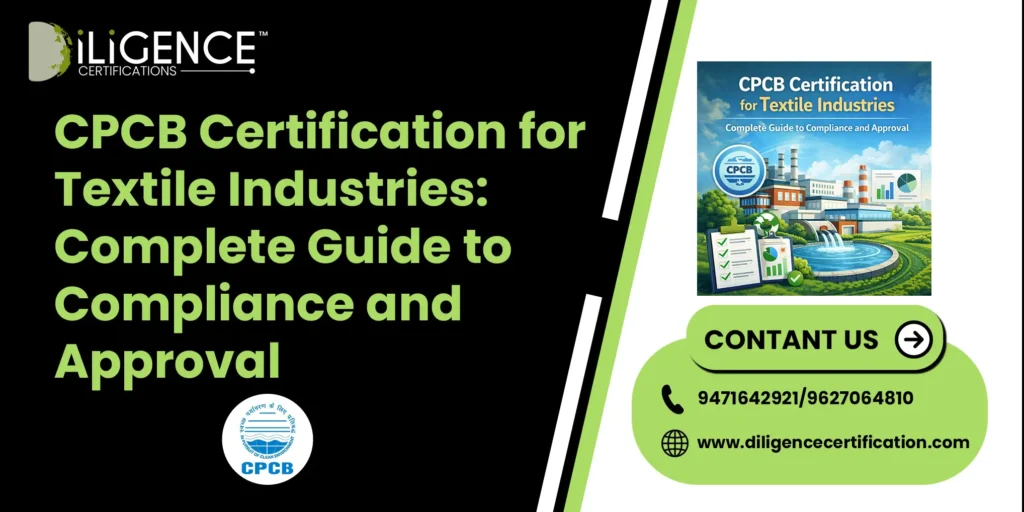
Regulatory Expert Advice: The certification by CPCB Certification for Textile industries ensures the environmental laws, air and water pollution standards, and industrial waste management rules are enforced properly.
Documentation without Mistakes: All the required technical documents, process flow charts, and compliance papers are prepared by consultants and in-house teams with maximum precision to ensure no rejection.
Speedy Process of Approval: With the right guidance, the textile unit can fast track the CPCB approval which will in turn minimize the time for starting or continuing operations.
Prevention of Risk & Penalty: The right CPCB compliance minimizes the risk of penalties, show-cause notices or the closure of the concern.
Support for Compliance in the Long Run: The assistance does not stop at certification but also includes renewals, audits and the constant surveillance of environmental standards.

Introduction
India’s CPCB Certification for Textile sector is a formidable player in industrial pollution, contributing significantly to the pollution of water, air, and chemicals. The CPCB Certification for Textile sector guarantees that the manufacturing process of the textiles is safe and environment-friendly according to the law and that the manufacturers are adopting good and sustainable production processes. Central Pollution Control Board
For instance, a dyeing and printing unit in Tamil Nadu was served multiple show-cause notices on account of high effluent discharge levels. The plant got the guidance of CPCB Certification for Textile and did the necessary paperwork to get the certification, which not only ensured compliance with the regulations but also accepted the stability of their operations in the long run.
The case under discussion here throws light on the need for proper knowledge about the requirements for getting the CPCB certification as well as the need to synchronize them with the practices of the textile production industry.
What is CPCB Certification for Textile Industries?
CPCB Certification for Textile is an official endorsement given by the Central Pollution Control Board (CPCB) to industries that meet the requirements of the environmental standards. In the case of textile manufacturing units, it guarantees that;
- wastewater, dye effluents, and chemical waste are handled and treated properly.
- Moreover, it allows the units to comply with the norms of air and water pollution.
- As well as, it requires the units to safely dispose of and recycle the hazardous chemicals.
- Furthermore, it makes the units monitor and report the pollution levels regularly.
- Finally, it gives the units the legal and operational protection under Indian environmental laws.
In the absence of CPCB certification, textile units might get environmental fines, be temporarily closed, or face legal action against them which would be due to their violation of the environment.
Why Textile Industries Need CPCB Certification
Textile industries frequently encounter:
- Chemical dyes and bleaches
- Large amounts of water used and wastewater released
- Air pollution originating from boilers and steam engines
- Waste, both solid and hazardous
Obtaining CPCB certification is an indication of adherence, leads to the avoidance of legal problems, and the coarsening of the brand’s image through the display of responsible and eco-friendly practices.
Key Compliance Areas for Textile Industries
Effluent Management – A correct process of treating wastewater to make it suitable for discharge.
Air Pollution Control – Depending on the CPCB standard, air filtration, scrubbing, or chimney construction.
Hazardous Waste Handling – The method of either chemical and dye recycling or disposal that is safe.
Monitoring & Reporting – Continuous filing of emission and effluent reports.
Extended Producer Responsibility (EPR) – The textile items falling under the CPCB rules are also complying with the EPR.
Step-by-Step CPCB Certification Process for Textile Industries
Step 1: Compliance Assessment
You have to find out the pollution sources, chemical usages, and waste disposal practices in your textile unit.
Step 2: Documentation Preparation
Acquire, Create, and gather everything in the form of flow diagrams, waste management plans, EHS policies, and technical reports as the necessary documents.
Step 3: Application Submission
The submission of the online application to CPCB is done along with the supporting documents and the consent of SPCB.
Step 4: Scrutiny & Inspection
CPCB might inspect the site to check the pollution control systems and compliance measures.
Step 5: Grant of Certification
The verification is completed, and then the CPCB certification is granted which is tantamount to a legal operation under the environmental norms.
Step 6: Continuous Compliance & Renewal
It is essential to keep records, perform audits, and renew CPCB certification at intervals to remain compliant.
Documents Required for CPCB Certification for Textile Industry
- Company incorporation certificates, PAN, and GST
- SPCB Consent to Establish/Operate
- Site ownership or lease agreement
- Technical process flow diagrams of textile operations
- Details of pollution control equipment (air, water, and chemical waste)
- EHS policy and safety documents
- Waste authorization and EPR compliance certificates
- Authorization letter (if a consultant applies)
Timeline, Validity & Renewal
- Processing Timeline: 30–60 working days
- Certification Validity: Up to 5 years (category-based)
- Renewal: Submit updated compliance documents before expiry
- Amendments: Required for capacity expansion, location changes, or process modifications
Importance and Benefits of CPCB Certification for Textile Industries
| Importance | Benefits |
| Legal compliance | Eschew penalties, show-cause notices, and stoppages |
| Environmental protection | Lowers pollution and harmful chemicals |
| Operational continuity | Non-stop textile operations |
| Brand credibility | Trust with authorities, customers, and investors are strengthened |
| Market access | Gives the assurance of being suitable for contracts with industrial businesses that are regulated |
Conclusion
CPCB Certification for Textile Industries is more of a strategy than a regulatory requirement, that it can facilitate sustainability, reduce operational risks, and secure compliance in the long run. Simply having good preparation, accurate documentation, and timely application will lessen the approvals process and strengthen the company’s reputation as a responsible and eco-friendly business.
On the other hand, textile industries that apply CPCB Certification for Textile compliance in their operational practices are not only protecting the environment but also gaining a market competitive advantage.
Frequently Asked for Questions
What is CPCB Certification for textile industries?
This is a certification from the Central Pollution Control Board that confirms the compliance of textile factories with the regulations concerning the environment.
Why is CPCB Certification necessary for the textile units?
It guarantees adherence to the law, diminishes the impact on the environment, and secures the company from fines.
What areas of compliance does CPCB cover for the textile sector?
CPCB deals with effluent treatment, air control, handling of hazardous waste, monitoring, and EPR compliance.
How do textile manufacturing sectors get CPCB Certification?
They have to apply online with the required documents along with the SPCB consent to the CPCB portal.
What docs are needed for CPCB Certification of textiles?
Business registration, SPCB approval, process flowcharts, specifications of pollution control devices, EHS policy, and EPR compliance certificates.
What is the duration of getting CPCB Certification?
The procedure generally takes 30–60 working days, depending on the classification.
What is the duration of CPCB Certification that textile units obtain?
The certification is effective for 5 years in total, determine by the category of the industry.
Is it possible that CPCB Certification will avoid fines and legal proceedings?
Of course, it guarantees observance of the environmental standards, thus minimizing the possibility of imposing fines, issuing notices, or closing down.
How frequently should the textile industries apply for CPCB Certification renewal?
Renewal must be carried out before the expiration, along with compliance and monitoring documents updated.
Is EPR compliance for textile products included in CPCB Certification?
Definitely, the textile items that are governed by the CPCB rules are obligated to fulfill the Extended Producer Responsibility (EPR) criteria.