



 BIS Certification
 CDSCO
CDSCO
 CPCB
CPCB
 LMPC
LMPC
 WPC Approval
 Global Approvals
 TEC
TEC
 ARAI
ARAI
 BEE
BEE
 ISO Certification
 DGCA Certification
 NOC For Steel
 APEDA Registration
















 Business Registration
 FSSAI Mark Certification













 (32).jpg)
 Legal Services
 Trademark Registration
 Copyright Registration
 Patent Registration
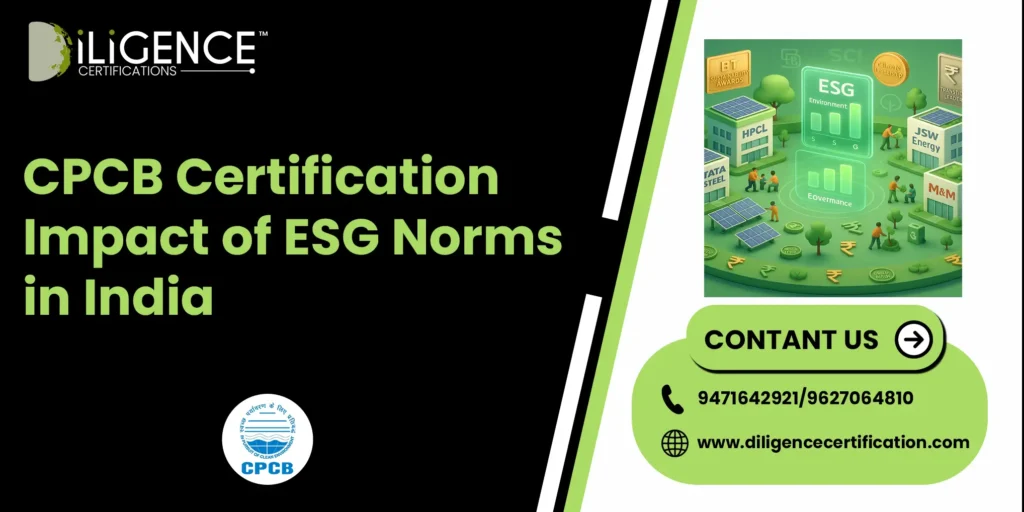
Integration of ESG with CPCB Certification: ESG regulations are increasingly becoming the measuring stick for the environmental compliance and sustainability practices of the industries assessed by the CPCB Certification Impact of ESG.
Stricter Environmental Accountability: The industries are undergoing an ESG-compliance-driven change which will lead them to not only meet but also exceed the minimum CPCB requirements and finally adopt long-term pollution control measures.
Improved Corporate Governance: The CPCB Certification Impact of ESG that is in line with ESG norms contributes to the transparency of reporting, the accuracy of reporting, and the ethical conduct of operations.
Reduced Legal and Operational Risks: The ESG-compliant CPCB Certification Impact of ESG reduces the likelihood of penalties, show-cause notices, and operational shut-downs.
Enhanced Brand & Investor Confidence: The companies that are compliant with both the CPCB norms and ESG standards do get credibility not only from the regulators but also from investors and global partners.

Introduction
Regulatory expectations have undergone a transformation in Indian industries over the years. The environment is not the only consideration when it comes to compliance; companies are expected to go beyond first-step approvals and legal thresholds. The trend of giving importance to ESG (Environmental, Social, and Governance) has in fact changed the way the renewal of CPCB Certification Impact of ESG is viewed and applied in India in a big way. Central Pollution Control Board
For instance, a manufacturing unit in the state of Gujarat that had valid CPCB authorization continued to be scrutinized by the investors because of inadequate environmental disclosures and no sustainability reporting. The company not only solidified its compliance status by integrating CPCB with ESG norms such as open pollution monitoring, worker safety measures, and responsible waste disposal but also gained a better image in the market.
This is a clear case that demonstrates the interconnection between CPCB Certification Impact of ESG thus turning compliance into a strategic necessity instead of just a legal formality.
What Is CPCB Certification Impact of ESG?
CPCB Certification Impact of ESG is associated with the permits and approvals obtained from the Central Pollution Control Board (CPCB) to make certain that the industrial activities are in line with the environmental regulations of India. It guarantees that industries:
- Are working within the allowed limits of pollution
- Are handling air, water, and dangerous waste in an eco-friendly way
- Comply with the laws for environmental protection and adhere to CPCB/SPCB regulations
- Have equipped themselves with good monitoring, reporting, and controlling systems
If a company does not have a CPCB certificate, it may suffer fines, the halt of operations, or lawsuits under environmental laws.
What Are ESG Norms?
ESG Norms are the standards of measuring a company’s overall sustainability and ethical impact, made up of Environmental, Social, and Governance criteria.
- Environmentally: Pollution management, waste handling, carbon dioxide emissions, and resource capturing efficiency.
- Socially: Employee health, society’s positive or negative effects, and fair labor practices
- Governance: Openness, legal compliance investigating, and moral decision-making
In India, the ESG norms are progressively taken up as a tool for assessing business sustainability by the regulators, and investors, financial institutions, and foreign partners.
How ESG Norms Impact CPCB Certification in India
ESG norms are increasingly impacting CPCB Certification Impact of ESG along with the industries:
1. Stronger Environmental Compliance Expectations
CPCB has now put a strong stress on constant pollution monitoring, good waste disposal, and preventive environmental measures which are the main ESG environmental parameters.
2. Data Transparency & Reporting
ESG norms require precise environmental data which is quite similar to CPCB’s requirements for emission reports, waste logs, and compliance submissions.
3. Governance & Accountability
Bad governance and repeated non-compliance may affect the CPCB approvals. ESG-aligned governance facilitates audit readiness and builds regulatory trust.
4. Social Responsibility & Worker Safety
CPCB inspections more and more often take EHS (Environment, Health & Safety) practices into account which are the main social components of ESG.
5. Long-Term Sustainability Focus
In place of short-term compliance, ESG-driven CPCB Certification Impact of ESG supports and encourages sustainable industrial growth and risk prevention.
Why ESG-Aligned CPCB Certification Is Important for Industries
ESG norms non-alignment could lead to:
- Regulatory scrutiny hike
- Repeated show-cause notices
- Investments or loans obtaining difficulties
- Loss of business opportunities with clients focusing on ESG
On the other hand, being aligned with ESG compliance of CPCB ensures:
- Legal and regulatory safety
- Environmentally responsible operations
- Stability of operations
- Better market reputation
Importance and Benefits of ESG-Driven CPCB Compliance
| Importance | Benefits |
| Legal compliance | Avoids penalties and closure |
| Environmental protection | Reduces pollution and ecological damage |
| Governance strength | Improves transparency and reporting |
| Investor confidence | Attracts ESG-focused investors |
| Sustainable growth | Ensures long-term business viability |
Step-by-Step Approach to Align ESG Norms with CPCB Certification
Step 1: ESG & Compliance Assessment
Assess the environmental, social, and governance aspects concerning their impact and the requirements of the Central Pollution Control Board (CPCB) together with the environmental impact, social practices, and governance structure.
Step 2: Strengthen Pollution Control Systems
Bring air, water and waste management systems up to the level of expectation set by ESG and CPCB through upgrades.
Step 3: Improve Monitoring & Reporting
Make continuous monitoring a part of the environmental records and also keep them to be very accurate.
Step 4: Adopt EHS & Social Safeguards
Implement safety measures for workers, provide training, and adopt ethical labor practices.
Step 5: Regular Audits & Reviews
Carrying out internal audits that will ensure the production continues to adhere to both ESG and CPCB.
Documents Required for ESG-Aligned CPCB Certification
- Company incorporation documents
- SPCB Consent to Establish / Operate
- Pollution control system details
- Environmental monitoring reports
- Waste management authorization
- EHS and safety policy documents
- ESG or sustainability reports (if available)
Timeline, Validity & Renewal
Processing Timeline: 30–60 working days
Certification Validity: Up to 5 years (depending on category)
Renewal: Submission of updated compliance and monitoring data before expiry
Conclusion
CPCB Certification: Impact of ESG Norms in India has been a major factor in the modern approach to environmental compliance. The present scenario shows that CPCB certification is more than just fulfilling the lowest regulatory prerequisites—it is a way of showcasing the ESG principles-positiveness, openness, and eco-friendliness.
The industries which align the CPCB Certification Impact of ESG compliance with the ESG norms get legal shielding, trust from investors, and stability in operations for a long time. In the changing regulatory landscape, the ESG-based CPCB certification is more than just a compliance requirement—it is a competitive edge and the basis for the sustainable growth of the industrial sector.
Frequenlty Asked for Questions
What is CPCB Certification in India?
CPCB certification serves as a guarantee that the industrial activities are in line with and not violating the laws aimed at protecting the environment and controlling pollution in India.
What is the impact of ESG norms on CPCB certification?
The notion of ESG sets up the bar higher for compliance by putting a spotlight on transparency, sustainability, and responsibility towards the environment over the long term.
Is ESG compliance mandatory for CPCB certification?
Although not binding under the law, ESG alignment would still make the process for CPCB accreditation much easier and would also greatly increase the credibility with regulators.
How does ESG improve environmental compliance under CPCB?
The practices associated with ESG bring about continuous pollution viewing, proper waste management, and environmental measures that are preventive rather than curative.
Does ESG alignment reduce CPCB-related legal risks?
Indeed, the aligned CPCB compliance with ESG gives rise to reduced risks of penalties, notices to show cause, and operational shutdown.
Why do investors prefer ESG-aligned CPCB-certified companies?
It is because these companies are already showing the world their sustainable practices, strong governance, and lower risk of being affected by the regulators.
How does governance under ESG affect CPCB approvals?
With the strong governance, audit readiness will be better, reporting will be more accurate and the regulatory trust will be built with CPCB authorities.
Are worker safety and social factors checked during CPCB inspections?
CPCB has been inspecting EHS more and more, which is the core social issue of ESG; hence, the answer is yes.
Can ESG reporting support CPCB certification renewal?
Definitely, ESG and sustainability reports are very useful as they show the company's commitment to compliance and responsible conduct.
What is the key benefit of ESG-driven CPCB certification?
It provides a guarantee for compliance with the regulations and at the same time helps to build up the reputation of the brand, investor confidence, and sustainability in the long run.