




 BIS Certification
 CDSCO
CDSCO
 CPCB
CPCB
 LMPC
LMPC
 WPC Approval
 Global Approvals
 TEC
TEC
 ARAI
ARAI
 BEE
BEE
 ISO Certification
 DGCA Certification
 NOC For Steel
 APEDA Registration





















 Business Registration
 FSSAI Mark Certification












 Legal Services
 Trademark Registration
 Copyright Registration
 Patent Registration
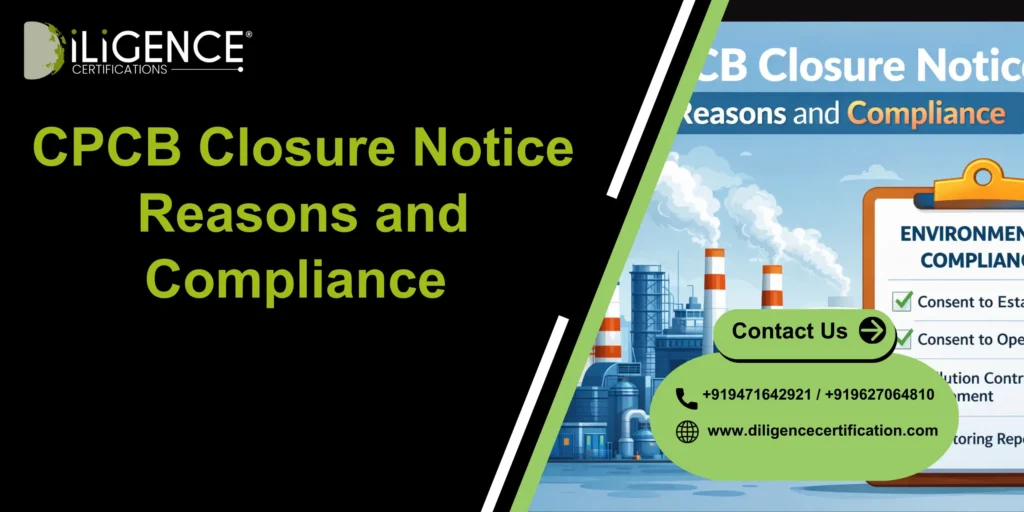
- CPCB Closure Notice Reasons and Compliance explains why diligence admits check notices from pollution control authorities and how businesses can maintain environmental nonsupervisory compliance.
- Proper CPCB compliance helps diligence avoid arrestment orders, penalties, and legal action.
- Timely pollution control monitoring ensures smooth artificial operations and environmental safety.
- CPCB compliance strengthens business credibility and nonsupervisory blessing.
- Regular environmental checkups reduce the threat of functional dislocations and legal violations.

Introduction
In India, diligence must follow strict environmental protection regulations to control air, water, and land pollution under the Environment Protection Act, 1986. The Central Pollution Control Board( CPCB) and State Pollution Control Boards( SPCBs) cover artificial pollution and take action against non-compliant diligence.
CPCB Closure Notice Reasons and Compliance helps businesses understand the causes of check notices issued by pollution authorities and the corrective way needed to renew operations. Maintaining CPCB compliance ensures sustainable artificial growth while guarding environmental and public health.
What’s a CPCB Closure Notice?
A CPCB Closure Notice Reasons is an sanctioned order issued by pollution control authorities directing an assiduity to stop operations due to environmental compliance violations.
CPCB Closure Notice Reasons are issued when businesses fail to follow pollution control regulations or operate without needed environmental blessings.
CPCB check notices may bear diligence to
- Stop manufacturing or functional conditioning
- Install pollution control outfit
- gain environmental concurrence or concurrence instruments
- Amend compliance violations
- Submit compliance reports and covering data
Common CPCB Closure Notice Reasons
diligence may admit check notices due to the following violations
Operating Without concurrence to Establish( CTE) or concurrence to Operate( CTO)
diligence must gain pollution control blessings before starting or operating manufacturing units.
Exceeding Pollution Emission Limits
Failure to control air emigrations, wastewater discharge, or dangerous waste operation can affect check orders.
Non-Installation of Pollution Control Equipment
diligence must install approved air and water pollution control systems.
Improper Hazardous Waste Disposal
Incurious running, storehouse, or disposal of dangerous waste violates environmental morals.
Failure to Submit Environmental Monitoring Reports
diligence must regularly submit pollution monitoring data to nonsupervisory authorities.
Operating in confined orNon-Industrial Zones
diligence operating in environmentally sensitive or unauthorized zones may face check notices.
Significance of CPCB Compliance
Failure to misbehave with CPCB regulations can affect in serious legal and functional consequences, including
Artificial arrestment or sealing of demesne
- Heavy environmental penalties and forfeitures
- Legal action by nonsupervisory authorities
- suspense of licenses and blessings
- Damage to brand character and investor confidence
still, proper CPCB compliance ensures
- Legal authorization to operate artificial units
- Environmental protection and sustainability
- Smooth nonsupervisory examinations and blessings
- Advanced business credibility and stakeholder trust
- Long- term artificial growth and functional stability
Benefits of CPCB Compliance
| Importance | Benefits |
| Legal Compliance | Meets environmental laws and pollution control regulations |
| Environmental Protection | Reduces pollution and supports sustainable operations |
| Business Continuity | Prevents closure notices and shutdown orders |
| Risk Management | Avoids penalties and regulatory disputes |
| Brand Reputation | Builds trust with authorities and customers |
Step- by- Step CPCB Closure Notice Compliance Process
Step 1 Review Closure Notice
diligence must precisely review the violation reasons mentioned in the check order.
Step 2 Identify Compliance Gaps
Conduct internal environmental checkups to identify non-compliance areas.
Step 3 apply Corrective Measures
Install pollution control outfit, update waste operation systems, and amend functional violations.
Step 4 gain needed blessings
Apply for Consent to Establish, Consent to Operate, or environmental concurrence if missing.
Step 5 Submit Compliance Report
Submit compliance documents and corrective action reports to CPCB or SPCB authorities.
Step 6 examination and Continuing blessing
Authorities may conduct examinations before allowing diligence to renew operations.
Documents Needed for CPCB Closure Notice Compliance
- concurrence to Establish( CTE) Certificate
- concurrence to Operate( CTO) Certificate
- Environmental Clearance Certificate
- Pollution monitoring reports
- Dangerous waste operation records
- Installation reports of pollution control outfit
- Assiduity layout and functional details
- Authorization letters and business enrollment documents
Timeline for CPCB Closure Notice Reasons Compliance
Compliance perpetration: Depends on violation inflexibility and corrective measures
Inspection Timeline: generally conducted after compliance submission
Continuing blessing: Issued after successful compliance verification
Timely compliance helps diligence renew operations briskly and avoid fresh penalties.
Common diligence entering CPCB Closure Notice Reasons
Closure notices are generally issued to diligence similar as
- Chemical and pharmaceutical manufacturing
- Textile and dyeing units
- Food processing diligence
- Essence and mining diligence
- Plastic manufacturing units
- Construction and structure systems
Stylish Practices to Avoid CPCB Closure Notice Reasons
- gain all environmental blessings before operations
- Install pukka pollution control outfit
- Conduct regular environmental checkups
- Maintain proper waste disposal systems
- Examiner pollution emigration situations continuously
- Keep compliance attestation streamlined
- Train workers on environmental safety norms
Conclusion
CPCB Closure Notice Reasons and Compliance highlights the significance of following environmental regulations for diligence operating in India. Understanding check notice causes and enforcing timely corrective measures helps businesses avoid functional shutdowns and legal penalties. CPCB Certification
diligence that maintains CPCB Closure Notice Reasons ensures sustainable manufacturing practices, environmental protection, and long- term business stability. Proper compliance not only protects businesses from nonsupervisory action but also supports responsible artificial development and environmental conservation.
Frequently Asked for Questions
What's a CPCB check notice?
It's an sanctioned order directing diligence to stop operations due to environmental compliance violations.
Who issues CPCB check notices?
Closure notices are issued by CPCB or separate State Pollution Control Boards.
Why do diligence admit CPCB check notices?
diligence admit notices for pollution violations, missing blessings, or non-compliance with environmental laws.
Is CPCB compliance obligatory for all diligence?
Yes, diligence generating pollution must follow CPCB and SPCB environmental regulations.
What's Consent to Operate( CTO)?
CTO is a obligatory blessing allowing diligence to run operations after meeting pollution control conditions.
Can diligence renew after entering a check notice?
Yes, diligence can renew after correcting violations and carrying nonsupervisory blessing.
What penalties apply for CPCB non-compliance?
Penalties may include heavy forfeitures, arrestment orders, or legal action.
How long does CPCB compliance correction take?
The timeline depends on violation inflexibility and corrective action perpetration.
Which diligence generally admit CPCB check notices?
Chemical, cloth, medicinal, plastic, and manufacturing diligence generally admit notices.
How can diligence avoid CPCB check notices?
diligence can avoid notices by maintaining pollution control systems and regular environmental monitoring.