BIS Certification
 CDSCO
 PESO
 CPCB
 LMPC
 WPC Approval
 Global Approvals
 TEC
 ARAI
 BEE
 ISO Certification
 DGCA Certification
 NOC For Steel
 APEDA Registration























 Business Registration
 FSSAI Mark Certification












 (32).jpg)
 Legal Services
 Trademark Registration
 Copyright Registration
 Patent Registration
 By
- CPCB registration is not one single certificate. What you need depends on what your business actually does.
- Plastic packaging, e-waste, batteries, tyres and used oil all follow separate rules.
- Keep PAN, GST details, incorporation papers and product information ready before you start.
- Getting the certificate is only the beginning. Records, EPR targets and annual returns come after.
- Spend time choosing the right category. It saves weeks of back and forth.
Introduction
Consider how a business expands. At first everything revolves around sales, suppliers and cash flow. Environmental rules? They usually surface later often when a notice arrives or a buyer requests a certificate.
Take an example. A company in Noida sells packaged snacks under its brand. A factory in another town produces the snacks. The company focuses on branding, packaging and sales. The owner believes, “The factory produces the product so the factory deals with the side.”
Perhaps. Perhaps not.
If your product is packed in plastic you must verify whether plastic waste rules apply to your role. The answer depends on what your business does, not, on who operates the machines.
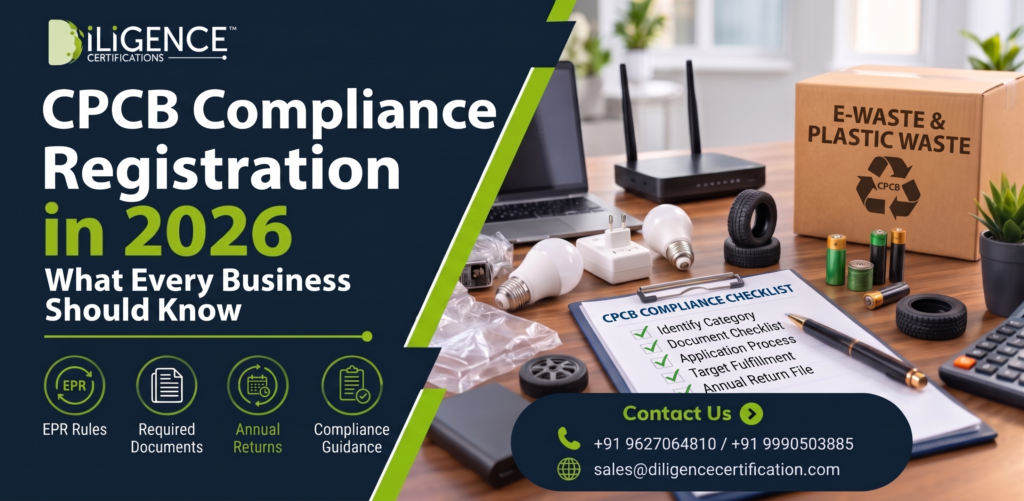
That is where CPCB compliance registration comes into play. From the outside it appears complex with rules, portals and categories. But once you understand your activity locate the appropriate rule and keep your documents ready it becomes much more manageable.
What Is CPCB Compliance Registration?
You need the registration or authorisation that the Central Pollution Control Board (CPCB) sets for rules or the system connected to those rules. Depending on what you do the State Pollution Control Board or a Pollution Control Committee might also be involved. The registration or authorisation depends on your activity.
Extended Producer Responsibility or EPR is a part of the registration and authorisation process. The idea is simple. If a business places a product or packaging on the market the registration and authorisation require the business to take responsibility, for the waste that product becomes later. That means setting recycling targets working with authorised processors keeping records and filing returns under the registration and authorisation rules.
Consider two cases. An importer who brings packaged goods must follow the packaging rules and obtain the correct registration and authorisation. A company that makes covered electronic items must follow the e‑waste rules. Obtain the correct registration and authorisation. Both situations fall under EPR. The registration and authorisation steps differ.
No there is no single CPCB certificate that covers everything. The registration is decided by the activity, the product and the rule attached to it.
Who Needs CPCB Compliance Registration?
It comes down to your role. What do you make, import, sell or process? Here are the common cases.
Producers and brand owners
Selling under your brand? You should check if the rules make you responsible.
Imagine a skincare brand that sells creams and shampoos in bottles. The brand does not own a factory.. The brand owner still needs to find out if the plastic packaging rules apply to the brand. Outsourcing production does not erase all responsibility.
Importers
You should check before the goods arrive not after.
A company that imports electronic equipment might be covered by the e-waste framework. A business that brings in goods, in packaging must review the plastic rules. Learning about a rule after the shipment reaches the port creates problems that nobody wants so you should review the rules before you place an order.
Manufacturers
A plastic packaging maker, a battery maker and an electronics maker do not face the same rules. Each one has to find the framework that covers its own product.
Also, don’t assume one registration settles everything. There can be other permissions, at both central and state level.
Recyclers and waste processors
Recyclers have their own set of requirements, and they differ from those of producers. A plastic recycling unit and an e-waste recycler are not treated the same way either.
Expect the application to ask about your facility, machinery, processing capacity and permissions. Pick the right waste category before you submit.
E-commerce sellers and small businesses
Selling on a marketplace does not keep you outside these rules by default.
If you import, sell under your own brand or use regulated packaging, look at your position properly. Small sellers should be just as careful. Being an MSME, working from a small office or outsourcing production does not give you an exemption on its own. An exemption has to come from the rules or an official notification.
Types of CPCB Compliance Registration
First find the waste category that fits your business. Everything else follows from that.
1. Plastic packaging EPR registration
This one affects everyday businesses: food brands, cosmetics companies, household product sellers and importers. The Plastic Waste Management Rules, 2016 and their later changes set the rules.
You could be a producer, an importer, a brand owner or a plastic waste processor and the duties are not the same, for each. A company selling its packaged products should look at its packaging materials and figure out which requirements apply to its role. Keep records of packaging types and quantities too.
Important 2026 update: The centralised plastic packaging EPR portal was stopped from 28 June 2026. People involved have been told to use the Common EPR Portal for updates and moved information. If you were already registered check your records. Follow the latest official instructions before you make any changes or submit a new application.
2. E-waste registration
The E-Waste (Management) Rules, 2022 and any later changes apply to equipment. If you work with products make sure your activity fits the definitions given. Producers, manufacturers, recyclers and refurbishers might need to get registered depending on their type. A common mistake happens when an importer believes the rules apply to a factory that’s outside the country. The E-Waste Rules 2022 do not apply to a factory that’s, outside the country. An importer or a producer has responsibilities, not a recycling unit. Before you start the process check the CPCB e-portal and its steps.
3. Registration for battery waste
Batteries are covered under the Battery Waste Management Rules, 2022 and any updates that follow. Do you make batteries. Bring batteries into the country or do you sell items that have batteries inside? Then check if you meet the definition of a producer.
Your job and the type of battery determine what you need to do. People who recycle batteries and those who fix batteries have their responsibilities. Thinking about starting to make battery-powered products? Read these rules before you begin.
4. Registration, for waste tyre
If you make tyres bring tyres into the country sell tyres under your name or recycle tyres that are covered look at the waste tyre EPR rules. Producers and recyclers have tasks so pick the correct category and follow the official steps.
5. Used oil registration
Used oil is part of the other waste management system. This includes the Extended Producer Responsibility rules and any changes, to them. Make sure your activity is included and read the rules about registering and reporting. When the rules say you need documents or EPR certificates store them in the correct way.
One thing to keep in mind. Every type of waste has its process and being registered for one type does not mean you are covered for another.
Documents Required for CPCB Compliance Registration
“Which documents do I need?” is the first thing most people ask. The exact list changes with the category, but keeping the basics ready makes life easier.
Business documents
- PAN details
- GST registration details, where applicable
- Certificate of incorporation or other business registration papers
- Registered office and facility addresses
- Details of the authorised person
- Business contact information
- Declarations or undertakings, as prescribed
Product and packaging details
Some applications ask about your products and packaging: categories, packaging materials, quantities, manufacturing details and import records. Check which information is needed for the reporting period.
For recycling businesses
Recyclers may have to give details of their facility, machinery, processing capacity, waste-handling activity and permissions. Confirm the exact list from the rules and the current portal instructions.
A small tip: before submitting, match your company name, PAN, GST details and addresses across every document. Tiny differences are a common reason for queries during scrutiny.
And please don’t copy another company’s checklist. A recycler’s list can look very different from an importer’s or a brand owner’s.
How to Apply for CPCB Compliance Registration Online
The steps change from category to category, but this gives you a practical starting point.
Here is the rewritten version of the user input:
Step 1: Find your category. Write down what your business makes brings in sells or works with. Are you bringing in electronics? Look at e-waste. Do you sell things in packaging? Look at the plastic rules. Do this before making any account.
Step 2: Check the website. Open the CPCB website or online place and read the most recent instructions. Don’t use articles or saved links. Systems and ways of doing things can change.
Step 3: Get your papers ready. Collect business details, product information and any supporting documents. If the form wants numbers for a year use that year’s records. Be prepared to explain the numbers if needed.
Step 4: Fill out the application. Take your time. Check the category, company details, addresses and product information. If a part is confusing read the instructions on the portal of choosing the option that looks most similar.
Step 5: Check and send. Read everything again. Make sure the details match your papers and that every statement is complete. Pay any fees that are needed according to the instructions. Keep a copy of the application and the confirmation.
Step 6: Answer questions. The government might ask for information. Reply quickly with papers. If something needs fixing do it through the way. Remember, sending the form is not the same as getting approval.
Step 7: Keep track of what happens. After registration find out what comes next for your category: EPR targets, keeping records annual reports. It helps to have one person, in your team take care of this.
What E-commerce Businesses Should Keep in Mind
Online selling usually involves many parties. One company makes the product, another imports it, a third sells it under its brand, and a marketplace handles the sale. Their responsibilities are not always the same.
Imagine a company selling kitchen containers under its own brand. A third-party factory makes them, and the company sells them in its own packaging on an online marketplace. It should find out who makes the packaging, whether anything is imported and which rules apply to each party.
Being listed on a marketplace does not decide whether you need registration. And outsourcing production does not pass every legal responsibility to the manufacturer.
Before launching a product, ask yourself four questions:
- Who manufactures or imports the product?
- Under whose brand is it sold?
- Does it use regulated packaging or materials?
- Which registration and reporting requirements apply?
Keep purchase records, supplier details, product information and packaging records in order. You will need them when you review your obligations.
Common Mistakes to Avoid
Choosing the wrong category. A producer, an importer, a brand owner and a recycler can have different requirements. The wrong pick can lead to queries or an unsuitable application.
Giving inconsistent information. Company name, address, product details or quantities that don’t match across documents will draw questions. Compare the application with your records before you submit.
Using outdated instructions. Rules and portals change. Always go to the current official portal and notifications.
Forgetting annual returns. Many businesses chase the certificate and forget what comes after. Note the reporting dates for your category, since different waste streams can have different deadlines.
Assuming small means exempt. Low turnover, a small team or outsourced manufacturing does not automatically remove the need for registration. Read the provisions first.
Ignoring supporting records. Keep production, import and packaging data organised through the year. Rebuilding figures at the last minute is hard and leads to mistakes.
What Happens After Registration?
The certificate is a step forward. The work is not done yet.
Keep the certificate the acknowledgment and all messages from the authority. Then arrange the documents that’re important for your business like production, imports, sales, amounts of packaging and details about waste processing.
After that check your EPR responsibilities. Some areas have recycling goals, certificates or contact with approved waste handlers and the steps are different, for each type of waste.
Stay updated with information as well. If your products, packaging materials or operations change your registration information might need changes. A basic spreadsheet or a compliance calendar is enough to keep track of dates so nothing is missed.
Where Can You Check Official CPCB Requirements?
Always verify the latest requirements from official sources before applying.
The CPCB Common EPR Portal is a good starting point for common-portal services and updates. Confirm your category there and follow the latest instructions.
For plastic packaging, read the Plastic Waste Management Rules and the current portal guidance. For e-waste, batteries, tyres or used oil, check the relevant official systems and rules. Depending on your facility and activity, you may also need separate permissions from your State Pollution Control Board or Pollution Control Committee.
Not sure what applies? Don’t start with a generic checklist. Start with your business activity and find the rule that covers it.
Why Choose Diligence Certifications for CPCB Compliance Registration Certification?
For owners the hardest part is knowing where to begin. The form itself is not too difficult. The real challenge lies in picking the category and finding the right documents. That’s what takes up much time.
Diligence Certifications offers help with certification and regulatory compliance. This includes support for CPCB and EPR requirements. Depending on the plan you choose they can review your business activity figure out the registration category make a list of needed documents and get your information ready for the application. They also help with submitting the application answering questions and explaining your reporting responsibilities after registration.
You can find out more on the Diligence Certifications services page.
Before you talk to any consultant make sure you have your company details, product information and any existing registration records handy. Explain clearly what your business makes, imports, sells or processes. That way the first conversation starts off with a foundation.
Getting help can make the process cleaner and more organised.. There is no guarantee of approval. The final decision is always made by the authority, based on the rules, in place.
Conclusion
Compliance feels much lighter when you understand your responsibilities before you start.
CPCB compliance registration is not the same for everyone. A packaged food brand, an electronics importer and a recycling unit can all have requirements. Find your category prepare accurate documents and check the current official portal. This helps you avoid a lot of confusion.. Remember registration is often followed by reporting and record-keeping.
Unsure what applies to your business? Visit the Diligence Certifications homepage to know more, about its compliance services. Keep your company details and product information ready so you can explain your situation clearly. Decide the next step.
Frequently Asked Questions
1. What is CPCB compliance registration?
It is the registration or authorisation you need under environmental rules run by CPCB or the linked regulatory system. What applies to you depends on your business activity and waste category.
2. Who needs CPCB compliance registration in India?
Certain producers, importers, brand owners, manufacturers, recyclers and other regulated entities. The applicable rules decide who is covered.
3. Is CPCB registration compulsory for every online seller?
No, not for everyone. An online seller should check whether its products, imports, brand ownership or packaging bring it under the relevant environmental rules.
4. What documents are required?
Usually PAN, GST details, business registration records and authorised-person details. Product or packaging information and certain licences or declarations may be needed too, based on the category.
5. How can I apply online?
Find the right category, check the current official portal, prepare your documents, submit the application and reply to any queries. The exact steps differ for each waste stream.
6. Is CPCB registration the same as EPR registration?
Not always. EPR registration is one specific process under an Extended Producer Responsibility framework. What you need depends on the rule that applies to you.
7. Can small businesses be exempt?
Only where the rules or notifications provide for it. Low turnover alone does not mean exemption, so verify the provisions first.