BIS Certification
 CDSCO
CDSCO
 PESO
PESO
 CPCB
CPCB
 LMPC
LMPC
 WPC Approval
 Global Approvals
 TEC
TEC
 ARAI
ARAI
 BEE
BEE
 ISO Certification
 DGCA Certification
 NOC For Steel
 APEDA Registration























 Business Registration
 FSSAI Mark Certification












 (32).jpg)
 Legal Services
 Trademark Registration
 Copyright Registration
 Patent Registration
 By
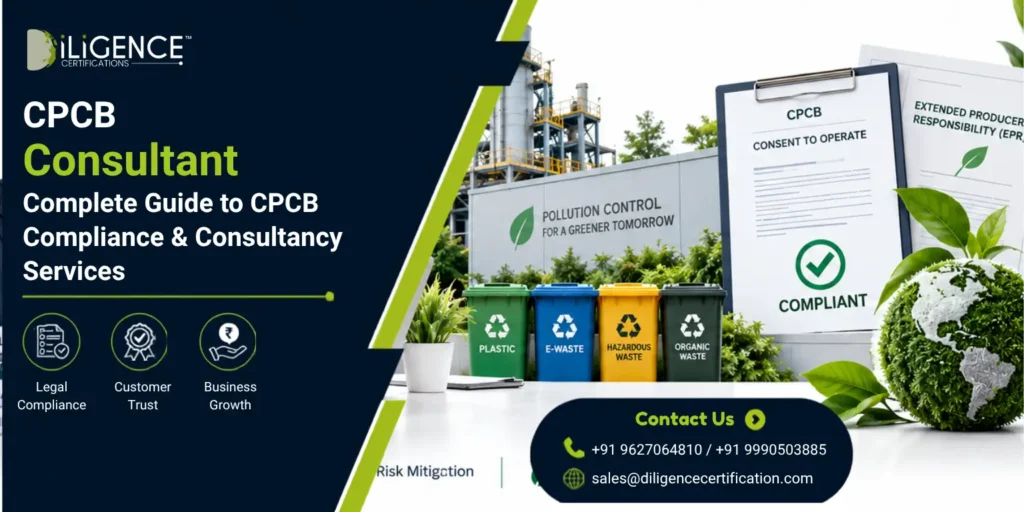
By - CPCB Consultant helps businesses understand and manage environmental compliance requirements applicable to their operations.
- A consultant can assist with CPCB-related approvals, documentation, compliance requirements, applications, and regulatory coordination.
- The consultancy process generally involves understanding the business activity, identifying applicable requirements, preparing documents, submitting applications, and supporting compliance-related follow-up.
Introduction
Environmental compliance has become an important part of running a responsible business in India. Businesses involved in manufacturing, waste management, pollution control, recycling, plastic products, electronic equipment, batteries, and other regulated activities may have to follow requirements issued under the environmental regulatory framework.
The Central Pollution Control Board (CPCB) plays an important role in preventing and controlling pollution and in supporting the implementation of environmental laws and standards in India.
For a business owner, however, understanding environmental regulations and completing the required compliance work can sometimes feel complicated. Different industries can have different requirements, documents, applications, and reporting obligations. This is where a CPCB Consultant can be helpful.
A CPCB consultant provides professional guidance to businesses that need assistance with environmental compliance and CPCB-related procedures. The consultant can help identify applicable requirements, organize documentation, prepare applications, coordinate with relevant authorities, and support businesses throughout the compliance process.
Professional assistance does not replace the role of CPCB or other competent authorities. Instead, it helps applicants understand the applicable process and present their information correctly.
The exact requirements depend on the nature of the business, products, processes, location, waste generation, environmental impact, and applicable rules. Therefore, businesses should review their specific requirements before starting any application or compliance activity.
What is a CPCB Consultant?
A CPCB Consultant is a professional or consultancy service provider that assists businesses with CPCB-related environmental compliance requirements.
A consultant may help businesses understand:
- CPCB Compliance Requirements
- Environmental Regulations
- Waste Management Requirements
- Pollution Control Obligations
- Applicable Registrations or Approvals
- Documentation Requirements
- Application Procedures
- Compliance Reporting
- Regulatory Communication
- Renewal or Continued Compliance Requirements
The role of a consultant is not limited to submitting an application. Good consultancy involves understanding the client’s business activities and determining which environmental requirements may apply.
Depending on the business, assistance may be required for areas such as plastic waste, e-waste, battery waste, hazardous waste, biomedical waste, used oil, waste processing, recycling, or other regulated activities.
Since environmental requirements can change according to the type and scale of operations, businesses should avoid relying on generic information alone. A proper compliance review can help identify the requirements relevant to the particular business.
Applications of CPCB Consultant Services
CPCB consultant services may be useful for:
- Manufacturers
- Importers
- Producers
- Recyclers
- Waste Management Companies
- E-Waste Businesses
- Plastic Product Businesses
- Battery-Related Businesses
- Industrial Units
- Environmental Service Providers
- Other Regulated Businesses
Common areas where professional assistance may be required include:
- CPCB Registration
- Environmental Compliance
- Waste Management Compliance
- EPR-Related Requirements
- Plastic Waste Compliance
- E-Waste Compliance
- Battery Waste Compliance
- Recycling Compliance
- Documentation Support
- Application Filing
- Compliance Reporting
A business should first identify the environmental rules applicable to its specific activity. The requirement may differ depending on the products handled, manufacturing process, waste generated, and role of the business in the supply chain.
Who Can Hire a CPCB Consultant?
Businesses that need help understanding or completing environmental compliance requirements may engage a CPCB consultant.
They may include:
- Manufacturers
- Producers
- Importers
- Recyclers
- Waste Processors
- Brand Owners
- Industrial Businesses
- E-Waste Management Companies
- Plastic-Related Businesses
- Battery-Related Businesses
- Other Eligible Entities
A consultant can review the nature of the business and help determine which CPCB-related requirements may be relevant.
Before beginning the consultancy process, the applicant should provide accurate information about the business, products, manufacturing activities, waste handling practices, and existing registrations or approvals.
Providing complete and correct information is important because environmental compliance requirements are closely connected with the actual nature of business operations.
Types of Compliance Supported by CPCB Consultant
Waste Management Compliance
A CPCB consultant may assist businesses with requirements related to:
- Plastic Waste
- E-Waste
- Battery Waste
- Hazardous Waste
- Used Oil
- Waste Processing
- Recycling Activities
- Waste Collection
- Waste Management Documentation
Useful for:
- Manufacturers
- Producers
- Importers
- Recyclers
- Waste Management Businesses
Waste management requirements can vary according to the type of waste generated or handled by the business. A consultant can help identify applicable obligations and organize the required documentation.
EPR & Environmental Compliance
A consultant may provide assistance related to:
- EPR Requirements
- Environmental Documentation
- Producer Responsibilities
- Importer Responsibilities
- Recycling Information
- Waste Processing Records
- Compliance Reporting
- Regulatory Submissions
Extended Producer Responsibility can create additional compliance responsibilities for businesses operating in regulated product categories.
Professional assistance can help businesses understand their obligations and maintain appropriate records for compliance purposes.
Documentation & Application Compliance
Important documents may include:
- Business Registration Documents
- PAN Details
- GST Details
- Address Proof
- Authorized Person Details
- Product Information
- Manufacturing Details
- Import Information
- Waste Management Details
- Recycling Information
- Agreements or Supporting Documents
- Photographs or Facility Details
- Existing Environmental Approvals
- Other Applicable Documents
The exact documents depend on the type of application and business activity.
Keeping documents accurate, updated, and consistent can make the application process more organized and reduce avoidable queries.
Documents Required for CPCB Consultant Services
The documents required for CPCB-related consultancy depend on the nature of the business and the specific compliance requirement.
Generally, applicants may need:
- Identity and Business Proof
- PAN Card
- GST Registration
- Certificate of Incorporation or Business Registration
- Address Proof
- Authorized Person Details
- Product Details
- Manufacturing Details
- Import Details, Where Applicable
- Waste Management Information
- Recycling Details
- Facility Information
- Existing Consent or Approval Documents
- Agreements with Recyclers or Waste Processors, Where Applicable
- Supporting Environmental Documents
All information should be accurate and consistent with the actual business operations.
A consultant may review these documents before preparing or submitting an application. This preliminary review can help identify missing information and reduce the chances of avoidable documentation issues.
Step-by-Step Process for Hiring a CPCB Consultant
Step 1: Understand the Business Activity
The first step is to understand the nature of the business and identify the environmental requirements that may apply.
Consider:
- Business Activity
- Products
- Manufacturing Process
- Import Activities
- Waste Generated
- Waste Handled
- Recycling Activities
- Existing Approvals
- Applicable Environmental Rules
A proper initial assessment helps determine the scope of consultancy required.
Step 2: Gather Required Documents
Collect the business, product, facility, waste management, and environmental documents relevant to the requirement.
The consultant may review the documents and identify whether additional information is required before proceeding.
Step 3: Compliance Assessment and Application Preparation
The consultant can assess the applicable requirements and prepare the relevant application or documentation.
This may include details of:
- Applicant
- Business
- Products
- Facility
- Manufacturing Activities
- Import Activities
- Waste Management
- Recycling Arrangements
- Environmental Compliance
- Supporting Documents
The application should accurately represent the actual business operations.
Step 4: Application Submission & Verification
Once the documentation is prepared, the application may be submitted through the applicable regulatory platform or authority.
The authority may review:
- Application Details
- Supporting Documents
- Business Information
- Product Information
- Environmental Details
- Compliance Information
If clarification or additional documentation is required, the applicant may need to respond accordingly.
Step 5: Regulatory Review and Approval
The competent authority may review the application and supporting information according to the applicable regulatory framework.
Depending on the requirement, the process may involve document verification, clarification, additional information, or other regulatory procedures.
The consultant can assist the applicant in responding to relevant queries and maintaining proper communication during the process.
Step 6: Ongoing Compliance
CPCB-related compliance may not end after receiving an approval or registration.
Businesses may need to:
- Maintain Compliance Records
- Submit Applicable Information
- Maintain Waste Records
- Track Regulatory Requirements
- Respond to Regulatory Queries
- Maintain Supporting Documents
- Follow Applicable Environmental Rules
- Monitor Changes in Requirements
Regular compliance monitoring can help businesses avoid problems caused by outdated information or missed obligations.
Timeline, Cost & Validity of CPCB Consultant Services
The timeline, cost, and validity depend on the nature of the CPCB-related requirement, business activity, documentation, authority, application type, and compliance scope.
| Timeline | Cost | Validity |
| The consultancy timeline depends on document preparation, application requirements, verification, and regulatory processing. | The cost depends on the applicable regulatory fee, professional charges, documentation requirements, and scope of consultancy. | Validity depends on the specific registration, approval, consent, or compliance requirement applicable to the business. |
| Complete and accurate documentation can help reduce avoidable delays. | Government or regulatory fees may vary according to the applicable requirement. | Businesses should follow the validity period and compliance conditions applicable to their approval or registration. |
| Processing time may vary depending on application complexity, authority review, and responses to queries. | Professional consultancy charges depend on the nature and complexity of assistance required. | Continued compliance may be required throughout the applicable validity period or business operation. |
Importance & Benefits of CPCB Consultant
| Importance | Benefits |
| Helps businesses understand applicable environmental compliance requirements. | Provides structured support for CPCB-related procedures. |
| Supports responsible environmental practices and regulatory compliance. | Helps organize applications and supporting documents. |
| Encourages businesses to follow applicable waste management and pollution control requirements. | Helps reduce avoidable documentation and procedural errors. |
| Promotes better awareness of environmental responsibilities. | Supports communication and follow-up during the compliance process. |
| Helps businesses maintain organized environmental records and compliance practices. | Makes the overall compliance process more manageable. |
Why is Hiring a CPCB Consultant Important?
Hiring a CPCB Consultant can be useful for businesses that are unsure about environmental compliance requirements or need professional support with regulatory procedures.
Environmental compliance is not the same for every business. A manufacturer may have different obligations from an importer, recycler, waste processor, or producer.
A CPCB consultant can help businesses understand areas such as:
- Environmental Compliance
- Waste Management
- EPR Requirements
- CPCB Registration
- Application Documentation
- Regulatory Submissions
- Compliance Records
- Environmental Reporting
Professional assistance can make the process easier to understand and more organized. It can also help businesses identify documentation gaps before submitting an application.
For businesses that are already operating, consultancy can be useful for reviewing existing compliance practices and identifying areas that may require attention.
Consequences of Not Addressing CPCB-Related Compliance
Ignoring applicable environmental requirements can create several challenges for a business.
Financial Loss
Non-compliance may result in additional expenses, corrective measures, professional costs, or other financial consequences depending on the nature of the violation.
Regulatory Action
Failure to meet applicable environmental requirements can expose a business to regulatory action by the competent authorities.
Business Disruptions
Environmental compliance issues may affect business operations, especially when required approvals, registrations, or permissions are not properly maintained.
Loss of Documentation
Poor record-keeping can make it difficult for a business to demonstrate compliance when documents or records are required.
Procedural Delays
Incomplete applications or failure to respond to regulatory queries can result in unnecessary delays.
Missed Compliance Opportunities
Businesses that do not regularly review their obligations may miss important regulatory updates or compliance requirements.
Reputation of the Business
Environmental compliance problems can negatively affect the credibility of a business among customers, partners, and other stakeholders.
Risk of Bad Reputation
Repeated environmental or regulatory issues may reduce confidence in the organization’s compliance practices.
Growing the Business
Businesses planning to expand into new products, markets, or operations may face additional compliance requirements that should be assessed in advance.
Renewal of CPCB Compliance
CPCB-related registrations, approvals, or permissions do not all follow the same renewal process. The requirement depends on the specific approval, registration, consent, or environmental framework applicable to the business.
Important areas include:
- Registration Status
- Validity Period
- Compliance Requirements
- Regulatory Updates
- Documentation
- Environmental Records
- Applicable Returns or Reports
- Approval Conditions
- Further Compliance Requirements
Businesses should monitor their applicable validity and compliance obligations instead of waiting until the last moment.
Regular compliance reviews can help identify upcoming requirements and keep regulatory documentation organized.
How Professional Assistance Helps with CPCB Compliance?
A professional CPCB consultant can assist with:
- CPCB Requirement Review
- Business Compliance Assessment
- Application Preparation
- Documentation
- Online Filing Assistance
- EPR Compliance Support
- Waste Management Compliance
- Regulatory Communication
- Query Resolution
- Compliance Documentation
- Application Tracking
- Renewal or Continued Compliance Guidance
Professional support can make the compliance process more organized and help businesses avoid common documentation and procedural mistakes.
A consultant can also explain the requirements in simpler terms so that business owners can understand what information is needed and why it is relevant.
Why Choose Diligence Certifications for CPCB Consultant Services?
Diligence Certifications assists businesses with regulatory and compliance-related requirements and provides professional support for CPCB-related procedures.
Services may include:
- CPCB Compliance Assistance
- Application Documentation
- Application Preparation
- Online Filing Assistance
- EPR Compliance Support
- Waste Management Compliance Assistance
- Document Organization
- Application Tracking
- Regulatory Guidance
- Query Resolution
- Compliance Support
- Procedural Assistance
With proper professional assistance, businesses can better understand their environmental responsibilities and manage the documentation and application process more efficiently.
Diligence Certifications focuses on making regulatory procedures easier to understand and helping clients maintain an organized approach to compliance.
Conclusion
Environmental compliance is an important responsibility for businesses operating in regulated sectors. Understanding the applicable CPCB requirements can help businesses manage their environmental obligations more effectively and avoid unnecessary procedural complications.
A CPCB Consultant can provide support with requirement assessment, document preparation, application filing, regulatory communication, compliance documentation, and ongoing guidance.
The exact process depends on the nature of the business and the environmental requirements applicable to its activities. Therefore, businesses should first identify their specific obligations before proceeding with any CPCB-related application or compliance activity.
Professional assistance can make the process more structured, especially when the business owner is unfamiliar with environmental regulations or has multiple compliance responsibilities to manage.
Frequently Asked Questions
What is a CPCB Consultant?
A CPCB consultant provides professional assistance with CPCB-related environmental compliance, documentation, applications, and regulatory procedures.
Why do businesses need a CPCB Consultant?
Businesses may hire a consultant to understand applicable environmental requirements and manage related documentation and compliance procedures.
Who can hire a CPCB Consultant?
Manufacturers, producers, importers, recyclers, waste management businesses, and other regulated entities may require consultancy support.
What services does a CPCB Consultant provide?
Services may include compliance assessment, documentation, application preparation, filing assistance, query resolution, and compliance guidance.
Does a CPCB Consultant provide approval?
No. Approvals or registrations are issued by the competent regulatory authority. A consultant provides professional assistance with the process.
What documents are required?
Documents vary according to the business activity and specific CPCB-related requirement.
How long does CPCB compliance take?
The timeline varies depending on the application type, documentation, regulatory review, and complexity of the case.
What is the cost of hiring a CPCB Consultant?
The cost depends on the scope of consultancy, application requirements, professional charges, and applicable regulatory fees.
Does CPCB compliance require renewal?
Some registrations, approvals, or permissions may have validity requirements, while others may involve continuing compliance obligations.
Can Diligence Certifications help with CPCB compliance?
Yes, Diligence Certifications can assist with documentation, application support, compliance guidance, filing assistance, and related regulatory procedures.