BIS Certification
 CDSCO
 PESO
 CPCB
 LMPC
 WPC Approval
 Global Approvals
 TEC
 ARAI
 BEE
 ISO Certification
 DGCA Certification
 NOC For Steel
 APEDA Registration























 Business Registration
 FSSAI Mark Certification












 (32).jpg)
 Legal Services
 Trademark Registration
 Copyright Registration
 Patent Registration
 By
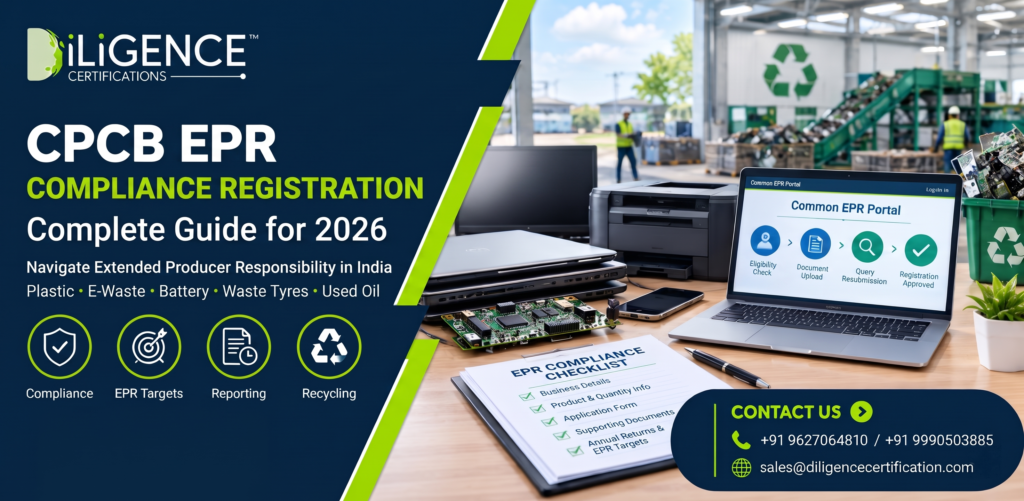
- CPCB EPR compliance registration is needed for businesses that fall under the Extended Producer Responsibility rules.
- The right CPCB EPR compliance registration path depends on the waste category and the company’s role whether it is a producer, importer, brand owner, manufacturer or processor.
- Applicants must gather business information, product details and supporting documents before they begin the CPCB EPR compliance registration process.
- The Common EPR Portal is now the starting point for plastic packaging EPR activities, after the June 2026 transition.
Introduction:
Imagine you run a business that sells packaged food, cosmetics, electronic products or household items. Your products are doing orders are going up and you are getting ready to go into new markets. Then someone asks if your business has met all the rules.
Many business owners only think about this question after their business has grown. They might already have GST registration, an import-export code or other business papers. They might not have checked if Extended Producer Responsibility (EPR) applies to their products or packaging.
This is when CPCB EPR compliance registration becomes important. It helps businesses that are covered by the rules meet their registration and environmental waste-management duties.
EPR is not another certificate to keep in a file. Depending on the rules that apply a business might need to register report the number of products or packaging meet waste-management targets keep records and submit returns.
The exact rules depend on what the business does. An importer of equipment might have different responsibilities from a brand owner that sells products in plastic packaging. A recycling company also has rules that’re different from those of a producer.
There is another change coming for businesses in 2026. The old CPCB plastic packaging EPR portal stopped accepting operations from 28 June 2026 and information from existing registered units was moved to the Common EPR Portal. Businesses should check the information that was moved and follow the instructions on the official system.
This guide explains the registration process, in English including the documents to get ready common mistakes to avoid and the steps that might be needed after registration.
What Is CPCB EPR Compliance Registration?
CPCB means the Central Pollution Control Board. CPCB is an organisation that handles specific pollution‑control duties in India.
Extended Producer Responsibility or EPR puts businesses in charge of managing the waste that comes from their products or packaging as the regulations require.
In terms CPCB EPR compliance registration is the act of registering an eligible business under the proper EPR framework using the designated regulatory system.
For example a company that imports covered equipment must look at the E‑Waste (Management) Rules, 2022. A business that sells its brand products in plastic packaging should review the Plastic Waste Management Rules, 2016 and any applicable amendments.
The rules are not the same, for every waste category. Each framework can have definitions, registration requirements, targets, reporting periods and conditions.
Why is EPR registration important?
Registration helps the relevant authority identify businesses and it also helps the relevant authority monitor the applicable environmental responsibilities of regulated businesses.
For businesses the registration process also creates an opportunity for businesses to organise product information. It also helps businesses understand waste-management obligations. It helps businesses establish a reliable compliance routine.
However a company should not assume that every business needs the certificate. The first task, for a company is to establish whether the rules apply and to identify the registration category.
Who Needs CPCB EPR Compliance Registration?
The answer depends on the company’s activities, the products involved and the definitions provided in the relevant rules.
1. Producers and manufacturers
Businesses that make products covered by an EPR framework might need to register or follow rules. The specific requirements depend on the type of product and the role the business plays under the rules that apply.
2. Importers
Importers must look at whether the products they bring into India fall under EPR rules. Importing equipment, batteries, tyres or items wrapped in plastic packaging can bring up different compliance questions.
3. Brand owners
A company that sells goods under its brand must look at its duties for the packaging that gets the goods to customers.
For example a business that sells shampoo in bottles or packaged snacks under its own label should check the rules, about plastic packaging provisions instead of assuming the packaging supplier has taken care of all duties.
4. Recyclers and waste processors
Businesses recycling or processing regulated waste may have their own registration requirements. Their role is different from that of a producer purchasing eligible EPR certificates.
Does every small business need EPR registration?
Not necessarily. Whether it applies depends on the rules that’re in place the type of business and any special exemptions or other arrangements that may exist.
Small businesses must not think that having a low turnover automatically frees them from any rules. Likewise small sellers should not think that every kind of EPR registration is needed for them.
Take the example of a seller who buys finished items from another Indian company and then sells them. That seller’s situation may be different from a business that imports those items or sells them under its brand.
The best way to decide is to look at what the business actually does and, at the definitions that apply before determining whether EPR registration is necessary.
Types of EPR Registration in India
CPCB EPR compliance registration covers several regulatory areas. A company should identify the relevant category before preparing its application.
Plastic packaging EPR registration
In my view the Plastic Waste Management Rules, 2016 and their amendments give the framework for plastic waste management. The EPR guidelines introduced in 2022 explain the duties for producers, importers and brand owners who are commonly called PIBOs.
Depending on the category a business belongs to and the way it registers a business might have to give packaging information report the amounts of plastic meet the obligations and file returns. The right path, with the CPCB or the State Pollution Control Board or the Pollution Control Committee must be confirmed by checking the rules and the portal instructions.
E-waste EPR registration
The E-Waste (Management) Rules, 2022, establish the framework for covered electrical and electronic equipment.
Specified manufacturers, producers, refurbishers and recyclers have registration requirements according to their respective roles. Producer obligations may include recycling targets and the use of eligible EPR certificates from registered recyclers.
Businesses should check the current rules and amendments before filing.
Battery waste EPR registration
Battery Waste Management Rules, 2022 and later changes set rules for all Battery activities that are covered. Producers and other regulated bodies must figure out which category they belong to and what registration work they must do. I think Battery compliance should not be treated automatically if a plastic packaging or e-waste registration is already, in place.
Waste tyre EPR registration
The tire waste framework applies to businesses and activities that involve tires that are covered. Companies that make bring in. Sell these products need to look at the latest definitions and the rules for signing up. The tire waste framework applies to businesses and activities that involve tires that are covered. Companies that make bring in. Sell these products need to look at the latest definitions and the rules, for signing up.
Used oil EPR registration
Certain entities that handle used oil may need to register and follow waste management rules under the hazardous waste laws and their updates.
The right process depends on what the company does and the rules that are in place.
Important: These categories are a general summary, not a full legal conclusion. A business might have to look at, than one set of rules if its products include different regulated materials.
How to Apply for CPCB EPR Compliance Registration Online
The application process varies by category, but the following steps provide a useful starting point.
Step 1: Identify your business category
Begin by explaining your business in words.
Are you making products bringing in finished goods selling goods under your brand or handling waste? Write down the products and materials that matter. This helps you find the EPR framework to review.
A business that sells packaged cosmetics may need to look at packaging duties. If the same business also brings in equipment new questions may come under a different framework.
Do not pick a registration category just because it looks like your business.
Step 2: Visit the official portal
For plastic packaging EPR, use the CPCB Common EPR Portal:
The earlier plastic packaging EPR portal states that it was discontinued for new operations from 28 June 2026. Existing registered units should verify their migrated data and report discrepancies through the current portal process.
Existing users were also instructed to use matching authorised-person PAN and company PAN details when linking accounts. Check the latest instructions before creating or linking an account.
Other waste categories may have dedicated registration modules. Follow the official portal instructions for the category you have identified.
Step 3: Prepare the required documents
Collect the business details and supporting information requested by the relevant application.
Depending on the category, this may include:
- PAN and business registration details.
- GST details, where applicable.
- Authorised person’s information.
- Registered office and manufacturing-unit details, where relevant.
- Product names, categories and specifications.
- Import information, where applicable.
- Production, sales or packaging quantities for the required period.
- Recycler or processor details, where required.
- Declarations and other documents specified by the portal.
This list is a preparation guide. The exact mandatory documents must be confirmed from the current category-specific instructions.
Step 4: Complete the application
Please enter the information that is asked for carefully.
Make sure that the official name, the address, the details, about the product and other information match the documents that support them.
If the application wants to know about sales or the amount produced in the past use the business records instead of guesses.
For a company that sells products in package types table can be helpful to create a table that shows each product the type of packaging and the correct amount. Table helps to look at the information before sending it in.
Step 5: Upload the supporting documents
Make sure each file is clear and easy to read. Use the file types and sizes allowed by the portal.
Double-check that the documents back up the details you entered in the application.
If you need to submit a declaration or authorisation be sure it’s signed by the person.
Keep copies of all documents you send. The confirmation you get after submitting.
Step 6: Respond to queries
The authority might ask for info or need something explained. Read the message carefully.
Reply using the process they tell you to use.
For example if the amount you reported doesn’t match what’s in your records you may need to explain why or fix a mistake.
Save all your answers and any documents you send with them. This helps keep your application history clear and easy to follow.
Step 7: Check the registration outcome
Use the system to follow your application.
If your registration is approved look at the certificate. Make sure the business name, address and category are correct.
Save the certificate with your application files.
Also note any conditions, reporting duties or other rules that come with your registration. Keep track of them so you don’t miss anything.
Documents Required for CPCB EPR Compliance Registration
Document requirements differ by waste category, so it is better to prepare a checklist based on the actual application rather than use the same folder for every registration.
| Document or information | Purpose |
| PAN and business details | Identifies the applicant |
| GST details, where applicable | Supports business verification |
| Authorised person’s information | Establishes the application contact |
| Product or packaging details | Identifies the relevant products and materials |
| Production, sales or import data | Supports applicable quantity reporting |
| Unit or factory details | Relevant where required for the activity |
| Recycler or processor information | Supports category-specific requirements |
| Declarations and supporting records | Meets the instructions for the application |
How to avoid document-related delays
Use business details throughout the application and all supporting documents. If the company has moved to an address or if the authorised person has changed, check whether the records need to be updated.
Importers should make sure their product records and import records are organised. Brand owners should keep packaging specifications. The relevant sales data up, to date. Manufacturers should have production information and product information that can back up the numbers used in the application.
A document being present does not automatically mean it is enough. The requirements of the authority are the most important thing to follow.
What Happens After EPR Registration?
Receiving a registration certificate is an important step, but businesses should check what obligations continue afterwards.
Fulfil applicable EPR targets
Some frameworks set targets based on product quantities, historical sales, waste generation or other prescribed calculations.
Maintain a record of the target, relevant reporting period, progress and evidence needed to demonstrate compliance.
Work with eligible recyclers
Where the rules require the use of EPR certificates or registered waste processors, verify the eligibility and registration status of the relevant party.
Keep the necessary certificates, invoices, transaction records and supporting evidence. A payment receipt alone may not demonstrate that an environmental obligation has been fulfilled.
File applicable returns
Some EPR frameworks require periodic or annual returns. The reporting schedule differs across categories and may change through official notifications.
For example, the CPCB e-waste portal publishes category-specific notices and reporting updates. Businesses should follow the current official schedule for their registration rather than rely on a deadline copied from an old article.
Maintain records
Keep registration certificates, application copies, relevant quantity records, returns, certificates and official correspondence together.
Good record-keeping makes it easier to answer queries and identify missing information before the next reporting period.
Common Mistakes to Avoid
A few simple checks can prevent avoidable compliance problems.
Choosing the wrong category: Identify the business role and applicable rules before applying.
Entering inconsistent details: Check PAN-linked information, legal names, addresses and authorised-person details.
Reporting inaccurate quantities: Use records that support the figures submitted.
Assuming registration means complete compliance: Check applicable targets, returns, certificates and other conditions.
Ignoring portal updates: Existing plastic EPR users should verify migrated records on the Common EPR Portal.
Working with ineligible processors: Where required, verify the registration status of recyclers and processors.
Leaving reporting until the last day: Assign responsibility for tracking deadlines and reviewing the data before submission.
What Are the Consequences of EPR Non-Compliance?
Consequences depend on the applicable rules, the nature of the breach and the action taken by the competent authority.
Depending on the framework, non-compliance may lead to notices, directions to correct deficiencies, environmental compensation where provided by the rules, or other regulatory action.
Businesses should not assume that every missed obligation can be resolved simply by submitting a late return. If a gap is identified, determine which requirement and reporting period are affected, review the relevant rules and take corrective action through the appropriate process.
Keeping accurate records throughout the year is generally more manageable than trying to reconstruct missing information after a notice arrives.
How to Maintain EPR Compliance Throughout the Year
A practical compliance routine can help businesses manage their responsibilities without leaving everything until the reporting deadline.
- Maintain a product register. Record the products and packaging materials relevant to the business.
- Review quantities regularly. Compare sales, production, imports and packaging information with the records used for reporting.
- Track applicable targets. Record the relevant period, target and progress.
- Check recycler records. Verify eligibility and retain supporting documents for relevant transactions.
- Monitor official updates. Review amendments, portal notices and changes to filing instructions.
- Prepare returns in advance. Leave enough time to resolve differences in the underlying data.
- Review business changes. New products, additional packaging or changes in import activity may affect the applicable obligations.
CPCB EPR Compliance Registration for Importers and Online Brands
Importers and online businesses should take a look at their products and supply chains. They should not assume that a supplier or marketplace has taken care of all requirements.
Take the example of a business that imports rechargeable electronic devices. Sells them on its own website. This business needs to check things. It must consider the e- regulations that apply. It also needs to look at rules for batteries.. It should review the plastic packaging used to ship the products.
These are all compliance issues. Just because one registration is in place does not mean it covers all the materials involved.
Now think about a brand that sells personal-care products in packages. This brand should carefully review the packaging materials. It must understand its role, under the environmental rules. It also needs to know what information is required to report the quantities of products being sold.
A simple compliance spreadsheet can help:
| Information | Example |
| Product | Rechargeable electronic device |
| Business role | Importer or own-brand seller |
| Material | Electronic equipment, battery or packaging |
| Applicable framework | To be confirmed for each category |
| Registration status | Pending, submitted or granted |
| Ongoing action | Reporting, targets or other applicable duties |
These are illustrative examples, not claims about actual clients. They show why reviewing products individually is often more useful than assuming that one broad registration covers the entire business.
Why Choose Diligence Certifications for CPCB EPR Compliance Registration Certification?
For businesses the hard part isn’t just filling out an online form. Its figuring out which rules are important gathering the information and knowing what to do after signing up. Diligence Certifications offers help with following the rules, for businesses that need advice on the steps to take. Before starting a business should get an explanation of the correct type the papers needed and the steps to take when getting ready to apply.
A useful consultation should cover:
- An initial review of the business activity and applicable EPR category.
- A category-specific document checklist.
- Guidance on the relevant portal and application information.
- Help identifying inconsistencies in supporting records.
- An explanation of ongoing reporting or other obligations, where applicable.
For information about the companys compliance work go to Diligence Certifications.
For help with the category look at its CPCB and environmental compliance services.
Before hiring a consultant ask what the service covers, who will manage the account how questions about the application will be dealt with and if there is support for ongoing compliance.
A consultant can help with organizing the process. The final decision, about registration is made by the authority that has the power to do so. No private company can promise approval. Take away a legal responsibility.
Conclusion
CPCB EPR compliance registration is an important part of environmental compliance for businesses covered by India’s EPR frameworks. The process begins with understanding the business category, preparing accurate information and using the correct official registration system.
Importers, manufacturers, brand owners and online sellers should pay particular attention to their products, packaging and the materials they introduce into the market. Registration is only one part of the process; applicable targets, returns, eligible recycling arrangements and record-keeping may also need attention.
If you are unsure where your business stands, begin by reviewing your products and activities against the relevant rules. Organising the information early can make the application and ongoing compliance easier to manage.
Diligence Certifications can help you understand the relevant compliance pathway and prepare for the registration process. Before filing, verify the latest requirements through the official portal and applicable notifications.
Frequently Asked Questions
1. What is CPCB EPR compliance registration?
It is the process of registering an eligible business under the applicable Extended Producer Responsibility framework. The requirement depends on the waste category, products and business activity.
2. Who needs CPCB EPR registration in India?
Specified producers, importers, brand owners, manufacturers, recyclers and other regulated entities may need registration. The exact requirement depends on the applicable rules.
3. How can I apply for CPCB EPR registration online?
Identify the relevant category, review the official instructions, prepare the required documents, access the designated portal, submit the application and respond to any queries.
4. What documents are required for EPR registration?
Depending on the category, documents may include PAN, business details, GST information where applicable, authorised-person details, product information and relevant production, sales or import records.
5. Is EPR registration mandatory for small businesses?
It may be mandatory when a business falls within an applicable framework. Specific exemptions or alternative arrangements may exist under certain rules, so eligibility should be checked carefully.
6. Has the CPCB plastic EPR portal changed in 2026?
Yes. The earlier plastic packaging portal was discontinued for new operations from 28 June 2026, and existing user data was migrated to the Common EPR Portal. Existing users should verify their records and follow current instructions.
7. Does EPR registration need renewal?
Validity and renewal requirements depend on the relevant framework and registration conditions. Check the current certificate and official portal guidance.