



 BIS Certification
 CDSCO
CDSCO
 CPCB
CPCB
 LMPC
LMPC
 WPC Approval
 Global Approvals
 TEC
TEC
 ARAI
ARAI
 BEE
BEE
 ISO Certification
 DGCA Certification
 NOC For Steel
 APEDA Registration

















 Business Registration
 FSSAI Mark Certification










 Legal Services
 Trademark Registration
 Copyright Registration
 Patent Registration
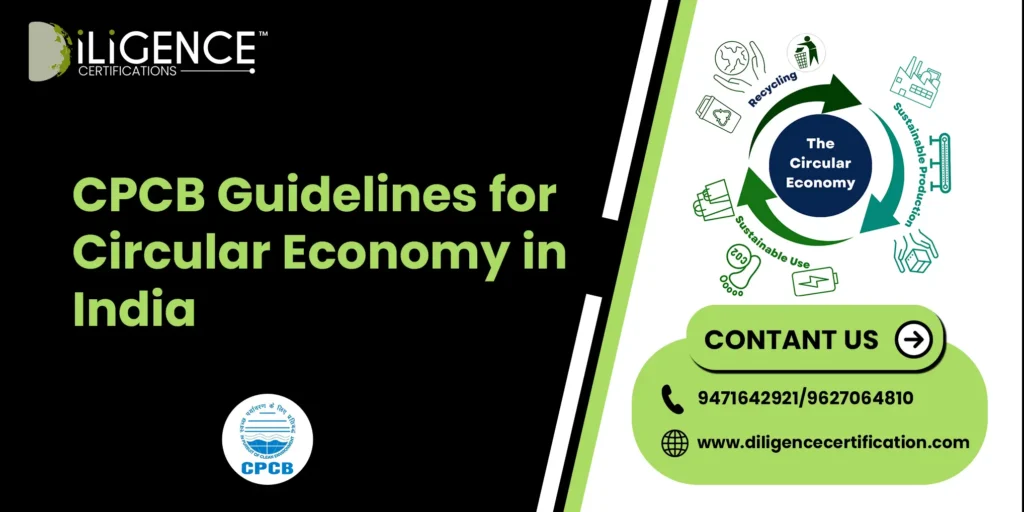
- Regulatory Alignment: The CPCB Guidelines for Circular regulations according to the guidelines provide the underlying support to the industry to start practicing circular economy principles.
- Waste Minimination: Main effort will be put on cutting down production waste, aviating its landfill disposal, and coming up with new products from the recycled industrial waste, thus achieving sustainability goals.
- Enhanced Compliance: Environmental laws are followed and legal risks are cut down by conforming to these guidelines.
- Operational Efficiency: The use of resources economically causes costs to go down and makes the company a sustainable one in terms of business in the long run.
- Brand & Investor Confidence: The businesses that go for a circular economy are able to build up trust among the regulatory authorities, investors, and partners.

Introduction
India has increasingly embraced the CPCB Guidelines for Circular concept, especially in the manufacturing and industrial sectors. The Central Pollution Control Board (CPCB) has issued thorough guidelines with the aim of promoting the transition of industries from linear “take-make-dispose” models to ecology-friendly circular systems. Central Pollution Control Board
An example of such a transition is the case of a plastics manufacturer in Gujarat that implemented circular economy practices by reusing industrial scraps and introducing waste-to-resource initiatives. In addition to compliance with the CPCB Guidelines for Circular guidelines, this move cut down the manufacturer’s operational costs and brought in ESG-focused investors.
The CPCB Guidelines for Circular Economy in India serve as a precise and systematic guide for the industries to interact with the resources in a way that is efficient, to reduce the environmental impact and also to gain more trust in compliance.
What Is the Circular Economy?
A circular economy is an eco-friendly industrial method that prevents waste, makes maximum use of resources, and supports the recycling, reusing, and proper throwing away of the materials.
The key principles are:
Reduce: Having the least possible waste coming from the source.
Reuse: Finding new uses for used products or materials.
Recycle: Turning waste into the new materials for production again.
Recover: Taking energy or value out of the left-over waste.
The guidelines of the CPCB aid the industries in applying these principles without violating the Indian environmental laws.
What Are CPCB Guidelines for Circular Economy in India?
CPCB Guidelines for Circular has issued these guidelines with the objective to require the industries to implement the environmentally friendly resource management practices and at the same time measure up to the standards set by the following regulations:
- Air (Prevention and Control of Pollution) Act
- Water (Prevention and Control of Pollution) Act
- Environment Protection Act
- Hazardous Waste Management Rules
- Plastic Waste Management Rules
The guidelines point out the necessity of the following:
- Effective waste management systems in place
- Keeping a record and reporting of materials and emissions
- Transition to using green practices in production and recycling
- Incorporation into the requirements of the Extended Producer Responsibility (EPR) scheme
Key Components of CPCB Circular Economy Guidelines
| Component | Details |
| Waste Management | Proper segregation, storage, and treatment of hazardous & non-hazardous waste |
| Resource Efficiency | Optimizing raw material usage and energy consumption |
| Recycling & Reuse | Processes to recover materials for industrial reuse |
| Monitoring & Reporting | Regular compliance reports submitted to CPCB/SPCB |
| EPR Integration | Ensuring producers take responsibility for product lifecycle |
Why Following CPCB Guidelines Is Important
Disregarding the rules of the circular economy can result in the following consequences:
- Legal penalties and fines
- Higher operating expenses due to waste
- Environmental harm and low ESG ratings
- Withdrawal of investor confidence
Advantages of CPCB Guidelines for Circular Compliance:
- Security from regulation and legal compliance
- Green manufacturing and resource-efficient
- Less waste and less impact on nature
- Better reputation and more trust among investors
Step-by-Step Approach to Implement Circular Economy
Step 1: Carry Out Resource Assessment
Evaluate the input and output of materials, disposal of wastes, and the use of resources throughout your production procedures.
Step 2: Connect Waste Management Systems
Put in place recycling facilities, classify waste, and implement energy recovery methods.
Step 3: Observe and Notify
Ensure that you have precise documentation for CPCB compliance regarding waste, emissions, and resource utilization.
Step 4: Staff Instruction & Consciousness
Incorporate into the training program the topics of circular economy, the workers’ safety, and environmental responsibilities.
Step 5: Evaluate & Ongoing Improvement
Do frequent reviews and revise the processes in order to achieve higher efficiency and better compliance.
Documents Required for CPCB Circular Economy Compliance
- Company incorporation certificates
- SPCB / CPCB consent to establish / operate
- Waste management system details
- Monitoring and reporting logs
- Recycling and EPR compliance records
- Employee EHS & sustainability training documents
Timeline, Validity & Renewal
| Item | Timeline |
| Compliance Setup | 30–60 working days (depends on industry) |
| Certification Validity | Up to 5 years |
| Renewal | Submission of updated monitoring and compliance reports before expiry |
Conclusion
CPCB guidelines for circular economy in India are no longer just rules but a strategic route for the eco-friendly and resource-savvy industrial conduct. Industries that embrace these practices take advantage of not only legal compliance but also operational savings, trust of investors, and a better ESG profile.
In the present business environment aligning CPCB certification with CPCB Guidelines for Circular principles is not merely a case of regulatory compliance but rather an issue of gaining competitive advantage as well as being able to proceed on the road of sustainable growth in the long run.
Frequently Asked for Questions
What are CPCB guidelines for circular economy in India?
They are practically the same as regulatory guidelines but issued by CPCB to attract industries end of the line practices that involve waste reduction, recycling, and sustainable resource use.
Why are CPCB circular economy guidelines important for industries?
They provide industries with a way to cut down on waste, add to their compliance rating, and finally, make them adopt environmentally friendly practices.
Which laws support CPCB circular economy guidelines?
They fit perfectly with the Environment Protection Act, Air Act, Water Act, and the rules for handling waste.
Who must follow CPCB circular economy guidelines?
The manufacturing units, recyclers, waste processors, and businesses creating waste that is under regulations have to obey these guidelines.
How do CPCB guidelines promote waste minimization?
They are the ones who advocate for putting an end to waste at the source, carrying out recycling, and then reusing and recovering industrial waste.
Are CPCB circular economy guidelines linked with EPR?
Yes, the guidelines are interwoven with Extended Producer Responsibility for product life cycle waste management.
Does circular economy compliance reduce legal risks?
Yes, it minimizes the chances of incurring penalties, getting non-compliance notices, and undergoing regulatory actions.
What documents are required for CPCB circular economy compliance?
The documents consist of waste management plans, monitoring reports, EPR records, and SPCB/CPCB consents.
How long does it take to implement CPCB circular economy practices?
The usual time for implementation is 30-60 working days, but this may vary according to the size and complexity of the industry.
What is the main benefit of following CPCB circular economy guidelines?
It provides a guarantee of compliance with the latest regulations while at the same time boosting operational efficiency, ESG performance, and trust from investors.