 BIS Certification
 CDSCO
 PESO
 CPCB
 LMPC
 WPC Approval
 Global Approvals
 TEC
 ARAI
 BEE
 ISO Certification
 DGCA Certification
 NOC For Steel
 APEDA Registration













 Business Registration
 FSSAI Mark Certification










 (32).jpg)
 Legal Services
 Trademark Registration
 Copyright Registration
 Patent Registration
 By
- An e waste EPR consultant India helps businesses understand CPCB registration requirements and identify the correct category under the E-Waste (Management) Rules, 2022.
- Manufacturers, producers, refurbishers and recyclers must check their applicable registration and compliance obligations.
- Required documents may include company registration details, PAN, GST information, product details and environmental permissions, depending on the business category.
- EPR compliance may involve recycling targets, eligible EPR certificates, record maintenance and periodic returns after registration.
- Choosing an experienced consultant can help businesses prepare accurate applications, respond to regulatory queries and manage ongoing e-waste compliance.
Introduction
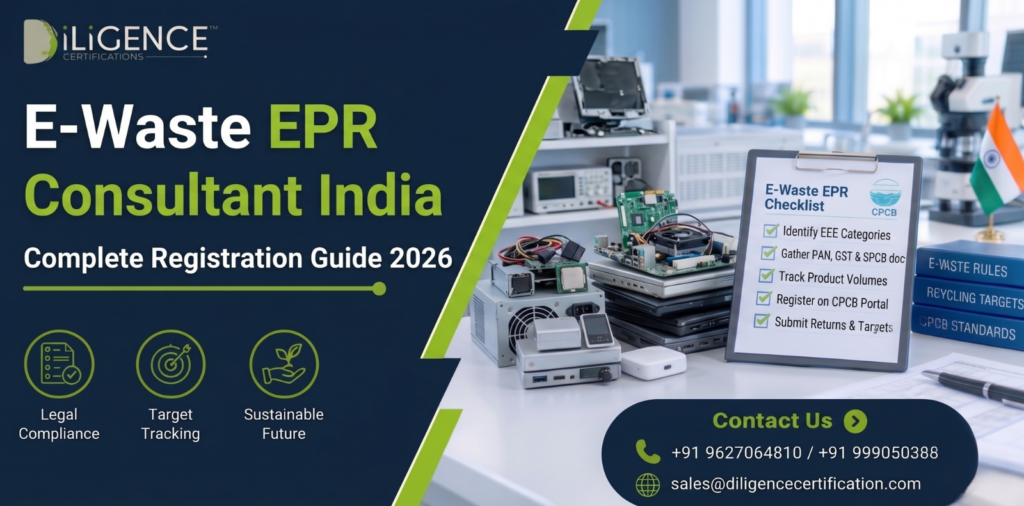
E-Waste EPR Consultant India Complete Registration Guide 2026 Imagine a company bringing laptops and computer accessories into India. Sales are increasing dealers are placing orders and the business is set to grow. Then someone asks a question: does the company have the necessary EPR registration for its electronic products?
The management team might think that GST registration, import documents and product certifications are enough.. These documents are for different reasons. If the business is covered by the E-Waste (Management) Rules, 2022 it needs to check its registration and environmental compliance
This is when an e waste EPR consultant India can be useful. A consultant can look at the companys business activities find the category gather the needed information and help with the application process through the right Central Pollution Control Board (CPCB) portal.
The rules apply to more, than companies that recycle old electronics. Depending on what the company does and what products it handles, manufacturers, producers, refurbishers and recyclers may have registration and compliance duties.
What Is E-Waste EPR Registration?
E-waste Extended Producer Responsibility (EPR) is a rule system that gives duties to companies that are part of Indias e-waste rules.
Under the E-Waste (Management) Rules, 2022 which started on 1 April 2023 companies that are included must sign up in the group on the special website. Producers also need to complete their EPR duties using the system.
In words EPR links the selling or making of electronic products to the job of handling the waste that comes from those products when they are no longer useful.
For example a company that sells products under its own brand may need to check what producer registration is needed. A company that gathers and processes electronics to get materials back has a different job and must look at the rules, for recyclers.
The right way to go depends on what the business does which products it deals with.
Who Needs an E-Waste EPR Consultant in India?
An e‑waste consultant is helpful when a business is not sure about its registration category, its paperwork or its ongoing duties. First you should check whether the rules that apply to the business are in force.
1. Manufacturers of electronic products
Businesses that make electronic equipment that appear on Schedule I should look at the registration rules that apply. They may also need to look at their State Pollution Control Board (SPCB) permissions and the reports they must send depending on how they run the business.
2. Producers, importers and brand owners
A producer can be a manufacturer or a seller that works under its brand as the rules say. Importers of the electronic equipment must also look at their duties.
An online seller must not think that selling through a marketplace takes away its responsibilities. The way the business works the type of product and the legal meaning of a producer all need to be looked at.
3. E‑waste recyclers
Recyclers take broken electronic equipment and turn it into useful materials. They must check the CPCB registration steps the needs for their facility the environmental permissions they need and the reports they must file.
A recyclers registration is not the same as a producers registration.
4. Refurbishers
A refurbisher. Puts together used equipment to make it work for longer as the rules say. The rules may ask for registration and reports. Also for handling the waste that comes from the refurbishment.
5. Businesses managing activities
Some firms make equipment sell it under their own brand and also do refurbishment. If a firm is in, than one regulated category it may need separate registrations as the rules say.
An e‑waste consultant should look at each activity separately than treating the whole business as one registration case.
What Does an E-Waste EPR Consultant in India Do?
A good consultant does more than fill in an online application. The purpose is to help a business understand the rules, prepare reliable records and follow the correct procedure.
Typical support may include:
- Reviewing the company’s business model and electronic product categories.
- Identifying the relevant registration category.
- Preparing a document checklist based on the applicable CPCB procedure.
- Checking company details and product information for inconsistencies.
- Guiding the online application and document submission.
- Helping the business understand CPCB queries and prepare responses.
- Explaining applicable EPR targets, certificate requirements and return filing.
- Helping organise records for future amendments, reporting and compliance reviews.
The exact scope should be agreed before the engagement begins. A consultant can provide guidance and application support, but the regulator decides whether an application meets the requirements.
Documents Required for E-Waste EPR Registration
There is no single document list that fits every applicant. Requirements differ between producers, manufacturers, recyclers and refurbishers. The relevant standard operating procedure should be checked before the application is submitted.
The following are common preparation items.
| Document or information | Why it may be required |
| Company incorporation or business registration documents | To establish the applicant’s legal identity |
| PAN and GST details, where applicable | To verify business and tax information |
| Authorised signatory details | To establish who can submit or confirm the application |
| Registered office and contact details | To maintain accurate applicant records |
| Product details and applicable categories | To determine the relevant product coverage |
| Brand and manufacturing information | To support producer or manufacturer applications |
| Sales and import records | To help assess producer information and EPR obligations |
| Technical or product information | To support the details submitted for covered equipment |
| Consent to Operate and other environmental permissions | Where required for the particular facility and category |
| Facility and process information | Particularly relevant to recycling and refurbishment operations |
| Declarations and prescribed forms | As specified in the applicable CPCB procedure |
Important: This is a preparation checklist, not a guarantee that every item is mandatory in every case. For instance, recycler applications may require valid Consent to Operate under the Air and Water Acts and other permissions specified by the applicable procedure. Requirements for a producer selling electronic products are different.
Before uploading files, check that company names, addresses, product descriptions and other details match the supporting records. Even a small mismatch can lead to additional questions.
E-Waste EPR Registration Process: Step by Step
The application should follow the current procedure for the relevant category. A typical process looks like this.
Step 1: Identify the category
Decide if the applicant is a manufacturer, a producer, a refurbisher or a recycler. If the company carries out activities the company must check if separate registrations are needed.
Step 2: Review product coverage
For manufacturers and producers I examine if the equipment appears in Schedule I of the E-Waste (Management) Rules, 2022. I do not determine the classification by looking at the commercial name of the product. The E-Waste (Management) Rules, 2022 also contain exclusions. Overlap with other waste‑management systems. For example batteries and plastic packaging are handled under the rules.
Step 3: Prepare the documents
I collect the business, product, facility and environmental records. I use the CPCB operating procedure as the final reference, for the document list.
Step 4: Apply through the designated portal
Create the account and complete the application, in the relevant category. Enter information and upload the prescribed documents. Always confirm the portal instructions before starting as registration systems and procedures can change.
Step 5: Respond to questions or deficiencies
If the regulator requests information review the regulators query carefully. The regulators response should address the regulators issue and include the regulators supporting documents where necessary. Avoid uploading material simply to make the regulators application appear complete.
Step 6: Review the registration details
After registration is approved look at the certificate and the information that was recorded. Make sure the name of the person who applied is correct. Check the category they’re, in and any other important details.
Step 7: Maintain ongoing compliance
Registration is not the step. Businesses should keep records. They must track all EPR obligations. They also need to file returns. This must be done according to the rules. They must follow the schedule as well.
What Are E-Waste EPR Targets and Certificates?
EPR targets and certificates are parts of the compliance system for producers who fall under the rules. A producer’s recycling obligation is decided based on the rules and schedules. The producer has to meet that obligation using the approved system. This includes buying EPR certificates from registered recyclers through the official portal, where needed.
Registered recyclers create EPR certificates based on recycling activities and the rules set for the portal. Producers can use these certificates to fulfill their recycling duties.
Take an electronics brand selling products in India for example. The brand cannot collect a few devices and think that its legal duty is done. It must know its assigned EPR target. Follow the official process laid out by the rules.
Similarly a recycler should not believe that every kilogram of material they handle automatically earns an EPR certificate. What counts as recycling the final products made, proper documentation and portal compliance all matter a lot.
An e-waste EPR consultant, in India can help companies understand the process and keep their records in order.. The final obligation and the number of valid EPR certificates depend on the official rules and regulations.
E-Waste EPR Compliance After Registration
Many businesses pay a lot of attention to getting the certificate. They often don’t focus enough on the work that comes after. This can lead to issues down the line.
Quarterly and annual returns
The rules require businesses to file returns. Companies need to figure out which returns are needed for their type of operation and keep a calendar based on the latest filing dates. The official portal sometimes shares updates or extensions so always check the instructions instead of using an old deadline from another site.
Sales and product records
Producers must keep records of their products and sales. These records are important for meeting registration and extended producer responsibility (EPR) requirements. If there are changes in product lines, brands or how the business runs these changes may need to be reviewed and updated in the system.
Recycling and certificate records
Producers should keep records showing how they fulfilled their EPR duties. Recyclers must keep documents and transaction details that prove recycling activities and help generate certificates.
Changes in company information
If the company name, address, product range or any other key detail changes check if a formal amendment is needed. Don’t assume that a certificate issued earlier still covers all changes.
Environmental permissions
For businesses operating from a facility it’s important to keep all required permits and approvals up to date. A CPCB registration is not a substitute, for environmental consents. Each operation may need approvals and those must be maintained.
Common E-Waste EPR Registration Mistakes
Avoidable compliance problems start with wrong information or not fully understanding what the business is responsible for.
Picking the category is a common mistake. A producer and a recycler have rules. The application must match the work being done.
Don’t assume every electronic device falls under the rules. Check the schedule and definitions before classifying a product.
Inconsistent records cause delays. Make sure the legal entity name, GST number, address and documents all match. Mismatches trigger queries.
Registration does not cover everything. If a company is in than one regulated area it must check if separate registrations are needed.
After approval don’t stop reporting. Registration doesn’t end the obligation to file returns. Continued reporting is required.
Working with partners is not allowed in many cases. The rules say registered businesses cannot deal with unregistered entities. Always check the registration status of business partners.
Beware of promises, from consultants. No one can guarantee approval. Say a regulator will never question anything. Be careful of anyone who claims to control the outcome.
The best way to stay compliant is to check the rules gather and prepare all documents properly and set up a compliance calendar after registration. Keep track of deadlines and requirements throughout the year.
How to Choose the Right E-Waste EPR Consultant in India
Price matters, especially for small and medium-sized businesses. But the cheapest quote is not always the most useful one.
Before appointing a consultant, ask these questions:
- Do they understand your business category? They should be able to explain why the proposed registration route fits your activity.
- Will they review your documents before submission? A clear review process can help identify avoidable inconsistencies.
- Do they explain ongoing duties? Ask about returns, EPR targets, certificates and amendments relevant to your case.
- Is the service scope written down? Clarify whether the fee includes document review, application support, responses to queries and post-registration guidance.
- How will they communicate updates? You should know who will handle your case and how you will receive information.
- Are their claims realistic? Registration decisions and timelines depend on the applicable procedure, documents and regulatory review.
A dependable consultant should explain both the work they can do and the responsibilities that remain with your company.
Why Choose Diligence Certifications for E-Waste EPR Consultant India Certification?
Businesses often need more than help with a form. Businesses need an explanation of which requirements apply which documents to prepare and what they must do after registration.
Diligence Certifications provides certification and regulatory compliance support including guidance related to waste registration. Diligence Certifications role in your case should be agreed according to your business activity and the service scope you require.
You can start by visiting the Diligence Certifications homepage to learn about Diligence Certifications compliance services.
For e‑waste‑specific information review Diligence Certifications E‑Waste Certification service page. Use the discussion to clarify your category, product coverage, document requirements and any continuing compliance support you may need.
Before proceeding ask for a written scope of work. Confirm what is included in the service. Regulatory approval remains subject, to the rules and the decision of the relevant authority.
Conclusion
E-waste compliance should be part of a company’s operating plan, not something addressed only when a customer or regulator asks for documents.
The right approach starts with understanding the business activity, confirming product coverage, choosing the correct registration category and preparing accurate information. After registration, the business must continue to meet the obligations that apply to it.
An experienced e waste EPR consultant India can help make this process easier to understand and manage, but the company must provide correct information and follow the applicable rules.
Frequently Asked Questions
1. What is an e-waste EPR consultant in India?
An e-waste EPR consultant helps businesses understand applicable registration requirements, prepare documents, navigate the CPCB application process and manage relevant compliance duties. The exact service depends on the applicant's category and requirements.
2. Is EPR registration mandatory for electronic products in India?
Registration is mandatory for entities covered by the E-Waste (Management) Rules, 2022. Businesses should check the relevant definitions, Schedule I, exclusions and their actual activities before deciding which requirements apply.
3. Who needs e-waste EPR registration
The rules provide for registration of manufacturers, producers, refurbishers and recyclers. A business that falls into more than one category may need separate registrations for those categories.
4. Which documents are required for e-waste EPR registration?
Documents depend on the applicant's category. They may include business registration details, PAN and GST information where applicable, product information, declarations and facility permissions where required. Check the current CPCB procedure for the complete list.
5. How do producers fulfil e-waste EPR targets?
Producers must fulfil their applicable obligations under the rules and prescribed portal system. This includes using eligible EPR certificates from registered recyclers as required by the applicable provisions.
Producers must fulfil their applicable obligations under the rules and prescribed portal system. This includes using eligible EPR certificates from registered recyclers as required by the applicable provisions.
Not necessarily. A recycler must also check the environmental consents, permissions and facility requirements applicable to its operation. Registration should not be treated as a substitute for other required approvals.
7. Does e-waste EPR registration need ongoing compliance?
Yes. Depending on the category, obligations may include quarterly and annual returns, record maintenance, fulfilment of EPR targets, certificate-related records and updates when business details change.
8. Can an e-commerce seller need e-waste EPR registration?
Selling online does not automatically remove EPR responsibilities. The business should examine whether it meets the applicable definition of a producer and whether its products fall within the rules.