

 BIS Certification
 CDSCO
CDSCO
 CPCB
CPCB
 LMPC
LMPC
 WPC Approval
 Global Approvals
 TEC
TEC
 ARAI
ARAI
 BEE
BEE
 ISO Certification
 DGCA Certification
 NOC For Steel
 APEDA Registration















 Business Registration
 FSSAI Mark Certification











 Legal Services
 Trademark Registration
 Copyright Registration
 Patent Registration
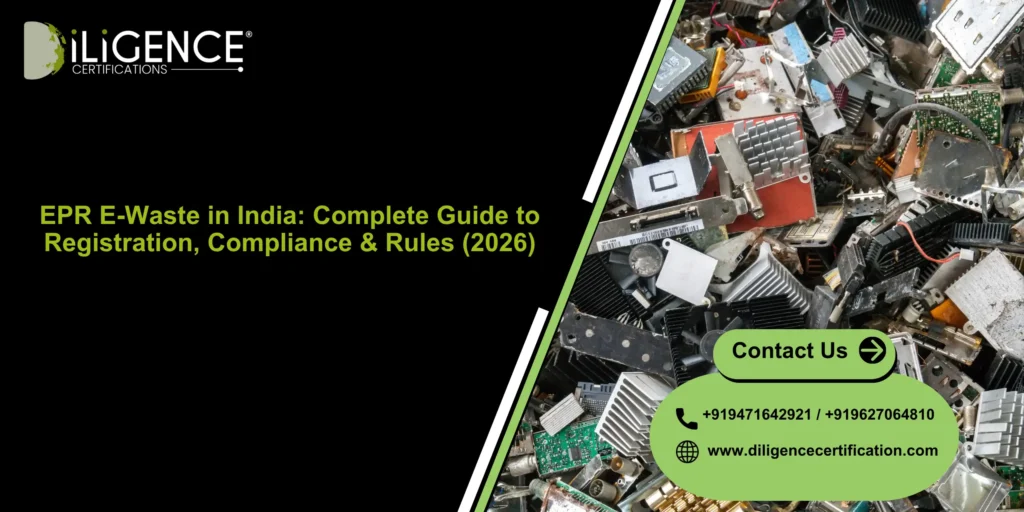
- Mandatory Compliance with EPR Regulations: EPR E-Waste in India Manufacturers, importers, brand owners, and e-commerce sellers selling electronic goods are required to be registered at the CPCB website and adhere to EPR regulations.
- Recycling Objectives: Companies are required to reach certain objectives concerning e-waste recycling per annum (initially, 60%, then increasing to 70-80% in subsequent years).
- System of EPR Credits/Certificates: Electronic waste recycling is credited with EPR credits/certificates that companies should accumulate (purchase).
- Digital Traceability and Transparency: The process of tracking recycling is conducted through CPCB websites and traceability in the digital space.
- Severe Consequences for Non-compliance with EPR Regulations: Non-compliance with EPR regulations may entail penalties in terms of environmental compensation under the provisions of environmental laws.
Introduction | EPR E-Waste in India
E-waste is among the most rapidly accumulating waste streams in India, fueled by technological innovation, consumer demand, and reduced life cycles. Electronic devices like cell phones, computers, TVs, and other household gadgets pose environmental hazards because they carry harmful substances. To combat the problem of ever-increasing e-waste, the Indian government came up with the concept of extended producer responsibility (EPR). The EPR concept mandates producers such as manufacturers, importers, and brand owners to collect and recycle the generated e-waste.
What is EPR E-Waste?
Definition of Extended Producer Responsibility for EPR E-Waste in India is a policy mechanism that imposes accountability on producers for management of all stages of life cycle of electronics products right from production till the product becomes waste. EPR policy mechanism holds the producer accountable for collection, recycling and environmentally sound disposal of e-waste created by the products of producers.
Keypoints:
- Responsibility After Product Lifecycle Completion: This responsibility applies to producers after selling their products until they reach the EOL.
- Mandatory Registration Requirement: It is mandatory for any producer of electronic products to be registered with CPCB before sale.
- Recycling Targets: The producers should attain the yearly recycling targets fixed by the government.
- EPR Certificate: The producers are required to collect EPR certificates from authorized recyclers.
- Primary Objectives: The main objective is to minimize pollution and enhance recycling.
Who Needs EPR Registration?
It is mandatory for companies that manufacture and sell electrical and electronic equipment (EEE) in India to register for Extended Producer Responsibility (EPR). This registration EPR E-Waste in India guarantees that they will be responsible for taking care of the waste created by their products after they reach the end of their lives.
Keypoints:
- Manufactures: Enterprises producing electrical and electronic equipment (EEE) inside India.
- Importers: Companies bringing electronics items/components/ spare parts to India for resale and/or use.
- Brand Owners (PIBOs): Organizations that sell their products using their own brands, whether they manufacture themselves or outsource production.
- Online sellers: E-commerce websites and online sellers trading in electronics items will have to comply with EPR requirements.
- Refurbishers (in certain instances): Refurbishers of electronics products are required to register depending on their business activity.
Products Covered Under EPR E-Waste
In accordance with E-Waste Management Rules of India, EPR will be applicable for a variety of Electrical and Electronic Equipments (EEE) which cause generation of waste upon their end-of-life use. Following is the classification of such items into categories:
- IT & Communication Equipments:
Computers, laptops, printers, scanning units, servers, mobile phones, and other network equipment.
- Consumer Electronic Products:
Televisions, refrigerators, washing machines, air conditioners, audio players, and other such items excluding filament light bulbs.
- Lighting Equipments:
LEDs, CFLs, Fluorescent lights, and other such lightings except filament light bulbs.
- Household Appliances:
Equipment like mixers, grinders, microwave ovens, electric irons, heater, etc.
- Medical & Monitoring Devices:
Medical monitoring and diagnostic equipment excluding those which have become hazardous due to infection.
Importance & Benefits of EPR Compliance
| Importance of EPR Compliance | Benefits of EPR Compliance |
| Ensures environmentally safe disposal of e-waste | Enhances brand reputation and credibility |
| Reduces pollution and health hazards caused by hazardous materials | Helps avoid legal penalties and fines |
| Promotes structured and regulated waste management systems | Improves operational efficiency through proper waste handling |
| Supports recycling and resource recovery (circular economy) | Builds customer trust and sustainability image |
| Ensures compliance with government laws and regulations | Provides competitive advantage in the market |
EPR E-Waste Registration Process (2026)
Step 1: Identify Applicability
Determine whether your business falls under EPR requirements (Manufacturer, Importer, Brand Owner, or E-commerce seller dealing with electronic products).
Step 2: Prepare Required Documents
Collect all necessary documents such as:
- Company registration details
- GST certificate
- PAN card
- Product details (EEE category)
- Authorization agreements with recyclers
Step 3: Register on CPCB Portal
Create an account on the Central Pollution Control Board (CPCB) EPR portal and fill in the required business and product information.
Step 4: Submit EPR Plan
Prepare and upload an EPR plan that includes:
- Collection mechanism
- Recycling strategy
- Agreements with authorized recyclers
- Target fulfillment plan
Step 5: Obtain EPR Registration Certificate
After verification by CPCB:
- Address any queries (if raised)
- Receive approval and EPR certificate online
- Begin compliance with recycling targets and annual reporting
Documents Required for EPR Registration
| Document Name | Description |
| Company Incorporation Certificate | Proof of business registration (CIN, Partnership Deed, or Proprietorship proof) |
| GST Certificate | Valid GST registration of the business entity |
| PAN Card | PAN of the company or proprietor |
| Authorized Signatory Details | ID proof and authorization letter of the responsible person |
| Product Details | List and specifications of electrical & electronic equipment (EEE) |
| Import Export Code (IEC) | Required for importers of electronic products |
| EPR Plan | Detailed plan for collection, recycling, and disposal of e-waste |
EPR Certificate Validity, Renewal & Fees
- Validity Period: The EPR E-Waste certificate is generally valid for 5 years, during which businesses must meet compliance and recycling targets.
- Renewal Process: Renewal must be applied before expiry on the CPCB portal with updated sales data, recycling records, and compliance reports.
- Government Fees: Fees are charged by CPCB based on type and quantity of electronic products (EEE).
- Consultancy Cost: Optional and varies depending on service providers, documentation support, and compliance complexity.
- Timeline for Approval: The approval process typically takes 15–30 working days, depending on document accuracy and CPCB verification.
Penalties for Non-Compliance
Non-conformity to the regulations of the EPR E-Waste regime can prove costly and even lead to legal repercussions for organizations. This is because the CPCB closely watches compliance levels and any organization found not meeting the requirements can be sanctioned.This EPR E-Waste in India includes the payment of Environmental Compensation (EC), which depends on the volume of e-waste not handled within set limits. Organizations that have failed to register with the CPCB or met their targets in recycling the waste will be charged Environmental Compensation.
Why Choose Diligence Certifications
Diligence Certifications is a reliable consultancy firm to help businesses register for EPR and be compliant with all the relevant laws and environmental regulations. They provide complete guidance and ensure your business gets approvals without making any mistakes or encountering any issues. Being experts in the field of EPR, they have comprehensive knowledge about its rules and regulations.
Conclusion
Following EPR E-Waste regulations in India is now compulsory for any business entity that handles electronic products. In light of growing environmental issues and new regulations in 2026, it becomes necessary for any firm to register itself, recycle the EPR E-Waste in India as per targets set by the government, and keep track of its activities through proper reporting procedures. This will help them comply with EPR E-Waste in India without fear of punishment, along with ensuring sustainable disposal of waste and environmental conservation.
Frequently Asked Questions (FAQs)
What is EPR regarding e-waste?
Producers' obligation for e-waste disposal management.
Who must register for EPR?
E-waste producers, importers, brand owners, and e-retailers.
Is EPR certification registration necessary?
It is mandatory according to Indian law.
How long does EPR certificate validity last?
Usually, 5 years.
What are the EPR objectives?
E-waste recycling goals set by CPCB.
What is an EPR Certificate?
EPR Compliance proof via authorized recyclers.
How long will it take for approval?
About 15–30 working days.
What are the consequences of non-compliance?
Fines, sanctions, and legal proceedings.
Can the EPR compliance be outsourced?
Yes, through authorized recyclers/consultants.
Where can you apply for EPR?
Via CPCB online portal.