



 BIS Certification
 CDSCO
CDSCO
 CPCB
CPCB
 LMPC
LMPC
 WPC Approval
 Global Approvals
 TEC
TEC
 ARAI
ARAI
 BEE
BEE
 ISO Certification
 DGCA Certification
 NOC For Steel
 APEDA Registration





















 Business Registration
 FSSAI Mark Certification













 Legal Services
 Trademark Registration
 Copyright Registration
 Patent Registration
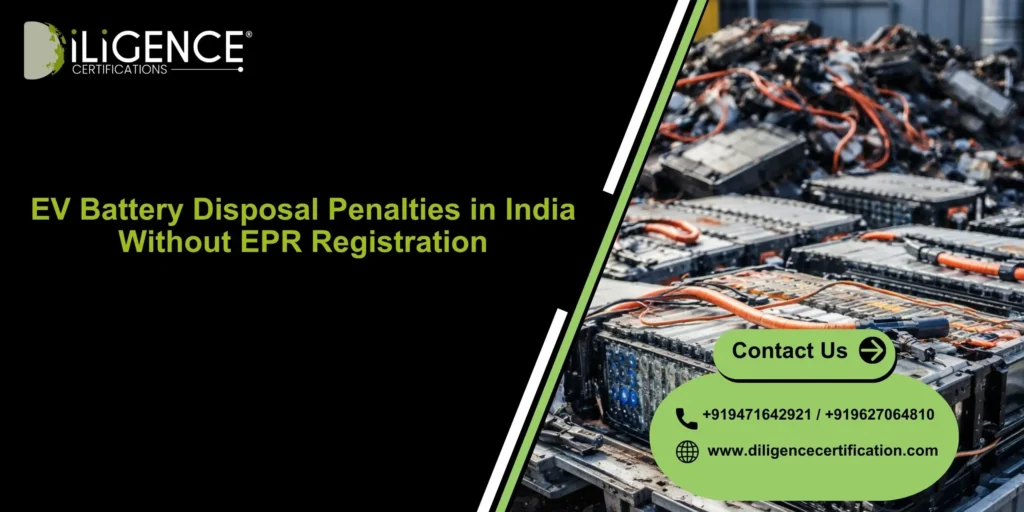
- EV Battery Disposal Penalties India EV battery producers, importers, and manufacturers must comply with Extended Producer Responsibility (EPR) under India’s battery waste rules.
- Non-compliance can lead to heavy environmental compensation, legal action, and business restrictions.
- The Central Pollution Control Board (CPCB) regulates EPR compliance for battery waste management.
- Improper disposal of EV batteries can harm the environment and public health due to hazardous materials.
- Timely EPR registration ensures legal compliance, brand credibility, and smooth business operations.
Introduction|EV Battery Disposal Penalties India
With the rapid growth of electric vehicles (EVs) in India, the use of lithium-ion batteries has increased significantly. While EVs are eco-friendly in terms of emissions, their batteries pose serious environmental risks if not disposed of properly. To address this issue, the Government of India has introduced strict regulations under the Battery Waste Management Rules, making Extended Producer Responsibility (EPR) mandatory.
EPR ensures that producers, importers, and manufacturers take responsibility for the collection, recycling, and disposal of used batteries. However, many businesses still overlook these requirements, leading to severe penalties.
This blog provides a complete legal guide on EV battery disposal penalties in India without EPR registration, along with compliance processes, benefits, and challenges.
What is EV Battery Disposal Penalties India EPR Compliance?
Extended Producer Responsibility (EPR) is a policy approach that makes producers responsible for managing the lifecycle of their products, including post-consumer waste.
In the case of EV Battery Disposal Penalties India, EPR compliance requires businesses to:
- Register with the Central Pollution Control Board
- Ensure proper collection of used batteries
- Meet recycling targets
- Work with authorized recyclers
- File regular compliance reports
The Battery Waste Management Rules, 2022 mandate that all entities dealing with batteries must follow these guidelines to reduce environmental impact.
Why EV Battery Disposal Penalties India EPR Compliance is Important
Key Reasons:
- Environmental Protection: Prevents soil and water contamination from hazardous battery chemicals.
- Legal Requirement: Mandatory under Indian environmental laws.
- Sustainable Business Practice: Promotes recycling and circular economy.
- Brand Reputation: Builds trust among eco-conscious consumers.
- Avoids Penalties: Helps businesses avoid heavy fines and legal issues.
Failure to comply can result in serious consequences, making EPR registration not just important but essential.
Penalties for EV Battery Disposal Penalties India Without EPR Registration
Businesses that fail to comply with EPR regulations for EV Battery Disposal Penalties India may face:
1. Environmental Compensation (Fines)
The government imposes financial penalties based on:
- Quantity of non-compliant battery waste
- Duration of non-compliance
- Environmental damage caused
These fines can range from thousands to lakhs depending on the violation.
2. Legal Action
Non-compliance may lead to:
- Notices from authorities
- Legal proceedings under environmental laws
- Possible shutdown orders
3. Business Restrictions
Authorities may:
- Suspend licenses
- Restrict operations
- Cancel approvals for manufacturing or import
4. Blacklisting
Companies may be blacklisted, affecting:
- Government tenders
- Partnerships
- Market reputation
5. Increased Compliance Scrutiny
Once flagged, businesses may face:
- Frequent inspections
- Strict monitoring
- Additional reporting requirements
Importance and Benefits of EV Battery Disposal Penalties India
| Importance of EPR Compliance | Benefits for Businesses |
| Ensures legal compliance | Avoids heavy penalties |
| Protects environment | Enhances brand image |
| Promotes recycling | Builds customer trust |
| Supports sustainability goals | Improves market competitiveness |
| Reduces pollution risks | Ensures smooth operations |
Process to Obtain EPR Registration for EV Batteries
Getting EPR registration involves several steps:
Step 1: Business Identification
Determine whether your business falls under:
- Producer
- Importer
- Manufacturer
Step 2: Documentation Preparation
Required documents include:
- Company registration certificate
- GST details
- Import/export license (if applicable)
- Product details
Step 3: EPR Plan Submission
Prepare a detailed plan including:
- Collection mechanism
- Recycling strategy
- Partner recyclers
Step 4: Apply on CPCB Portal
Submit the application through the official portal of the Central Pollution Control Board
Step 5: Review and Approval
Authorities review:
- Documents
- Compliance plan
- Recycling arrangements
Step 6: EPR Certificate Issuance
Upon approval, the EPR certificate is issued.
Step 7: Ongoing Compliance
- Meet annual targets
- Maintain records
- File periodic reports
Challenges of Getting This Certification Without a Consultant
Many businesses try to obtain EPR registration on their own but face several challenges:
1. Complex Documentation Understanding and preparing accurate documents can be confusing.
2. Regulatory Knowledge Gap Lack of awareness about rules and updates can lead to rejection.
3. Time-Consuming Process The application process involves multiple steps and follow-ups.
4. Technical Requirements Preparing an effective EPR plan requires expertise in waste management.
5. Risk of Rejection Incorrect applications may result in delays or rejection.
6. Compliance Management Issues Post-registration compliance is equally challenging without expert support.
Why Choose Diligence Certification for This Certification
Choosing a professional consultant like Diligence Certification can simplify the entire process.
Key Advantages:
- Expert Guidance: Experienced professionals ensure accurate documentation.
- Hassle-Free Process: End-to-end support from application to approval.
- Faster Approval: Reduced chances of rejection or delays.
- Compliance Support: Assistance in meeting ongoing EPR requirements.
- Affordable Services: Cost-effective solutions for businesses of all sizes.
Diligence Certification helps businesses stay compliant while focusing on growth.
Conclusion
EV battery waste management is a critical aspect of India’s sustainability efforts. With strict regulations in place, businesses must comply with EPR requirements to avoid penalties and legal issues EV Battery Disposal Penalties India.
Non-compliance not only results in financial losses but also damages brand reputation and operational stability. On the other hand, proper EPR registration ensures smooth business operations, environmental responsibility, and long-term growth.
By understanding the rules, following the correct process, and seeking expert assistance when needed, businesses can easily comply with EV battery disposal regulations in India.
Frequently Asked Questions (FAQs)
What is EPR in EV batteries?
EPR is a policy that makes producers responsible for collecting and recycling used batteries.
Who needs EPR registration in India?
Manufacturers, importers, and producers dealing with batteries must register.
What is the penalty for not having EPR registration?
Penalties include fines, legal action, and possible business restrictions.
Which authority regulates EPR compliance?
The Central Pollution Control Board (CPCB) regulates EPR compliance.
Is EPR mandatory for EV batteries?
Yes, it is mandatory under Battery Waste Management Rules.
How long does it take to get EPR registration?
It usually takes a few weeks depending on documentation and approval.
Can a business operate without EPR compliance?
No, operating without EPR compliance can lead to penalties and shutdown.
What documents are required for EPR registration?
Company registration, GST details, and product information are required.
Do small businesses also need EPR registration?
Yes, all applicable entities must comply regardless of size.
Can a consultant help in EPR registration?
Yes, consultants simplify the process and ensure faster approval.