BIS Certification
 CDSCO
CDSCO
 PESO
PESO
 CPCB
CPCB
 LMPC
LMPC
 WPC Approval
 Global Approvals
 TEC
TEC
 ARAI
ARAI
 BEE
BEE
 ISO Certification
 DGCA Certification
 NOC For Steel
 APEDA Registration























 Business Registration
 FSSAI Mark Certification












 (32).jpg)
 Legal Services
 Trademark Registration
 Copyright Registration
 Patent Registration
 By
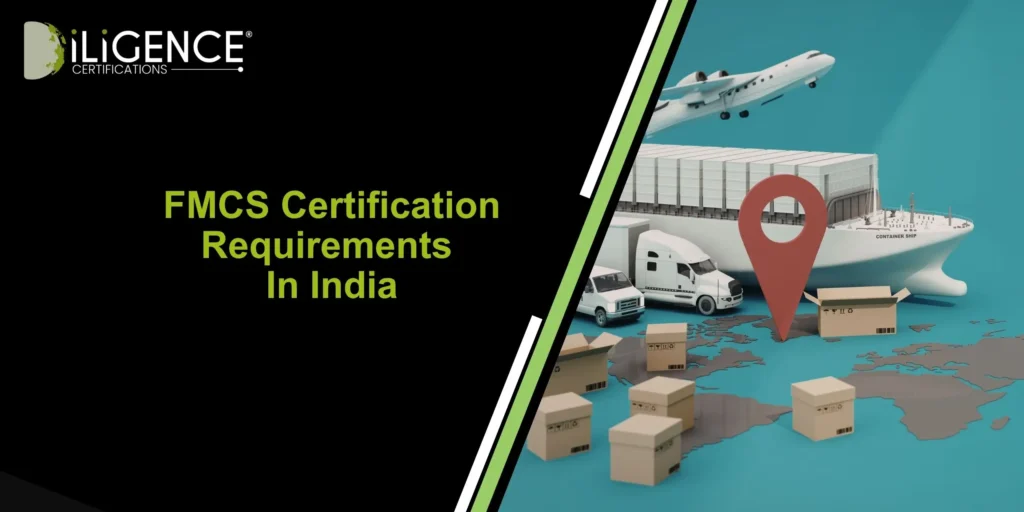
By - FMCS certification is mandatory for foreign manufacturers selling products under BIS standards in India
- FMCS Certification Requirements allows use of the ISI mark on products manufactured outside India
- Requires factory inspection by BIS officials before approval
- Product testing must be done in BIS-recognized laboratories
- Non-compliance can lead to import rejection, penalties, or product bans
Introduction | FMCS Certification Requirements
India is a highly regulated market when it comes to product quality and safety. For foreign manufacturers, entering this market is not just about demand-it is about compliance. One of the most critical certifications required is FMCS Certification Requirements under BIS.
Many businesses assume this is just another documentation process. That assumption is wrong. FMCS is inspection-heavy, compliance-driven, and time-sensitive. If you misunderstand the requirements, your application will either get delayed or rejected.
This guide explains FMCS certification requirements in India in simple terms, step-by-step, so you can avoid mistakes and move faster.
What is FMCS Certification Requirements?
FMCS is an abbreviation that stands for Foreign Manufacturer’s Certification Scheme. This is one of the schemes under BIS in which foreign manufacturers can avail themselves of the ISI Marking.
Main Features:
- Only applies to manufacturers who are not based in India
- It covers certain products based on Indian Standards
- Inspection at the factory level is done by BIS prior to approval
- Authorized Indian Representative (AIR) is necessary
- Validity period of the certificate is initially 1 year (extendible)
- In essence, FMCS helps ensure that products manufactured outside India are up to par with the Indian products.
Why FMCS Certification Requirements
If your product falls under mandatory BIS certification, you cannot sell or import it into India without FMCS approval.
Key Reasons:
- Legal Compliance Without FMCS certification, your product cannot enter the Indian market legally.
- Quality Assurance Ensures that your product meets Indian safety and quality standards.
- Custom Clearance Non-certified products are often stopped at customs.
- Market Trust ISI mark builds credibility among Indian consumers.
- Avoid Penalties Selling without certification can lead to heavy fines and legal action.
Important Features and Benefits of FMCS Certification Requirements
| Feature | Benefit |
| BIS Approval | Legal access to Indian market |
| ISI Mark Usage | Builds trust and brand value |
| Factory Inspection | Ensures production quality |
| Product Testing | Confirms compliance with Indian standards |
| Market Expansion | Enables long-term business growth in India |
| Regulatory Protection | Avoids penalties and product bans |
| Competitive Advantage | Certified products sell faster |
FMCS Certification Requirements in India
To apply successfully, foreign manufacturers must meet specific requirements. Missing even one can delay approval.
1. Manufacturing Unit Information
- Complete address of factory
- Information on manufacturing process
- Details of machinery used
- Measures adopted for quality control
2. Compliance with Standards
- The product must be covered under Indian Standard
- It should conform to technical specifications laid down by BIS
3. Testing Procedures
- Testing of the products shall be done in laboratories approved by BIS
- The test report should be authentic and true
4. Authorized Indian Representative (AIR)
- Compulsory for foreign companies
- Acts as an intermediary between company and BIS
- Handles issues related to compliance and law
5. Documentations
- Business license
- Details of manufacture
- Quality manual
- Test report
- Letter of Authorization
6. Factory Visit
- Inspection by officials of BIS to manufacturing unit
Step-by-Step FMCS Certification Process
This is where most applicants fail-because they skip steps or mismanage timelines.
Step 1: Identify Applicable Standard
- Check if your product falls under mandatory BIS certification
- Select the correct Indian Standard (IS code)
Step 2: Appoint AIR
- Choose a reliable Authorized Indian Representative
- Ensure they understand compliance requirements
Step 3: Prepare Documentation
- Gather all required documents
- Ensure accuracy and consistency
Step 4: Product Testing
- Send samples to BIS-recognized labs
- Get test reports aligned with Indian standards
Step 5: Application Submission
- Submit application to BIS
- Include all documents and test reports
Step 6: Factory Inspection
- BIS officials visit your manufacturing unit
- Inspection includes:
- Production process
- Quality control system
- Testing facilities
Step 7: Grant of License
- If everything is compliant, BIS issues license
- You can start using ISI mark
Step 8: Post-Certification Compliance
- Maintain quality standards
- Allow periodic inspections
- Renew license on time
Challenges of Getting FMCS Certification Without a Consultant
FMCS Certification Requirements It is observed that many companies seek FMCS certification through internal channels. This normally causes delays and rejects.
Common Issues:
- Wrong Documentation Any minor mistake in documentation causes a delay.
- Product Standard Mismatch Causes either rejection or reapplication.
- Testing Problems Test report nonconformity is the main cause of rejection.
- Inspection Rejection Lack of preparedness during factory inspection causes rejection.
- BIS Communication Issue It is difficult for foreign companies to communicate with the authorities.
- Timely Application Issue It should ideally take months but takes an entire year.
Why Choose Diligence Certification for FMCS Compliance
Diligence Certification your objective is fast approval with minimal rejection risk, execution quality matters more than effort. FMCS certification involves technical standards, documentation accuracy, and inspection readiness-areas where most foreign manufacturers fail.
1. Start with Correct Standard Mapping Diligence Certification identifies the exact Indian Standard (IS code) applicable to your product.
Why it matters: Wrong standard = direct rejection or restart.
2. Build Error-Free Documentation They prepare and verify all documents before submission.
Why it matters: BIS rejects incomplete or inconsistent files without clarification.
3. Handle BIS-Approved Testing Properly They coordinate testing with recognized labs and align reports with BIS expectations.
Why it matters: Most applications fail due to non-compliant test reports.
4. Prepare You for Factory Inspection They audit your manufacturing setup before BIS inspection.
Why it matters: Inspection failure delays approval by months.
5. Manage End-to-End BIS Communication They act as a structured interface with BIS authorities.
Why it matters: Miscommunication is a common bottleneck for foreign applicants.
6. Ensure Faster Turnaround With structured handling, timelines are reduced significantly compared to self-managed applications.
Conclusion
FMCS Certification Requirements is not optional-it is mandatory for foreign manufacturers entering the Indian market. The process involves strict documentation, testing, and inspection.
The biggest mistake companies make is underestimating the complexity. This is not a form-filling exercise. It is a compliance system.
If done correctly,FMCS Certification Requirements opens a large and profitable market. If done incorrectly, it results in delays, losses, and missed opportunities.
The decision is simple: either approach it strategically or deal with repeated rejections.
Frequently Asked Questions (FAQs)
What is FMCS certification in India?
FMCS certification allows foreign manufacturers to use the ISI mark on products sold in India.
Is FMCS certification mandatory?
Yes, for products covered under mandatory BIS certification.
Who needs FMCS certification?
Foreign manufacturers exporting products to India under BIS standards.
What is the validity of the FMCS license?
Initially 1 year, renewable based on compliance.
What is an Authorized Indian Representative (AIR)?
A local representative responsible for compliance and communication with BIS.
How long does FMCS certification take?
Typically 4-6 months, depending on documentation and inspection readiness.
What happens if my product fails testing?
You must correct issues and retest before proceeding.
Can I sell products without FMCS certification?
No, it is illegal for regulated products.
What are the main reasons for rejection?
Incorrect documentation, failed testing, poor inspection results.
Can FMCS certification be renewed?
Yes, it can be renewed annually with continued compliance.