 BIS Certification
 CDSCO
CDSCO
 PESO
PESO
 CPCB
CPCB
 LMPC
LMPC
 WPC Approval
 Global Approvals
 TEC
TEC
 ARAI
ARAI
 BEE
BEE
 ISO Certification
 DGCA Certification
 NOC For Steel
 APEDA Registration




















 Business Registration
 FSSAI Mark Certification











 (32).jpg)
 Legal Services
 Trademark Registration
 Copyright Registration
 Patent Registration
 By
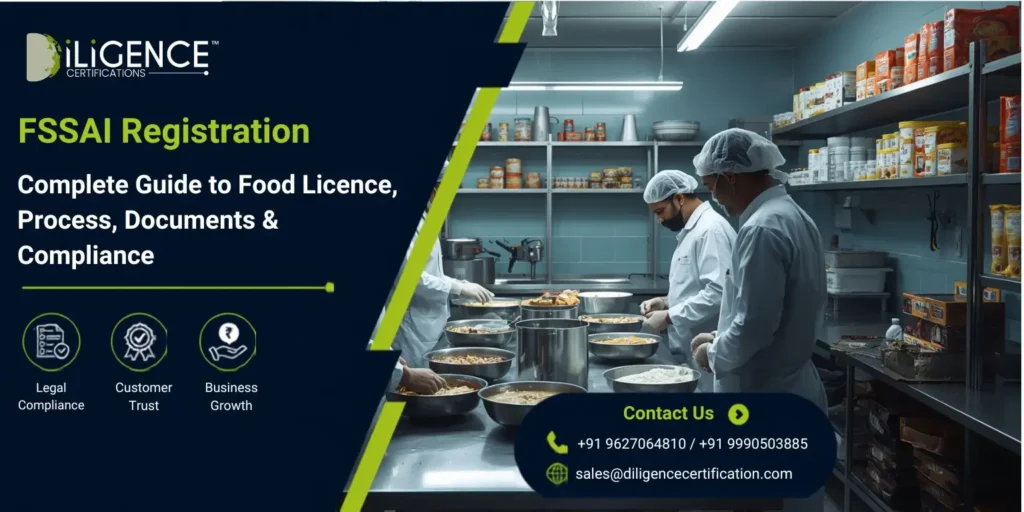
By - FSSAI Registration is a mandatory food safety approval required for small food businesses operating in India under the Food Safety and Standards Authority of India (FSSAI).
- It allows food businesses to legally manufacture, store, distribute, market, or serve food products in compliance with safety standards.
- The category of FSSAI registration depends upon the size of the business and its annual turnover.
Introduction
As soon as the owner of a small homemade food company began selling her homemade snacks via online delivery channels, she was primarily concerned about taste, packaging, and customer reviews. After some time, the orders increased, however, the owner found herself in front of a new issue - both clients and delivery companies demanded a legitimate food licence.
Many cases like this happen among Indian food entrepreneurs. Most of such businesses launch with passion and excellent-quality products without considering one critical element - FSSAI Registration.
It is impossible to conduct any activity related to production, processing, storage, distribution, import or export of food products legally without having the appropriate food licence. This document is not only required by law, it also helps to build trust among customers who know that your business operates within food safety rules.
For instance, consumers who buy packaged spices, sweets, and ready-to-eat products check the FSSAI logo and the licence number. Famous food companies have gained consumer trust thanks to their regulatory compliance right from the start.
If you are about to open a small homemade food business or grow a food company, FSSAI Registration is the first step towards reliable food brand building.
What is FSSAI Registration?
FSSAI Registration means the issuance of food safety certification by the Food Safety and Standards Authority of India (FSSAI) for the Food Business Operator (FBO). It is an exercise in checking whether the business undertaking which is indulged in production, processing, storage, distribution, and marketing of foods complies with the Food Safety and Standards Act, 2006.
This registration confers a unique 14-digit FSSAI license number which must be put on the food packs, invoices, and business premises, wherever applicable.
It is required for various food businesses, including:
- Home-based food businesses
- Restaurants and cafes
- Cloud kitchens
- Food manufacturers and retailers
- Wholesalers, importers, and exporters
- Food storage and transportation businesses
Why is FSSAI Registration Mandatory?
Food safety impacts the health of citizens; therefore, the FSSAI Registration process is mandatory for any food establishment in India to ensure that it follows the government’s standards of hygiene and safety.
1. Ensures Food Safety Compliance
FSSAI registration guarantees that the food establishment will have proper standards for food hygiene, food storage, production, and labeling for the provision of safe food for the consumers.
2. Builds Customer Trust
The license number from the FSSAI makes sure that the consumer is assured that the food business meets the standards set by the government for food safety.
3. Makes Business Operations Legal
Failure to get an FSSAI registration could lead to legal consequences. The process of registration will make it legally legitimate to carry on a business activity in the food industry.
4. Supports Business Growth
The process of getting FSSAI registration is necessary to enable one to distribute their products in supermarkets and online stores among others.
5. Enhances Brand Reputation
An FSSAI registration gives legitimacy to a business, thus helping to create a reputable brand image.
Who Needs FSSAI Registration?
The businesses related to food manufacturing, processing, storage, distribution, and selling usually need an FSSAI Registration. The category of registration may differ depending upon the nature and scale of the business.
- Food Manufacturers: Businesses manufacturing packaged food, beverages, dairy products, spices, or processed food.
- Restaurants/Cafes: Restaurant/hotel/cafes or food businesses providing services to their customers.
- Home Food Businesses: Chefs/bakers/entrepreneurs manufacturing and selling food items from home for commercial purpose.
- Cloud Kitchens: Food businesses providing food online but not having any dine-in facility.
- Food Retailers: Grocery stores/supermarkets or businesses selling packaged foods.
- Food Importer/Exporter: Business of importing/exporting food items, usually requiring a Central FSSAI Licence.
- Food Storage/Distribution Businesses: Warehouses/transports/distributors of food products.
Types of FSSAI Registration and Licence
The type of FSSAI approval required depends mainly on the business category, annual turnover, and scale of operations.
There are three major categories:
- Basic FSSAI Registration
- State FSSAI Licence
- Central FSSAI Licence
1. Basic FSSAI Registration
Basic FSSAI Registration is designed for small food businesses with limited operations.
Generally, small businesses with annual turnover up to ₹12 lakh require Basic Registration.
Businesses that commonly require Basic Registration:
- Small home-based food businesses
- Petty food manufacturers
- Small retailers
- Small traders
- Temporary food stalls
- Small storage units
2. State FSSAI Licence
State FSSAI Licence is required for medium-sized food businesses operating within a particular state.
Businesses with annual turnover above the basic registration limit and up to the prescribed state-level limit generally fall under this category.
Businesses requiring State Licence may include:
- Medium-sized restaurants
- Food processing units
- Bakeries
- Manufacturing businesses
- Storage facilities
- Caterers
3. Central FSSAI Licence
Central FSSAI Licence is required for large food businesses and companies involved in specific activities.
It is generally applicable to businesses operating across multiple states or meeting central licence criteria.
Businesses requiring Central Licence may include:
- Large food manufacturers
- Importers and exporters
- Businesses supplying food products across states
- Large processing units
- Food businesses operating in government premises
Difference Between Basic Registration, State Licence & Central Licence
| Feature | Basic Registration | State Licence | Central Licence |
| Business Size | Small businesses | Medium businesses | Large businesses |
| Annual Turnover | Up to ₹12 Lakh | ₹12 Lakh to ₹20 Crore | Above ₹20 Crore |
| Area of Operation | Local level | Within one state | Multiple states or specific categories |
| Suitable For | Home bakers, petty retailers, small dhabas, street vendors | Restaurants, mid-sized hotels, food manufacturers | Importers, exporters, e-commerce businesses, large factories, defence canteens |
| Issuing Authority | State Food Safety Department | State Food Safety Department | Central Licensing Authority |
| Application Form | Form A | Form B | Form B |
Eligibility Criteria for FSSAI Registration
All FBOs involved in food product manufacturing, processing, storage, distribution, and sale must register under FSSAI or get a FSSAI License based on their business size and turnover.
Eligible businesses include:
- Food manufacturers and processors
- Restaurants and cafes
- Cloud kitchens
- Home-based food businesses
- Bakeries and confectionery shops
- Grocery stores and supermarkets
- Food importers and exporters
- Dairy, meat, and seafood businesses
- Caterers and food service providers
- Online food sellers
- Food packaging and storage businesses
Even small home-based food business selling commercial food products may be eligible to apply for FSSAI Registration.
Documents Required for FSSAI Registration
The required documents vary based on the type of FSSAI Registration or licence. However, the common documents include:
For Basic FSSAI Registration
- Passport-size photograph
- Identity proof (Aadhaar, PAN, Voter ID, etc.)
- Business address proof
- Business activity details
- Food product details
- Partnership deed (if applicable)
- Self-declaration form
For State or Central FSSAI Licence
In addition to the above, applicants may need:
- Certificate of Incorporation or Registration
- Company PAN card
- Partnership Deed or LLP Agreement
- Food Safety Management Plan
- Manufacturing unit and machinery details
- Water testing report (if applicable)
- Import Export Code (for importers/exporters)
- Authorisation letter and other supporting documents
Step-by-Step Process for FSSAI Registration
The FSSAI Registration process involves submitting accurate business details and completing verification requirements.
Step 1: Identify the Correct Licence Category
The first step is selecting the right type of approval:
- Basic Registration
- State Licence
- Central Licence
The selection depends on turnover, business activity, and operational scale.
Choosing the wrong category may result in rejection or additional compliance requirements.
Step 2: Collect Required Documents
Before starting the application, keep all required documents ready.
This includes:
- Identity proof
- Business address proof
- Business details
- Food product information
- Supporting certificates
Proper preparation makes the application process smoother.
Step 3: Submit FSSAI Application
The application is submitted through the official FSSAI online portal.
The applicant needs to provide:
- Personal details
- Business information
- Food category details
- Premises information
- Required documents
Every detail should match the supporting documents to avoid discrepancies.
Step 4: Application Review by Authority
After submission, the application is reviewed by the concerned food safety authority.
During review, authorities verify:
- Submitted information
- Documents
- Business category
- Compliance requirements
If additional information is required, the applicant may receive a clarification request.
Step 5: Inspection (If Applicable)
Depending on the business category, an inspection of the premises may be conducted.
During inspection, officials may check:
- Hygiene conditions
- Storage facilities
- Manufacturing practices
- Food safety measures
Maintaining proper hygiene standards helps businesses complete this stage smoothly.
Step 6: Receive FSSAI Certificate
After successful approval, the applicant receives the FSSAI certificate containing the unique 14-digit licence number.
The number must be displayed:
- At the business premises
- On food packaging (where applicable)
- On invoices and business documents
Validity, Timeline & Government Fees for FSSAI Registration
| Particular | Details |
| Validity | 1 to 5 years (chosen by the applicant) |
| Processing Time | Basic Registration: 7-10 working days*State/Central Licence: May take longer due to verification and inspection. |
| Government Fees | Vary based on licence type, validity period, business category, and applicable government regulations. |
Renewal Process of FSSAI Registration
FSSAI Registration needs to be renewed prior to its expiration to continue with your business without facing any issues.
Step 1: Check Licence Details
Check your license type, expiry date, and details about your business. Make any changes in the details if needed.
Step 2: Prepare Documents
Keep necessary documents handy, including the current FSSAI license, identity documents, business documents, and the updated business details.
Step 3: Submit the Renewal Application
Renew the license via the FSSAI website after entering your details and uploading the documents.
Step 4: Receive the Renewed Certificate
Once your details get verified, you will receive the renewed license.
Importance & Benefits of FSSAI Registration
| Importance | Benefits |
| Ensures compliance with the Food Safety and Standards Act, making the business legally authorised to operate. | Provides legal recognition and protects the business from penalties and compliance issues. |
| Confirms that the business follows hygiene, quality, and food safety standards. | Builds customer trust and confidence in the quality and safety of food products. |
| Mandatory for many online platforms, retailers, and distributors. | Enables business expansion through e-commerce, supermarkets, and food delivery platforms. |
| Encourages businesses to maintain proper food handling, storage, and labelling practices. | Improves product quality and reduces the risk of contamination. |
Common Mistakes to Avoid During FSSAI Registration
- Choosing the Wrong Licence: Select the correct licence based on your business size, turnover, and operations.
- Providing Incorrect Information: Ensure all business and applicant details match the supporting documents.
- Missing Renewal Deadlines: Renew your FSSAI Registration before it expires to avoid penalties and business interruptions.
- Not Updating Business Details: Inform FSSAI about changes in address, ownership, products, or business activities.
- Submitting Incomplete Documents: Verify that all required documents are accurate and complete before applying.
Why Choose Diligence Certifications for FSSAI Registration?
Diligence Certifications simplifies the FSSAI Registration process by providing expert guidance and end-to-end compliance support.
- Expert Assistance: Accurate documentation and application support to minimise delays.
- End-to-End Service: Help with licence selection, application filing, and compliance requirements.
- Business-Specific Guidance: Solutions tailored to your business type and operational needs.
- Reliable Compliance Support: Ensures a smooth registration process and helps maintain long-term regulatory compliance
Conclusion
Registration under FSSAI is one of the most important criteria for all food businesses working in India. This registration gives legal recognition, builds customer trust, aids business growth, and makes sure that the food items comply with the safety standards.
Whether it is a small kitchen at home or any food processing factory, all Food Business Operators must realize the importance of getting their license category right.
A registered food business will have a sound foundation due to the fact that these days, the consumers value transparency and safety.
Should you wish to set up a food business or require help with your present compliance needs, Diligence Certifications can assist you in completing your FSSAI Registration process.
Frequently Asked Questions
What is FSSAI Registration?
FSSAI Registration is an authorization that enables food companies to function according to the standards of food safety.
Is FSSAI Registration compulsory for small food businesses?
Yes. Most small food businesses, home cooks, and food retailers require Basic FSSAI Registration.
For how many years is FSSAI Registration valid?
It is valid for 1 to 5 years, based on the period chosen at the time of application.
Which documents are needed for FSSAI Registration?
Identity proof, address proof, photograph and business-related documents are some of the necessary documents.
Is FSSAI Registration online possible?
Yes, online application is possible via the official FSSAI website.
What could happen if a business functions without FSSAI Registration?
Penalties, legal consequences, and shutting down of business could take place.
What kind of FSSAI licence should a restaurant obtain?
It depends on the restaurant’s turnover and size - Basic, State, or Central License.
Is FSSAI Registration necessary for home-based food business?
Yes, FSSAI Registration is mandatory for home-based food business.
What is the cost of an FSSAI License in India?
It depends on the type of license, duration of license and government fees.
How to obtain an FSSAI License in Karnataka?
You can obtain FSSAI license in Karnataka by following the above steps.