




 BIS Certification
 CDSCO
CDSCO
 CPCB
CPCB
 LMPC
LMPC
 WPC Approval
 Global Approvals
 TEC
TEC
 ARAI
ARAI
 BEE
BEE
 ISO Certification
 DGCA Certification
 NOC For Steel
 APEDA Registration














 Business Registration
 FSSAI Mark Certification












 Legal Services
 Trademark Registration
 Copyright Registration
 Patent Registration
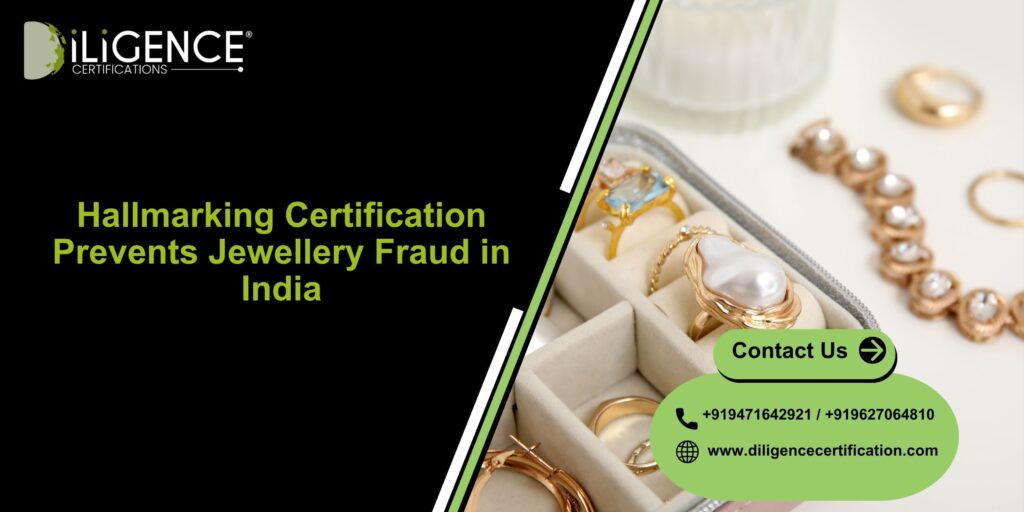
- Hallmarking for Prevents Fraud ensures gold and precious metals meet verified purity standards.
- Certified jewellery protects consumers from fraud and substandard products.
- It builds trust between jewellers and buyers by guaranteeing quality.
- Government-regulated hallmarking promotes transparency and accountability.
- Hallmarking encourages industry standardization, reducing counterfeit jewellery.
Introduction | Hallmarking for Prevents Fraud
India is one of the largest markets for gold and precious metals in the world. Jewellery plays a crucial role in Indian culture, investment portfolios, and the economy. With increasing demand, fraudulent practices in the jewellery industry, such as selling impure metals, mixing alloys, or misrepresenting karat value, have become a serious concern Hallmarking for Prevents Fraud.
Hallmarking certification was introduced to curb these practices. By providing independent verification of metal purity, hallmarking protects consumers and creates trust in the market. This blog explores what hallmarking is, why it is essential, the detailed process to obtain certification, challenges businesses face, and the role of professional consultants like Diligence Certifications in ensuring compliance.
What Is Hallmarking Certification?
Hallmarking certification is a process of authenticating the purity of gold, silver, and other precious metals in jewellery. In India, hallmarking is regulated by the Bureau of Indian Standards (BIS) under the Hallmarking Scheme.
A hallmark confirms that the jewellery has been tested and verified by a certified assaying and hallmarking center. The hallmark consists of:
- Purity mark: Indicates karat value, e.g., 22K for gold (91.6% purity).
- BIS logo: Shows that the jewellery meets BIS standards.
- Assaying and hallmarking center mark: Identifies the testing center.
- Jeweller’s identification mark: Shows the manufacturer or retailer.
By looking at the Hallmarking for Prevents Fraud, consumers can confirm the authenticity of their jewellery. This reduces the risk of purchasing fake or adulterated products.
Types of Hallmarks
- Gold Hallmarking: Indicates karat value and purity in parts per thousand (e.g., 916 for 22K).
- Silver Hallmarking: Uses standard marks like 925 for sterling silver.
- Platinum Hallmarking: Platinum jewellery is marked with the platinum content, such as 950.
Why Hallmarking for Prevents Fraud Is Necessary
Hallmarking for Prevents Fraud is not just a formality; it addresses multiple issues in the jewellery sector:
- Consumer Protection: Prevents buyers from being misled about metal purity.
- Assured Purity: Confirms the metal content matches the label.
- Trust Building: Certified jewellery gives consumers confidence in the seller.
- Fraud Prevention: Discourages fraudulent jewellers from selling substandard metals.
- Legal Compliance: BIS mandates hallmarking for certain gold products to enforce industry standards.
Real-World Impact
For example, a buyer purchasing 22K gold without hallmarking may unknowingly receive 18K gold mixed with cheaper metals. Hallmarking prevents this by ensuring that gold is independently tested and certified.
Hallmarking also helps banks and investors, as certified gold is more reliable for loans, resale, or investment purposes.
Importance and Benefits of Hallmarking for Prevents Fraud
| Importance | Benefits |
| Guarantees purity of gold and precious metals | Consumers can buy with confidence and trust |
| Reduces fraud risk in jewellery market | Strengthens trust between jewellers and buyers |
| Legal recognition of metal purity | Protects both buyer and seller in disputes |
| Standardizes quality across the industry | Encourages fair trade practices |
| Promotes transparency | Helps regulators monitor and prevent fraud |
Benefits Explained
- Consumer Protection: Buyers get assurance about the actual metal content and avoid losses.
- Industry Standardization: Jewellers adopt uniform quality standards, improving overall market credibility.
- Dispute Resolution: In case of disagreements, hallmarking provides a verifiable certificate of authenticity.
- Enhanced Brand Value: Certified jewellers gain consumer loyalty and market trust.
Step by Step Process for Hallmarking
The Hallmarking for Prevents Fraud process involves multiple steps and is strictly regulated by BIS.
Step 1: Assaying
The jewellery is sent to a BIS-approved assaying center. Here, experts test the metal’s purity using advanced methods like:
- Fire assay for gold
- X-ray fluorescence (XRF)
- Spectrochemical analysis
These methods detect even small impurities, ensuring accurate purity measurement.
Step 2: Hallmarking
Once purity is confirmed, the hallmark is stamped on the jewellery. The hallmark includes:
- Purity mark (karat or parts per thousand)
- BIS logo
- Assaying center code
- Jeweller’s unique mark
This stamp is permanent, tamper-proof, and provides a reliable reference for buyers.
Step 3: Certification
A certificate accompanies the jewellery. It includes details of:
- Metal type and purity
- Jeweller information
- Assaying and hallmarking center details
- Date of certification
This certificate helps in resale, legal proof, and consumer assurance.
Step 4: Retail Sale
Certified jewellery can be sold with confidence. Customers can verify hallmark and certificate details before purchase.
Example of Hallmark Verification
If a buyer purchases a 22K gold chain, the hallmark should read:
- 916 – gold purity
- BIS logo – certified by BIS
- AHC – code of assaying and hallmarking center
- J123 – jeweller’s unique ID
This transparency ensures the buyer is not defrauded Hallmarking for Prevents Fraud.
Challenges of Getting Hallmarking Certification Without a Consultant
Despite being essential, obtaining hallmarking certification can be challenging:
- Complex Documentation: BIS requires detailed information about manufacturing processes, metal sourcing, and jeweller identity.
- Technical Compliance: Jewellery must meet precise standards of purity and quality.
- Time-Consuming Process: Coordinating with assaying centers and submitting applications can take months.
- Risk of Rejection: Minor mistakes or incomplete documentation can result in rejection.
- Keeping Up with Regulations: BIS frequently updates rules; staying compliant without expert help is difficult.
Businesses without professional assistance may face delays, rejections, or even penalties.
Why Choose Diligence Certifications for Hallmarking Certification
Diligence Certifications specializes in helping jewellers and manufacturers obtain hallmarking certification efficiently.
- Expert Assistance: Guides you through BIS documentation and compliance requirements.
- Faster Processing: Coordinates with assaying and hallmarking centers to minimize delays.
- Regulatory Updates: Keeps clients informed about changes in BIS standards and procedures.
- Error Prevention: Ensures correct documentation and metal purity testing.
- End-to-End Support: From initial application to final certification, every step is managed professionally.
By hiring a consultant, businesses save time, reduce risk, and ensure full compliance, while avoiding fraud or market penalties.
Conclusion
Hallmarking for Prevents Fraud is essential to reduce jewellery fraud in India. By verifying metal purity, standardizing quality, and enforcing compliance, hallmarking protects consumers and builds trust.
Obtaining certification without guidance can be difficult due to documentation, technical requirements, and regulatory updates. Professional consultants like Diligence Certifications streamline the process, ensuring accurate hallmarking and seamless compliance.Hallmarking for Prevents Fraud jewellery businesses adopting hallmarking benefit from consumer confidence, legal protection, and long-term market credibility.
Frequently Asked Questions (FAQs)
What is hallmarking certification?
It is a process that verifies the purity of gold, silver, and platinum jewellery as per BIS standards.
Is hallmarking mandatory in India?
Yes, BIS mandates hallmarking for gold jewellery above a certain weight to ensure authenticity.
How can I check if jewellery is hallmarked?
Look for BIS logo, purity mark, assaying center code, and jeweller’s ID mark.
Does hallmarking cover gemstones in jewellery?
No, it only certifies the metal purity, not gemstones or craftsmanship.
What metals can be hallmarked?
Gold, silver, and platinum jewellery are eligible for BIS hallmarking.
How long does the certification process take?
With proper documentation and guidance, the process can be completed efficiently, usually within weeks.
Can hallmarking marks be tampered with?
Tampering is illegal and difficult; hallmarks are permanent and traceable.
Do small jewellers require hallmarking certification?
Yes, all jewellers dealing in eligible gold jewellery must comply with BIS hallmarking rules.
What are the consequences of selling jewellery without hallmarking?
Legal penalties, consumer trust loss, and potential liability for fraud.
Why hire a consultant like Diligence Certifications?
They provide expert guidance, ensure compliance, prevent errors, and streamline the certification process.