


 BIS Certification
 CDSCO
CDSCO
 CPCB
CPCB
 LMPC
LMPC
 WPC Approval
 Global Approvals
 TEC
TEC
 ARAI
ARAI
 BEE
BEE
 ISO Certification
 DGCA Certification
 NOC For Steel
 APEDA Registration












 Business Registration
 FSSAI Mark Certification


 Legal Services
 Trademark Registration
 Copyright Registration
 Patent Registration
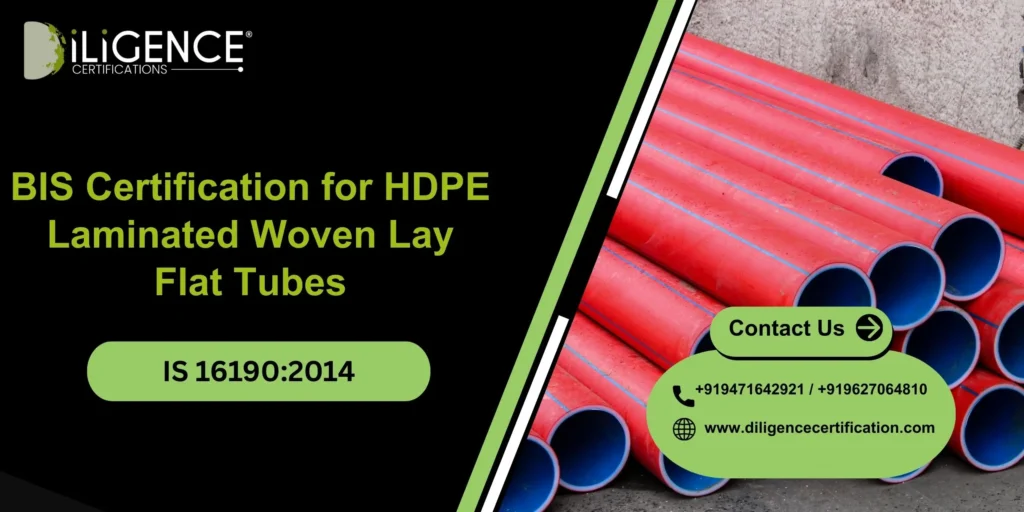
- BIS Certifies all IND products to ensure adherence to a consistent method of production and the overall quality of said products.
- BIS Certification Standard IS 16190:2014 HDPE Laminated Woven Lay Flat Tubes defines the parameters of HDPE laminated woven Lay Flat tubing with respect to material, construction, and performance specifications.
- Tubers that pass through the BIS certification process and have been manufactured using superior grade HDPE are characterized by high tensile strength, flexibility, as well as outstanding resistance to tears and abrasions.
- BIS has carried out tests to determine how well tubers perform based on elongation, tear resistance, tensile strength, and burst pressure test results.
- Only tubers certified by BIS are allowed for use as legal products in India; hence, only manufacturers who are selling BIS-certified tubers can produce them.
Introduction
The Bureau of Indian Standards certifies the quality, safety, and performance of HDPE laminated woven layflat tubes under IS 16190:2014. These tubes are made from recommended HDPE material and will withstand pressure and carry liquids to provide dependable service in agricultural and industrial use. In order to sell the tubes, manufacturers must meet this standard; this helps develop confidence in the tubes among consumers.
What is IS 16190:2014?
In India, achieving BIS certification HDPE Laminated Woven Lay Flat Tubes establishes compliance with Indian Standard regulations and acts as a framework for establishing product quality and safety as well as regulatory compliance within the marketplace. Following the requirements of applicable Indian Standards also ensures legal requirements are satisfied while increasing the reliability and trust of consumers within the marketplace and building acceptance among manufacturers and marketers. A BIS Certification signifies a commitment to the maintenance of quality throughout the production process, the use of responsible manufacturing practices and as such establishes the business with an identity of having consistent product quality.
Key Points:
- Authority Issuing The Charge: The Bureau of Indian Standards issued IS 16190:2014 for the purpose of governing both the safety and quality of products.
- The Purpose of the Product: HDPE laminated woven lay flat tubing used to transfer and transport potable water, fog and other type irrigated agricultural land irrigation is covered.
- The Requirements for Material(s): HDPE is required as the material for manufacture to provide strength and durability.
- The Performance Requirements of These Materials: The standards set out the principal performance characteristics of HDPE Laminated Flat Woven Tubing including: elongation, tensile strength, burst pressure, and resistance to leaks.
- The Quality Assurance Function: IS 16190:2014 has been developed to ensure that all products are tested, identified, packaged properly, to provide the end user with a product that will consistently perform and be reliable.
Why is BIS Certification Mandatory
It is vital for products to meet Indian Standards on Quality, Safety and Performance if they want to receive a BIS-Certification. BIS-Certification provides consumers with protection against unsafe or substandard products and ensures uniformity of manufacturing processes across India while creating market confidence. By being required to comply with these regulations, manufacturers gain the ability to legally create, market and sell their products in India as well as abide by all other regulations imposed by Bureau of Indian Standards concerning the environment.
Key Reasons:
- Safety from Dangerous Goods: Provides protection by ensuring all products meet the required safety and quality requirements.
- Compliance with Local Laws: Mandatory BIS Certification is required in order to manufacture, import or sell regulated consumer goods in India legally.
- Quality Assurance: Confirms the consistent conformity of all products with all applicable Indian Standard specifications through the regular testing and inspection of the products.
- Market Build-Up: Builds upon previous work completed creating and building customer trust and credibility through the demonstration that they have successfully complied with India’s National Quality Standards.
- Regulatory Control: Allows BIS to regulate product quality to avoid the distribution of substandard products.
Importance and Benefits of BIS Certification
| Importance | Benefits |
| Verify Safety Standards – Assurance that the products provided meet the specified safety standards and performance standards. | Increased consumer trust: Certification provides a higher level of credibility and acceptance for star rated products in the marketplace. |
| Mandatory Legal Requirement – A legal requirement for the manufacture, importation and/or sale of certain categories of regulated goods in India. | Market Access: Certification simplifies entry into the Indian marketplace by removing any potential for legal/regulatory challenges. |
| Quality Control – Ongoing Voluntary Testing of Products & Factory Inspections to Achieve a Consistent Level of Quality. | Competitive Advantage: Certification helps differentiate a certified product from the non-certified products in the marketplace. |
| Elimination of Poor Quality Products – This Program Helps to Eliminate Low-Quality Unsafe Items from the Marketplace. | Brand Image Enhancement: Certification improves the public perception of a brand through the display of a commitment to providing high quality products. |
| Regulatory Compliance – It Allows for the Effective Monitoring of Products by The Bureau of Indian Standards. | Reduced Risk: Certification provides a company with a reduction in the likelihood of incurring penalties, product recalls, or other legal complications. |
Step-by-Step Process of BIS Certification
Step1:Documentation
- Collect required technical documents
- Prepare product specifications
- Gather company registration details
- Ensure documents follow BIS format
Step2:Product Testing
- Send samples to a BIS-approved lab
- Conduct safety and quality tests
- Receive test reports
- Confirm compliance with BIS standards
Step3:Application Submission
- Fill out the BIS application form
- Upload all required documents
- Attach valid test reports
- Pay the necessary BIS fees
Step4:Scrutiny and Inspection
- BIS reviews submitted documents
- Authority verifies test results
- Factory/product inspection may occur
- Clarifications requested if needed
Step5:Grant of License
- BIS approves the application
- License number is issued
- Product can carry BIS mark
- Renewal required before expiry
Documents Required for BIS Certification
| Category | Documents Required |
| Business Documents | Business license/registration, ISO certificate, organizational details |
| Manufacturer Details | Factory layout, process flow chart, machinery list, production details |
| Product Documents | Product specifications, component list, user manual, model details |
| Testing Documents | Test report from BIS-recognized lab, sample details, test request form |
| Legal & Compliance | Authorization letter, brand ownership proof, trademark certificate (if any) |
| Import/Foreign Manufacturer (If applicable) | AIR (Authorized Indian Representative) details, contract agreement, overseas manufacturer documents |
Timelines, Costs, Validity & Renewal
- Timelines: Usually from 20 to 30 days, with only 7-15 days for the testing.
- Costs: The cost of the government and the test varies depending on the product. There can be some additional charges though.
- Validity: The validity period is 2 years in most situations.
- Renewal: The renewal is done before the expiration; there should be updated documents/tests; the renewal
Why Choose Diligence Certifications
Diligence Certifications is an established, credible organization providing BPA (Bureau of Indian Standards) compliance assistance to manufacturers. Diligence Certifications provides a spectrum of experience in the area of regulatory compliance and offers manufacturers a straightforward, cost-effective, and fast way to achieve full compliance with all applicable Indian regulatory requirements and certification processes.
Conclusion
In India, achieving BIS certification establishes compliance with Indian Standard regulations and acts as a framework for establishing product quality and safety as well as regulatory compliance within the marketplace. Following the requirements of applicable Indian Standards also ensures legal requirements are satisfied while increasing the reliability and trust of consumers within the marketplace and building acceptance among manufacturers and marketers. A BIS Certification signifies a commitment to the maintenance of quality throughout the production process, the use of responsible manufacturing practices and as such establishes the business with an identity of having consistent product quality.
Frequently Asked Questions (FAQs)
What is BIS Certification?
An organization's certification for products that have been tested and are determined to be safe, compliant with all regulatory requirements in accordance with the Indian Standards, and provide quality assurance to the consumer.
Is it Mandatory?
Yes, any manufacturer or seller of HDPE Layflat Tubing must have the BIS Certification to sell legally in India.
What is Covered by the IS 16190:2014 Specification?
Specifications for the required materials, how products must be manufactured, how products perform in accordance with the required specifications, and labelling requirements for the products.
Who Needs to Apply for BIS Certification?
Manufacturers of HDPE laminated woven layflat tubing specifically for the Indian marketplace are required to apply to obtain the BIS Certification
Required Material for BIS Certification under IS 16190:2014
The responsible manufacturing of HDPE laminated woven layflat tubing in accordance with the specifications requires the use of high-quality HDPE material, to ensure strength and durability of the final product(s).
What are the types of tests performed for certification?
The following tests will be conducted to obtain BIS certification: Tensile Strength, Elongation, Tear Resistance, Burst Pressure, and Leakage Resistance.
How long does it take to get a BIS Certification?
It typically takes 20 - 30 days to obtain your BIS Certification from the time you submit testing and documentation.
How long is a BIS certification valid for?
The typical validity period for BIS Certification is a maximum of 2 years and will be renewable after the 2 year period.
Can you sell any tubes that were not BIS certified in India
No, it is illegal to sell any tubes that are not BIS Certified; any company or individual selling non-BIS Certifed tubes may be subject to penalties.
Why is BIS Certification important for consumers?
BIS Certification provides assurance of product safety, reliability and consistency in Performance in all agricultural and industrial applications.