BIS Certification
 CDSCO
CDSCO
 PESO
PESO
 CPCB
CPCB
 LMPC
LMPC
 WPC Approval
 Global Approvals
 TEC
TEC
 ARAI
ARAI
 BEE
BEE
 ISO Certification
 DGCA Certification
 NOC For Steel
 APEDA Registration























 Business Registration
 FSSAI Mark Certification












 (32).jpg)
 Legal Services
 Trademark Registration
 Copyright Registration
 Patent Registration
 By
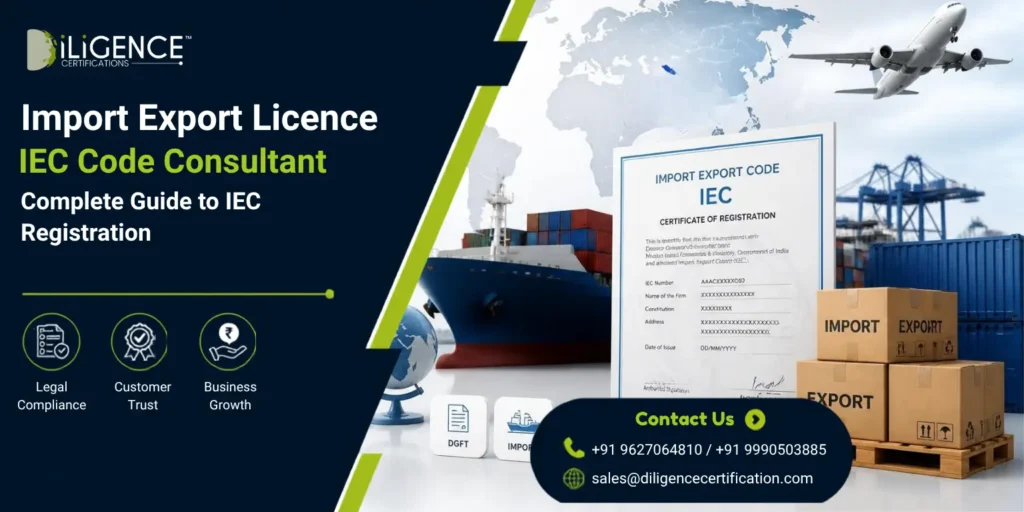
By - IEC Registration is generally required for businesses involved in applicable import and export activities in India.
- The Import Export Code (IEC) is issued by the Directorate General of Foreign Trade (DGFT).
- An IEC consultant can assist with documentation, online application, compliance, and registration support.
Introduction
Businesses involved in importing or exporting goods from India need to follow certain regulatory requirements. One of the key requirements for international trade is the Import Export Code
IEC stands for Import Export Code. It is issued by the Directorate General of Foreign Trade (DGFT) and is generally required for businesses involved in applicable import and export activities.
Obtaining IEC is an important step for businesses planning to enter international markets. An Import Export Licence IEC Code Consultant can help with documentation, application filing, DGFT procedures, modifications, and compliance requirements.
What is Import Export Code ?
Import Export Code (IEC) is a unique identification number issued through DGFT for businesses undertaking applicable import or export activities.
IEC helps identify businesses involved in international trade and is commonly required for relevant customs, banking, and trade-related processes.
An IEC Code Consultant can assist with:
- IEC Registration
- Documentation Assistance
- DGFT Application Support
- IEC Modification
- IEC Updates
- Query Resolution
- Import-Export Compliance
- Regulatory Guidance
The exact requirements may vary depending on the applicant, business structure, and nature of the transaction.
Applications of Import Export Code in India
IEC is relevant to various businesses involved in international trade, including:
- Import Businesses
- Export Businesses
- Manufacturers
- Merchant Exporters
- Traders
- E-commerce Exporters
- Startups
- Small Businesses
- Trading Companies
- Proprietorship Firms
- Partnership Firms
- LLPs
- Private Limited Companies
- Other Eligible Businesses
Businesses planning to import raw materials, machinery, finished goods, or other products may need IEC. Similarly, exporters may require IEC for applicable export transactions.
Who Needs Import Export Code in India?
Businesses undertaking applicable import or export activities may need an IEC, subject to prescribed exemptions.
These may include:
- Importers
- Exporters
- Manufacturers
- Merchant Exporters
- Traders
- E-commerce Sellers
- Startups
- Small and Large Businesses
- Proprietorship Firms
- Partnership Firms
- LLPs
- Private Limited Companies
- Public Companies
For businesses entering international trade for the first time, professional assistance can make the registration process easier and more organized.
Types of Compliance Supported by IEC Code Consultant
Import & Export Compliance
An IEC consultant can help businesses understand and organize:
- Import Documentation
- Export Documentation
- IEC Requirements
- DGFT Requirements
- Trade Documentation
- Regulatory Requirements
- Shipping Documentation
Useful for:
- Importers
- Exporters
- Manufacturers
- Traders
- E-commerce Businesses
Proper documentation can help reduce avoidable delays during international trade transactions.
DGFT & IEC Compliance
IEC-related compliance may involve keeping business information accurate and updated.
Assistance may include:
- IEC Registration
- IEC Modification
- Address Update
- Bank Detail Update
- Contact Information Update
- Business Information Update
- Application Verification
- Query Resolution
Businesses should regularly check their IEC details and update them whenever required.
Documentation & Application Compliance
Proper documentation is essential for IEC registration.
Documents and information may include:
- PAN Details
- Business Registration Documents
- Address Proof
- Bank Account Details
- Cancelled Cheque or Bank Certificate
- Business Constitution Documents
- Authorized Person Details
- Supporting Business Documents
A consultant can review the documents and help identify missing or inconsistent information before submission.
Documents Required for IEC Registration
The required documents may vary according to the applicant’s business structure.
Generally, businesses may need:
- PAN Card
- Business Registration Documents
- Address Proof
- Bank Details
- Cancelled Cheque or Bank Certificate
- Partnership Deed, where applicable
- Certificate of Incorporation, where applicable
- Applicant Details
- Authorized Person Details
- Supporting Documents
The information provided should match the applicant’s official business records.
Step-by-Step Process for IEC Registration in India
Step 1: Eligibility Assessment
The business first determines whether IEC is required for its proposed import or export activity.
This may depend on:
- Nature of Business
- Import or Export Activity
- Business Structure
- Type of Goods
- Applicable Exemptions
- DGFT Requirements
Step 2: Gathering Required Documents
The required business and supporting documents are collected and checked for accuracy.
Important details include PAN, business name, address, bank information, and applicant details.
Step 3: Preparation and Filing of Application
The IEC application is prepared with the required business information and documents and submitted through the applicable DGFT process.
Correct information is important to avoid unnecessary queries or corrections.
Step 4: Verification of Application
The submitted information may be reviewed and verified according to the applicable DGFT process.
This may involve:
- Document Verification
- PAN Verification
- Bank Detail Verification
- Application Review
- Query Resolution
Step 5: Grant of IEC
After successful processing, the IEC is issued through the applicable DGFT system.
Businesses can then use their IEC for relevant import-export activities.
Step 6: Ongoing Compliance
After obtaining IEC, businesses should continue monitoring:
- Business Information
- Bank Details
- Address
- Contact Details
- PAN Information
- DGFT Requirements
- IEC Updates
Keeping information accurate helps maintain proper compliance.
Timeline, Cost & Validity of IEC Registration
The timeline, cost, and validity depend on application completeness, DGFT processing, business structure, and professional service charges, if applicable.
| Timeline | Cost | Validity |
| The IEC registration timeline depends on application submission, verification, and DGFT processing. | The cost depends on applicable government fees and professional service charges, if any. | IEC generally remains valid unless surrendered, cancelled, or otherwise affected under applicable regulations. |
| Proper documentation can help reduce processing delays. | Charges may vary according to the services required. | Businesses should keep their IEC information updated as required. |
| Processing time may vary depending on verification and application queries. | Proper planning helps manage registration expenses. | Regular review helps maintain accurate IEC records. |
Importance & Benefits of IEC Registration
| Importance | Benefits |
| Helps businesses fulfill applicable requirements for import and export activities. | Enhances business credibility and supports international trade. |
| Supports proper identification of importers and exporters. | Makes international trade activities easier to manage. |
| Encourages proper documentation and regulatory compliance. | Supports smoother handling of trade documentation. |
| Helps maintain organized foreign trade records. | Creates opportunities for international market expansion. |
| Supports legal and regulatory responsibilities. | Strengthens long-term business growth and market presence. |
Why is Import Export Code Important?
IEC is important for many businesses involved in international trade because it provides an identification mechanism for applicable import and export activities.
It can help businesses manage international transactions and related documentation in an organized manner.
IEC registration and compliance can support:
- Import Compliance
- Export Compliance
- DGFT Compliance
- International Trade
- Documentation Management
- Regulatory Compliance
- Market Expansion
- Reducing Compliance Risks
Professional assistance can be particularly useful for businesses starting international trade for the first time.
Consequences of Non-Compliance with IEC Requirements
Failure to follow applicable IEC and foreign trade requirements can create business and regulatory difficulties.
Regulatory Non-Compliance
Businesses may face problems if applicable IEC requirements are not properly followed.
Action by the Competent Authority
Relevant authorities may take appropriate action in cases of non-compliance.
Operation Restrictions
Import or export activities may face difficulties where required registrations or information are not properly maintained.
Business Activity Time Lags
Incorrect documents or outdated information can cause delays in trade transactions.
Suspension or Cancellation
Regulatory action may affect the status or use of an IEC where applicable.
Documentation Risks
Incorrect IEC information can create difficulties in trade-related documentation.
Reputation of the Business
Compliance problems may affect the confidence of customers, suppliers, banks, and business partners.
Risk of Bad Reputation
Repeated compliance issues can negatively affect business credibility.
Growing the Business
Compliance difficulties may create challenges when expanding import-export activities or entering new international markets.
Renewal of IEC Registration
IEC generally does not work like a certificate with a fixed expiry date. However, businesses should regularly review their IEC information and complete applicable updates or compliance requirements prescribed by DGFT.
Businesses should review:
- Business Name
- Address
- Bank Details
- Contact Details
- PAN Information
- Business Constitution
- Authorized Person
- Other IEC Information
Common activities may include:
- Updating Business Information
- Updating Bank Details
- Updating Address
- Reviewing IEC Details
- Completing Applicable Compliance
- Monitoring DGFT Requirements
Regular review helps businesses keep their IEC information accurate and up to date.
How Professional Assistance Helps with IEC Registration?
An Import Export Licence IEC Code Consultant can simplify the registration and compliance process by assisting with:
- IEC Requirement Assessment
- Documentation Preparation
- Application Filing
- DGFT Support
- Application Tracking
- Query Resolution
- IEC Modification
- IEC Updates
- Compliance Guidance
- Import-Export Documentation
Professional assistance can help businesses avoid common documentation mistakes and manage the process more efficiently.
Why Choose Diligence Certifications for IEC Registration?
Diligence Certifications assists businesses with registration, documentation, certification, and compliance-related requirements.
IEC-related services may include:
- IEC Registration Assistance
- Documentation Assistance
- Application Filing
- DGFT Compliance Support
- IEC Modification
- IEC Update Assistance
- Query Resolution
- Import-Export Guidance
- Regulatory Advisory
With professional guidance, businesses can better understand IEC requirements, organize documents, and manage the application process while focusing on their core operations.
Conclusion
Import Export Code (IEC) is an important requirement for many businesses involved in importing or exporting goods from India.
IEC stands for Import Export Code and is issued through the Directorate General of Foreign Trade (DGFT).
The registration process involves providing accurate business information, submitting required documents, and following the applicable DGFT procedure.
An Import Export Licence IEC Code Consultant can assist with registration, documentation, application filing, modifications, updates, queries, and compliance guidance.
For businesses planning to enter international markets, professional IEC assistance can make the registration process more organized and easier to manage.