 BIS Certification
 CDSCO
CDSCO
 PESO
PESO
 CPCB
CPCB
 LMPC
LMPC
 WPC Approval
 Global Approvals
 TEC
TEC
 ARAI
ARAI
 BEE
BEE
 ISO Certification
 DGCA Certification
 NOC For Steel
 APEDA Registration























 Business Registration
 FSSAI Mark Certification












 (32).jpg)
 Legal Services
 Trademark Registration
 Copyright Registration
 Patent Registration
IMEI Registration
IMEI registration is the mandatory process of recording every mobile handset's unique IMEI number with the Department of Telecommunications before...
Get expert consultation
Trusted by 25,000+ leading enterprises worldwide













Key takeaways
- IMEI registration is mandatory under the Prevention of Tampering of the Mobile Device Equipment Identification Number Rules, 2017, notified by the Department of Telecommunications (DoT).
- Every mobile handset must carry a unique 15-digit IMEI before it is sold, imported or manufactured in India.
- Registration is done online through the DoT’s Indian Counterfeited Device Restriction (ICDR) portal, linked to the Mobile Equipment Identity Register (MEIR).
- It applies to domestic manufacturers, importers and brand owners placing mobile devices on the Indian market.
- IMEI numbers are sourced from the GSMA (the global allocator) and then registered with the DoT before commercial sale.
- Unregistered or duplicate IMEIs can be blocked on Indian networks, making the device unusable.
What is IMEI Registration?
IMEI registration is the process of recording the International Mobile Equipment Identity (IMEI) of every mobile handset with the Department of Telecommunications before that device is sold, imported or manufactured for the Indian market. The IMEI is a unique 15-digit number that identifies a specific device on cellular networks.
The framework was introduced to keep counterfeit, cloned and tampered handsets off Indian networks. By maintaining a central register of genuine IMEIs, the government can identify and block devices carrying fake, duplicate or non-compliant identifiers, protecting both consumers and legitimate brands.
Why the IMEI matters
- Uniquely identifies each handset on mobile networks
- Allows lost or stolen phones to be traced and blocked
- Helps law-enforcement agencies investigate misuse
- Distinguishes genuine devices from counterfeit ones
- Required for warranty, servicing and lawful resale
- Forms the basis of network access control in India
Who needs IMEI registration?
If you place mobile devices on the Indian market in any commercial capacity, you fall within the ICDR framework. The exact route depends on whether you make, import or brand the handsets.
| Business type | Why registration applies |
|---|---|
| Domestic manufacturers | Must register the IMEI of every handset produced in India before commercial sale. |
| Importers | Must register the IMEIs of imported devices with the DoT before the consignment reaches the market. |
| Brand owners | Companies marketing handsets under their own brand must ensure all IMEIs are duly registered. |
| Devices covered | Examples |
|---|---|
| Smartphones | Android and iOS handsets sold through retail and online channels |
| Feature phones | Basic GSM and dual-SIM mobile phones |
| Cellular-enabled devices | Tablets and data devices that use a SIM and carry an IMEI |
| Refurbished handsets | Pre-owned devices reintroduced for commercial sale |
The registration process, step by step
IMEI registration is handled online through the DoT’s ICDR portal. The path is broadly the same for manufacturers and importers, with the difference lying in the supporting documents.
Manufacturers
Obtain IMEIs
Source genuine IMEI numbers for your devices through the GSMA, the global allocator of IMEI ranges.
Register on ICDR
Create an account on the DoT ICDR portal and submit company and device details.
Upload IMEIs
Upload the IMEI list for the handsets to be sold along with the supporting documents.
Validation
The DoT validates the IMEIs against the central register before the devices go on sale.
Importers
Compile details
Gather the IMEI list, import documentation and brand details for the consignment.
File on ICDR
Submit the import application on the ICDR portal with the IMEIs and supporting papers.
Review
The DoT verifies the IMEIs and import particulars against the register.
Approval
Once registered, the devices can be lawfully imported and sold in India.
Documents required
- Company incorporation or registration documents
- GST registration certificate
- Identity and address proof of the authorised signatory
- Authorisation letter or board resolution for the signatory
- Complete list of IMEI numbers to be registered
- Device model and specification details
- For imports: import documentation and bill of entry
- For manufacturers: factory or manufacturing details
Validity & compliance
- A registered IMEI stays valid for the lifetime of the device.
- Each handset must carry a unique IMEI; duplicates can be blocked on networks.
- Tampering with or reprogramming an IMEI is a punishable offence.
- Records must be kept accurate and made available to the DoT on request.
Bringing devices to market? You may also need our WPC Approval and EPR Registration services.
Fees, timeline & what drives them
There is no single fixed fee for IMEI registration; the overall cost and turnaround depend on the volume of IMEIs, the device portfolio and how complete your documentation is. The typical components are:
| Factor | Details |
|---|---|
| IMEI allocation | Cost of obtaining genuine IMEI ranges from the GSMA |
| Volume of devices | Larger IMEI lists take longer to compile and validate |
| Documentation and filing | Preparation and submission of the application on the ICDR portal |
| Verification time | Time taken by the DoT to validate IMEIs against the register |
Launching a handset in India?
Tell us whether you manufacture, import or brand the devices, and we will map the exact registration steps, documents and timeline.
Benefits of IMEI registration
Legal compliance
Meet the DoT’s ICDR requirements and sell handsets in India without regulatory risk.
Network access
Registered IMEIs are recognised by Indian operators, so devices connect without being blocked.
Anti-counterfeit protection
A central register keeps cloned and fake-IMEI handsets out of your supply chain.
Brand trust
Genuine, registered devices reassure retailers, platforms and consumers.
Traceability
Lost or stolen devices can be traced and blocked, aiding consumer recovery.
Market access
Compliance is a prerequisite for selling through major retail and e-commerce channels.
Why IMEI registration is mandatory
Under the Prevention of Tampering of the Mobile Device Equipment Identification Number Rules, 2017, the Department of Telecommunications requires every mobile device to carry a unique, registered IMEI before it is sold or imported in India. Placing handsets with unregistered, duplicate or tampered IMEIs on the market is unlawful.
What non-compliance can cost you
- Devices blocked on Indian networks and rendered unusable.
- Seizure of stock carrying invalid or duplicate IMEIs.
- Penalties and legal action for tampering with IMEIs.
- Loss of market access across retail and e-commerce channels.
Why Diligence Certifications
IMEI registration sits at the intersection of telecom regulation, import documentation and device compliance. We bring the three together so your handsets reach the market cleanly and on time.
Specialist guidance
Experienced advisors who handle DoT and ICDR filings day in, day out.
End-to-end filing
From IMEI sourcing to portal submission and validation, we manage the whole process.
Faster turnaround
Clean, complete dossiers that reduce back-and-forth and avoid rejections.
One compliance partner
Pair IMEI registration with WPC, BIS and EPR approvals under a single team.
Frequently asked questions
What is IMEI registration?
IMEI registration is the process of recording each mobile handset’s unique 15-digit IMEI with the Department of Telecommunications before the device is sold, imported or manufactured in India. It is done through the DoT’s ICDR portal.
Who needs to register IMEIs in India?
Domestic manufacturers, importers and brand owners placing mobile devices on the Indian market must ensure the IMEIs of those devices are registered with the DoT before commercial sale.
Which law governs IMEI registration?
The Prevention of Tampering of the Mobile Device Equipment Identification Number Rules, 2017, notified by the Department of Telecommunications, governs IMEI integrity and registration in India.
Where are IMEI numbers obtained from?
IMEI ranges are allocated globally by the GSMA. Manufacturers and importers source genuine IMEIs through the GSMA and then register them with the DoT before sale in India.
What happens if a device has an unregistered or duplicate IMEI?
Handsets carrying unregistered, duplicate or tampered IMEIs can be blocked on Indian networks, making them unusable, and the stock may face seizure and legal action.
Can I apply for IMEI registration online?
Yes. Registration is handled online through the DoT’s ICDR portal, where you submit company details, device information, the IMEI list and the supporting documents.
Why choose Diligence Certification?
For compliance and credibility, Diligence is much more than a checklist - we give you real confidence in your business. We examine your legal, financial and operational status, so you are not just certified, but trusted.
Stronger risk protection
Spot hidden legal, financial or operational risks early - fix problems before they become threats.
Earn stakeholder trust
From investors to customers, people want to work with businesses that play by the rules.
Stay legally aligned
Compliant not just on products but on labour, environmental and tax laws too.
Enhance brand reputation
Show the world you operate with integrity and transparency.
Stand out from competitors
In a crowded market, credibility is your biggest edge.
24×7 expert support
A 100+ strong service team guiding you at every step, free first consultation.
Real sites, real certifications
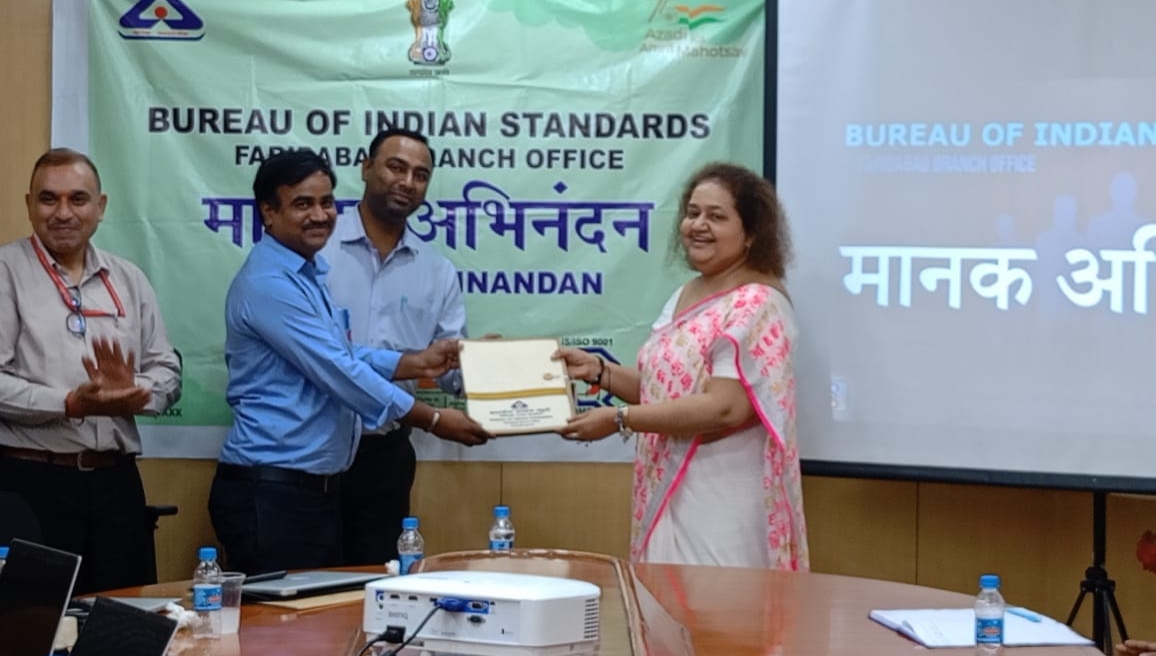
Our teams work inside factories and plants across India and abroad - inspections, audits and certification milestones spanning BIS, global schemes and the full compliance stack you see on this site.






What our clients say
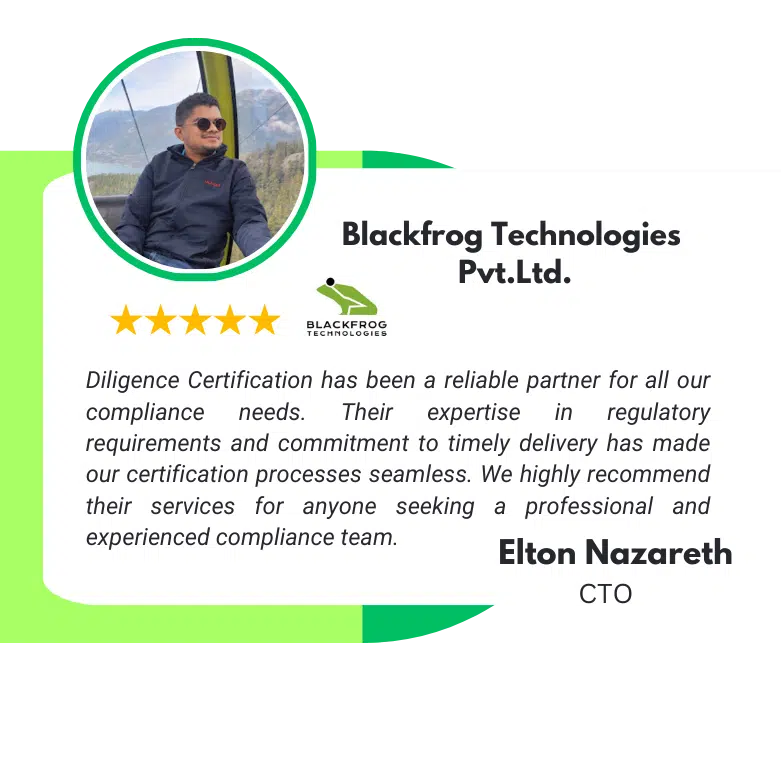
Reviews and feedback from businesses that have worked with Diligence Certifications.









Related TEC / Telecom services
TEC Approval
Telecom Engineering Center approval - full support.
View details →IMEI Certification
A clear guide to IMEI certification in India: who needs it, the ICDR portal process, documents.
View details →OEM Registration
Complete guide to OEM registration in India on the GeM portal: who needs it, brand and vendor.
View details →Ready to get IMEI Registration?
Talk to our experts for a clear, fixed-scope plan - most clients get a roadmap the same day.