



 BIS Certification
 CDSCO
CDSCO
 CPCB
CPCB
 LMPC
LMPC
 WPC Approval
 Global Approvals
 TEC
TEC
 ARAI
ARAI
 BEE
BEE
 ISO Certification
 DGCA Certification
 NOC For Steel
 APEDA Registration





















 Business Registration
 FSSAI Mark Certification












 Legal Services
 Trademark Registration
 Copyright Registration
 Patent Registration
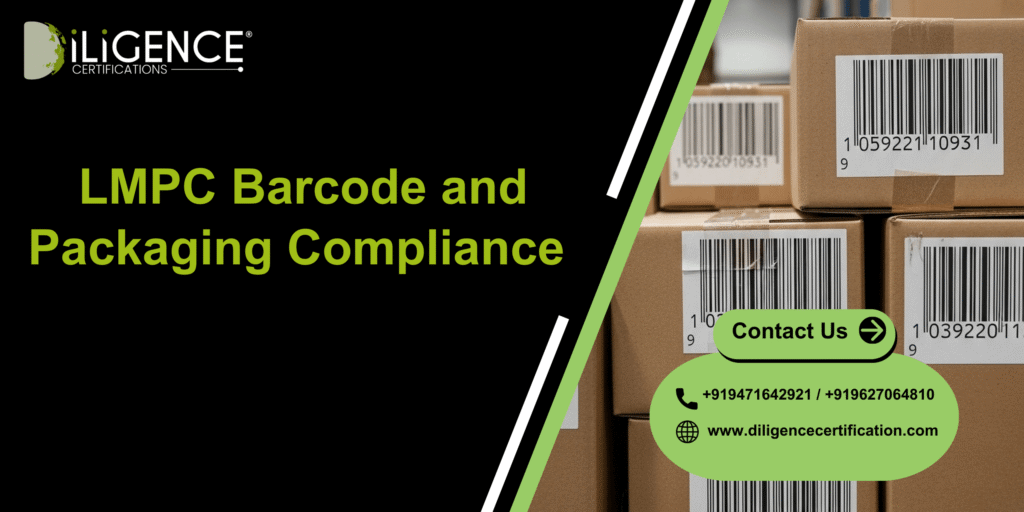
- LMPC Barcode and Packaging Compliance ensures that businesses dealing withpre-packaged goods follow Legal Metrology norms related to labeling, barcode placement, and packaging delicacy in India.
- The compliance frame is governed under the Legal Metrology Act, 2009 and the Legal Metrology( Packaged Goods) Rules, 2011.
- Proper LMPC barcode and packaging compliance helps manufacturers, importers, and distributors maintain accurate product identification and nonsupervisory translucency.
- Failure to follow LMPC barcode and packaging rules can lead to penalties, product seizure, payload detainments, or legal action.
- Following LMPC barcode compliance supports smooth force chain operations, consumer protection, and nonsupervisory blessing.

Introduction
In India’s fast- growing retail, FMCG, ande-commerce sectors, LMPC Barcode and Packaging play a critical part in product identification, force operation, and consumer translucency. Businesses dealing withpre-packaged goods must misbehave with Legal Metrology packaging and labeling regulations, including barcode- related compliance conditions. Legal Metrology Packaged Commodities
LMPC Barcode and Packaging Compliance helps businesses understand obligatory labeling norms, barcode placement conditions, and packaging translucency rules. Proper compliance ensures smoother distribution, brisk customs concurrence, and bettered consumer trust.
What Is LMPC Barcode and Packaging Compliance?
LMPC Barcode and Packaging Compliance refers to adherence to packaging and labeling conditions that insurepre-packaged goods carry accurate product information along with standardized barcode identification.
The compliance frame ensures that businesses
- give accurate labeling and packaging details
- Maintain barcode identification for product shadowing
- Declare net volume, MRP, and manufacturer/ importer details
- Follow standardized packaging and labeling morals
- insure translucency and consumer protection
These regulations are executed under
- Legal Metrology Act, 2009
- Legal Metrology( Packaged Goods) Rules, 2011
- Consumer Protection Laws
Connection of LMPC Barcode and Packaging Compliance
LMPC barcode and packaging compliance applies to
- Importers ofpre-packaged goods
- Manufacturers and packers of packaged products
- FMCG and consumer goods companies
- E-commerce merchandisers and online commerce
- Logistics and distribution companies
- Food andnon-food packaging diligence
Significance of LMPC Barcode and Packaging Compliance
Non-compliance with LMPC barcode and packaging regulations can lead to
- Payload rejection or product seizure
- Customs concurrence detainments
- Legal penalties and forfeitures
- Product recall or request pullout
- Damage to brand character
On the other hand, compliance ensures
- Accurate product shadowing and identification
- Legal authorization to vend packaged goods
- Consumer trust and product translucency
- Faster nonsupervisory examinations and blessings
- Smooth force chain and force operation
Benefits of LMPC Barcode and Packaging Compliance
| Importance | Benefits |
| Legal Compliance | Meets Legal Metrology packaging regulations |
| Consumer Protection | Ensures transparent product information |
| Inventory Efficiency | Improves tracking through barcode systems |
| Regulatory Approval | Supports smooth inspections and audits |
| Business Credibility | Builds customer and retailer confidence |
Step- by- Step LMPC Barcode and Packaging Compliance Process
Step 1 Identify Product Packaging Conditions
Businesses must identify LMPC labeling and barcode compliance conditions grounded on product order.
Step 2 Design Compliance- Grounded Packaging Labels
ensure packaging markers include obligatory affirmations similar as MRP, net volume, manufacturer/ importer details, and barcode placement.
Step 3 Obtain LMPC Registration
Apply for LMPC enrollment through the Legal Metrology Department.
Step 4 Barcode Integration
apply barcode systems similar to GS1 norms for product identification and shadowing.
Step 5 Conduct Packaging and Barcode Verification
corroborate barcode readability, labeling delicacy, and packaging compliance before product distribution.
Step 6 Maintain Compliance Attestation
Maintain packaging artwork, barcode details, and compliance records for examinations.
Documents Needed for LMPC Barcode and Packaging Compliance
- LMPC Registration Certificate
- Import Export Code( IEC)( if applicable)
- Business Registration Certificate
- GST Registration Certificate
- Product Packaging and Marker Artwork
- Barcode Registration( GS1 or fellow)
- Quantity Testing and Measurement Records
- Authorization Letter
Stylish Practices for LMPC Barcode and Packaging Compliance
- Use standardized barcode formats and placement guidelines
- insure barcode readability and scanning delicacy
- Maintain accurate labeling templates
- Conduct internal compliance checkups regularly
- Use calibrated packaging and dimension outfit
- Maintain digital packaging and barcode records
- Stay streamlined with Legal Metrology emendations
Timeline, Validity & Renewal
LMPC Registration Processing Time 20 – 30 working days
Registration Validity Generally continuance( subject to compliance changes)
Renewal Requirement needed in case of packaging, barcode, or business variations
Conclusion
LMPC Barcode and Packaging Compliance plays a pivotal part in maintaining packaging translucency, product traceability, and consumer protection in India. Proper barcode integration and packaging labeling help businesses insure smooth force chain operations and nonsupervisory blessings. LMPC Certification
Companies that misbehave with LMPC barcode and packaging norms profit from better product credibility, briskly customs concurrence, and stronger request acceptance. By maintaining accurate packaging and barcode compliance, businesses can achieve long- term nonsupervisory compliance and sustainable growth in India’s competitive packaged goods sector.
Frequently Asked for Questions
What's LMPC barcode compliance?
LMPC barcode compliance ensures packaged goods follow Legal Metrology labeling and barcode identification rules.
Is barcode obligatory under LMPC rules?
Barcode is not always obligatory but is extensively needed for product identification and force chain shadowing.
Which barcode standard is generally used in India?
GS1 barcode norms are generally used for packaged goods compliance.
Who must follow LMPC barcode regulations?
Manufacturers, importers, packers, distributors, and e-commerce merchandisers must follow LMPC barcode rules.
What details must be published along with barcodes?
MRP, net volume, manufacturer or importer details, and product identification details must be published.
Can incorrect barcode placement lead to penalties?
Yes, incorrect or deceiving barcode labeling may affect in compliance violations and penalties.
Is LMPC enrollment needed for barcode compliance?
Yes, LMPC enrollment is needed for businesses dealing with imported or packaged goods.
How do authorities corroborate barcode compliance?
Authorities corroborate barcode readability, labeling delicacy, and packaging information during examinations.
Can barcode crimes beget payload detainments?
Yes, barcode or labeling miscalculations can lead to customs concurrence detainments or payload rejection.
How can businesses insure barcode compliance?
Businesses can follow GS1 norms, conduct internal checkups, and maintain accurate packaging records.