



 BIS Certification
 CDSCO
CDSCO
 CPCB
CPCB
 LMPC
LMPC
 WPC Approval
 Global Approvals
 TEC
TEC
 ARAI
ARAI
 BEE
BEE
 ISO Certification
 DGCA Certification
 NOC For Steel
 APEDA Registration












 Business Registration
 FSSAI Mark Certification








 Legal Services
 Trademark Registration
 Copyright Registration
 Patent Registration
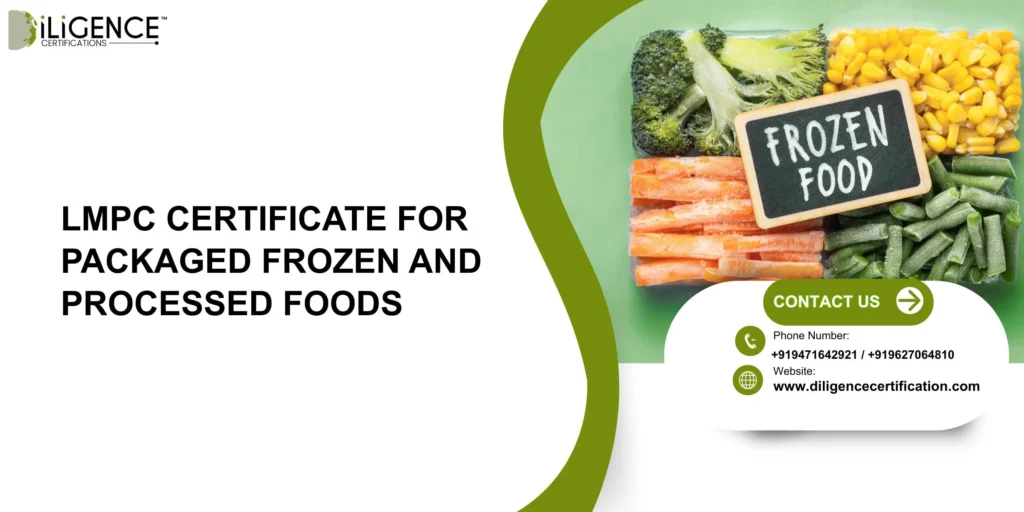
- Mandatory Legal Compliance: Under the Legal Metrology Act, 2009, an LMPC Certificate for Packaged is a prerequisite for manufacturers, packers, importers and sellers of packaged frozen and processed foods.
- Accurate Labeling & Quantity Declaration: Guarantees that the correct net weight/quantity, MRP, manufacturing details and date markings are all very clearly indicated on food packaging.
- Consumer Protection: It prevents misleading packaging, underweight products, and unfair trade practices thus consumer rights are protected.
- Market & e-Commerce Approval: It is necessary for the retail sale of packaged frozen and processed foods in physical stores and online platforms like Amazon and Flipkart.
- Brand Trust & Legal Safety: It establishes brand trust, keeps the company legal in terms of compliance, and guarantees hassle-free business operations throughout India.

Introduction
Frozen and processed foods packaged in a manner that is easily understandable have become a necessity in today’s generation because of the aforementioned factors along with their being very much available. Different types of such food products are frozen vegetables, ready-to-eat meals, meat products, and bakery and processed snacks to name a few, and they are sold in large quantities at retail stores and e-commerce sites.
Legal Metrology (Packaged Commodities) Rules, 2011 govern selling and marketing of these food products since they are sold in pre-packaged forms. Compliance withLMPC Certificate for Packaged guarantees transparency, improves consumer protection, and makes sure that fair trade is provided. A product that has an LMPC Certificate for Packaged Frozen and Processed Foods signifies that the packaging of the item conforms not only to the legal but also to the accuracy standards measuring the quality and quantity of the product.
What Is LMPC Certificate for Packaged Frozen and Processed Foods?
The Legal Metrology Department has granted its LMPC Certificate for Packaged Frozen and Processed Foods an authorization that permits the operation of businesses only with pre-packaged food products. This certificate governs the practices of labeling, measuring, and informing the consumers concerning the packaged foods.
The certification for LMPC incorporates the following major points:
- Net quantity announcement – Precise weight or volume of the food contents
- Compulsory labeling – Name, address of the manufacturer/importer/packer
- Date markings – Date of manufacture, best before/use by
- MRP declaration – All taxes included
- Consumer information – Contact details for complaints
- Uniform packaging standards – To prevent misleading practices
The packaged frozen and processed food products that comply with the LMPC regulations not only ensure the honesty of the trade but also provide uniformity throughout the supply chain.
LMPC Certification for Packaged Frozen and Processed Foods
Under the Legal Metrology umbrella, companies handling packaged frozen and processed foods have to secure an LMPC Certificate for Packaged first for their products to be sold in India.
The certification guarantees:
- Declaration of quantity and weight to be right
- Obedience to packaged product labeling rules
- Consumer safeguarding against packages with less weight or untrue indications
- Equal standards for home-grown and imported food items
- Legitimate selling through retail and e-commerce channels
Offering packaged frozen and processed foods in the Indian market legally is only possible for a business that has been granted the LMPC certificate.
Why Is LMPC Certificate Mandatory for Packaged Frozen and Processed Foods?
Lack of adherence to LMPC rules can result in severe repercussions among which are the following:
- Penalties and fines that are extremely high
- Confiscation of food packages that do not meet the requirements
- Sales on online marketplaces being stopped
- Consumer trust being lost
- Court cases taken by the government
The LMPC certificate guarantees:
- Abidance by Legal Metrology (Packaged Commodities) Rules
- Clear food labeling and pricing
- Consumer rights being protected
- Trustworthiness and market acceptance
For food companies,LMPC Certificate for Packaged acts as a protective barrier against legal risks as well as damage to reputation.
Importance and Benefits of LMPC Certificate
| Importance | Benefits |
| Legal compliance | Avoidance of fines and lawsuits |
| Proper labeling | Gives a clear message to the consumers |
| Safety of the consumer | Prohibition of deceptive packing practices |
| Market acceptance | Easier sales in retail and online platforms |
| Trustworthiness of the brand | Creation of a trustworthy and professional image |
Step-by-Step LMPC Certification Process
Step 1: Documentation
Collect and prepare the company details, product information, packaging details, and labeling formats in accordance with LMPC Certificate for Packaged regulations.
Step 2: Application Submission
Present the LMPC application to the Legal Metrology Department along with the necessary documents, either online or offline.
Step 3: Scrutiny by Authorities
The department checks the documents and packaging declarations for adherence to the regulations.
Step 4: Inspection (If Required)
Legal Metrology officials may, in some situations, conduct an inspection of the premises or the packaging process.
Step 5: Grant of LMPC Certificate
The LMPC certificate is granted upon successful verification, thus permitting the legal sale of frozen and processed food in packages.
Documents Required for LMPC Certificate
- Business registration certificate
- PAN card and GST registration
- Address proof of manufacturer’s or packager’s facility
- List of products along with packaging information
- Label design conforming to LMPC regulations
- Import-export license (only for importers)
- Letter of authorization (if required)
Timeline, Validity & Renewal
Certification Timeline: 15-30 working days
Validity: 1 to 5 years (depending on the state)
Renewal: To be done before the expiration date with new compliance documents
Conclusion
The LMPC Certificate for Packaged Frozen and Processed Foods is a major compliance necessity that guarantees openness, consumer safety, and legal authority in the food sector. Certified goods observe legal labeling requirements, facilitate fair trading, and win greater acceptance in the market.
For companies in the frozen and processed food industry, LMPC Certificate for Packaged is not merely a legal necessity but also a tactical step toward being credible, eco-friendly, and successful over the long run. By adhering to LMPC regulations, the company not only maintains its good reputation but also wins over customers and inlets business automatically in the Indian food market which is full of competition.
Frequenlty Asked for Questions
What is an LMPC certificate?
It is a type of legal document that gives an official approval to a business for selling its pre-packaged products indicating right labeling and quantitative details.
Why is LMPC needed for frozen and processed foods?
Since these foods are packed in bags and are to be marked clearly with the weight, price as well as information about the product.
Who requires LMPC for packaged food?
Everybody who is involved in the production, packing, importing, or selling of frozen or processed foods in the package.
Is it mandatory to have an LMPC for online food selling?
Yes, the online platforms will not allow you to list packaged food products unless the labeling is LMPC-compliant.
What information must be present on food packaging according to LMPC?
The packaging should mention the net quantity, MRP, details of the manufacturer or the importer, and date information.
How long is the wait for an LMPC certificate?
Usually, the process takes weeks if the documents and labels are done right.
Can a company sell packaged food products if it does not possess LMPC certification?
Selling without LMPC certification is a sure way to penalties and product removal.
Is LMPC certification applicable to imported frozen foods?
Absolutely, imported frozen foods also have to comply with the LMPC labelling rules.
How long is an LMPC certificate good for?
It usually lasts from one year to several years based on the issuing authority.
What are the consequences of not adhering to LMPC regulations?
The result of not being compliant can be fines, confiscation of goods, and losing customer loyalty.