BIS Certification
 CDSCO
CDSCO
 PESO
PESO
 CPCB
CPCB
 LMPC
LMPC
 WPC Approval
 Global Approvals
 TEC
TEC
 ARAI
ARAI
 BEE
BEE
 ISO Certification
 DGCA Certification
 NOC For Steel
 APEDA Registration























 Business Registration
 FSSAI Mark Certification












 (32).jpg)
 Legal Services
 Trademark Registration
 Copyright Registration
 Patent Registration
 By
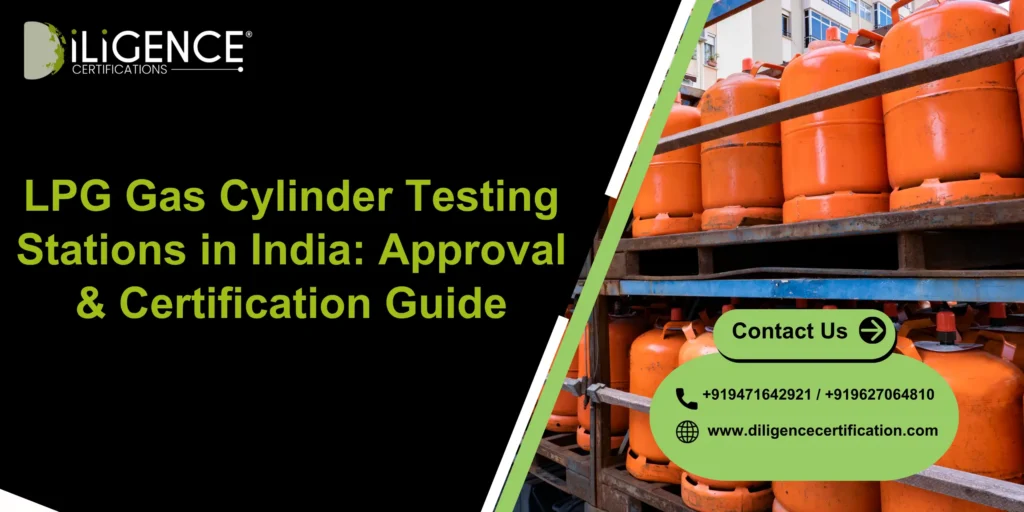
By - LPG Gas Cylinder Testing Stations serve as safety, compliance, and quality assurance of LPG cylinders prior to approval in India.
- The primary objective of the stations is testing of cylinders on their pressure, endurance, leakage, and safety compliance.
- Such stations play a vital role in avoiding accidents and achieving compliance with GCR Rules 2016.
- The necessary documents required are company incorporation, cylinder description, and quality test certificates.
- The process consists of application, inspection, testing, evaluation, and final approval.
Introduction
There are numerous hurdles that companies face in the absence of proper certification through LPG Gas Cylinder Testing Station for their products. There can be a lot of problems associated with the failure to meet quality and safety standards in India, as a result, these cylinders will be rejected. This could be costly for manufacturers as well as create problems regarding legality issues. Petroleum & Explosives
Safety Organization (PESO)
Therefore, it is essential for manufacturers to obtain certification through LPG Gas Cylinder Testing Station for their products as it guarantees thorough testing of the cylinders. The cylinders would be properly tested on pressure, leakages, strength, and general safety criteria according to government requirements.
In this way, manufacturers can be fully compliant with GCR norms along with other standards in India. Moreover, they can also establish customer trust.
What are LPG Gas Cylinder Testing Stations?
LPG Gas Cylinder Testing Stations are approved establishments in India that test and certify the gas cylinders so that they can be safely utilized by anyone based on certain safety requirements, quality and performance standards. LPG Gas Cylinder Testing Stations serve an extremely crucial function in keeping up with the safety standards of the GCR rules.
- Definition & Functions: LPG Gas Cylinder Testing Stations refer to specific locations where cylinders are tested for safety, strength and performance before being certified for use in industry or households.
- Regulation: LPG Gas Cylinder Testing Stations ensure that all the cylinders are compliant with the safety laws of India and pressure vessels.
- Tested Products: They conduct tests on LPG cylinders, industrial cylinders, CNG cylinders and other pressurized cylinders.
- Safeguarding Safety: Cylinders are tested against pressure, leakage, strength, and structure, and so on, in order to avoid any accident or danger.
- Quality Certification: Through testing, LPG gas cylinder testing stations ensure that only cylinders of superior quality are sold in the market.
Why is LPG Gas Cylinder Testing Stations Important?
The LPG Gas Cylinder Testing Stations are of utmost importance when it comes to ensuring that the gas cylinders meet the required safety, quality, and regulatory requirements before being put to use or marketed.
- Legal Compliance: The LPG Gas Cylinder Testing Stations ensure that the cylinders conform to the safety norms laid down by India and GCR guidelines to avoid any legal action or rejection.
- Safety: The testing of cylinders at these stations ensures that cylinders are tested for pressure, leaks, and other strengths to provide safe usability.
- Quality Checks: Testing ensures that cylinders are made from the best material and are properly manufactured and tested.
- Market Acceptance: Cylinders which have been certified are readily accepted by dealers and distributors in India.
- Consumer Preference: Consumers prefer cylinders that have been tested and certified due to safety reasons.
- Growing Business: Proper testing and certification helps in promoting their business across the country and abroad.
Thus, it can be said that the LPG Gas Cylinder Testing Stations are quite important for any business in this sector.
Features of LPG Gas Cylinder Testing Stations
The LPG Gas Cylinder Testing Stations are unique sites where gas cylinders are tested thoroughly to make sure that they comply with all the Indian norms regarding their safety, durability, and reliability. This is because there is a set procedure that must be followed at these sites to certify them.
- Safety Norms: They are tested based on their ability to withstand pressure and resist any sort of leakages.
- Regulatory Compliances: They ensure that all the cylinders are completely in line with GCR rules.
- Durable: They are tested for their ability to tolerate environmental changes.
- Reliable: They help in ensuring that the cylinders work efficiently throughout their lifetime.
- Material Quality: They ensure only quality material-based cylinders are approved.
Thus, the LPG Gas Cylinder Testing Stations ensure that all the cylinders meet all the Indian safety norms.
Who Needs LPG Gas Cylinder Testing Stations?
The necessity of LPG Gas Cylinder Testing Stations is for all those business houses who are engaged in either manufacturing, handling, and distributing the gas cylinders along with other gas accessories.
- Manufacturers: Manufacturers need LPG testing stations to ensure the cylinders manufactured meet the Indian safety standards.
- Importers: Importers also need LPG testing stations to ensure the cylinders imported meet Indian standards of safety and are not rejected by customs authorities.
- Suppliers/Dealers: Suppliers and dealers rely on testing stations to verify whether the products are safe and certified.
- Exporters: The requirement for LPG testing stations for exporters is to check if the cylinders exported comply with Indian safety standards.
All in all, testing stations are necessary for everyone dealing with gas cylinders.
Documentation Needed for LPG Gas Cylinder Testing Stations
In order to receive an approval from LPG Gas Cylinder Testing Stations, one needs to provide accurate documents that would be used during an evaluation process. These documents ensure that there is no mistake made during the testing and evaluation process, which may lead to rejection.
- Business Registration: Business registration document, Import Export Code (IEC), and authorization letter.
- Product Specifications: Detailed technical description about the product such as its design, capacity, material, and pressure rating.
- Test Reports: Reports of the tests conducted on the products such as safety tests, pressure tests, leakage tests, and durability tests.
- Quality Control (QC): Information related to the manufacturing process and inspection reports.
Accurate documents play a vital role in ensuring that the approval process at LPG Gas Cylinder Testing Stations is smooth and error-free.
Step-by-Step Process for LPG Gas Cylinder Testing Stations
The procedure carried out in LPG Gas Cylinder Testing Stations ensures that all gas cylinders comply with safety, quality and performance standards set by the Indian Government before getting approved. The following is a simplified guide on how to get certified in these stations.
Process of Application:
An application for certification of products will have to be submitted to the authorized LPG Gas Cylinder Testing Station including basic details about the company and product.
Submission of Documents:
Alongside with the application form, you’ll need to submit all the documents necessary for verification of your company, including company registration certificate and product specifications among others.
Testing Procedure:
The testing of gas cylinders includes their evaluation in terms of pressure resistance, leakage, durability, strength of materials and safety performance.
Process of Inspection:
The experts will inspect gas cylinders and confirm if they correspond with the data stated in the provided documentation.
Process of Verification and Evaluation:
All obtained data from the above procedures will be thoroughly evaluated to confirm the compliance with the Indian standards and regulations set forth in GCR.
Final Stage of the Procedure:
Once the above stages are completed successfully, the LPG Gas Cylinder Testing Station will issue the approval certificate.
Timeline, Cost, and Renewal Process
| Parameter | Details |
| Timeline | The complete approval process usually takes around 2 to 6 weeks, depending on cylinder type, testing requirements, and document accuracy. |
| Cost | The cost varies based on cylinder category, testing scope, and consultancy services. It may be moderate to high depending on complexity. |
| Validity | Approval is valid for a specific cylinder design or type until there are any changes in regulations or technical specifications. |
| Renewal Process | Renewal is required if there are changes in design, material, or compliance standards. |
| Tips to Avoid Delays | Submit complete documents, conduct pre-testing, ensure full compliance with GCR Rules, and respond quickly to authority queries. |
Common Errors in LPG Gas Cylinder Testing Station
The manufacturer or importer may experience problems with getting approval from LPG Gas Cylinder Testing Station because of some preventable mistakes. Recognizing those will facilitate the process of certification.
- Missing Documentation: Incomplete information can be the cause of delay or even rejection of the application.
Advice: Provide the authorities with comprehensive documentation.
- Wrong Technical Data: Incorrect specifications for cylinders can result in test failure.
Advice: Make sure that all the technical details are correct.
- Lack of Pre-Testing: Shipping the goods without conducting preliminary tests increases the risk of refusal.
Advice: Carry out all tests before submitting the products to the authorities.
- Violation of Requirements: Neglecting the GCR or safety guidelines will prevent you from receiving approval.
Advice: Adhere to all the regulations strictly.
- Late Communication: Poor communication with the government will prolong the process of certification.
Advice: Communicate promptly with the authorities.
Recognizing and avoiding common mistakes will increase the likelihood of successful approval from LPG Gas Cylinder Testing Station.
Benefits of LPG Gas Cylinder Testing Stations
LPG Gas Cylinder Testing Stations are very important facilities as far as they assure that cylinders are fully safe and compliant with all regulations before being marketed. These stations will enable businesses to offer high-quality products and thus earn their customers’ trust.
- Assuring Quality: Assures that cylinders are made of approved materials and meet high standards as far as their usability is concerned.
- Compliance with Regulations: Enables manufacturers, importers, and suppliers of LPG gas cylinders to comply with GCR Rules and Indian safety regulations.
- Increased Customer Satisfaction: Assures customers of the highest possible level of safety and efficiency when it comes to cylinder performance.
- Durability: Allows businesses to produce cylinders capable of enduring high pressure and adverse weather conditions.
- Ensuring Safety: Increases safety because cylinders are thoroughly tested for leakage and ability to withstand different pressure conditions.
- Acceptance on the Market: Cylinders tested in such stations have good chances to be accepted by dealers and distributors.
To summarize, LPG Gas Cylinder Testing Stations provide an effective way of assuring cylinders of good quality.
Why Choose Diligence Certification for LPG Gas Cylinder Testing Stations
Selecting the right consulting firm plays a significant role in getting the LPG Gas Cylinder Testing Stations approval process done efficiently without any trouble at all. Diligence Certification ensures comprehensive services in helping you get started with the whole process.
- Professional Guidance: Get expert guidance at each and every step in order to ensure complete awareness about requirements.
- Efficient Approval: With efficient coordination, the certification process becomes swift, without causing any delays.
- Comprehensive Documentation: Ensure complete documentation and submission of all necessary forms.
- Clear Process: Get complete information about all steps taken during the certification process.
- Comprehensive Services: Enjoy complete services throughout the process.
Diligence Certification will ensure easy completion of the LPG Gas Cylinder Testing Stations certification process for businesses.
Conclusion
LPG Gas Cylinder Testing Stations help ensure the highest quality and safety of gas cylinders while ensuring that they meet all requirements under Indian laws and GCR guidelines. The entire procedure, from testing to certification and verification, ensures that the product is in perfect condition before being released into the market. Not only does it prevent risks, but it also helps manufacturers establish their reputation within the market. PESO Certificate
In today’s highly competitive market environment, maintaining compliance is necessary not only from a legal perspective but also for developing a successful business. Always remember that certified and tested products will be much more acceptable in the market.
Whether you are manufacturing, importing, or dealing with gas cylinders, the best way is to follow the right procedure for certification.To get hassle-free certification, contact us for LPG Gas Cylinder Testing Stations.
Frequently Asked for Questions
What are LPG Gas Cylinder Testing Stations in India?
These are authorized centers which test and certify gas cylinders.
Why is LPG cylinder testing needed?
For ensuring safety and durability of the cylinder.
What is the process of approval of LPG cylinders?
Involves application, testing, inspection, and certification of cylinders.
Which are the rules governing LPG cylinder testing in India?
The GCR rules 2016 and other Indian regulations.
Who requires LPG Gas Cylinder Testing Stations?
Manufacturers, importers, exporters, and suppliers of the gas cylinders.
What is the document requirement for LPG cylinders?
Registration of company, specification of cylinders, testing certificate, etc.
What is the time duration for getting approvals?
It takes 2-6 weeks to get the approval from the testing station.
What is tested at the LPG testing stations?
Pressure, leakage, durability, and performance of the cylinder.
Is the certification required for LPG cylinders?
Yes, certification is compulsory for LPG cylinders in India.
Why should you go for certified LPG testing stations?
For the sake of compliance and market acceptance.