BIS Certification
 CDSCO
CDSCO
 PESO
PESO
 CPCB
CPCB
 LMPC
LMPC
 WPC Approval
 Global Approvals
 TEC
TEC
 ARAI
ARAI
 BEE
BEE
 ISO Certification
 DGCA Certification
 NOC For Steel
 APEDA Registration























 Business Registration
 FSSAI Mark Certification












 (32).jpg)
 Legal Services
 Trademark Registration
 Copyright Registration
 Patent Registration
 By
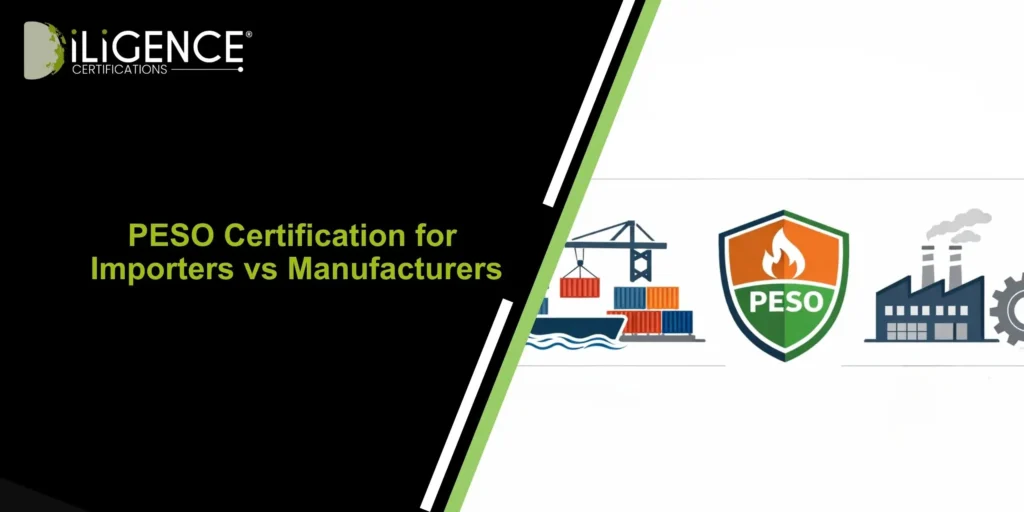
By - Scope Difference - PESO for Importers vs Manufacturers Importers need product approval manufacturers need full facility approval.
- Documentation - Importers submit product certificates; manufacturers submit plant and safety documents.
- Inspection - Importers are mostly document-checked; manufacturers face site inspection by Petroleum and Explosives Safety Organisation.
- Responsibility - Importers ensure product compliance; manufacturers ensure complete operational safety.
- Approval Time - Importers get faster approvals; manufacturers take longer due to inspections.
Introduction | PESO for Importers vs Manufacturers
If you are dealing with petroleum products, explosives, or hazardous materials in India, compliance is not optional. Approval from Petroleum and Explosives Safety Organisation (PESO) is mandatory before you import, manufacture, store, or distribute such products.
However, many businesses make a critical mistake-they assume the PESO certification process is the same for importers and manufacturers. It is not.The regulatory scope, documentation, approvals, and compliance risks differ significantly. Understanding these differences early helps avoid delays, rejections, and penalties.
This guide breaks down the exact differences, processes, and practical implications in simple terms.
What is PESO for Importers vs Manufacturers?
The PESO for Importers vs Manufacturers is a government clearance necessary for working with dangerous goods, including petroleum, explosives, compressed gases, and the equipment used with them, in India.
This ensures:
- Safety adherence
- Risk prevention
- Legality of operations
Important Features:
- Compulsory under Acts like the Explosives Rules, 2008, and the Petroleum Rules, 2012
- For importers, producers, transporters, and warehouses of the material
- Meets safety norms for equipment and material in India
- Pre-requisite for importing material into India
- Non-compliance results in legal action and closure
PESO for Importers vs Manufacturers
| Basis | Importers | Manufacturers |
| Scope of Approval | Product approval for import | Full facility, process, and product approval |
| Authority | Approval from Petroleum and Explosives Safety Organisation for import permission | Approval from Petroleum and Explosives Safety Organisation for plant setup and operations |
| Documentation | Product specs, test certificates, foreign manufacturer details | Plant layout, safety systems, risk assessment, machinery details |
| Inspection | Mostly document-based | Mandatory on-site inspection |
| Compliance Responsibility | Ensure imported products meet Indian standards | Ensure safe manufacturing and product compliance |
| Approval Time | Faster (if documents are correct) | Longer due to technical checks and inspection |
| Risk Level | Lower operational risk | Higher due to production hazards |
| Renewal & Monitoring | Periodic renewal | Strict monitoring and regular inspections |
Why PESO for Importers vs Manufacturers is Important
PESO for Importers vs Manufacturers is essential for any business dealing with hazardous materials in India because it ensures legal compliance, safety, and smooth operations. Approval from the Petroleum and Explosives Safety Organisation is mandatory before importing, manufacturing, or handling products like petroleum, explosives, or gas equipment. Without it, businesses may face customs delays, penalties, or even shutdown. More importantly, it reduces safety risks, builds credibility in the market, and allows companies to operate without regulatory interruptions.
Key Reasons:
- Legal Requirement Operations with hazardous substances become illegal if they don’t have PESO approval.
- Market Entry Barrier Importers cannot import their goods through customs unless they obtain PESO approval.
- Safety Consideration It decreases the chance of having an accident or explosion.
- Reputation Factor Enhances reputation among customers, regulatory agencies, and business partners.
- Continuity It prevents operational interruptions.
Important and Benefits of PESO for Importers vs Manufacturers
| Aspect | Details |
| Legal Compliance | Mandatory approval from Petroleum and Explosives Safety Organisation to operate legally in India |
| Market Access | Enables import, manufacturing, storage, and sale of hazardous products |
| Safety Assurance | Ensures products and operations meet strict safety standards |
| Avoid Penalties | Prevents fines, legal action, and business shutdown |
| Smooth Customs Clearance | Importers can clear goods without delays |
| Business Credibility | Builds trust with clients, authorities, and partners |
| Risk Reduction | Minimizes chances of accidents and hazards |
| Operational Continuity | Avoids disruptions due to non-compliance |
| Competitive Advantage | Gives an edge over non-compliant competitors |
| Long-Term Growth | Supports expansion with proper regulatory approvals |
PESO for Importers vs Manufacturers Process
The process varies slightly for importers and manufacturers, but the core framework is similar.
Step-by-Step Process:
1. Identify Applicable Rules
- Petroleum Rules, 2012
- Explosives Rules, 2008
- Gas Cylinder Rules, etc.
2. Document Preparation
For Importers:
- Product datasheet
- Test certificates (IEC/ATEX, etc.)
- Authorization from foreign manufacturer
For Manufacturers:
- Factory layout plan
- Safety systems details
- Equipment specifications
- Risk assessment reports
3. Application Submission
- Submit application to PESO authority
- Include all technical and legal documents
4. Technical Evaluation
- PESO reviews product or facility
- May request clarifications
5. Inspection (Mainly for Manufacturers)
- Physical inspection of plant
- Verification of safety compliance
6. Approval Grant
- Certificate issued if compliant
- Conditions may apply
7. Post-Approval Compliance
- Periodic inspections
- Renewal of license
- Continuous adherence to safety standards
Challenges of Getting PESO Certification Without a Consultant
Without expert support, businesses often face wrong classification, incomplete documents, and delays. Poor understanding of rules and inspection requirements can lead to rejection by the Petroleum and Explosives Safety Organisation.
Key Challenges:
- Wrong Classification causes rejection.
- Incomplete Documentation Lack of technical information or misuse of formats delays approval.
- Regulatory Issues There are various regulations depending on product type.
- Technical Issues Incorrect interpretation of safety standards.
- Inspection Issues Manufacturing companies fail the first inspection process.
- Time Issues Approvals could be delayed without sufficient knowledge and skills.
- Communication Issues Inaccurate responses to questions from PESO results in rejection.
Why Choose Diligence Certification for PESO Approval
Diligence Certification provides end-to-end support for PESO for Importers vs Manufacturers ensuring accurate documentation, correct classification, and faster processing. Their expertise reduces the risk of rejection, prepares manufacturers for inspections, and handles compliance efficiently, helping businesses save time and avoid costly delays.
Key Advantages:
- Correct Classification from Day One Avoids rejection due to the wrong application category.
- Complete Documentation Support Ensures every technical document meets PESO standards.
- Faster Approval Timeline Eliminates unnecessary back-and-forth.
- Inspection Readiness Prepares manufacturers for PESO audits.
- End-to-End Support From application to approval and renewal.
- Experience Across Industries Handles petroleum, explosives, gas, and equipment approvals.
- Risk Reduction Minimizes compliance errors and legal exposure.
Conclusion
PESO for Importers vs Manufacturers is not a simple registration-it is a strict regulatory approval that directly impacts your ability to operate in India.
The difference between importer and manufacturer certification is significant:
- Importers deal with product compliance
- Manufacturers deal with full operational safety
Most delays and failures happen due to misunderstanding this difference.
If you approach it correctly-with proper documentation, classification, and compliance-you can avoid months of delays and costly mistakes.
Frequently Asked Questions (FAQs)
Is PESO certification mandatory for importers?
Yes, without PESO approval, hazardous products cannot be imported into India.
Do manufacturers need more approvals than importers?
Yes, manufacturers require facility inspection and safety approvals in addition to product certification.
How long does PESO certification take?
Importers: 4-8 weeks
Manufacturers: 2-4 months depending on inspection
Can I apply for PESO certification myself?
Yes, but errors in documentation and classification often lead to rejection.
What happens if I operate without PESO approval?
You may face legal action, penalties, or business shutdown.
Is PESO certification required for all products?
Only for hazardous materials like petroleum, explosives, gas cylinders, and related equipment.
Do foreign manufacturers need PESO approval?
Yes, if their products are imported into India, they must comply with PESO standards.
What documents are critical for importers?
Test certificates, product specifications, and manufacturer authorization.
What is the biggest challenge for manufacturers?
Passing the PESO inspection and meeting safety compliance requirements.
Can PESO certification be renewed?
Yes, it must be renewed periodically to maintain compliance.