BIS Certification
 CDSCO
CDSCO
 PESO
PESO
 CPCB
CPCB
 LMPC
LMPC
 WPC Approval
 Global Approvals
 TEC
TEC
 ARAI
ARAI
 BEE
BEE
 ISO Certification
 DGCA Certification
 NOC For Steel
 APEDA Registration























 Business Registration
 FSSAI Mark Certification












 (32).jpg)
 Legal Services
 Trademark Registration
 Copyright Registration
 Patent Registration
 By
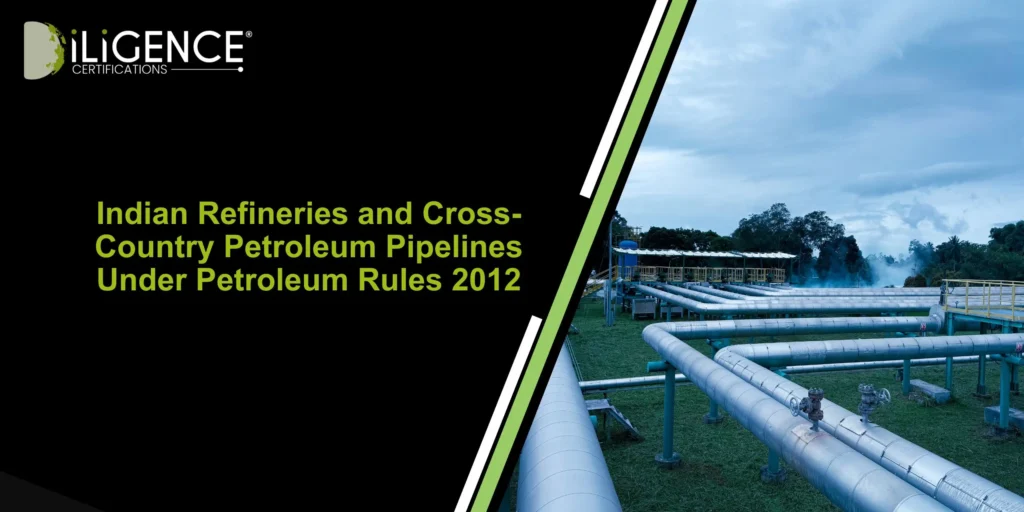
By - Petroleum Rules Pipelines in India Petroleum Rules 2012 regulate storage, transport, refining, and handling of petroleum products in India.
- Cross-country pipelines require strict safety, design, and operational approvals.
- Refineries must comply with licensing, inspection, and hazard control norms.
- PESO (Petroleum and Explosives Safety Organization) is the primary authority.
- Non-compliance can lead to shutdowns, penalties, or legal action.
Introduction | Petroleum Rules Pipelines in India
India’s petroleum sector operates under strict regulatory control due to the hazardous nature of petroleum products. The Petroleum Rules, 2012 provide a legal framework governing the refining, storage, and transportation of petroleum, including cross-country pipelines.
Petroleum Rules Pipelines in India For businesses involved in refineries or pipeline operations, compliance is not optional-it is mandatory for operational continuity. Whether setting up a refinery or laying a pipeline across states, approvals, inspections, and documentation play a critical role in avoiding regulatory risks.
This guide breaks down the regulatory structure, approval process, benefits, and challenges involved.
What Are Refineries and Cross-Country Petroleum Rules Pipelines in India?
- Refineries: Industrial facilities where crude oil is processed into usable petroleum products such as petrol, diesel, LPG, and lubricants.
- Cross-country pipelines: Long-distance pipelines used to transport petroleum products across states or regions.
Key Components
- Refinery Units
- Distillation units
- Cracking units
- Storage tanks
- Pipeline Infrastructure
- Pumping stations
- Valves and control systems
- Monitoring systems
- Safety Systems
- Fire protection systems
- Leak detection mechanisms
- Emergency shutdown systems
- Regulatory Oversight
- Licensing requirements
- Periodic inspections
- Compliance audits
- Environmental Controls
- Emission control
- Waste management
- Spill prevention
Why Petroleum Rules, 2012 Apply to Petroleum Rules Pipelines in India
Purpose of Regulation
Petroleum Rules Pipelines in India Petroleum Rules, 2012 ensure safe handling and transportation of petroleum products across India.
Key Reasons
- Risk Management Petroleum is highly flammable. Regulations reduce accident risks.
- Standardization Ensures uniform safety and operational standards nationwide.
- Environmental Protection Prevents oil spills, leaks, and pollution.
- Legal Compliance Mandatory approvals avoid penalties and shutdowns.
- Public Safety Protects people living near pipelines and refineries.
Importance and Benefits Petroleum Rules Pipelines in India
| Aspect | Benefit |
| Regulatory Compliance | Avoids penalties and legal issues |
| Operational Safety | Reduces fire and explosion risks |
| Business Continuity | Ensures uninterrupted operations |
| Reputation | Builds trust with stakeholders |
| Insurance Approval | Easier insurance claims and coverage |
| Environmental Safety | Prevents ecological damage |
| Investment Readiness | Attracts investors and partners |
Approval and Compliance Process
Step-by-Step Process
Step 1: Project Planning
- Define refinery or pipeline scope
- Conduct feasibility study
- Risk assessment
Step 2: Documentation Preparation
- Layout drawings
- Technical specifications
- Safety plans
- Environmental clearance
Step 3: Application Submission
- Submit application to PESO
- Attach all required documents
Step 4: Design Approval
- Technical evaluation of design
- Compliance with safety standards
Step 5: Site Inspection
- Physical inspection by authorities
- Verification of infrastructure
Step 6: Installation Approval
- Approval for equipment and systems
- Compliance check during installation
Step 7: Final Certification
- Issuance of license/approval
- Permission to operate
Step 8: Periodic Renewal
- Regular inspections
- Renewal of licenses
Additional Compliance Requirements
- Emergency response planning
- Fire safety certification
- Pressure testing of pipelines
- Regular maintenance logs
- Staff training and certification
Challenges of Getting This Certification Without a Consultant
- Complex Documentation Most applications get delayed due to incomplete or incorrect documentation.
- Regulatory Interpretation Understanding Petroleum Rules requires technical and legal knowledge.
- Design Errors Non-compliant layouts lead to rejection.
- Delays in Approval Improper submission leads to multiple queries and delays.
- Coordination Issues Multiple authorities involved (environment, safety, PESO).
- High Risk of Rejection Even minor mistakes can result in rejection.
- Time and Cost Overruns Delays increase project costs significantly.
Why Choose Diligence Certification for Petroleum Rules, 2012 Compliance
Choosing the right consultant directly affects approval timelines, cost, and risk exposure. Here is what makes Diligence Certification a practical choice:
1. End-to-End Support From documentation to final approval.
2. Regulatory Expertise Deep understanding of Petroleum Rules, 2012.
3. Faster Approvals Minimizes delays through accurate submission.
4. Error-Free Documentation Ensures compliance at first submission.
5. Liaison Support Handles communication with authorities.
6. Customized Solutions Tailored for refineries and pipeline projects.
7. Proven Track Record Experience across multiple compliance projects.
Conclusion
Petroleum Rules Pipelines in India Petroleum Rules, 2012 is critical for any refinery or cross-country pipeline project in India. The regulatory framework ensures safety, environmental protection, and operational efficiency.
However, the complexity of approvals and technical requirements makes the process challenging without expert guidance. Businesses that approach this strategically-with proper planning and compliance support-can avoid delays, reduce risks, and achieve faster operational readiness.
Frequently Asked Questions (FAQs)
What are Petroleum Rules, 2012?
They are regulations governing storage, transport, refining, and handling of petroleum products in India.
Who regulates petroleum pipelines in India?
PESO is the primary authority responsible for approvals and safety compliance.
Is approval mandatory for cross-country pipelines?
Yes, approval is compulsory before installation and operation.
What documents are required for approval?
Layout plans, safety reports, technical specifications, and environmental clearance.
How long does approval take?
Typically 3-6 months, depending on project complexity and documentation accuracy.
What happens if compliance is not followed?
Penalties, shutdowns, and legal action may be imposed.
Are periodic inspections required?
Yes, regular inspections are mandatory for continued operation.
Can small errors lead to rejection?
Yes. Even minor non-compliance can delay or reject applications.
Is environmental clearance necessary?
Yes, especially for large-scale refinery and pipeline projects.
Why hire a consultant for approval?
A consultant reduces errors, speeds up approvals, and ensures full compliance.