


 BIS Certification
 CDSCO
CDSCO
 CPCB
CPCB
 LMPC
LMPC
 WPC Approval
 Global Approvals
 TEC
TEC
 ARAI
ARAI
 BEE
BEE
 ISO Certification
 DGCA Certification
 NOC For Steel
 APEDA Registration









 Business Registration
 FSSAI Mark Certification

 Legal Services
 Trademark Registration
 Copyright Registration
 Patent Registration

- BIS Certification as per IS 11066:2022 confirms that Polyester Multifilament Ropes conform to quality, safety, and performance standards of India.
- The ISI Mark creates confidence for customers and allows manufacturers to bid for government and export tenders.
- Certification involves product testing, requisite documentation, factory inspection, and approval by the Bureau of Indian Standards.
- Licenses are valid for two years and can be renewed for periods of time up to five years so long as quality regulations are in compliance.
- By hiring a BIS certification consultant, the documentation of your business, product testing, and approval can be streamlined for more efficient time to market.
Introduction
In mid-2024, a polyester rope producer from Gujarat was unable to fulfill a major export requirement to a buyer in Southeast Asia. The reason was not price or quality — it was the lack of BIS Certification under IS 11066:2022. While the ropes could meet international tensile standards, the buyer adhered to Indian regulations and could only accept products certified with an ISI mark.
This narrative is one with which many Indian wire rope manufacturers may relate. The BIS Certification for Polyester Multifilament Ropes has become a necessity for the industry — not just for compliancy, but for customer trust, performance, and market legitimacy. These ropes will occupy a worthy safety spot, in any marine or fishing operation, or for industrial lifting, as failure of the materials is simply unacceptable.
The Bureau of Indian Standards (BIS) guarantees every rope manufactured, or imported to India, adheres along a demanding proceedings for strength, elongation, and environmental stress blow regulations. For any rope manufacturer, getting the ISI Mark under IS 11066:2022 marks the final achievement to ensure legal compliancy, buyer assurance, and competitiveness, throughout Indian, the local, and the global market.
What is IS 11066:2022?
The Bureau of Indian Standards (BIS) has released Indian Standard IS 11066:2022 for Polyester Multifilament Sectioned Ropes. This standard outlines the technical specifications, test parameters, and the performance requirements to check the properties of polyester multifilament sectioned ropes intended for use in marine, industrial lifting, construction and engineering applications requiring high strength and durability.
This standard will ensure all polyester multifilament ropes manufactured or sold in India will be consistent in quality and safety. The standard covers:
- Material Specifications: Defines approved polyester multifilament materials suitable for rope manufacturing.
- Construction and Dimensions: Sets limits on diameter, strand count, and construction patterns for uniform performance.
- Mechanical Properties: Prescribes minimum breaking strength, elongation at break, and load-bearing capacity.
- Workmanship and Finish: Ensures that ropes are free from defects such as loose strands, knots, or irregular weaving.
- Testing Methods: Describes standard testing for tensile strength, elongation, and dimensional accuracy under controlled conditions.
Why BIS Certification for Polyester Multifilament Ropes Matters
BIS Certification for Polyester Multifilament Ropes confirms that the product satisfies India’s stringent quality, strength, and safety standard as defined in IS 11066:2022. These rope types are commonly employed in sensitive activities including marine loading, lifting, movement of goods, and construction activities, where dependability and performance must not be compromised.
Obtaining BIS certification matters because:
- Confirms Quality & Strength: Establishes that the rope meets prescribed standards for tensile strength, load capacity, and material purity.
- Confirm Safety Standards: Reduces the possibility of an accident occurring from using a weak or faulty quality rope in a manufacturing or marine industry.
- Legal Requirement: BIS certification is required prior to manufacturing, selling, or importing polyester multifilament ropes in India.
- Gives You Market Confidence: The ISI mark is a mark of reliability that helps develop your brand in the eyes of your buyers or contractors.
- Allows for Tender Acceptance: Most government and large industrial tenders only accept BIS certified products.
In essence, BIS certification guarantees that Polyester Multifilament Ropes are tested, verified, and compliant with Indian safety and performance standards, making them safe for both domestic and export markets.
Understanding the ISI Mark for Polyester Multifilament Ropes
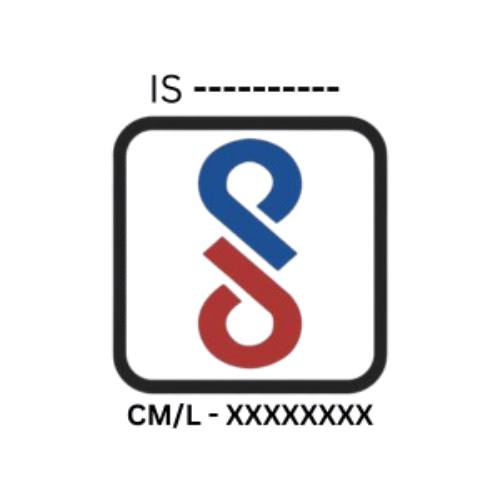
The ISI Mark on Polyester Multifilament Ropes demonstrates confidence, quality, and conformity with the Bureau of Indian Standards (BIS) Indian Standard IS 11066:2022. It assures the user that the ropes have passed all testing, inspection and performance verification at BIS accredited laboratories.
The ISI mark indicates that every action taken from the selection of raw materials to the production of the finished products has been carried out in compliance with the quality control measures put in place by the Bureau of Indian Standards (BIS), meaning that the ropes are strong, durable, UV resistant , and safe for industrial and marine use.
Key benefits of the ISI mark include:
- Proof of Standard Compliance: Confirms adherence to IS 11066:2022 specifications.
- Enhanced Market Credibility: Builds buyer confidence and simplifies entry into government tenders.
- Product Safety Assurance: Ensures ropes are tested for load strength, flexibility, and wear resistance.
- Legal and Commercial Advantage: Non-ISI products can be restricted from sale in the Indian market
Benefits of BIS Certification for Polyester Multifilament Ropes
Obtaining BIS Certification for Polyester Multifilament Ropes provides multiple advantages for both manufacturers and end users. It not only ensures product quality and reliability but also strengthens brand credibility in domestic and international markets.
Key benefits include:
- Quality Assurance:
Confirms that the ropes meet the standards of IS 11066:2022, ensuring consistent performance and strength. - Safety Compliance:
Reduces the risk of breakage, accidents, and product failure during lifting, towing, or marine applications. - Market Access:
BIS certification is mandatory for sale and distribution of polyester multifilament ropes in India, allowing legal and smooth market entry. - Customer Confidence:
The ISI mark builds trust among buyers, government departments, and industrial users. - Export Support:
Certified products are recognized for their quality, enhancing global competitiveness and export potential. - Tender Eligibility:
Many government and industrial tenders require BIS-certified products for participation.
Step-by-Step Process for BIS Certification for Polyester Multifilament Ropes
To obtain BIS certification, manufacturers must follow the standard procedure defined by the Bureau of Indian Standards. Below is the simplified step-by-step process:
- Identify the Applicable Standard:
Determine that your product falls under IS 11066:2022 – Polyester Multifilament Ropes. - Product Testing:
Send a product sample to a BIS-recognized laboratory for testing as per the requirements of IS 11066:2022. - Documentation & Application Submission:
Prepare all mandatory documents (factory details, test reports, and quality manuals) and submit the online application on the Manak Online BIS portal. - Factory Inspection (for Domestic Manufacturers):
BIS officials inspect the manufacturing facility to verify infrastructure, testing equipment, and production quality control systems. - Grant of License:
Once all requirements are verified and the product passes testing, BIS issues the ISI license allowing the manufacturer to use the ISI mark on the product. - Post-Certification Surveillance:
BIS periodically checks product quality and factory compliance to ensure consistent adherence to standards.
Documents Required for BIS Certification
Applicants must provide accurate and complete documentation to avoid rejection or delay in the BIS approval process.
Essential documents include:
- Application form and duly filled checklist.
- Manufacturing unit registration or incorporation certificate.
- Factory layout plan and process flow chart.
- Product test report from a BIS-recognized laboratory.
- List of manufacturing machinery and testing equipment.
- Details of quality control personnel and internal testing process.
- Sample labels, marking details, and packaging information.
- In case of foreign manufacturers – appointment of an Authorized Indian Representative (AIR).
Validity and Renewal of BIS License
The BIS license granted for Polyester Multifilament Ropes under IS 11066:2022 is initially valid for two years from the date of issue.
Manufacturers can apply for renewal by submitting a renewal application before the license expiry date.
Key points for renewal:
- The renewal period can be extended for 1 to 5 years, depending on product performance and compliance records.
- Updated test reports and inspection results must be provided.
- The factory must continue to maintain the quality control systems as per BIS requirements.
- Any major change in production, machinery, or address must be informed to BIS.
Failure to renew the license on time may result in cancellation or suspension of the ISI mark usage rights.
Common Challenges Manufacturers Face
While obtaining BIS certification offers significant benefits, many manufacturers face difficulties during the process, such as:
- Incomplete Documentation: Missing technical or testing details often cause application rejection.
- Failed Product Testing: Products not meeting IS 11066:2022 parameters delay certification.
- Lack of Awareness: Many manufacturers are unfamiliar with BIS procedures and online portal requirements.
- Inspection Delays: Scheduling and completing factory inspections can take extra time.
- Non-Compliance Issues: Failure to maintain consistent quality may lead to suspension or renewal rejection.
Proper guidance from an experienced BIS consultant can help overcome these challenges efficiently.
Cost of BIS Certification
The cost of BIS certification for Polyester Multifilament Ropes depends on multiple factors, such as:
- Application fees and government charges as per BIS norms.
- Testing charges for product samples in BIS-recognized labs.
- Inspection and audit expenses, if applicable.
- Consultation and documentation support fees.
The total cost varies depending on production scale, number of product models, and factory location. While the process requires investment, it ensures long-term benefits in market trust, compliance, and credibility.
Why Choose Diligence Certification
Selecting a business partner can help ease the burden of the BIS certification process. Diligence Certification delivers a full service solution — from coordinating the product testing through to preparing the application, dots-documents required, and licence approval.
Key reasons to choose expert BIS assistance:
- Experienced consultants familiar with all BIS standards and procedures.
- Complete documentation, testing, and inspection guidance.
- Transparent process with timely updates.
- Fast and reliable approval support for domestic and international manufacturers.
With expert support, you can focus on production while ensuring 100% BIS compliance without delays.
Conclusion
The BIS Certification for Polyester Multifilament Ropes (IS 11066:2022) is an extremely important need and measure for ensuring product quality, performance and safety in areas such as marine, transportation, and construction.
It supports achieving reputation, market acceptance and trust from consumers, while also showing compliance with relevant regulations.
Manufacturers should pursue BIS Certification as a vehicle for meeting the safety and performance requirements India stipulates for offering the highest measure of assurance to customers in the domestic and export marketplace.
Frequently Asked Questions
What does BIS (Bureau of Indian Standards) Certification mean for Polyester Multifilament Rope?
It signifies that the ropes comply with IS 11066:2022 and have been assessed in terms of strength, safety, and longevity.
Why is BIS Certification required?
To ensure the rope maintains a certain level of quality for consumer confidence, and for the legality of the rope in India.
Which standard is associated with these ropes?
The standard associated with these ropes is IS 11066:2022 from the Bureau of Indian Standards (BIS).
Has BIS Certification already been made mandatory?
Yes, BIS certification is required in India to manufacture or sell polyester ropes.
What testing was performed to obtain BIS approval?
Tests were completed for tensile strength, elongation, and load bearing capacity.
How long is BIS license good for?
The BIS license is good for two years, and can be renewed up to five years.
Who issues the BIS Certification?
BIS issues the ISI licensing.
What are the benefits of utilizing BIS approved rope.
Safer development, more confidence in the quality, eligibility for a tender.
Can a foreign manufacturer apply for a BIS?
Yes, a foreign manufacturer can apply through an AIR (Authorized Indian Representative).
Does Diligence Certification offer help?
They help with the documentation, testing, and application process for BIS approval, saving time to approval.