


 BIS Certification
 CDSCO
CDSCO
 CPCB
CPCB
 LMPC
LMPC
 WPC Approval
 Global Approvals
 TEC
TEC
 ARAI
ARAI
 BEE
BEE
 ISO Certification
 DGCA Certification
 NOC For Steel
 APEDA Registration











 Business Registration
 FSSAI Mark Certification









 (32).jpg)
 Legal Services
 Trademark Registration
 Copyright Registration
 Patent Registration
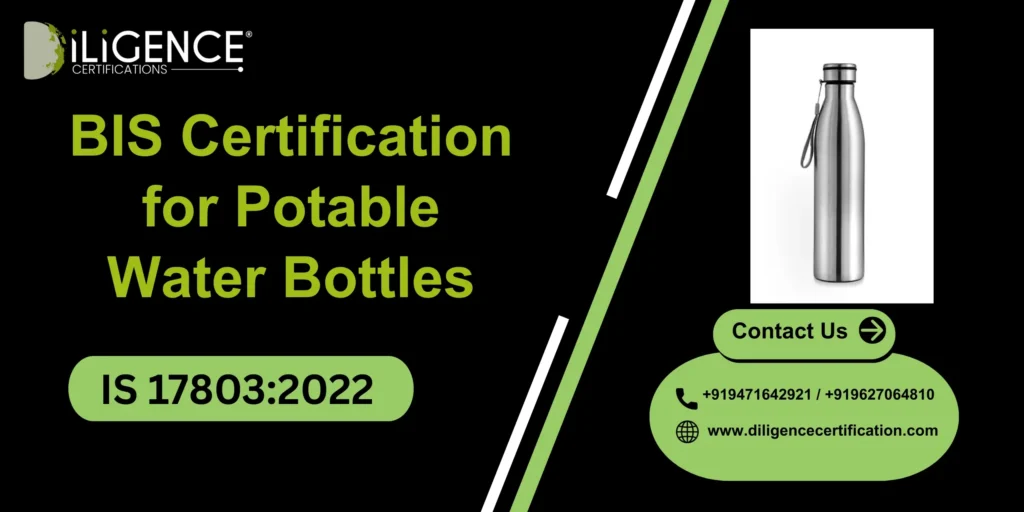
- BIS Certification for Potable Water Bottles under IS 17803:2022 is mandatory in India for copper, stainless steel, and aluminium bottles meant for drinking water.
- The ISI Mark ensures material safety, hygiene, and compliance with Indian food-contact standards.
- Manufacturers and importers must obtain BIS approval before selling or importing potable water bottles in India.
Introduction
Last year, a mid-sized stainless steel bottle manufacturer from Gujarat reached out after their export-grade bottles were stopped at an Indian distributor warehouse. The reason was not quality, not leakage, not even pricing. It was simple and costly: no BIS Certification for Potable Water Bottles.They had assumed that food-grade steel and international test reports were enough. Indian regulators thought otherwise.That single assumption delayed their launch by three months and blocked over ₹40 lakhs worth of inventory.This is the reality today. If you manufacture or import potable water bottles made of copper, stainless steel, or aluminium, BIS compliance under IS 17803:2022 is no longer optional. It is a legal, commercial, and reputational requirement.
What Is BIS Certification for Potable Water Bottles?
BIS Certification for Potable Water Bottles is a mandatory conformity assessment issued by the Bureau of Indian Standards. It certifies that bottles intended for drinking water meet Indian safety, hygiene, and material standards.Under this system, compliant products carry the ISI Mark, signalling that the bottle is safe for human consumption and suitable for potable water storage.
This requirement applies equally to:
- Indian manufacturers
- Foreign manufacturers exporting to India
- Importers selling under private labels
IS 17803:2022 Explained in Simple Terms
What is IS 17803:2022?
IS 17803:2022 is the Indian Standard titled “Metallic Drinking Water Bottles — Specification.” It defines technical, chemical, and hygienic requirements for bottles used to store drinking water.
Materials Covered Under IS 17803:2022
- Copper water bottles
- Stainless steel water bottles
- Aluminium water bottles
Each material has different test parameters, but all must ensure no harmful leaching, structural safety, and consumer hygiene.
Why This Standard Was Introduced
Indian households increasingly shifted to reusable metal bottles. Complaints about metallic taste, corrosion, and contamination triggered regulatory action. IS 17803:2022 closed that gap.
Is BIS Certification Mandatory for Water Bottles in India?
Yes. As per BIS notifications, potable water bottles made of metal must carry the ISI Mark before being sold in the Indian market.
Selling without certification can lead to:
- Seizure of goods
- Heavy penalties
- Import clearance rejection
- Legal action under BIS Act, 2016
Many brands learn this only when stock is already produced.
ISI Mark for Potable Water Bottles: What It Actually Means
The ISI Mark on a bottle confirms three things:
- The material is safe for drinking water contact
- Manufacturing is controlled and audited
- Product samples passed BIS-recognised lab testing
For consumers, it is trust.
For regulators, it is compliance.
For brands, it is market access.
Who Needs BIS Certification for Potable Water Bottles?
You need BIS Certification if you are:
- Manufacturing bottles in India
- Importing bottles from China, Europe, or any other country
- Selling under your own brand or private label
- Supplying bottles to corporates, schools, or government tenders
Even e-commerce sellers listing on Amazon or Flipkart are now asked for BIS details.
BIS Certification Process for Potable Water Bottles
Step 1: Product & Factory Assessment
We first identify:
- Bottle material (copper / SS / aluminium)
- Manufacturing process
- Factory readiness
Many delays happen here if documentation is weak.
Step 2: Sample Testing
Samples are sent to a BIS-recognised laboratory for:
- Chemical composition
- Migration and leaching tests
- Physical and workmanship tests
Step 3: BIS Application Filing
Application is submitted under the ISI Certification Scheme with:
- Factory documents
- Test reports
- Quality control details
Step 4: Factory Inspection
A BIS officer audits the manufacturing unit. This is where most applications fail if preparation is poor.
Step 5: Grant of Licence
Once approved, the manufacturer is authorised to use the ISI Mark on bottles.
Timeline & Cost: What to Expect Realistically
- Timeline: 30–60 working days (if documentation and factory are ready)
- Cost: Depends on material, testing scope, and factory location
Cheapest applications often become the most expensive due to rework and delays.
Common Mistakes Brands Make
From experience, these are recurring issues:
- Assuming food-grade material equals BIS compliance
- Using non-recognised test labs
- Poor internal quality control documentation
- Ignoring marking and labelling requirements
One Delhi-based importer lost an entire consignment due to incorrect ISI mark placement.
Special Case: Foreign Manufacturers & Importers
Foreign manufacturers must:
- Appoint an Authorised Indian Representative (AIR)
- Undergo factory inspection abroad
- Comply with Indian testing standards
This process is stricter and needs proper coordination.
How BIS Certification Builds Brand Trust
In India, compliance is not just legal. It is commercial credibility.
Retailers prefer BIS-certified brands.
Government buyers demand it.
Consumers recognise the ISI Mark instantly.
It quietly increases conversion without marketing noise.
Why Choose Diligence Certification
When brands approach us for BIS, ISI, CDSCO, or regulatory approvals, it’s usually after they’ve already faced delays, rejections, or confusion. Diligence Certification was built specifically to prevent those situations—not react to them.
1. We Work Like Compliance Consultants, Not Agents
Most agencies only file applications. We diagnose compliance first, then file.
That means:
- We check product scope, applicable Indian Standards, and exemptions upfront
- We flag risks before BIS or authorities do
- You avoid rejections, resubmissions, and wasted testing costs
This approach saves time, money, and credibility.
2. Deep Expertise in BIS & ISI Certification
Diligence Certification has hands-on experience with:
- BIS ISI Certification
- Scheme I, Scheme II, and Foreign Manufacturer Certification
- Product categories where rejection rates are high (metal products, consumer goods, industrial items)
Our team understands how BIS officers evaluate files, not just what the checklist says.
3. End-to-End Handling (No Handovers, No Confusion)
Clients choose us because they don’t want to coordinate between:
- Labs
- Inspectors
- Documentation teams
- Follow-ups
We manage:
- Product standard mapping
- Testing coordination with BIS-recognised labs
- Factory inspection readiness
- Application filing and post-submission queries
You deal with one accountable team, not multiple vendors.
4. Practical Factory & Inspection Support
Factory inspection is where most applications fail.
We don’t just say “inspection will happen.”
We prepare you for:
- Quality control records
- Marking & labelling compliance
- In-house testing arrangements
- Officer-level questions during inspection
This practical preparation is the difference between approval vs delay.
5. Transparent Communication & Realistic Timelines
We do not promise “guaranteed approval in 7 days.”
Instead, we provide:
- Clear timelines based on product and factory readiness
- Honest feedback if changes are required
- Regular updates without being chased
Clients trust us because there are no surprises mid-process.
6. Experience Across Indian & Foreign Manufacturers
Whether you are:
- An Indian manufacturer
- A startup brand
- An importer
- A foreign manufacturer exporting to India
We understand both domestic BIS licensing and Foreign Manufacturer Certification (FMCS) requirements, including AIR support and overseas inspections.
7. Compliance That Supports Business Growth
Certification is not the end goal—market access is.
Our clients choose Diligence Certification because:
- Their products clear customs smoothly
- Distributors accept them without compliance objections
- Government and institutional buyers trust their brand
That’s real business value, not just a licence number.
8. Trusted by Growing & Established Brands
Diligence Certification works with:
- Manufacturers scaling nationwide
- Importers entering India for the first time
- Brands upgrading from non-compliant to compliant operations
Our reputation is built on successful approvals, not sales pitches.
Conclusion
BIS Certification for Potable Water Bottles under IS 17803:2022 is a mandatory legal requirement in India for copper, stainless steel, and aluminium bottles intended for drinking water. It exists to protect consumer health by ensuring material safety, hygiene, and consistent manufacturing quality.The presence of the ISI Mark, issued by the Bureau of Indian Standards, confirms that a product has passed approved laboratory testing and factory inspection and is being manufactured under controlled conditions. Diligence Certification Without this certification, bottles cannot be legally sold, imported, or distributed in the Indian market.For manufacturers and importers, BIS compliance is not merely about avoiding penalties—it is essential for uninterrupted market access, acceptance by distributors and e-commerce platforms, and long-term brand credibility. Ensuring certification before production or import helps prevent inventory blockage, regulatory action, and financial losses.
Frequently Asked Questions
All metal water bottles produced and sold in India must have BIS certification, correct?
Yes, BIS certification is necessary for all copper, stainless steel and aluminium portable water bottles produced/ imported into India according to IS 17803: 2022.
What does IS17803:2022 consist of?
IS 17803: 2022 consists of safety, hygiene and materials for the manufacture of metallic drinking water containers.
Which metals are used for producing drinking water containers and are therefore covered under IS17803:2022?
The IS17803: 2022 Standard specifies copper, stainless steel and aluminium as acceptable materials for producing drinking water containers.
Who Will Be Required to Get BIS Certification for Potable Water Bottles?
BIS Certification is required by Indian Manufacturers, Foreign Manufacturers, Importers and Private Label Brand Owners.
If Water Bottles Are Sold Without BIS Certification, What Will Happen?
Un-Certified Products may be Seized, Imported Products may be Rejected, and Penalties may be Assessed Under The BIS Act of 2016.
What Does The ISI Mark of A Bottle Indicate?
The ISI Mark Indicates that The Bottle has been Tested Under BIS, and is manufactured Under Audited Quality Controls.
How long for BIS Certification of Water Bottles?
Typically, BIS Certification will take 30-60 Working days; however, this is subject to Factory Readiness and Documentation.
Is Laboratory Testing Required for BIS Certification?
Yes, Laboratory Tester will be Requisite for BIS; however the final decision will be made once we review all Lab Tests.
Are Foreign Manufacturers Eligible to Get BIS Certification?
Yes, Foreign Manufacturers can Obtain BIS Certification. However, they must Apply for Certification through THE BIS FMCS and appoint An Authorized Indian Representative (AIR).
Are BIS certified metallic drinking water containers permitted to sell through e-commerce platforms/online shopping?
Yes, all e-commerce platforms/online stores must ensure that businesses/sellers provide BIS Certification Information when listing portable drinking water containers for sale.