BIS Certification
 CDSCO
CDSCO
 PESO
PESO
 CPCB
CPCB
 LMPC
LMPC
 WPC Approval
 Global Approvals
 TEC
TEC
 ARAI
ARAI
 BEE
BEE
 ISO Certification
 DGCA Certification
 NOC For Steel
 APEDA Registration























 Business Registration
 FSSAI Mark Certification












 (32).jpg)
 Legal Services
 Trademark Registration
 Copyright Registration
 Patent Registration
 By
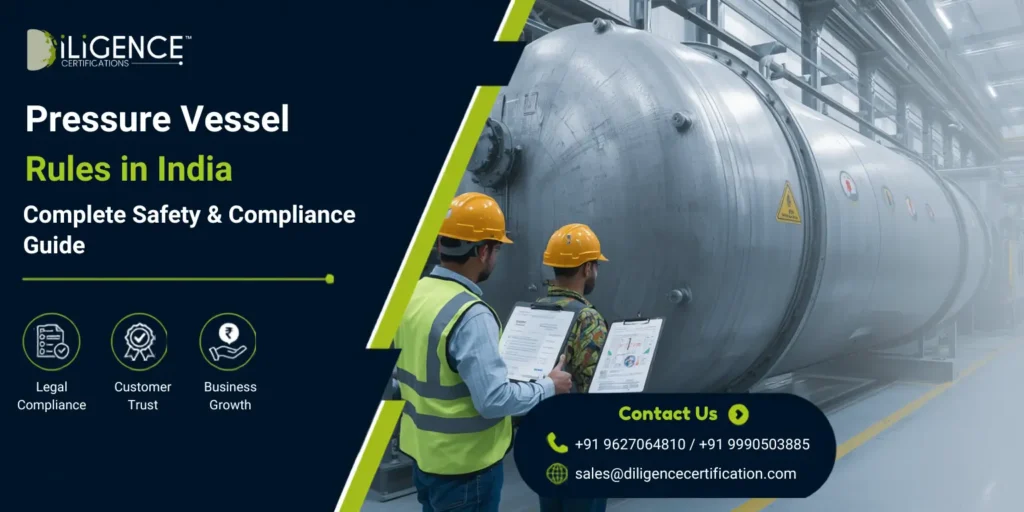
By - Pressure Vessel Code in India sets out the guidelines for pressure vessel safety, design, construction, testing, and operation.
- Regulations apply to pressure vessels that use hazardous gases, flammable materials, or pressurized liquid products. Pressure vessels should adhere to all necessary regulations, which include PESO norms.
- Adhering to the necessary rules will enable both manufactures and industries to avoid any problems in their operations.
Introduction
Recently, a pressure vessel manufacturer sought our assistance regarding delay in the commissioning of their industrial project. Though the pressure vessels had been fabricated correctly with certified materials, correct welding practices, and testing, there was a delay in the commissioning of the project due to lack of adequate documentation and inspection records according to the Pressure Vessel Rules in India.
Thus, compliance with pressure vessels is about much more than just manufacturing good equipment. It includes aspects such as design, fabrication, testing, installation requirements, and operational safety measures.
EPC contractors, manufacturers, and industries handling compressed gas, steam, chemicals, and other hazardous materials have to comply with the regulations before commissioning the equipment. The Pressure Vessel Rules in India provide guidelines for checking whether the pressure equipment operates safely in difficult industrial environments.
Compliance at an early stage of the process enables the business to avoid regulatory observations and delays in approvals.
What are Pressure Vessel Rules in India?
Pressure Vessel Rules in India are guidelines and regulations concerning the design, manufacturing, testing, installation, and operational aspects of pressure vessels used in industrial applications. The Pressure Vessel Rules in India help to ensure that the vessels that carry any compressed gas, hazardous material, or high-pressure fluid conform to set safety standards before operation.
In India, different bodies such as the Petroleum and Explosives Safety Organization (PESO) regulate specific categories of pressure vessels. The compliance of the vessels depends on various parameters such as the stored material, pressure, temperature, volume, and application among others.The industries such as oil & gas, chemical, pharmaceutical, power, and industrial gases should adhere to Pressure Vessel Rules in India for safe operation and compliance.
Why are Pressure Vessel Rules Important in India?
Pressure vessels store fluids under significant pressure, which means even a small manufacturing defect or maintenance failure can create dangerous situations. The purpose of regulatory requirements is not only legal compliance but also protection of employees, equipment, and surrounding areas.
Ensures Industrial Safety
The primary objective of pressure vessel regulations is preventing accidents caused by pressure failure, leakage, or structural damage.
Proper design calculations, material selection, welding procedures, and testing requirements ensure that vessels can withstand actual operating conditions.
Prevents Equipment Failure
A pressure vessel may appear structurally sound externally, but internal defects such as cracks, welding failures, or material weaknesses can create serious risks.
Mandatory inspection methods such as:
- Radiographic Testing (RT)
- Ultrasonic Testing (UT)
- Hydrostatic Testing
- Non-Destructive Testing (NDT)
help identify defects before the vessel enters operation.
Supports Regulatory Compliance
Industries handling hazardous materials are required to follow applicable government regulations. Non-compliance may lead to:
- Operational shutdowns
- Inspection failures
- Project delays
- Legal consequences
- Financial losses
Following the correct compliance pathway ensures smoother approvals and audits.
Builds Customer and Business Confidence
Large industrial buyers, EPC contractors, and government projects generally prefer suppliers who maintain proper pressure equipment compliance.
A compliant pressure vessel manufacturer demonstrates better quality control and reliability.
Regulatory Authorities Governing Pressure Vessels in India
The applicable authority depends on the type of pressure vessel, substance stored, and intended use. Several regulatory bodies and standards influence pressure vessel compliance in India.
Petroleum and Explosives Safety Organisation (PESO)
The Petroleum and Explosives Safety Organisation (PESO) is one of the key authorities responsible for regulating pressure vessels used for hazardous substances such as petroleum products, compressed gases, and cryogenic liquids.
PESO operates under the Department for Promotion of Industry and Internal Trade (DPIIT), Government of India.
For specific categories of pressure vessels, approvals may be required under regulations such as:
- Static and Mobile Pressure Vessels (Unfired) Rules, 2016 (SMPV Rules)
- Petroleum Rules
- Gas Cylinder Rules
PESO evaluates aspects such as:
- Engineering design
- Material specifications
- Manufacturing process
- Safety devices
- Inspection reports
- Installation arrangements
Bureau of Indian Standards (BIS)
BIS develops Indian Standards related to materials, manufacturing practices, testing procedures, and industrial equipment.
Pressure vessel manufacturers may need to follow relevant BIS standards depending on the equipment category and application.
BIS standards help maintain consistency in:
- Material quality
- Product specifications
- Testing procedures
- Manufacturing practices
Types of Pressure Vessels Covered Under Indian Regulations
Pressure vessels differ based on their application, stored substance, operating conditions, and design requirements.
Common categories include:
Gas Storage Pressure Vessels
These vessels are used for storing compressed gases such as:
- Oxygen
- Nitrogen
- Hydrogen
- Carbon dioxide
- Argon
They require strict safety controls because compressed gases contain high stored energy.
Cryogenic Pressure Vessels
Cryogenic vessels store liquefied gases at extremely low temperatures.
Examples include:
- Liquid Oxygen (LOX)
- Liquid Nitrogen (LIN)
- Liquid Argon (LAR)
- LNG
These vessels require specialised insulation systems and temperature control mechanisms.
Types of Pressure Vessels Covered Under Indian Regulations (Continued)
Mobile Pressure Vessels
Mobile pressure vessels are designed for transportation of compressed gases and hazardous liquids through road tankers or other transport systems.
Examples include:
- LPG tankers
- LNG transport vessels
- Industrial gas tankers
- Chemical transport vessels
These vessels require additional safety considerations because they operate under changing conditions during transportation, including vibration, road movement, and environmental exposure.
Compliance requirements generally include:
- Approved vessel design
- Vehicle mounting arrangements
- Safety equipment installation
- Pressure testing
- Periodic inspection
Diligence Certifications assists manufacturers and transport operators with documentation, inspection coordination, and regulatory compliance support for mobile pressure vessels.
Steam and Process Pressure Vessels
Industries such as power generation, pharmaceuticals, chemicals, and manufacturing use pressure vessels for steam, heating, and process applications.
These vessels are commonly found in:
- Boilers and steam systems
- Chemical reactors
- Heat exchangers
- Storage systems
- Processing equipment
The design and operation of these vessels require proper engineering evaluation to ensure they can handle expected pressure, temperature, and operating conditions.
Key Requirements Under Pressure Vessel Rules in India
Compliance with Pressure Vessel Rules in India involves multiple technical and operational requirements. A pressure vessel cannot be approved only based on manufacturing completion; every stage must meet defined safety criteria.
1. Engineering Design Compliance
The design stage forms the foundation of pressure vessel safety.
Engineers evaluate:
- Operating pressure
- Design pressure
- Operating temperature
- Material strength
- Corrosion allowance
- Vessel dimensions
- Stress calculations
The design must ensure that the vessel can safely withstand expected operating conditions throughout its service life.
Commonly referenced engineering standards include:
- ASME Boiler and Pressure Vessel Code
- Indian Standards (IS Codes)
- Industry-specific engineering practices
2. Material Selection and Certification
The material used for pressure vessels directly affects durability and safety.
Manufacturers must maintain proper records of:
- Material grade
- Chemical composition
- Mechanical properties
- Heat treatment details
- Material Test Certificates (MTC)
Materials should be suitable for the stored substance and operating environment.
For example, cryogenic applications require materials capable of maintaining strength at extremely low temperatures, while chemical applications require corrosion-resistant materials.
3. Qualified Fabrication Process
Pressure vessel fabrication requires controlled manufacturing processes.
Important fabrication requirements include:
- Approved welding procedures
- Qualified welders
- Welding inspection records
- Heat treatment records
- Dimensional verification
- Traceability of materials
Poor welding quality is one of the major causes of pressure vessel failures. Therefore, welding activities must be performed under qualified procedures and monitored throughout fabrication.
Documents Required for Pressure Vessel Compliance
Documentation plays a major role in approval and inspection processes. Regulatory authorities review technical records to confirm that the pressure vessel has been manufactured according to approved requirements.
Business Documents
The applicant may need to provide:
- Certificate of Incorporation or Registration
- PAN Card
- GST Registration Certificate
- Factory Licence (where applicable)
- Authorisation Letter
- Identity proof of authorised representative
Technical Documents
Technical documents demonstrate the engineering compliance of the pressure vessel.
These include:
- General Arrangement (GA) Drawing
- Fabrication Drawings
- Engineering Design Calculations
- Pressure Vessel Design Details
- Material Specifications
- Bill of Materials
- Welding Procedure Specification (WPS)
- Procedure Qualification Record (PQR)
- Welder Qualification Certificates
- Manufacturing Records
Inspection and Testing Documents
Testing records confirm that the vessel can safely perform under operating conditions.
Important reports include:
- Hydrostatic Test Report
- Pneumatic Test Report (where applicable)
- Radiographic Testing (RT) Report
- Ultrasonic Testing (UT) Report
- Non-Destructive Testing (NDT) Certificates
- Leak Test Report
- Pressure Relief Valve Test Certificate
- Calibration Certificates
- Third-Party Inspection Reports
Pressure Vessel Inspection and Testing Requirements
Inspection is a critical part of compliance because it verifies the structural integrity and operational safety of the vessel.
Hydrostatic Testing
Hydrostatic testing involves filling the vessel with liquid and applying pressure above normal operating conditions.
This test helps identify:
- Leakage
- Structural weakness
- Permanent deformation
Radiographic Testing (RT)
Radiographic testing uses X-rays or gamma rays to identify internal welding defects.
It helps detect issues such as:
- Cracks
- Porosity
- Lack of fusion
- Welding discontinuities
Ultrasonic Testing (UT)
Ultrasonic testing uses sound waves to identify internal material defects.
It is commonly used for detecting:
- Internal cracks
- Thickness variations
- Hidden flaws
Visual and Dimensional Inspection
Inspectors verify:
- Vessel dimensions
- Nozzle locations
- Weld appearance
- Surface condition
- Compliance with approved drawings
Any deviation from approved specifications may require corrective action before approval.
Pressure Relief and Safety Equipment Requirements
Safety devices are essential components of pressure vessel compliance.
A properly designed pressure vessel should include suitable protection systems such as:
Pressure Relief Valves
Pressure relief valves protect the vessel from excessive pressure build-up by releasing pressure when required.
Pressure Gauges
Pressure indicators allow operators to monitor vessel operating conditions.
Temperature Monitoring Systems
Temperature monitoring is especially important for cryogenic and temperature-sensitive applications.
Emergency Shutdown Systems
Certain applications require emergency isolation arrangements to reduce risks during abnormal conditions.
Safety Instruments
Additional safety instruments may include:
- Level indicators
- Alarm systems
- Automatic controls
- Safety interlocks
The selection and installation of safety equipment depend on the type of vessel and stored material.
Common Reasons for Pressure Vessel Approval Delays
Many businesses experience delays not because of major technical failures but due to avoidable compliance gaps.
Incomplete Documentation
Missing drawings, calculations, certificates, or inspection reports can result in regulatory observations.
Incorrect Engineering Drawings
Differences between submitted drawings and actual equipment may delay inspection clearance.
Poor Material Traceability
Failure to maintain proper material records can create questions about vessel quality.
Inadequate Testing Records
Incomplete NDT, hydrostatic testing, or inspection reports may require additional verification.
Installation Deviations
Changes made during installation without proper approval can affect compliance status.
Importance of Early Compliance Planning
A common mistake among businesses is involving compliance experts only after fabrication or installation is completed.
By that stage, correcting technical issues can become expensive and time-consuming.
Early compliance planning helps companies:
- Select suitable designs
- Prepare correct documentation
- Schedule inspections properly
- Avoid rework
- Reduce project delays
For example, an EPC contractor planning a new gas storage facility should consider regulatory requirements during the design phase itself rather than waiting until commissioning.
This approach saves both time and project cost while improving overall safety performance.
Step-by-Step Pressure Vessel Approval Process in India
Pressure vessels require proper inspection and evaluation before approval to ensure they meet safety standards and regulatory requirements. Understanding the approval process helps manufacturers avoid compliance issues and unnecessary delays.
Step 1: Identify Applicable Regulations
The first step is determining the relevant regulations based on:
- Type of fluid
- Operating pressure and temperature
- Vessel capacity
- Intended use
- Installation location
Pressure vessels used for LPG, LNG, petroleum products, and industrial gases are generally regulated under PESO and other applicable safety standards.
Step 2: Engineering Design Preparation
A compliant pressure vessel design is prepared according to operational requirements. It includes:
- General Arrangement (GA) drawings
- Design calculations
- Material specifications
- Pressure rating
- Safety system details
A proper design reduces modifications during inspection.
Step 3: Manufacturing and Fabrication
The vessel is manufactured using approved materials and qualified procedures while maintaining:
- Welding records
- Material traceability
- Quality control documents
- Inspection reports
Step 4: Testing and Inspection
Before approval, the vessel undergoes tests such as:
- Hydrostatic testing
- Radiographic Testing (RT)
- Ultrasonic Testing (UT)
- Leak testing
- Visual inspection
Step 5: Application Submission and Review
Required documents, including drawings, test reports, certificates, and compliance records, are submitted for technical evaluation.
Step 6: Approval and Commissioning
After successful review and inspection, approval is granted. Businesses must follow regular maintenance, periodic inspections, and safety procedures to ensure continued compliance.
Difference Between Pressure Vessel Standards and Pressure Vessel Rules in India
Many businesses confuse engineering standards with regulatory rules. Both are important, but they serve different purposes.
Pressure Vessel Rules
Rules define legal and regulatory requirements that businesses must follow.
They focus on:
- Approval requirements
- Safety obligations
- Inspection requirements
- Operational compliance
Engineering Standards
Standards provide technical guidelines for designing and manufacturing pressure equipment.
They cover:
- Material selection
- Design calculations
- Welding requirements
- Testing methods
For example, ASME standards may provide engineering guidance, while Indian regulatory authorities determine compliance requirements applicable in India.
Benefits of Following Pressure Vessel Rules in India
Compliance with Pressure Vessel Rules in India provides several operational and business advantages.
Improved Workplace Safety
Properly designed and tested pressure vessels reduce risks associated with:
- Explosion
- Leakage
- Pressure failure
- Equipment damage
Safety compliance protects employees, facilities, and surrounding areas.
Reduced Operational Interruptions
Regulatory issues discovered during commissioning can delay entire projects.
Following compliance requirements from the beginning helps avoid:
- Inspection failures
- Rework
- Project delays
- Unexpected shutdowns
Better Customer Confidence
Industrial clients often prefer suppliers who maintain proper regulatory compliance.
Compliance demonstrates:
- Quality assurance
- Technical capability
- Safety commitment
Easier Audits and Insurance Approval
Insurance companies and auditors commonly review safety documentation before approving industrial facilities.
Maintaining proper compliance records simplifies:
- Insurance assessments
- Customer audits
- Regulatory inspections
Why Choose Diligence Certifications for Pressure Vessel Compliance?
Pressure vessel compliance requires technical knowledge, regulatory understanding, and proper coordination with authorities. Managing the complete process internally can become challenging, especially for companies handling complex equipment.
Diligence Certifications provides professional assistance for pressure vessel compliance requirements, including:
- Regulatory requirement assessment
- Documentation preparation
- Technical document review
- Engineering compliance support
- Inspection coordination
- Application assistance
- Query resolution
- Compliance guidance
Our experts support manufacturers, industrial gas suppliers, chemical industries, EPC contractors, and infrastructure companies in navigating regulatory requirements efficiently.
Whether you are manufacturing a new pressure vessel, importing equipment, expanding an industrial facility, or upgrading an existing system, early compliance planning helps prevent costly delays.
Conclusion
Pressure Vessel Rules in India form an important part of making sure that the pressure containing equipment is safely designed, manufactured, tested, and operated. This makes sure that industries remain safe from equipment failure.
Right from design through manufacturing, testing and operation, everything must be done with proper adherence to the technicalities and regulations.
Firms that take care of their compliance requirements right from the start will be able to avoid problems of delays in approvals and other risks associated with their projects.
Diligence Certifications can help firms understand the pressure vessel rules and provide them with full service for all their technical, documentary and approval needs.
If you need expert advice on pressure vessel rules in India, you can contact Diligence Certifications today.