 BIS Certification
 CDSCO
CDSCO
 PESO
PESO
 CPCB
CPCB
 LMPC
LMPC
 WPC Approval
 Global Approvals
 TEC
TEC
 ARAI
ARAI
 BEE
BEE
 ISO Certification
 DGCA Certification
 NOC For Steel
 APEDA Registration























 Business Registration
 FSSAI Mark Certification












 (32).jpg)
 Legal Services
 Trademark Registration
 Copyright Registration
 Patent Registration
Project Reports
A project report is the bankable document that presents your business plan, financials and viability to banks, NBFCs and government...
Get expert consultation
Trusted by 25,000+ leading enterprises worldwide












Key takeaways
- A project report is a structured document that explains your business, its market, operations and projected finances to lenders and approving authorities.
- It is the core document banks and NBFCs assess before sanctioning a term loan, working-capital limit or cash credit.
- Government funding schemes such as PMEGP, Mudra, Stand-Up India and CGTMSE require a project report with the loan application.
- For larger or term-loan proposals, banks expect CMA data (Credit Monitoring Arrangement statements) alongside the report.
- A Detailed Project Report (DPR) goes further, covering technical, financial and commercial feasibility for large or subsidised projects.
- The strength of your projections, ratios and assumptions directly affects whether, and how much, finance is sanctioned.
What is a project report?
A project report is a comprehensive written document that describes a business idea or existing enterprise and demonstrates its financial and commercial viability. It brings together the promoter’s background, the product or service, the market, the operating plan and a full set of financial projections into a single, lender-ready document.
Banks, NBFCs and government agencies use the project report to judge whether a venture is sound and capable of repaying borrowed funds. A clear, realistic and well-substantiated report is often the deciding factor in whether a loan or subsidy is sanctioned, and at what amount.
Where a project report is used
- Bank and NBFC term loans and working-capital limits
- MSME, Mudra and CGTMSE collateral-free loans
- PMEGP and Stand-Up India subsidy applications
- Government grants, incentives and tender pre-qualification
- Investor pitches and equity fund-raising
- Internal feasibility study before committing capital
Who needs a project report
If you are seeking finance, a subsidy or a formal assessment of viability, a project report is almost always required. The depth of the report depends on the size of the proposal and the authority you are approaching.
| Applicant | Why a report is needed |
|---|---|
| New entrepreneurs and startups | To raise seed funding, a term loan or scheme-based finance for a new venture. |
| MSMEs and small businesses | For working-capital limits, machinery loans and collateral-free MSME finance. |
| Manufacturing units | For plant, machinery and infrastructure term loans where a DPR is expected. |
| Scheme applicants | For PMEGP, Mudra, Stand-Up India and similar government-backed funding. |
| Report type | Best suited for |
|---|---|
| Standard project report | Mudra, MSME and small business loans up to modest limits. |
| Project report with CMA data | Term loans and working-capital limits assessed under the Credit Monitoring Arrangement. |
| Detailed Project Report (DPR) | Large projects, subsidies and proposals needing full technical and financial feasibility. |
What a strong project report contains
A bankable report follows the structure lenders expect, with assumptions that stand up to scrutiny. The core sections are:
Executive summary
A concise snapshot of the promoter, the business and the funding requirement.
Business & operations
Product or service details, the process flow, location, plant and machinery.
Market analysis
Demand, competition, target customers and the marketing approach.
Cost of project
Capital cost, means of finance and the promoter’s own contribution.
Financial projections
Projected profit and loss, balance sheet and cash flow over the loan tenure.
Ratios & viability
Break-even, DSCR, current ratio and other indicators of repayment capacity.
Project report with CMA data
For most term loans and working-capital facilities, banks ask for CMA data (Credit Monitoring Arrangement) in addition to the project report. CMA data is a standardised, RBI-aligned set of statements that lets a bank assess past performance and projected financial health in the format its credit team uses.
What CMA data covers
- Particulars of existing and proposed limits across facilities.
- Operating statement with past, present and projected performance.
- Analysis of the balance sheet for the relevant years.
- Comparative statement of current assets and liabilities.
- Maximum permissible bank finance (MPBF) calculation.
- Fund-flow statement and key ratio analysis.
Our preparation process, step by step
We build the report around your numbers and your lender’s requirements, so it is realistic, consistent and ready to submit.
Information & planning
Understand the goal
We confirm the loan or scheme, the amount sought and the lender’s format.
Gather inputs
We collect KYC, business details, cost estimates, quotations and any past financials.
Build assumptions
We agree realistic sales, cost and capacity assumptions you can defend.
Drafting & delivery
Model the finances
We prepare projections, CMA data and ratios in the structure the bank expects.
Draft the report
We write up the business, market and operational sections around the numbers.
Review & finalise
We refine the report with you and deliver a submission-ready document.
Information & documents required
- PAN and Aadhaar of the promoter(s) or partners
- Business registration proof (Udyam, GST, incorporation or partnership deed)
- Brief profile of the promoter and the proposed business
- Cost estimates and quotations for machinery, equipment or fit-out
- Details of the loan amount, purpose and preferred bank or scheme
- Past financial statements and bank statements, for existing units
- Address and ownership or rent details of the business premises
Timeline & deliverables
- A standard project report is typically ready in 2 to 4 working days once inputs are complete.
- Reports with CMA data or a full DPR take a little longer, depending on complexity.
- You receive the report in PDF and editable formats for submission.
- We make reasonable revisions if the bank asks for changes to format or assumptions.
Setting up the business too? See our MSME Registration, Startup India Registration and GeM Registration services.
What affects the cost
Fees depend on the type of report and the depth of analysis required. The usual factors are:
| Cost factor | Details |
|---|---|
| Type of report | Standard report, report with CMA data, or full Detailed Project Report. |
| Loan size and scheme | Larger or scheme-linked proposals need deeper financial modelling. |
| Existing vs new business | Existing units require analysis of past financials and CMA history. |
| Revisions and lender format | Bank-specific formats and iterations on assumptions. |
Need a report your bank will accept?
Tell us the loan or scheme you are applying for, and we will prepare a project report, CMA data or DPR tailored to that lender’s format.
Benefits of a professional project report
Higher approval odds
A clear, realistic report gives the credit team confidence and reduces queries.
Right loan amount
Sound projections help you secure the funding the business actually needs.
Faster processing
A submission-ready report in the bank’s format avoids back-and-forth delays.
Scheme eligibility
Meets the documentation required by PMEGP, Mudra, Stand-Up India and CGTMSE.
Clear roadmap
Forces a disciplined look at costs, capacity and break-even before you commit.
Investor ready
The same financials support investor pitches and equity discussions.
Why work with us
We have prepared project reports, CMA data and DPRs for businesses across manufacturing, trading and services, for both fresh ventures and established units. We understand what bank credit teams and scheme authorities look for, and we build every report to that standard.
- Reports tailored to your specific bank, NBFC or government scheme
- Realistic, defensible assumptions, not inflated projections
- CMA data and ratio analysis prepared in the lender’s expected format
- Clear writing that connects the financials to the business story
- Support on revisions if the bank requests changes
- An experienced compliance and finance team behind every document
Frequently asked questions
What is a project report and why do I need one?
A project report is a document that describes your business and its financial viability. Banks, NBFCs and government schemes require it to assess whether to sanction a loan or subsidy and at what amount.
What is the difference between a project report and CMA data?
A project report covers the business, market, operations and projections. CMA data is a standardised set of financial statements, including the MPBF calculation, that banks use to assess working-capital and term-loan proposals. Larger loans usually need both.
Do I need a project report for a Mudra or MSME loan?
Yes. Most Mudra, MSME and scheme-based loans require a project report with the application. The depth required depends on the loan amount and the lending bank.
What is a Detailed Project Report (DPR)?
A DPR is a more comprehensive report covering the technical, financial and commercial feasibility of a project. It is used for larger proposals, subsidy schemes and infrastructure or manufacturing projects that need full feasibility analysis.
How long does it take to prepare a project report?
A standard project report is usually ready in 2 to 4 working days once all inputs are received. Reports with CMA data or a full DPR can take longer depending on the complexity of the proposal.
Does a good project report guarantee my loan will be approved?
No report can guarantee approval, as the final decision rests with the lender. A well-prepared, realistic report significantly improves your chances by presenting the proposal clearly and meeting the bank’s documentation and format requirements.
Why choose Diligence Certification?
For compliance and credibility, Diligence is much more than a checklist - we give you real confidence in your business. We examine your legal, financial and operational status, so you are not just certified, but trusted.
Stronger risk protection
Spot hidden legal, financial or operational risks early - fix problems before they become threats.
Earn stakeholder trust
From investors to customers, people want to work with businesses that play by the rules.
Stay legally aligned
Compliant not just on products but on labour, environmental and tax laws too.
Enhance brand reputation
Show the world you operate with integrity and transparency.
Stand out from competitors
In a crowded market, credibility is your biggest edge.
24×7 expert support
A 100+ strong service team guiding you at every step, free first consultation.
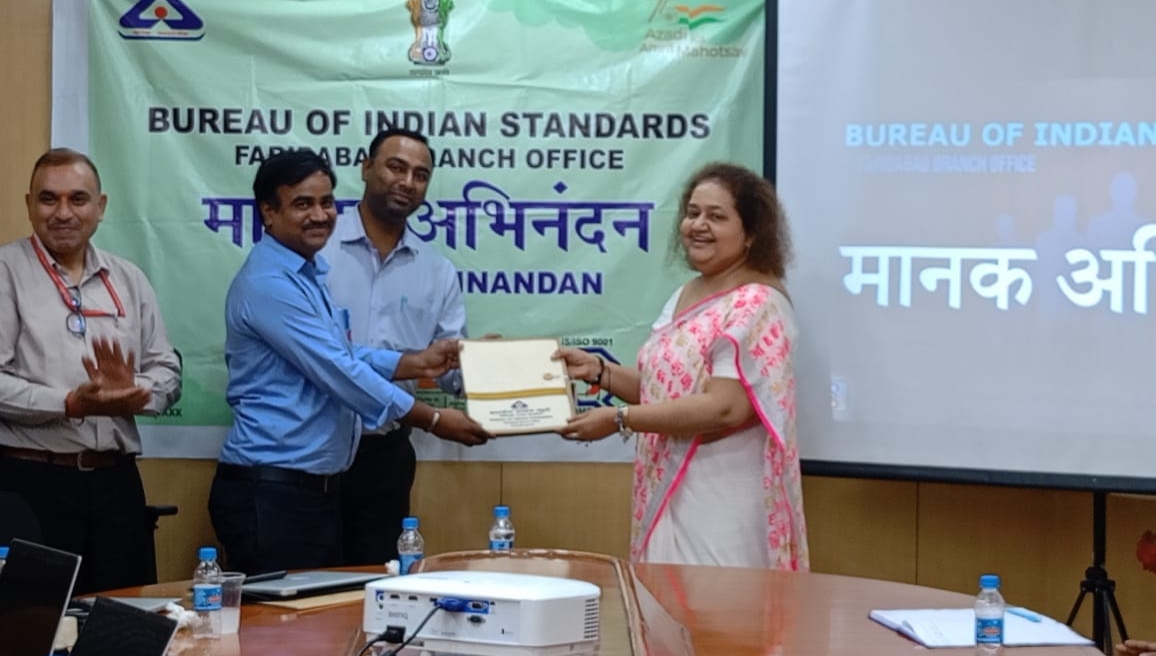
Real sites, real certifications
Our teams work inside factories and plants across India and abroad - inspections, audits and certification milestones spanning BIS, global schemes and the full compliance stack you see on this site.





What our clients say
Reviews and feedback from businesses that have worked with Diligence Certifications.










Related BIS & Standards services
BIS Certification
Get your products BIS certified to ensure compliance with Indian standards.
View details →ISI Mark Certification
ISI Mark Certification for your products with expert guidance.
View details →CRS Mark Certification
BIS CRS Registration for electronics & IT products.
View details →Hallmarking
BIS Hallmarking Certification for gold & jewellery.
View details →FMCS Mark Certification
For foreign manufacturers entering the Indian market.
View details →ECO Mark Certification
Showcase your eco-friendly products with ECO Mark.
View details →Ready to get Project Reports?
Talk to our experts for a clear, fixed-scope plan - most clients get a roadmap the same day.