 BIS Certification
 CDSCO
CDSCO
 PESO
PESO
 CPCB
CPCB
 LMPC
LMPC
 WPC Approval
 Global Approvals
 TEC
TEC
 ARAI
ARAI
 BEE
BEE
 ISO Certification
 DGCA Certification
 NOC For Steel
 APEDA Registration























 Business Registration
 FSSAI Mark Certification












 (32).jpg)
 Legal Services
 Trademark Registration
 Copyright Registration
 Patent Registration
Shareholder Agreement
A Shareholder Agreement is a private contract among a company's shareholders that defines their rights, obligations, share transfers and governance....
Get expert consultation
Trusted by 25,000+ leading enterprises worldwide








Key takeaways
- A Shareholder Agreement (SHA) is a private contract between some or all shareholders of a company that governs their mutual rights, duties and the running of the company.
- It is enforceable as a contract under the Indian Contract Act, 1872 and operates alongside the company’s Articles of Association (AoA).
- It protects founders and investors through clauses on share transfers, board control, reserved matters and exit.
- Key provisions include pre-emption (ROFR/ROFO), tag-along, drag-along, anti-dilution and lock-in.
- Where the SHA and AoA conflict, the AoA generally prevails against the company, so the two must be aligned.
- It is governed by the Companies Act, 2013 for company-law aspects and is not filed with the MCA, but its effects are usually mirrored in the AoA.
What is a Shareholder Agreement?
A Shareholder Agreement is a legally binding contract entered into among the shareholders of a company, and often the company itself, to set out how the business will be owned, controlled and managed. It records the understanding between the parties on everything from board composition and decision-making to what happens when a shareholder wants to sell, dies or falls into dispute.
Unlike the Memorandum and Articles of Association, which are public documents filed with the Registrar of Companies, a Shareholder Agreement is a private arrangement among the parties. It is enforceable as a contract under the Indian Contract Act, 1872, and is read together with the Companies Act, 2013 and the company’s Articles of Association.
What a Shareholder Agreement typically governs
- Ownership structure and shareholding pattern
- Board composition and voting rights
- Transfer and sale of shares
- Issue of new shares and anti-dilution protection
- Reserved matters and minority protection
- Exit, deadlock and dispute resolution
When you need a Shareholder Agreement
Any company with more than one shareholder benefits from a clear written agreement. It is most critical at moments where ownership, control or money is at stake.
| Situation | Why it matters |
|---|---|
| Co-founders starting up | Defines roles, equity split, vesting and what happens if a founder leaves. |
| Raising investment | Investors require protective rights, board seats and exit mechanisms before funding. |
| Admitting a new partner | Sets the terms on which a new shareholder joins and their rights and obligations. |
| Situation | Why it matters |
|---|---|
| Family-owned companies | Manages succession, transfer restrictions and inter-generational control. |
| Joint ventures | Allocates control, profits and exit between venture partners. |
| Avoiding future disputes | Provides clear rules and a resolution mechanism before conflict arises. |
Essential clauses we draft
Shareholding & capital
Records the equity split, classes of shares and how future capital will be raised.
Board & management
Board seats, quorum, voting thresholds and who controls day-to-day management.
Transfer restrictions
Right of first refusal (ROFR) or right of first offer (ROFO) and lock-in on shares.
Tag & drag rights
Tag-along to protect minority sellers and drag-along to enable a clean majority exit.
Anti-dilution
Protects investors against a fall in value on future down-round share issues.
Reserved matters
Decisions that need special or unanimous consent, protecting minority shareholders.
Exit & deadlock
Buy-sell, put and call options, and clean mechanisms to break a deadlock.
Confidentiality & non-compete
Protects trade secrets and stops shareholders from competing or poaching.
How it sits with your Articles of Association
A Shareholder Agreement is a private contract and binds only the parties who sign it. The Articles of Association, on the other hand, are a public document filed with the Registrar of Companies and bind the company and all its members. Indian courts have held that where a clause in the SHA conflicts with the AoA, the Articles generally prevail as against the company unless the clause is also incorporated into the Articles.
Why we align the two documents
- Key protective rights are mirrored in the Articles of Association so they bind the company.
- Transfer restrictions are made enforceable against third parties through the AoA.
- Special-resolution and reserved-matter requirements are kept consistent across both.
- Any inconsistency that could be exploited in a dispute is removed at the drafting stage.
Our drafting process, step by step
We move from understanding your commercial intent to a signed, enforceable agreement, keeping you involved at every stage.
Understanding & structuring
Consultation
We understand your shareholding, commercial goals and the rights each party expects.
Term sheet review
Where an investment is involved, we align the SHA with the term sheet and valuation.
Clause mapping
We identify the protections, controls and exit rights each shareholder needs.
Drafting & execution
First draft
We prepare a complete, India-ready draft with all key commercial and protective clauses.
Negotiation
We refine the draft through rounds of review until all parties are comfortable.
Execution & stamping
The agreement is signed, stamped per the relevant State Stamp Act and, where needed, mirrored in the AoA.
Information & documents required
- Certificate of Incorporation of the company
- Memorandum and Articles of Association
- Current shareholding pattern and cap table
- Details and KYC of all shareholders and directors
- Term sheet or investment agreement, if any
- Details of share classes, rights and any existing agreements
- Proposed board structure and reserved matters
- Any existing valuation or business plan
Stamping, validity & timeline
- The SHA is a private contract and is not filed with the MCA.
- It must be stamped per the Stamp Act of the relevant State; stamp duty varies by State.
- It remains valid for as long as the parties hold shares or until terminated per its terms.
- A clean first draft is typically ready within a few working days, with negotiation thereafter.
Need related drafting? See our Non-Disclosure Agreement and Memorandum of Understanding services.
Benefits of a well-drafted agreement
Clarity of rights
Every shareholder knows their rights, obligations and limits from day one.
Minority protection
Reserved matters and tag-along rights stop the majority from acting unfairly.
Investor confidence
Clear protective and exit rights make the company easier to fund.
Dispute prevention
Agreed rules and a resolution path reduce the risk of costly litigation.
Smooth exits
Buy-sell and drag-along clauses make share transfers and exits orderly.
Business continuity
Deadlock and succession clauses keep the company running through change.
Why choose Diligence Certifications
A Shareholder Agreement is only as strong as its drafting. A vague clause or a conflict with your Articles can leave you exposed exactly when it matters most. Our corporate-law team drafts agreements that are commercially sharp, legally enforceable and tailored to your shareholding.
- Bespoke drafting built around your cap table, not a generic template.
- Investor-ready clauses aligned with standard term-sheet expectations.
- AoA alignment so your protections actually bind the company.
- End-to-end support from first draft through negotiation, stamping and execution.
Protect your stake before you sign
Tell us about your company and shareholders, and we will draft a Shareholder Agreement that protects your interests end to end.
Frequently asked questions
What is a Shareholder Agreement?
A Shareholder Agreement is a private contract among a company’s shareholders, and often the company itself, that sets out their rights, obligations and how the company will be owned, controlled and managed. It is enforceable as a contract under the Indian Contract Act, 1872.
Is a Shareholder Agreement mandatory in India?
No, it is not legally mandatory. However, any company with more than one shareholder is strongly advised to have one, as it prevents disputes and protects both founders and investors.
What happens if the Shareholder Agreement conflicts with the Articles of Association?
Indian courts have generally held that the Articles of Association prevail against the company where there is a conflict, unless the relevant clause is also incorporated into the Articles. That is why we align the two documents during drafting.
Does a Shareholder Agreement need to be filed with the MCA?
No. Unlike the Memorandum and Articles of Association, a Shareholder Agreement is a private document and is not filed with the Ministry of Corporate Affairs. It should, however, be stamped per the Stamp Act of the relevant State.
What are tag-along and drag-along rights?
A tag-along right lets a minority shareholder sell their shares on the same terms when a majority shareholder sells. A drag-along right lets a majority shareholder require the minority to join a sale, enabling a clean exit to a buyer who wants full ownership.
Can the Shareholder Agreement be amended later?
Yes. It can be amended at any time with the consent of the parties as specified in the agreement, usually by a written amendment signed by all or a defined majority of shareholders. Related changes are then mirrored in the Articles where required.
Why choose Diligence Certification?
For compliance and credibility, Diligence is much more than a checklist - we give you real confidence in your business. We examine your legal, financial and operational status, so you are not just certified, but trusted.
Stronger risk protection
Spot hidden legal, financial or operational risks early - fix problems before they become threats.
Earn stakeholder trust
From investors to customers, people want to work with businesses that play by the rules.
Stay legally aligned
Compliant not just on products but on labour, environmental and tax laws too.
Enhance brand reputation
Show the world you operate with integrity and transparency.
Stand out from competitors
In a crowded market, credibility is your biggest edge.
24×7 expert support
A 100+ strong service team guiding you at every step, free first consultation.
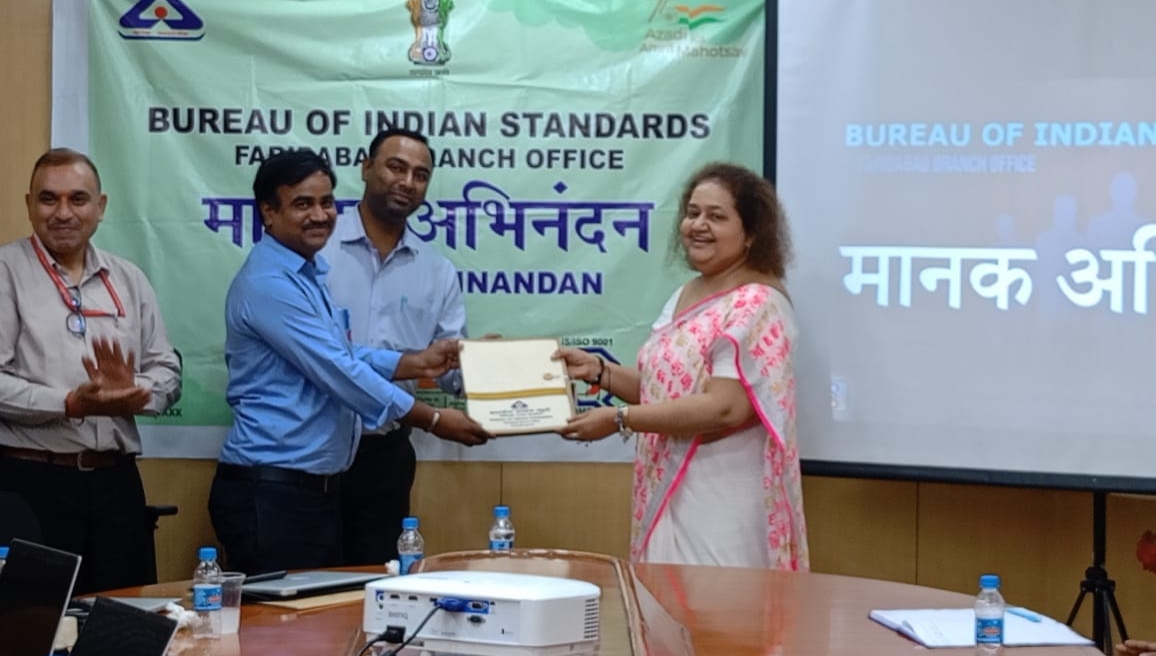
Real sites, real certifications
Our teams work inside factories and plants across India and abroad - inspections, audits and certification milestones spanning BIS, global schemes and the full compliance stack you see on this site.






What our clients say
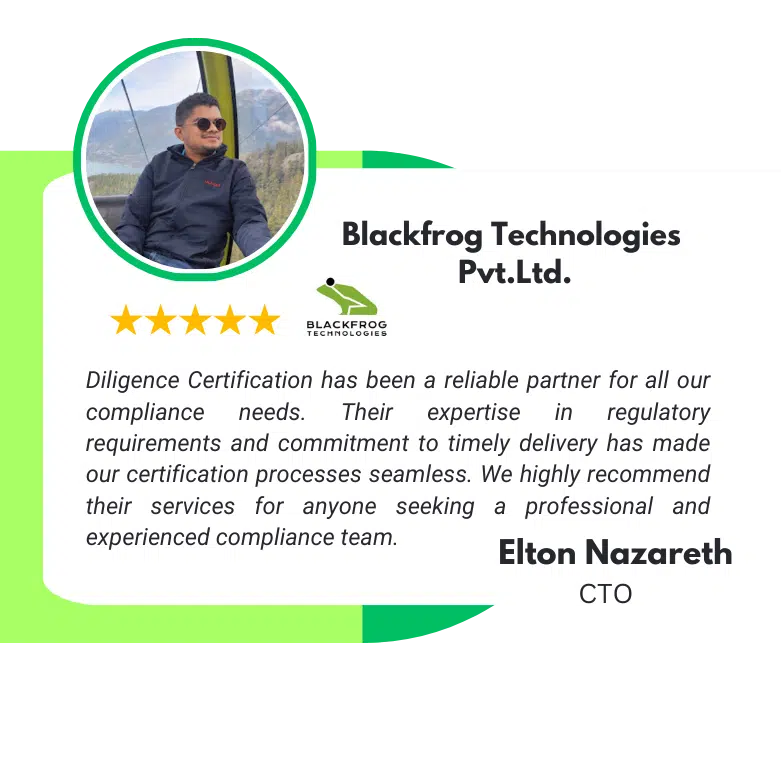
Reviews and feedback from businesses that have worked with Diligence Certifications.









Related BIS & Standards services
BIS Certification
Get your products BIS certified to ensure compliance with Indian standards.
View details →ISI Mark Certification
ISI Mark Certification for your products with expert guidance.
View details →CRS Mark Certification
BIS CRS Registration for electronics & IT products.
View details →Hallmarking
BIS Hallmarking Certification for gold & jewellery.
View details →FMCS Mark Certification
For foreign manufacturers entering the Indian market.
View details →ECO Mark Certification
Showcase your eco-friendly products with ECO Mark.
View details →Ready to get Shareholder Agreement?
Talk to our experts for a clear, fixed-scope plan - most clients get a roadmap the same day.