


 BIS Certification
 CDSCO
CDSCO
 CPCB
CPCB
 LMPC
LMPC
 WPC Approval
 Global Approvals
 TEC
TEC
 ARAI
ARAI
 BEE
BEE
 ISO Certification
 DGCA Certification
 NOC For Steel
 APEDA Registration




















 Business Registration
 FSSAI Mark Certification













 Legal Services
 Trademark Registration
 Copyright Registration
 Patent Registration
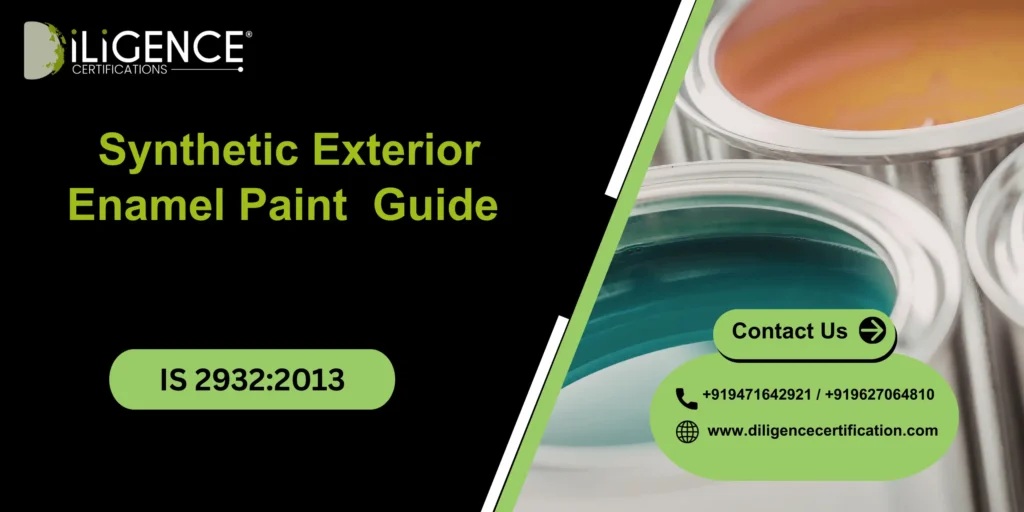
- The Synthetic Exterior Enamel Paint IS 2932:2013 Guide explains BIS standards for surface enamel paints used in undercoating and finishing.
- It ensures quality, continuity, and rainfall resistance for paints used on surface surfaces.
- The standard defines technical requirements, composition, and testing styles for synthetic enamel paints.
- Synthetic enamel paints are extensively used on essence structures, machinery, steel furniture, and wooden surfaces.
- Following IS 2932:2013 helps manufacturers maintain product quality and assiduity compliance.

Introduction
Paint standards are essential to ensure quality, continuity, and performance in construction and industrial Application. One similar important specification is Synthetic Exterior Enamel Paint IS 2932:2013, which defines the requirements for enamel paints used for surface surfaces, including both undercoating and finishing fleeces. Bureau of Indian Standards
This companion explains the IS 2932:2013 standard, its purpose, composition, Application, and why it’s important for manufacturers, contractors, and quality inspectors.
What’s Synthetic Exterior Enamel Paint?
Synthetic surface enamel paint is a type of oil painting- grounded paint designed to give a smooth, lustrous, and durable finish on surface surfaces. It’s generally used on essence, wood, and other accoutrements that bear long- continuing protection against rainfall requirements.
The Synthetic Exterior Enamel Paint IS 2932:2013 companion provides technical specifications for this paint to insure harmonious performance and quality.
Key Characteristics
- High continuity and rainfall resistance
- Smooth and lustrous finish
- Good adhesion to surfaces
- Protection against erosion and humidity
- Long service life
These characteristics make synthetic enamel paint suitable for industrial and construction use.
Overview of IS 2932:2013 Standard
IS 2932:2013 is an Indian Standard developed by the Bureau of Indian standards( BIS). The standard specifies the requirements for synthetic enamel paints used for surface Application, particularly fastening on undercoating and finishing fleeces.
Purpose of the Standard
The main objects of this standard include:
- Ensuring paint quality and thickness
- Defining performance requirements
- Establishing testing styles
- Maintaining continuity and protection for surface surfaces
Following the Synthetic Exterior Enamel Paint IS 2932:2013 companion helps manufacturers maintain assiduity compliance.
Types Covered in IS 2932:2013
The standard classifies synthetic enamel paint into two main orders.
1. Undercoating
Undercoating is the first subcaste of paint applied to the face. Its purpose is to prepare the face and ameliorate adhesion for the finishing fleece.
Functions of Undercoating
- Provides strong relating with the face
- Creates an invariant base for finishing paint
- Improves paint continuity
- Enhances erosion protection
Undercoating plays a vital part in ensuring the final paint finish lasts longer.
2. Finishing Coat
The finishing fleece is the top subcaste of paint applied over the hair. It provides the final appearance and fresh protection to the face.
Features of Finishing Coat
- Smooth and lustrous finish
- Advanced rainfall resistance
- Enhanced face protection
- More aesthetic appeal
The finishing fleece completes the oil process defined in the Synthetic Exterior Enamel Paint IS 2932:2013 companion.
Composition of Synthetic Enamel Paint
Synthetic enamel paints generally correspond to several factors that work together to give continuity and performance.
Main Components
- Binder( Resin) – Provides adhesion and film conformation
- colors – Adds color and nebulosity
- Detergents – Adjusts density for easy operation
- Complements – Improves performance and drying parcels
The proper balance of these accoutrements ensures the paint meets the requirements specified in IS 2932:2013.
Testing requirements Under IS 2932:2013
To insure compliance with the standard, synthetic enamel paints suffer colorful tests.
Common Tests Include:
- Drying time test
- Buff test
- Adhesion test
- continuity test
- Weather resistance test
- nebulosity and thickness tests
These tests ensure the paint performs well under different environmental requirements.
Application of Synthetic Exterior Enamel Paint
Synthetic enamel paint specified under IS 2932:2013 is extensively used in colorful diligence.
Common Uses
- Essence structures
- Machinery and outfit
- steel furniture
- industrial factors
- Exterior wooden surfaces
- Construction accoutrements
The continuity and lustrous finish make it suitable for both defensive and ornamental purposes.
Benefits of Following IS 2932:2013 Standard
clinging to the Synthetic Exterior Enamel Paint IS 2932:2013 Guide offers several advantages.
Key Benefits
- Ensures high- quality paint products
- Improves face protection and continuity
- Standardizes manufacturing processes
- Enhances client trust and trustability
- Meets nonsupervisory and assiduity requirements
For manufacturers and contractors, compliance with BIS standards is essential for maintaining product credibility.
Stylish Practices for Applying Synthetic Enamel Paint
Proper operation is important to achieve stylish results.
Application Tips
- Clean the face completely before painting
- Apply a suitable manual or hair
- insure proper drying time between fleeces
- Use recommended tools like skirmishes or spot outfit
- Follow manufacturer instructions for stylish results
These practices help maximize the performance of paint that follows IS 2932:2013 specifications.
Conclusion
TheSynthetic Exterior Enamel Paint IS 2932:2013 Guide plays an important part in maintaining quality and performance standards for enamel paints used on surface surfaces. By defining requirements for undercoating and finishing, the standard ensures continuity, protection, and harmonious results. BIS Certification
Whether you’re a manufacturer, contractor, or quality inspector, understanding this standard helps ensure that paint products meet the necessary specifications and deliver long- lasting performance.
Frequently Asked for Questions
What's Synthetic Exterior Enamel Paint IS 2932:2013?
It's a BIS standard that specifies requirements for synthetic enamel paints used for surface undercoating and finishing.
Where is synthetic surface enamel paint generally used?
It's extensively used on essence structures, machinery, steel furniture, and wooden surfaces.
What's the purpose of undercoating in enamel paint?
Undercoating provides strong adhesion and prepares the face for the finishing fleece.
Why is IS 2932:2013 important?
The standard ensures harmonious quality, continuity, and performance of synthetic surface enamel paints.
What's the function of the finishing fleece in enamel paint?
The finishing fleece provides the final smooth appearance and protects the face from rainfall damage.
Who should follow the IS 2932:2013 standard?
Paint manufacturers, contractors, and quality inspectors should follow this standard for surface enamel paint Application.
What are the main components of synthetic enamel paint?
The paint mainly contains resin binders, pigments, solvents, and performance additives.
How does synthetic enamel paint protect surfaces?
It forms a durable protective layer that resists moisture, corrosion, and environmental damage.
Where is synthetic exterior enamel paint mostly applied?
It is widely used in construction projects, industrial equipment, and metal fabrication.
Does IS 2932:2013 include testing requirements for paint quality?
Yes, the standard includes tests such as drying time, adhesion, durability, and gloss testing to ensure paint quality.