BIS Certification
 CDSCO
CDSCO
 PESO
PESO
 CPCB
CPCB
 LMPC
LMPC
 WPC Approval
 Global Approvals
 TEC
TEC
 ARAI
ARAI
 BEE
BEE
 ISO Certification
 DGCA Certification
 NOC For Steel
 APEDA Registration























 Business Registration
 FSSAI Mark Certification












 (32).jpg)
 Legal Services
 Trademark Registration
 Copyright Registration
 Patent Registration
 By
By - BIS Certification for copper rods and bars under IS 4171:1983 is mandatory for general engineering-grade copper products.
- The ISI mark ensures mechanical strength, dimensional accuracy, and metallurgical purity.
- Diligence Certifications offers expert BIS registration and consultant services for smooth certification and ISI marking.
Introduction
A mid-sized forging company in Mumbai was supplying copper bars to an automotive component OEM. They lost a critical deal worth ₹18 lakhs after their product failed a buyer’s audit-reason: no ISI mark and no BIS certificate. The company turned to Diligence Certifications, who identified gaps in documentation and testing procedures. Within 5 weeks, they secured BIS under IS 4171:1983 and requalified for supply.
BIS Certification for Copper rods and bars used for general engineering purposes-especially in forging, machining, fasteners, and industrial applications-must comply with Indian Standard IS 4171:1983. BIS is not just optional but legally mandated in many sectors.
What is BIS Certification for Copper Rods and Bars?

BIS Certification for Copper Rods and Bars ensures that products meet Indian Standard IS 4171:1983, which defines requirements for engineering-use copper. This includes:
- Chemical composition
- Mechanical properties
- Dimensional tolerances
- Free from cracks, inclusions, and surface defects
Products that pass BIS testing are allowed to carry the ISI mark, confirming compliance and reliability.
BIS Certification for Copper Rods and Bars for General Engineering Purposes
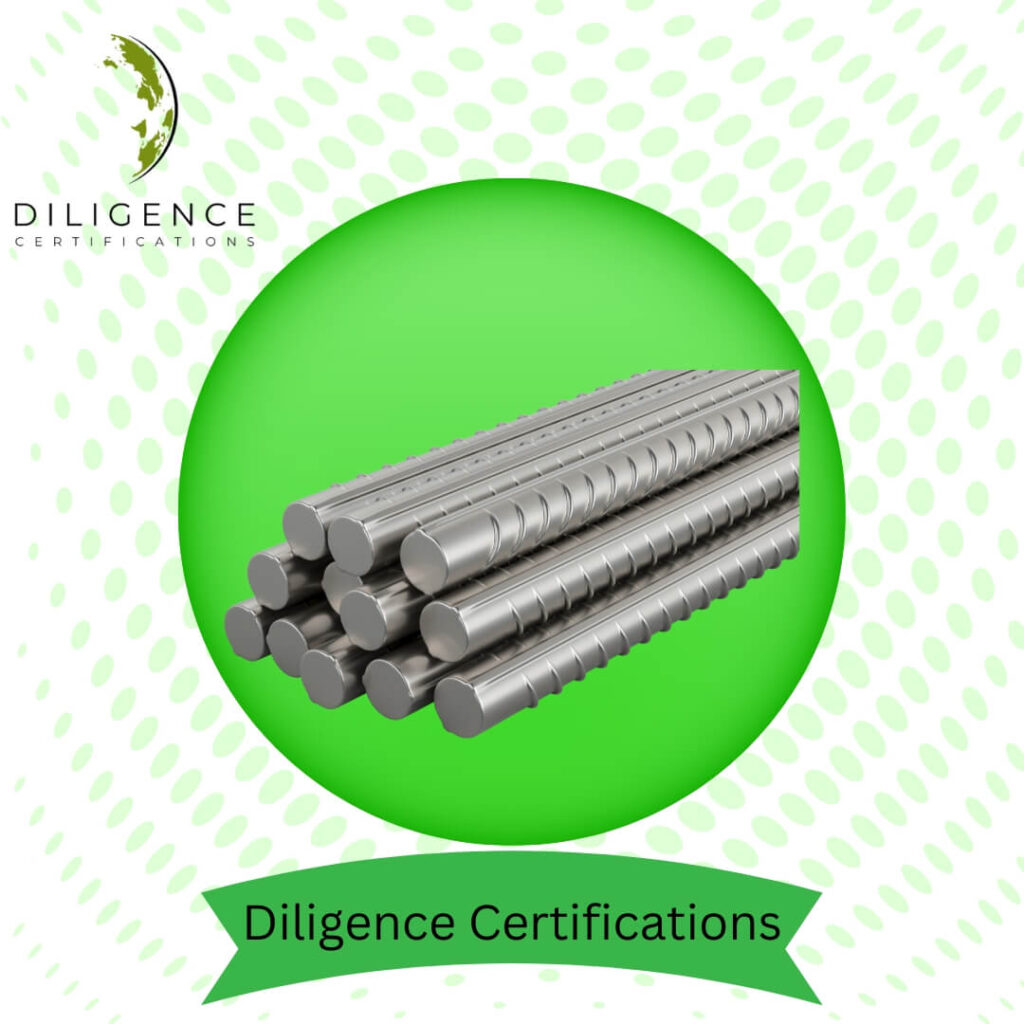
High standards signify quality and in turn are the backbone of successful engineering and manufacturing processes. The Indian Standard IS 4171:1983, colloquially referred to as “Copper Rods and Bars for General Engineering Purposes”, is an important benchmark for quality and reliability in material production.
The Indian Standard covers detailed specifications and rigorous testing, which necessitate that manufacturers obtain BIS for Copper Rods & Bars to satisfy industry expectations and create credibility. Compliance with IS 4171:1983 means not only standardizing production and application practices but also enhancing operational efficiency and strengthening credibility among stakeholders. Given the intense competition in the industry, use of BIS Certification for Copper Rods & Bars is a mark of excellence characterizing the dedication to quality, reliability, and adherence to industry standards.
IS 4171:1983 - Governing Standard for Engineering Copper Rods/Bars
The standard covers:
- Copper rods and bars for machining, hardware, and structural use
- Chemical purity (minimum 99.9% Cu)
- Tensile strength and elongation limits
- Cold and hot working parameters
This standard applies to:
- Non-electrical, structural, or mechanical applications
- Round, square, flat, and hexagonal bars
- Extruded and drawn rods
Key Specifications
IS 4171:1983 contains detailed guidelines regarding:
Material Composition:
- Specific to copper, the chemical composition is specified for purity and mechanical properties.
- Impurity-free to maintain its conductivity, malleability, and provide excellent corrosion resistance.
Dimensions and Tolerances:
- Standardizes diameter, length, and cross-sectional shape dimensions for rods and bars.
- Specifies acceptable tolerances to ensure uniformity of manufacture and application.
Mechanical Properties:
- Requirement for tensile strength, elongation, and hardness in material requirements.
- It intends to ensure adequacy in strength and durability for various engineering tasks.
Testing Procedures:
- Specifies the methods of determining material composition, mechanical properties, and dimensional accuracy.
- In addition, guidelines are provided for sampling to ensure representative specimens are tested.
Marking and Packaging:
- Specification of labels needed for traceability such as batch number, manufacturer, and compliance markings.
- Guidelines on the handling of packaging to avoid damages in transit and storage conditions.
Applications of Copper Rods and Bars
Copper rods and bars find a place-even a prominent one in engineering and industrial applications-because of their excellent properties such as high thermal and electrical conductivities, corrosion resistance, and machinability. Typical applications include the following:
- Electrical Engineering: Busbars, connectors, and components of electrical switchgear elements.
- Construction: Plumbing systems, roofs, and structural members.
- Machines: Bearings, gears, and other mechanical components.
- Automotive Industry: Radiator cores; heat exchangers; and electrical systems.
- Renewable Energy: Use is becoming increasingly common in solar panel systems and wind turbines because of their efficient energy transfer.
- Aerospace: Plays a crucial role in aircraft components requiring high durability and corrosion resistance.
| Key features | Description |
| Standard Name | IS 4171:1983 - Copper Rods and Bars for General Engineering Purposes |
| Purpose | To ensure quality, reliability, and standardization in copper rods and bars production. |
| Testing Protocols | Rigorous quality tests, including tensile strength, elongation, and hardness testing. |
| Quality Assurance | Compliance guarantees product reliability, durability, and stakeholder confidence. |
| Certification Benefits | Trust-building, regulatory compliance, and operational efficiency. |
| Role of Diligence Certifications | Provides expert services to streamline the BIS certification process and ensure compliance. |
Who Requires BIS Licence for Copper Rods and Bars?
You need BIS Certification under IS 4171:1983 if you are:
- Domestic copper rod/bar manufacturers for general engineering
- OEM suppliers producing copper fittings, fasteners, valves, etc.
- Exporters/importers trading in Indian markets
Govt contractors supplying copper goods to PSUs
Importance of IS 4171:1983 in Diligence Certifications
For organizations seeking diligence certifications, IS 4171:1983 manifests quality and compliance. Here’s how it makes a difference:
Standardized Quality:
- Assures copper rods and the bars to standards pre-defined, which oh so enhances the reliability of the product.
- Provides customer understandability concerning quality consistency assurance.
Regulatory Compliance:
- As the certification from national standards mostly exists here, it is verified against requirements by opening, the more such would apply to ISO 9001.
- It becomes convenient, authorizes, and easy for an export facility to approve once the international benchmark is met.
Operational Effectiveness:
- Reducing rework and material rejection with strict specifications.
- Smoother procurement as well as production process.
Improved Brand Image:
- Thus, showcase the organization’s profile vis-a-vis quality and best practices.
- That organization is likely to find openings for co-operation with such of their partners across the globe whose value chains are stringent in adherence to standards.
Sustainability and Environmental Responsibility:
- Proscriptions Prescribed for Global Recyclables and Environmentally Friendly Materials in Sustainable Development.
- The Usage of these Long-lasting, Quality Materials Will Even Lower the Carbon Footprint of Industries.
Advantages to the Manufacturer and End Users
IS 4171: 1983 guarantees the following benefits to the manufacturers:
- Production Efficiency: Such an assurance minimizes fluctuations of material properties in a way that results in smoother production.
- Cost Savings: It minimizes elimination and material rejection, optimizing resource utilization.
- Market Access: Meets most stringent requirements in both domestic and international markets.
For the end-users, benefits include:
- Reliability: Good quality materials lead to robust and reliable products.
- Safety: Conformance with standards assures that the components meet safety criteria thereby reducing risks during application.
- Performance: Copper rods and bars conforming to the standard will be superior in performance under most unfavorable conditions.
Why BIS Certification Matters for General Engineering Copper?
- Legal Requirement: Mandated by BIS for IS 4171:1983 products
- Quality Symbol: ISI mark proves compliance with national standards
- Buyer Confidence: Preferred by OEMs and industrial clients
- Reduced Rejections: Certified materials face fewer audits and returns
BIS Certification Process for Copper Rods and Bars (IS 4171:1983)
Step 1: Application Preparation
- Submit application with test reports, plant details, QA setup, and trademarks
Step 2: Factory Inspection by BIS
- Officials check production flow, raw material traceability, and quality system
Step 3: Product Sample Testing
- Samples sent to BIS-recognized labs to verify against IS 4171:1983
Step 4: Grant of BIS License
- If passed, BIS issues ISI mark certification valid for 1-2 years
Step 5: Renewal & Surveillance
- BIS conducts periodic audits. Licenses are renewable with updated compliance.
Documents Required for BIS Registration
- Manufacturing license/Udyam certificate
- QA protocols and plant layout
- Lab calibration and testing equipment details
- Trademark certificate
- Test reports from BIS/NABL accredited lab
- Production flow diagram
Cost, Timeline, and Validity of BIS Copper Certification
| Component | Details |
| Validity | 1 to 2 years |
| Estimated Cost | varies by scope |
| Certification Time | 30-45 working days |
| Renewal | Before expiry, includes new testing |
ISI Mark for Copper Bars/Rods
The ISI Mark on copper products indicates:
- Compliance with IS 4171:1983
- Approval by the Bureau of Indian Standards
- Quality in dimensions, surface, and purity
It acts as a non-negotiable requirement for many institutional buyers.
Role of BIS Consultants for Copper Products
An expert BIS Certification Consultant helps you:
- Avoid rejections due to technical or procedural errors
- Get quick lab coordination and application filing
- Prepare for BIS factory audit
- Handle renewals and non-conformance corrections
Why Choose Diligence Certifications?
- Over 1000 successful BIS projects handled
- Experts in copper metallurgy and BIS compliance
- Pan-India support with fast application tracking
- Trusted by SMEs and large OEMs alike
Conclusion
Acquiring BIS Certification for Copper Rods and Bars Factory for General Engineering Purposes - IS 4171:1983 provides assurance of product quality, legal use, and acceptance by the best customers in business. Whether you are a manufacturer of copper bars or wholesaling them in the Indian market.
These days, in this ever-changing industrial scenario with fast changes and increasing demands, these standards have become competitive market imperatives rather than regulatory requirements. Diligence Certification experts are well-placed to assist manufacturers, engineers, and industries with achieving compliance and certification on the processes to ensure their products remain at par with the best. Professional Certification under IS 4171:1983 is an avenue toward an organization working on improving product quality, business excellence, and market credibility.
Frequently Asked Questions
Is BIS Certification mandatory for all copper rods and bars?
Yes, for rods/bars used in general engineering applications under IS 4171:1983.
Can I get a BIS license if I don’t have in-house lab testing?
Yes, but you must tie-up with NABL/BIS-approved third-party labs.
What is the difference between IS 4171:1983 and IS 613:2000?
IS 4171 is for general engineering copper; IS 613 is for electrical applications.
What are the risks of selling copper rods without a BIS license?
Fines, product recalls, tender disqualification, and import/export delays.
How long is the BIS certification process?
Usually 30-45 business days depending on factory readiness and lab testing speed.
Can foreign manufacturers apply under IS 4171:1983?
Yes, through the FMCS route by BIS.
Does ISI mark help in exports?
Yes, it builds trust in global buyers seeking Indian-compliant engineering products.
Can I apply online for BIS registration?
Initial filing can be done online; physical audit and testing remain mandatory.
What is the role of consultants like Diligence Certifications?
They manage end-to-end BIS process including application, audit, testing, and renewals.
What happens during BIS surveillance audit?
Inspectors check for quality consistency, testing logs, and process control.