BIS Certification
 CDSCO
CDSCO
 PESO
PESO
 CPCB
CPCB
 LMPC
LMPC
 WPC Approval
 Global Approvals
 TEC
TEC
 ARAI
ARAI
 BEE
BEE
 ISO Certification
 DGCA Certification
 NOC For Steel
 APEDA Registration























 Business Registration
 FSSAI Mark Certification












 (32).jpg)
 Legal Services
 Trademark Registration
 Copyright Registration
 Patent Registration
 By
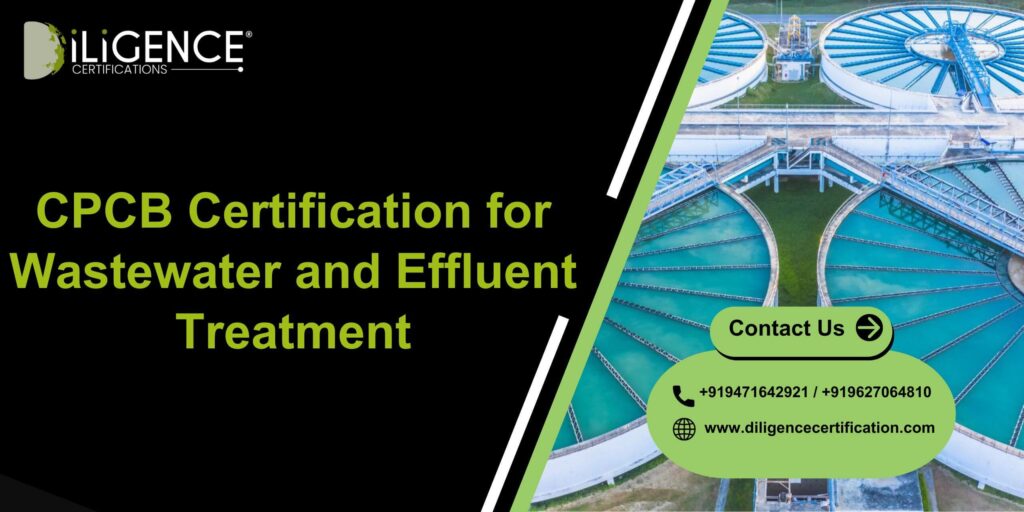
By - CPCB Certification for Wastewater and Effluent Treatment guarantees that all the industries in India treat their wastewater according to the country’s laws regarding the environment before it is released into nature.
- The certification helps to avoid the costs that may result from the company being penalized or even forced to stop working because of the violation of the law.
- Moreover, it helps in promoting the most advanced methods for the treatment of wastewater and the highest standards of control for pollution.
- The charge creates confidence with the regulatory authorities, investors, and local communities.
- Lastly, it promotes sustainable industrial practices and short-term environmental protection in India.
Introduction
India’s increasing industrial activity has led to the rise of wastewater and effluent discharge as critical ecological issues. It is up to the industry to decide whether to use their resources to tighten the production process and cut costs, but letting the waste of the treatment slide may result in very serious legal, and, of course, environmental troubles. Central Pollution Control Board
Not getting the CPCB Certification for Wastewater and Effluent Treatment will probably lead to such consequences as inspections, legal notices, high fines, or even the shutting down of industrial units. Badly treated or untreated effluents pollute the water, kill the living organisms (the ecosystem), and expose people living in the vicinity to health hazards.
This article is for the industries that want to operate legally and with a good conscience; through it, the significance, mandatory requirements, certification procedure, and the advantages of the CPCB Certification for Wastewater and Effluent Treatment are made clear.
What is CPCB Certification for Wastewater and Effluent Treatment?
The CPCB Certification for Wastewater and Effluent Treatment is an environmental permission that has been issued under the laws of the country that mainly include the Water (Prevention and Control of Pollution) Act, 1974 and the Environment (Protection) Act, 1986.
The certification is applicable to the industrial sector that produces wastewater or liquid effluent owing to its manufacturing, processing, or the activities of waste treatment.
CPCB Certification is a guarantee for:
- Meeting standards for the discharge of wastewater
- Setting up and functioning of Effluent Treatment Plants (ETPs)
- Disposal of treated wastewater which is safe or its reuse
- Monitoring and reporting of effluents quality regularly
- Legally letting to discharge treated wastewater
Industries with no CPCB Certification are subjected to enforcement measures, penalties, or even prohibition of their operational activities.
Why CPCB Certification is Important for Wastewater Treatment
In India, the legal obligation for industries to properly treat their wastewater is still in force. In case of non-compliance with CPCB Certification for Wastewater, the industry can get such penalties as follows:
- Legal notices and fines
- Temporary closure or complete halting of operations
- Denial of Consent to Operate applications
- Loss of reputation and distrust of stakeholders
- Higher risks of environmental damage Claims
CPCB Certification for Wastewater and Effluent Treatment is the proof of the industry’s dedication to environmental compliance and sustainable water management practices.
Industries That Require CPCB Certification for Effluent Treatment
CPCB certification becomes obligatory for industries like the following:
- Production and processing sectors
- Plants for chemicals and pharmaceuticals
- Textile dyeing and printing sectors
- Food and drink processing and beverage industries
- Tanneries and leather processing units
- Power generation and infrastructure projects
All industries producing liquid waste or effluent are required to follow wastewater regulations set by CPCB Certification for Wastewater.
Benefits of CPCB Certification for Wastewater and Effluent Treatment
| Importance | Benefits |
| Legal compliance | Avoids incurrence of fines, penalties, and cessation of operations |
| Environmental safety | Prevention of water pollution and ecological destruction |
| Regulatory approval | Easy cooperation with pollution control agencies |
| Brand credibility | Increasing trust among regulators and communities |
| Sustainable growth | Allows for the lawful industrial operations to continue in the long run |
Step-by-Step CPCB Certification Process
Step 1: Wastewater Assessment
Assess if possible the amount, the nature, and the pollutants of the wastewater produced.
Step 2: Documentation Preparation
Create technical reports, ETP design drafts, and compliance documents.
Step 3: Application Submission
Submit application through CPCB or the digital portal of the concerned State Pollution Control Board.
Step 4: Scrutiny & Inspection
The authorities will check the papers and might also visit the site to carry out their inspection.
Step 5: Grant of CPCB Certification
A certificate is granted after the inspection and confirmation of the adherence to regulations.
Step 6: Renewal & Ongoing Compliance
Keep up with the routine monitoring, reporting, and punctual renewals.
Documents Required for CPCB Certification
- Certificate of Incorporation
- PAN and GST Registration
- Site layout and wastewater flow diagram
- Effluent Treatment Plant (ETP) details
- Environmental management plan
- Consent to Establish / Operate
- Authorization letters (if applicable)
Timeline, Validity & Renewal
- Processing Time: 30-60 working days
- Validity: Depends on industry type and consent conditions
- Renewal: Mandatory before expiry
- Amendments: Required for changes in process, capacity, or discharge volume
Common Wastewater Compliance Requirements
The Installation of approved Effluent Treatment Plants
Compliance with specified discharge standards
Periodic sampling and analysis of effluents
Disposal or reuse of treated wastewater in a safe manner
Filing of compliance reports with authorities
Violations of the rules may lead to fines, orders of closure, or revocation of certification.
Conclusion
CPCB Certification for Wastewater and Effluent Treatment is not just a regulatory formality it is a vital safeguard for environmental protection and legal industrial operations.
The industries that give priority to wastewater compliance practices do not only escape the legal risks but also help in the water conservation and sustainable development process. Through the use of CPCB-certified effluent treatment methods, the industries can operate in an ethical manner, gain the trust of regulatory bodies, and ensure lasting growth in India’s ever more regulated industrial sector.
Frequently Asked for Questions
What is the meaning of CPCB Registration for Wastewater and Effluent Treatment?
The approval from the regulatory authority guarantees that industrial wastewater treatment complies with the Indian environment regulations.
Who will get waste water CPCB certification?
All industries that produce liquid effluents or wastewater are included in this category.
Are CPCB certifications required for waste treatment plants?
Indeed, it is a legal requirement as per the pollution control laws.
Which law controls the area of treatment of wastewater in India?
The Water (Prevention and Control of Pollution) Act, 1974, is the regulating authority for this area.
What if CPCB certification is not there?
Industrial facilities could be penalized, given closure notices, or face litigations.
Is it necessary for CPCB certification to have an ETP?
Of course, the setting up and functioning of an ETP is a must for the industry involved.
How long does the process of getting CPCB certification take?
Usually around 30 to 60 working days.
Is CPCB certification a continuous process that can be repeated?
Yes, renewal is required before the expiry date.
Can CPCB certified companies benefit from increased brand trust?
Yes, it will be a trust-building exercise for regulators, investors, and communities.
Is treated waste water reuse permitted by CPCB?
Yes, if the discharge standards are met, the reuse is permissible.