BIS Certification
 CDSCO
CDSCO
 PESO
PESO
 CPCB
CPCB
 LMPC
LMPC
 WPC Approval
 Global Approvals
 TEC
TEC
 ARAI
ARAI
 BEE
BEE
 ISO Certification
 DGCA Certification
 NOC For Steel
 APEDA Registration























 Business Registration
 FSSAI Mark Certification












 (32).jpg)
 Legal Services
 Trademark Registration
 Copyright Registration
 Patent Registration
 By
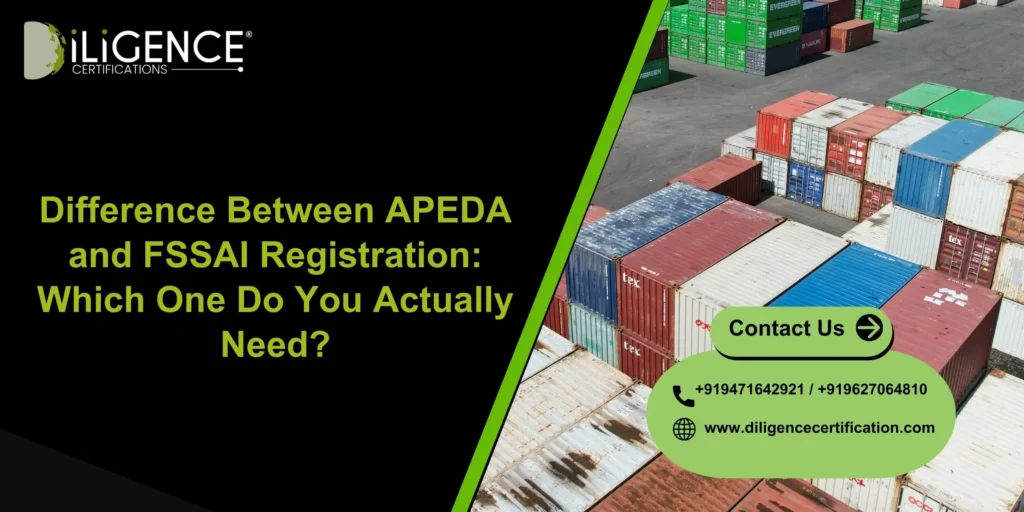
By - Difference Between APEDA and FSSAI serve fully different purposes, but both are critical for food businesses.
- APEDA enrollment is obligatory for exporters of listed agrarian and reused food products.
- FSSAI enrollment / license is obligatory for all food businesses operating in India, including manufacturers, dealers, and exporters.
- FSSAI focuses on food safety and hygiene, while APEDA focuses on import creation and regulation.
- Numerous exporters inaptly apply for only one, leading to detainments, rejections, or penalties.

Introduction | Difference Between APEDA and FSSAI
India is one of the world’s largest producers and exporters of agricultural and processed food products. However, starting or expanding a food business-especially into exports-requires strict compliance with government regulations. Among the most commonly confused registrations are APEDA Registration and FSSAI Registration.
This complete comparison guide clears all confusion by explaining what APEDA and FSSAI are, why they exist, how they differ, and which one your business actually needs. If you’re planning to manufacture, trade, or export food products from India, this guide can save you time, money, and serious legal trouble.
What Is APEDA Registration?
APEDA( Agricultural and Reused Food Products Export Development Authority) is a statutory body under the Ministry of Commerce & Industry, Government of India Difference Between APEDA and FSSAI.
APEDA regulates and promotes the import of listed agrarian and reused food products from India.
- Mandatory for exporters of APEDA- listed products
- Registration instrument is called RCMC( Registration- cum- Membership Certificate)
- Registration is done online
- Valid for 5 times
- Needed to mileage import impulses and benefits
Products Covered Under APEDA
- Fruits & vegetables
- Meat & meat products
- Dairy products
- Cereals & beats
- Reused food particulars
- Organic products
What Is FSSAI Registration?
FSSAI (Food Safety and Standards Authority of India) operates under the Ministry of Health & Family Welfare.
Purpose of FSSAI ensures food safety, hygiene, and quality standards across the food supply chain in India.
Key Points About FSSAI
- Mandatory for every food business operator (FBO)
- Required for manufacturing, storage, distribution, transport, retail, and export
- Comes in Basic Registration, State License, and Central License
- Legal compliance under the Food Safety and Standards Act, 2006
Who Needs FSSAI?
- Food manufacturers
- Packers & processors
- Wholesalers & retailers
- Restaurants & cloud kitchens
- Importers & exporters
Why Do APEDA and FSSAI Exist?
Why APEDA Exists
- Promote Indian agricultural exports
- Maintain international quality standards
- Support exporters with financial assistance
- Enable traceability and credibility in global markets
Why FSSAI Exists
- Protect consumer health
- Ensure food safety and hygiene
- Regulate food quality across India
- Prevent adulteration and unsafe practices
APEDA vs FSSAI: Important Differences
| Basis | APEDA Registration | FSSAI Registration |
| Governing Ministry | Commerce & Industry | Health & Family Welfare |
| Purpose | Export promotion & regulation | Food safety & hygiene |
| Mandatory For | Exporters of APEDA products | All food businesses |
| Certificate Issued | RCMC | Registration / License |
| Validity | 5 Years | 1-5 Years |
| Applicability | Export-oriented | Domestic + Export |
| Legal Act | APEDA Act, 1985 | FSS Act, 2006 |
| Online Process | Yes | Yes |
| Without This | Export not allowed | Business illegal |
Benefits of APEDA and FSSAI Registration
Benefits of APEDA Registration
- Eligibility for export incentives & subsidies
- Access to international trade fairs
- Recognition as a registered exporter
- Compliance with foreign buyer requirements
- Government support in market development
Benefits of FSSAI Registration
- Legal authorization to run food business
- Builds consumer trust & brand credibility
- Avoids penalties & shutdowns
- Mandatory for selling on Amazon, Flipkart, Swiggy, Zomato
- Required for food exports and imports
Challenges of Getting APEDA Registration Without a Consultant
Numerous exporters essay APEDA enrollment themselves and face avoidable hurdles Difference Between APEDA and FSSAI
- Wrong product order selection
- Document rejection due to format issues
- Portal crimes and unclear guidelines
- Delay in RCMC allocation
- Missed impulses due to incorrect compliance
Result
- Import detainments
- fiscal losses
- Buyer dissatisfaction
- Multiple re-applications
Why Choose Diligence Certification for APEDA & FSSAI Registration?
Diligence Certification simplifies the entire process so you can concentrate on business, not bureaucracy Difference Between APEDA and FSSAI.
- End- to- end enrollment support
- Expert running of APEDA & FSSAI attestation
- Error-free operation form
- Faster blessings
- Devoted compliance experts
- Affordable & transparent pricing
- Post-registration guidance
Conclusion
Difference Between APEDA and FSSAI enrollment lies in their purpose, authority, and connection - not in significance.
FSSAI is obligatory for every food business
APEDA is obligatory for exporters of listed products
Food exporters generally need BOTH
Ignoring or misreading this difference can lead to legal penalties, import rejection, and business shutdowns. The smart move is to get both enrollments done rightly and professionally Difference Between APEDA and FSSAI.
Frequently Asked Questions (FAQs)
Is APEDA registration mandatory for all food businesses?
No, only exporters of APEDA-listed products require it.
Is FSSAI required for exporters?
Yes, FSSAI is mandatory for all food exporters.
Can I apply for APEDA without FSSAI?
Technically yes, but exports will not be compliant without FSSAI.
Which registration should I get first-APEDA or FSSAI?
FSSAI should be obtained first.
Is APEDA required for domestic food sellers?
No, APEDA is only for exporters.
What happens if I export without APEDA registration?
Exports may be rejected and incentives denied.
Is APEDA registration lifetime valid?
No, it is valid for 5 years.
Does FSSAI cover food safety inspections?
Yes, FSSAI enforces hygiene and quality standards.
Can one business hold both APEDA and FSSAI registrations?
Yes, many exporters legally hold both.
Who can help with fast APEDA and FSSAI registration?
Professional consultants like Diligence Certification ensure smooth approval.