BIS Certification
 CDSCO
CDSCO
 PESO
PESO
 CPCB
CPCB
 LMPC
LMPC
 WPC Approval
 Global Approvals
 TEC
TEC
 ARAI
ARAI
 BEE
BEE
 ISO Certification
 DGCA Certification
 NOC For Steel
 APEDA Registration























 Business Registration
 FSSAI Mark Certification












 (32).jpg)
 Legal Services
 Trademark Registration
 Copyright Registration
 Patent Registration
 By
By - Mandatory Compliance: Commercial vacuum packaging appliances need to comply with IS 302 (Part 1): 2024 before they can be marketed in India.
- Electrical Safety: The standard specifies requirements for protection against electric shock, overheating, fire risks, and mechanical hazards.
- ISI Marking Requirement: ISI marking is mandatory on certified products.
- Testing and Inspection: The products are tested in BIS-recognized testing laboratories, and factory inspections are carried out before certification.
- Legality of Sale: Without BIS certification, it is illegal to manufacture, import, and sell these appliances in India.
Introduction
These vacuum packaging appliances are used in food processing units, hotels, supermarkets, and packaging units to increase the product’s shelf life while maintaining freshness. As these appliances make use of electrical components and heating elements for operation, safety is an integral part.The Bureau of Indian Standards (BIS) under IS 302 (Part 1): 2024 has specified safety standards for household and similar electrical appliances, including commercial vacuum packaging appliances.
What is IS 302:2024?
IS 302 (Part 1): 2024 is an Indian safety standard that is applicable to household, commercial, and similar electrical appliances.The IS 302 standard outlines the safety requirements that an electrical appliance needs to comply with in order to ensure the safety of users against risks like electric shock, fire, overheating, insulation failure, and mechanical injury.The standard outlines detailed guidelines that an electrical appliance needs to comply with in terms of design, construction, performance, testing, etc.
Key Points:
- Indian Safety Standard: This is for electrical appliances and is issued by the Bureau of Indian Standards (BIS).
- Covers General Safety Requirements: This Indian safety standard is applicable to household and commercial electrical appliances.
- Protection Against Hazards: This ensures safety against electric shock, fire, overheating, and mechanical hazards.
- Includes Mandatory Testing: This includes mandatory testing for appliances such as insulation resistance, dielectric strength, leakage current, and temperature rise.
- Required for BIS Certification: This is required for BIS certification under the Quality Control Order (QCO) for sale in India.
Why is BIS Certification Mandatory
BIS Certification is mandatory to ensure that electrical appliances placed in the Indian market meet the safety and quality requirements prescribed under Indian law. The certification is granted by the Bureau of Indian Standards (BIS) and is enforced through applicable Quality Control Orders (QCOs) issued by the Government of India.
Key Reasons:
- Consumer Safety Protection: This ensures that the products provided are safe from electrical shocks and fires.
- Legal Requirement: This is a mandatory requirement under the Quality Control Order (QCO) issued by the Government of India.
- Prevents Substandard Products: This prevents substandard and unsafe appliances from being sold in the market.
- Mandatory for Market Access: This is mandatory for manufacturing or selling products in India.
- Regulated by BIS: The certification is provided by the Bureau of Indian Standards (BIS) after proper inspection and testing of the products.
Importance and Benefits of BIS Certification
| Importance | Benefits |
| Mandatory Compliance: Mandatory under the applicable Quality Control Order (QCO) in India. | Ensures Consumer Safety: Provides safety against electrical and fire hazards. |
| Applicable Standard: It must comply with the safety requirements of the IS 302 (Part 1): 2024 standard | Legal Market Access: Facilitates legal manufacturing, import, and sale in India. |
| Testing in BIS Approved Laboratories: It must undergo the prescribed safety and performance tests in laboratories approved by the BIS. | Builds Brand Trust: Enhances brand credibility and customer trust. |
| Factory Inspection Required: BIS inspectors will conduct the inspection of the manufacturing unit before issuing the certification. | Competitive Advantage: Offers preference in government tenders and bulk orders. |
| ISI Mark Compliance: It must display the ISI mark issued by the Bureau of Indian Standards (BIS). | Reduces Business Risk: Lowers the risk of recalls, penalties, or lawsuits. |
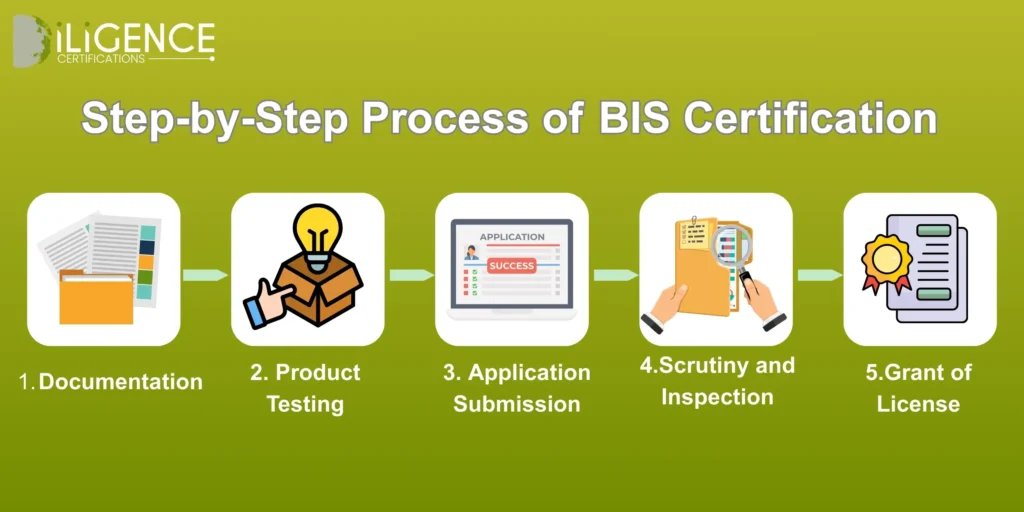
Step-by-Step Process of BIS Certification
Step1:Documentation
- Collect required technical documents
- Prepare product specifications
- Gather company registration details
- Ensure documents follow BIS format
Step2:Product Testing
- Send samples to a BIS-approved lab
- Conduct safety and quality tests
- Receive test reports
- Confirm compliance with BIS standards
Step3:Application Submission
- Fill out the BIS application form
- Upload all required documents
- Attach valid test reports
- Pay the necessary BIS fees
Step4:Scrutiny and Inspection
- BIS reviews submitted documents
- Authority verifies test results
- Factory/product inspection may occur
- Clarifications requested if needed
Step5:Grant of License
- BIS approves the application
- License number is issued
- Product can carry BIS mark
- Renewal required before expiry
Documents Required for BIS Certification
| Category | Documents Required |
| Business Documents | Business license/registration, ISO certificate, organizational details |
| Manufacturer Details | Factory layout, process flow chart, machinery list, production details |
| Product Documents | Product specifications, component list, user manual, model details |
| Testing Documents | Test report from BIS-recognized lab, sample details, test request form |
| Legal & Compliance | Authorization letter, brand ownership proof, trademark certificate (if any) |
| Import/Foreign Manufacturer (If applicable) | AIR (Authorized Indian Representative) details, contract agreement, overseas manufacturer documents |
Timelines, Costs, Validity & Renewal
- Timelines: Usually from 20 to 30 days, with only 7-15 days for the testing.
- Costs: The cost of the government and the test varies depending on the product. There can be some additional charges though.
- Validity: The validity period is 2 years in most situations.
- Renewal: The renewal is done before the expiration; there should be updated documents/tests; the renewal
Why Choose Diligence Certifications
Diligence Certifications is a professional consultancy firm dealing in BIS certification and approval of electrical and electronic products. With extensive knowledge of IS 302 (Part 1): 2024 and other relevant standards, the company offers comprehensive support to manufacturers and importers for obtaining hassle-free certification.Starting from documentation and application submission to product testing and communication with the Bureau of Indian Standards (BIS), Diligence Certifications ensures a smooth certification process. Their team of experts works towards reducing delays and ensuring transparency in the entire process.
Conclusion
BIS Certification in IS 302 (Part 1): 2024 is necessary for the safety, quality, and legal requirements of commercial vacuum packaging appliances in India. This certification safeguards consumers from electrical and fire-related dangers while ensuring a common standard for the product.
Frequently Asked Questions (FAQs)
What is IS 302 (Part 1): 2024?
It is an Indian Safety Standard for household and commercial electrical appliances.
Who issues BIS Certification?
The BIS certification is issued by the Bureau of Indian Standards.
Is BIS Certification Mandatory?
The BIS certification is mandatory under the applicable Quality Control Order (QCO).
What type of product is covered?
The product type is commercial vacuum packaging appliances and similar electrical equipment.
What type of testing is required?
The type of testing required is insulation resistance testing, dielectric testing, leakage current testing, and temperature rise testing.
Are importers eligible to apply for BIS certification?
yes
Is there any requirement for inspection of the factories?
yes
What mark does the product receive after certification?
The product gets the ISI mark.
What happens if the product is not certified?
The product cannot be manufactured, imported, or sold in India.
How long does BIS certification last?
It is granted for a specific period of time and then needs to be renewed in accordance with the guidelines of BIS.