BIS Certification
 CDSCO
CDSCO
 PESO
PESO
 CPCB
CPCB
 LMPC
LMPC
 WPC Approval
 Global Approvals
 TEC
TEC
 ARAI
ARAI
 BEE
BEE
 ISO Certification
 DGCA Certification
 NOC For Steel
 APEDA Registration























 Business Registration
 FSSAI Mark Certification












 (32).jpg)
 Legal Services
 Trademark Registration
 Copyright Registration
 Patent Registration
 By
By - Mandatory EPR Registration:Producers, Importers, and Brand Owners (PIBOs) need to register with the Central Pollution Control Board (CPCB) portal prior to the sale of plastic products.
- EPR Targets & Obligations: Companies need to meet the CPCB EPR Plastic Waste collection and recycling targets in the range of the plastic waste introduced in the market.
- Plastic Waste Management Compliance:Producers need to ensure the safe disposal of waste through recyclers in an environmentally safe manner in compliance with the Plastic Waste Management Rules.
- Use of Recycled Plastic:Companies need to use a fixed percentage of recycled plastic in the packaging material as per the guidelines of the CPCB.
- Documentation & Reporting: Filing of CPCB EPR Plastic Waste returns and maintaining records of plastic usage, collection, and recyclers is mandatory.
Introduction
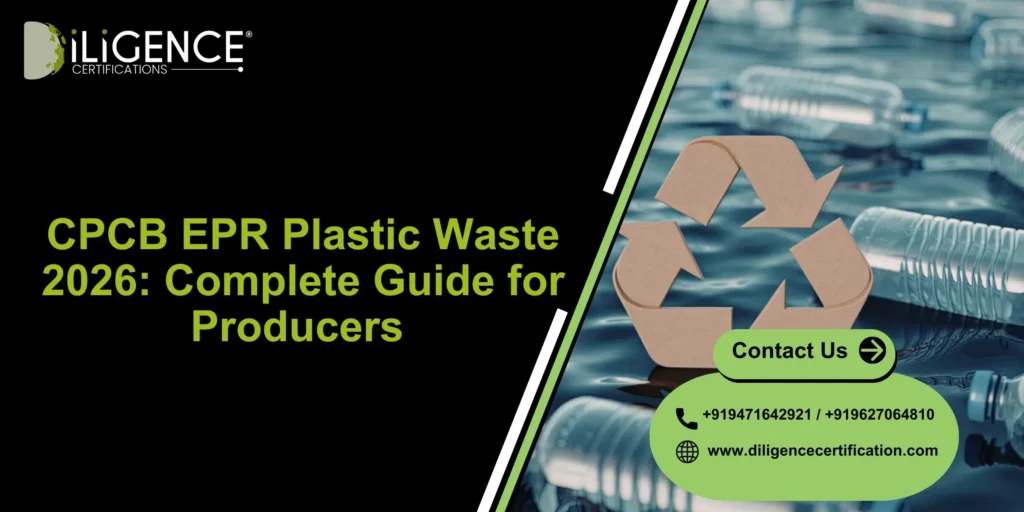
The Central Pollution Control Board (CPCB) has enhanced its regulations for Extended Producer Responsibility (EPR) under Plastic Waste Management Rules to address the plastic waste management problem in India. In 2026, more stringent compliance norms for Producers, Importers, and Brand Owners (PIBOs) under CPCB’s EPR Plastic Waste regulations are mandatory, covering the entire lifecycle of plastic packaging. This guide offers an entire overview of CPCB EPR Plastic Waste regulations, enabling businesses to understand how to comply with regulations to operate legally.
What is CPCB EPR Plastic Waste?
CPCB EPR Plastic Waste is a concept where producers are made responsible for the plastic waste produced from their products. This concept has been implemented as per the plastic waste management rules in India by the Central Pollution Control Board.In simpler terms, “Extended Producer Responsibility (EPR) means that Producers, Importers, and Brand Owners (PIBOs) are responsible for the entire life cycle of plastic packaging waste management, from production to collection, recycling, and safe disposal.”
Key Points:
- Legal Responsibility: CPCB EPR Plastic Waste Businesses must ensure proper collection and recycling of plastic waste they introduce into the market.
- EPR Targets: Companies are assigned annual targets for recycling and waste management.
- Authorized Recyclers: Waste must be processed through CPCB-approved recyclers or waste processors.
- Online Compliance: Registration and reporting are done through the CPCB EPR portal.
- Environmental Protection: The main goal is to reduce plastic pollution and promote sustainable practices.
Who Needs to Comply with EPR Plastic Waste Rules?
As per the regulations laid out by the Central Pollution Control Board (CPCB), EPR Plastic Waste Rules are applicable to all those entities or parties who are either introducing plastic packaging into the market or are responsible for disposing of CPCB EPR Plastic Waste . This includes producers, importers, brand owners, and plastic waste processing parties. These parties are responsible for reducing pollution and promoting plastic waste management practices.
Key Reasons:
- Producers of Plastic Raw Material: Producers of plastic raw material in the form of plastic granules or resin, used in the packaging industry, have to adhere to CPCB EPR Plastic Waste requirements.
- Importers of Plastic Products:Importers of plastic products or packaged goods have to take care of the plastic waste generated.
- Brand Owners (PIBOs):Companies whose products are sold in the market with the brand name and involve plastic as a raw material in the package have to take care of the plastic waste generated.
- Plastic Waste Processors:Recyclers and plastic waste processing units have to register with the Central Pollution Control Board (CPCB).
- E-commerce & Online Sellers:Online sellers introducing plastic products in the market also have to adhere to EPR requirements.
Importance and Benefits of CPCB EPR Compliance
| Importance | Benefits |
| Environmental Protection:Assists in reducing plastic pollution and promoting effective waste management. | Avoids Legal Penalties:Ensures smooth business operations by abiding by the government regulations. |
| Legal Requirement:Compulsory compliance with Plastic Waste Management Rules to avoid penalties. | Enhances Brand Image:Helps in creating a positive reputation as an environmentally responsible business entity. |
| Waste Accountability:Holds producers accountable for the entire lifecycle of plastic packaging | Business Growth Opportunities:Helps in building trust with customers, investors, and business partners.Efficient Waste Management |
| Promotes Recycling EcosystemEncourages a recycling ecosystem for plastic waste. | Efficient Waste Management:Makes waste collection and recycling more efficient. |
| Supports Sustainability Goals:Helps businesses align with environmental sustainability goals at a national and global level. | Competitive Advantage:Helps businesses stay ahead in the market with the rise of the green movement. |
Step-by-Step Process of CPCB E-Waste Rules
Step 1: Identify Your Category
- Determine whether you are a producer, manufacturer, recycler, refurbisher, or bulk consumer.
Step 2: Register on CPCB Portal
- Create an account and apply for E-Waste Registration/EPR Authorization online.
Step 3: Prepare & Upload Documents
- Submit required documents like PAN, GST, company details, and business licenses.
Step 4: Submit EPR Plan (For Producers)
- Provide a detailed plan for collection, recycling, and disposal of e-waste.
Step 5: Approval from CPCB
- CPCB reviews the application and grants authorization if all requirements are met.
Step 6: Implement E-Waste Management System
- Set up proper channels for collection, storage, recycling, and disposal.
Step 7: Maintain Records & File Returns
- Keep records of e-waste handled and submit regular compliance reports.
Documents Required for CPCB E-Waste Rules
| Category | Documents Required |
| Company PAN & GST Certificate | Proof of business identity and tax registration |
| IEC (Import Export Code) | Mandatory for importers of electronic goods |
| Business Registration Proof | Certificate of incorporation, partnership deed, or MSME registration |
| Product Details | Information about the type of electronic products handled |
| EPR Plan | A detailed plan for collection, recycling, and disposal of e-waste |
| Authorization Documents | Agreements with authorized recyclers, collection centers, or PROs |
Timelines, Costs, Validity & Renewal
- Timelines:The registration process usually takes a few weeks, depending on document verification and application accuracy.
- Costs:Costs vary based on business type, scale, and compliance requirements.
- Validity:CPCB E-Waste Registration is generally valid for a specific period as per approval terms and must be maintained through compliance.
- Renewal:Renewal should be applied before expiry with updated documents and compliance reports to ensure continuous authorization.
Why Choose Diligence Certifications
Diligence Certifications is an trustworthy consultancy firm with expertise in CPCB EPR Plastic Waste and compliance. The consultancy firm has experienced professionals who can offer end-to-end services for CPCB EPR registration. The customer-centric approach of Diligence Certifications helps businesses process CPCB EPR registration quickly, file accurate returns, and obtain approvals without any hassles. By choosing Diligence Certifications, businesses can be compliant withCPCB EPR Plastic Waste regulations without compromising business operations.
Conclusion
In conclusion, it is important to note that the CPCB EPR Plastic Waste compliance is one of the key steps that businesses need to undertake in order to conduct business in a responsible and sustainable manner. By abiding by the guidelines provided by the Central Pollution Control Board (CPCB), businesses can handle plastic waste in the most effective way possible, thus preventing any kind of complications. By adopting the EPR system, businesses can not only become compliant with the law but can also enhance their brand reputation in the market.
Frequently Asked Questions (FAQs)
What is CPCB EPR Plastic Waste?
It is a system introduced by the Central Pollution Control Board that requires the management of plastic waste.
Who should apply for EPR registration?
Producers, Importers, and Brand Owners (PIBOs) of plastic packaging waste.
Is EPR registration compulsory?
Yes, it is mandatory under the Plastic Waste Management Rules.
How can I apply for CPCB EPR?
You can apply online through the official CPCB online EPR portal.
What is the objective of EPR?
Annual targets set by the CPCB.
What if EPR is not followed?
Businesses will be subject to legal actions and penalties.
Do importers have to comply with EPR?
Yes, importers of plastic packaging products have to comply with EPR.
Is the use of recycled plastic mandatory?
Yes, a certain percentage is to be used as per guidelines.
Who are plastic waste processors?
Authorized recyclers and waste management agencies.
How often is an EPR report filed?
Periodic reports.