BIS Certification
 CDSCO
CDSCO
 PESO
PESO
 CPCB
CPCB
 LMPC
LMPC
 WPC Approval
 Global Approvals
 TEC
TEC
 ARAI
ARAI
 BEE
BEE
 ISO Certification
 DGCA Certification
 NOC For Steel
 APEDA Registration























 Business Registration
 FSSAI Mark Certification












 (32).jpg)
 Legal Services
 Trademark Registration
 Copyright Registration
 Patent Registration
 By
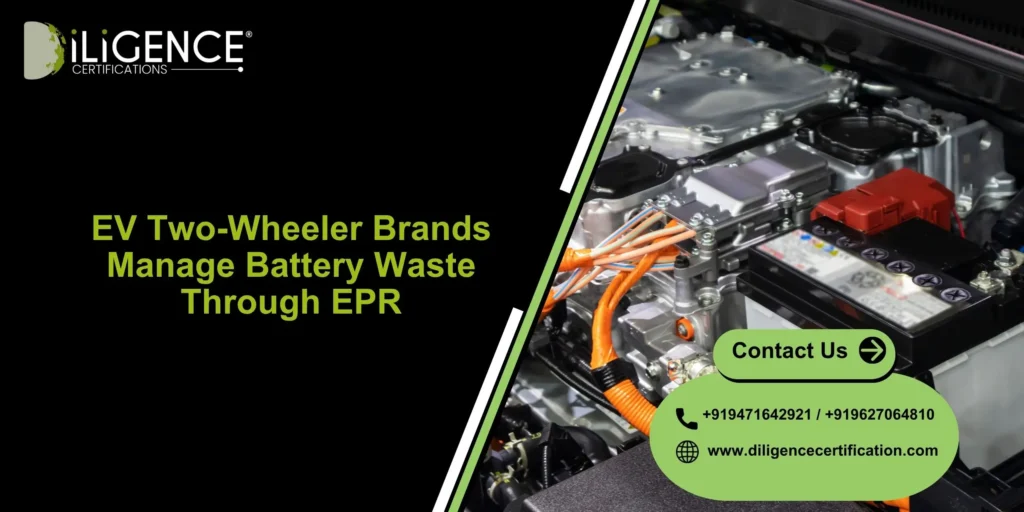
By - EPR makes EV manufacturers responsible for collecting and recycling used batteries.
- Lithium-ion batteries from EV Two-Wheeler Battery Waste require proper disposal due to environmental risks.
- Brands must register on the CPCB portal and meet annual recycling targets.
- Authorized recyclers and dismantlers play a key role in battery waste management.
- Non-compliance with EPR rules can lead to heavy penalties and business restrictions.
Introduction | EV Two-Wheeler Battery Waste
The rapid growth of electric vehicles (EVs), especially two-wheelers, is transforming the transportation landscape in India. With increasing demand for eco-friendly mobility, EV brands are scaling production and sales. However, this growth also brings a critical challenge - managing battery waste.
Lithium-ion batteries used in EV Two-Wheeler Battery Waste have a limited lifespan and contain hazardous materials. If not handled properly, they can harm the environment and human health. To address this issue, the government has introduced Extended Producer Responsibility (EPR), making manufacturers accountable for the entire lifecycle of batteries.
This blog explains how EV two-wheeler brands manage battery waste through EPR in a simple and SEO-friendly manner.
What is EPR in Battery Waste Management?
Extended Producer Responsibility (EPR) is a policy approach that makes manufacturers responsible for the collection, recycling, and disposal of products after their end-of-life stage.
In the context of EV Two-Wheeler Battery Waste, EPR applies to battery waste under the Battery Waste Management Rules. It ensures that producers, importers, and brand owners take responsibility for the safe handling of used batteries.
Under EV Two-Wheeler Battery Waste, EV brands must:
- Register with the Central Pollution Control Board (CPCB)
- Meet recycling and collection targets
- Partner with authorized recyclers
- Maintain proper records and file annual returns
This system ensures that battery waste is managed in an environmentally sound manner.
Why EPR is Required for EV Two-Wheeler Battery Waste
EPR is not just a regulatory requirement but a necessary step toward sustainable development. Here are key reasons why EPR is important:
1. Environmental Protection Improper disposal of lithium-ion batteries can lead to soil and water contamination. EPR ensures safe recycling.
2. Resource Recovery Batteries contain valuable materials like lithium, cobalt, and nickel, which can be reused through recycling.
3. Legal Compliance The government mandates EPR compliance for all battery producers, including EV brands.
4. Waste Reduction EPR promotes a circular economy by reducing landfill waste.
5. Brand Responsibility It builds trust among consumers by showing commitment to sustainability.
Importance and Benefits of EV Two-Wheeler Battery Waste
| Importance of EPR | Benefits for EV Brands |
| Ensures safe disposal of battery waste | Helps avoid legal penalties |
| Reduces environmental pollution | Improves brand reputation |
| Promotes recycling and reuse | Builds customer trust |
| Supports circular economy | Enhances sustainability goals |
| Controls hazardous waste management | Provides regulatory compliance |
Process of Managing EV Two-Wheeler Battery Waste
EV two-wheeler brands follow a structured process to manage battery waste under EPR:
Step 1: Registration on CPCB Portal
Manufacturers must register as producers under EPR guidelines.
Step 2: Target Allocation
Annual collection and recycling targets are assigned based on battery sales.
Step 3: Collection Mechanism
Brands set up collection systems such as:
- Dealer take-back programs
- Collection centers
- Reverse logistics
Step 4: Partnering with Authorized Recyclers Collected batteries are handed over to certified recyclers for safe processing.
Step 5: Recycling and Material Recovery Recyclers extract valuable materials and ensure proper disposal of hazardous components.
Step 6: Documentation and Reporting Brands must maintain records and submit annual compliance reports to CPCB.
Step 7: EPR Certificate Generation Recyclers generate EPR certificates, which help brands meet their targets.
Challenges of Getting This Certification Without a Consultant
Managing EPR compliance independently can be complex and time-consuming. Here are the major challenges:
1. Complex Regulatory Framework Understanding government rules and updates can be difficult for businesses.
2. Documentation Burden Preparing and submitting accurate documents requires expertise.
3. Finding Authorized Recyclers Identifying reliable and certified recyclers is not easy.
4. Portal Handling Issues Many businesses face technical issues while using the CPCB portal.
5. Target Management Tracking and achieving EPR targets requires proper planning.
6. Risk of Non-Compliance Errors in compliance can lead to penalties and business disruptions.
Why Choose Diligence Certification for This Certification
Choosing the right consultant can simplify the entire EPR process. Diligence Certification offers end-to-end support for EV battery waste compliance.
1. Expert Guidance A team of professionals ensures accurate understanding of EPR rules.
2. Hassle-Free Registration Complete assistance in CPCB registration and documentation.
3. Recycler Network Access to authorized and trusted recyclers.
4. End-to-End Compliance From application to certification, everything is managed smoothly.
5. Timely Updates Regular updates on regulatory changes and compliance deadlines.
6. Cost-Effective Solutions Affordable services tailored to business needs.
Conclusion
As EV adoption continues to grow, managing battery waste becomes a critical responsibility. Extended Producer Responsibility (EPR) ensures that EV Two-Wheeler Battery Waste brands take accountability for the entire lifecycle of batteries.
By implementing proper collection, recycling, and reporting systems, brands not only comply with regulations but also contribute to environmental sustainability. While the process can be complex, expert guidance from professionals like Diligence Certification can make compliance smooth and efficient.
EPR is not just a legal requirement - it is a step toward a cleaner and greener future.
Frequently Asked Questions (FAQs)
What is EPR in EV battery waste?
EPR is a policy that makes EV brands responsible for collecting and recycling used batteries.
Is EPR mandatory for EV two-wheeler manufacturers?
Yes, it is mandatory under Battery Waste Management Rules.
Who regulates EPR in India?
The Central Pollution Control Board (CPCB) regulates EPR compliance.
What type of batteries are covered under EPR?
All lithium-ion batteries used in EVs are covered.
What happens if a brand does not comply with EPR?
Non-compliance can lead to penalties and legal action.
Can EV brands outsource battery recycling?
Yes, they can partner with authorized recyclers.
What is an EPR certificate?
It is proof that recycling targets have been met.
How are battery waste collection targets decided?
Targets are based on the number of batteries sold.
Is CPCB registration required for EPR?
Yes, registration is mandatory for all producers.
How can a consultant help in EPR compliance?
A consultant simplifies the process by handling registration, documentation, and reporting.