 BIS Certification
 CDSCO
CDSCO
 PESO
PESO
 CPCB
CPCB
 LMPC
LMPC
 WPC Approval
 Global Approvals
 TEC
TEC
 ARAI
ARAI
 BEE
BEE
 ISO Certification
 DGCA Certification
 NOC For Steel
 APEDA Registration















 Business Registration
 FSSAI Mark Certification











 (32).jpg)
 Legal Services
 Trademark Registration
 Copyright Registration
 Patent Registration
 By
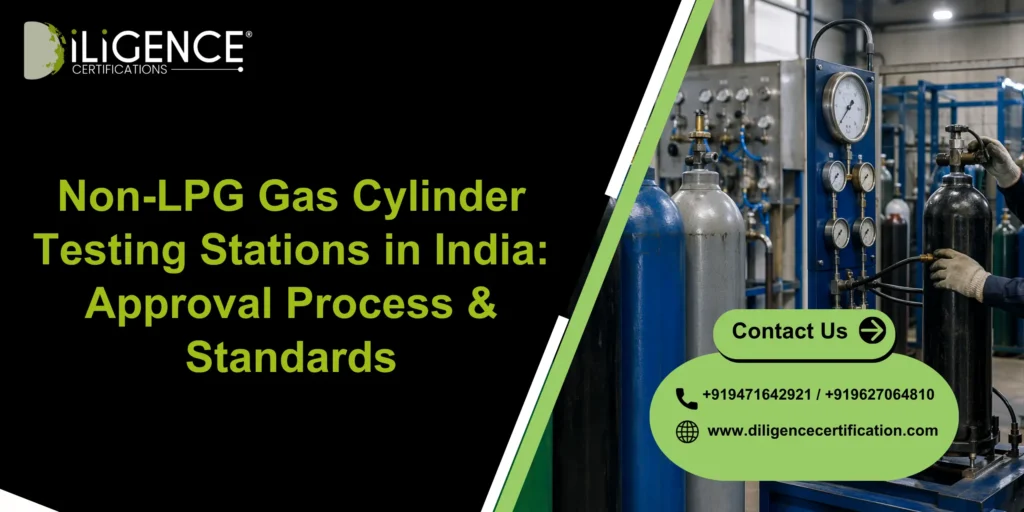
By - Non-LPG Gas Cylinders Testing is done in order to ensure safety, compliance, and quality certification of non-LPG gas cylinders before entering the market.
- The aim of Non-LPG Gas Cylinders Testing is to make sure that the non-LPG gas cylinders comply with the Indian safety and pressure vessel regulations.
- This service plays a key role in accident prevention and maintaining compliance.
- Documents that are required for Non-LPG Gas Cylinders Testing include company registration certificate, product details, testing reports, etc.
- This helps the manufacturing companies with increased safety and growth.
Introduction
Manufacturers and importers might encounter many difficulties when they do not go through correct Non-LPG Gas Cylinder Testing. The absence of appropriate testing and certification makes cylinders unsafe, substandard, and under pressure regulation requirements. Such products might be rejected, become legal problems, pose a risk to safety, and slow down the process of certification. Moreover, people do not want to buy uncertified products. Petroleum & Explosives Safety Organization (PESO)
In order to eliminate all such problems, receiving proper Non-LPG Gas Cylinder Testing certification becomes extremely important. All the cylinders have to be tested for their strength, safety from leaks, capacity under pressure, and quality performance according to Indian safety standards and guidelines provided by GCR.
With certification, companies can freely penetrate the market without fear of any penalties. People always prefer certified cylinders because of their safety and quality features.
What is Non-LPG Gas Cylinder Testing?
Non-LPG Gas Cylinder Testing is an inspection and certification process of industrial gas cylinders in India, which ensures compliance of these cylinders with required safety and quality requirements. In other words, industrial and special gas cylinders have to pass some tests and be certified to make sure that they are fully ready for handling high-pressure gases and conform to all safety rules established by the government, including GCR rules.
- Meaning & Purpose: Non-LPG Gas Cylinder Testing relates to an inspection of industrial gas cylinders for compliance with required safety and performance standards.
- Regulatory Purposes: Ensuring compliance with Indian safety and pressure vessels regulations to prevent any problems and incidents.
- Main Products Involved: Oxygen cylinders, nitrogen cylinders, carbon dioxide cylinders, hydrogen cylinders, refrigerant gas cylinders, and others.
- Safety Purposes: Industrial cylinders are tested for pressure resistance, possible leakage, burst strength, and other safety-related characteristics.
- Quality Purposes: It guarantees that only cylinders produced of high-quality materials can be used in industrial activities.
Conclusively, Non-LPG Gas Cylinder Testing is performed to make sure that industrial cylinders are safe and reliable and comply with Indian safety standards.
Why Non-LPG Gas Cylinder Testing is Important
Non-LPG Gas Cylinder Testing plays a major role in guaranteeing that all industrial gas cylinders meet all the necessary requirements concerning safety, quality, and adherence to regulations before being launched in the market. This process prevents all kinds of risks while maintaining compliance with Indian laws at the same time.
- Legal Compliance: The testing process guarantees that all cylinders comply with GCR Rules and other Indian regulations, thus preventing penalties and rejection.
- Safety Guarantee: Industrial cylinders are checked for any signs of leakage, low pressure, and weakness.
- Quality Assurance: All cylinders made from low-quality materials are identified during testing.
- Market Acceptability: Tested cylinders are always welcome among dealers, distributors, and authorities.
- Consumer Preference: Consumers tend to choose tested gas cylinders because of their reliability.
- Industry Development: Appropriate testing facilitates business growth and market expansion.
Key Features of Non-LPG Gas Cylinder Testing
The non-lpg gas cylinder testing is a well-designed procedure, which ensures that the cylinders conform to all the safety requirements as per Indian regulations before giving a certificate of approval for their use. This procedure involves rigorous testing and compliance with relevant standards.
- Safety Standard: Cylinders are tested for pressure, leakage and burst resistance.
- Compliance: The procedure guarantees complete adherence to GCR rules and other Indian standards.
- Durable: Tests include exposure to harsh conditions including high pressure.
- Reliable: The procedure makes sure that the cylinders function reliably with no failures in use or storage.
- Materials Quality: Only cylinders, which have been manufactured using approved materials, get an approval.
In conclusion, the non-LPG gas cylinder testing is a procedure which makes sure that all industrial gas cylinders are safe, durable, reliable and meet Indian safety standards.
Who Needs Non-LPG Gas Cylinder Testing ?
The Non-LPG Gas Cylinder Testing process is applicable to all companies that are engaged in the manufacture, importing, exporting, and distribution of industrial and special gas cylinders. It ensures that all the products being sold or used are in compliance with the standards and regulations of India.
- Manufactures: Testing helps ensure that the manufactured cylinders are safe and up to the mark before they enter the market.
- Importers: Certification of imported cylinders will make sure that they adhere to all the regulations of India and not be rejected at customs.
- Suppliers/Dealers: Testing provides dealers and suppliers with the assurance that the cylinders they are selling are safe and reliable for their customers.
- Exporters: Testing ensures that exporters can distribute their cylinders in accordance with the standards of India.
Documents Needed for Non-LPG Gas Cylinder Testing
For non-LPG gas cylinder testing, proper documentation needs to be submitted by the manufacturers/importers to verify their eligibility for approval under Non-LPG Gas Cylinder Testing.
- Company Registration Documents: This includes the registration document, IEC, and the authority letter issued by the company.
- Product Specifications: This will include specifications related to cylinder design, volume of the cylinder, material, etc.
- Test Report: The test report for safety, pressure, leakage, and bursting of the cylinder.
- Quality Control: It includes the manufacturing process and its quality control measures.
Having proper documentation reduces the chances of any errors during the Non-LPG Gas Cylinder Testing process.
Procedure for Testing Non-LPG Gas Cylinder in India
Non-LPG Gas Cylinder Testing procedure is a systematic approach applied in India to check and verify industrial and special gas cylinders’ compliance with all the necessary rules and requirements prior to certification. The step-by-step guide given below is aimed at assisting beginners:
Application Filing:
This procedure starts with submitting the application form to the appropriate testing station along with all essential information about the company and gas cylinder to be tested.
Document Filing:
After application filing, all the necessary documents are submitted for evaluation by the authorities. These may include company registration papers, detailed descriptions of products, technical drawings, etc.
Cylinder Testing:
Testing procedure includes various stages of checking the cylinder for its ability to withstand the pressure, to have no leakages, to be durable enough, and generally be safe to operate.
Physical Inspection:
Specialists perform physical inspection of the cylinders in order to make sure they correspond to the described characteristics and meet safety requirements.
Verifying and Evaluating:
Authorities examine and evaluate all the data collected after testing for compliance with Indian requirements and rules.
Approval Issuing:
If all criteria are satisfied, authorities issue the approval document to the applicant.
Timeline, Cost, and Renewal Process
| Parameter | Details |
| Timeline | The complete testing and approval process usually takes around 2 to 6 weeks, depending on cylinder type and testing requirements. |
| Cost | The cost varies based on cylinder category, testing complexity, and consultancy services. It may be moderate to high depending on the project scope. |
| Validity | Approval is valid for a specific cylinder design or type until any change in regulations or technical specifications occurs. |
| Renewal Process | Renewal is required if there are any changes in design, material, or updated compliance rules. |
| Tips to Avoid Delays | Submit complete and accurate documents, conduct pre-testing before application, ensure full compliance with GCR Rules, and respond quickly to authority queries. |
Common Errors Made During the Non-LPG Gas Cylinder Testing Process
Several issues often occur during the Non-LPG Gas Cylinder Testing Process that may cause delays in obtaining approvals or even rejection.
- Insufficient Documents: Failure to provide complete documentation may cause the submission to be delayed or rejected.
- Recommendation: Make sure that the required documentation is provided in their entirety.
- Inaccurate Data on Technical Specifications: Providing inaccurate data regarding the design or pressure rating of the cylinders will result in the test failing.
- Recommendation: Provide accurate information regarding the technical specifications of the products.
- Omission of the Pre-Testing Process: Sending the products for testing without prior testing will increase the likelihood of rejections.
- Recommendation: Perform pre-tests before submitting the products for testing.
- Non-Compliance with Guidelines: The submission will not be approved if it fails to comply with GCR.
- Recommendation: Ensure compliance with GCR when providing the required documentation.
Benefits of Non-LPG Gas Cylinder Testing
The use of non-LPG gas cylinder testing brings numerous advantages not only to the manufacturer but also to the importer and consumer, as it ensures that all cylinders are thoroughly inspected according to the necessary standards and are ready for utilization on the industrial level. This will positively affect the reliability of products and help establish a high level of trust.
- Quality Assurance: Guarantees that cylinders are produced from certified materials according to the requirements set by the industry.
- Compliance: Ensures the ability of an organization to follow Indian safety standards and GCR Rules without problems.
- Establishing Customer Trust: Builds customers’ trust in cylinders since they are guaranteed to be safe and reliable.
- Durability: Provides long-lasting service, thanks to the strict examination of a product at a very high pressure.
- Safety Improvement: Decreases any possible threats concerning leakage and burst thanks to the thorough inspection.
- Market Approval: Easily gains dealer and distributor approval due to certification.
Consequently, this method brings many advantages and helps improve various spheres within the company and industry as a whole.
Why Choose Diligence Certification for Non-LPG Gas Cylinder Testing
Selecting an appropriate consultant organization is crucial for getting a Non-LPG Gas Cylinder Testing certification easily. Diligence Certification offers comprehensive support throughout the process, ensuring an easy approval journey.
- Professional Guidance: Professional guidance will help get an appropriate idea about all requirements and facilitate approvals.
- Rapid Approval Procedure: Effective cooperation with relevant authorities will ensure quick approval.
- Document Preparation Assistance: Comprehensive guidance will ensure the preparation of required documents without facing any problems.
- Transparent Approval Process: The client will remain informed of every step taken by the consultant.
- Comprehensive Support: The consultant will take care of everything from the beginning till the end.
With the help of Diligence Certification, Non-LPG Gas Cylinder Testing certification will be completed easily with absolute compliance and reliability.
Conclusion
Non-LPG Gas Cylinder Testing is an extremely crucial activity ensuring that industrial gas cylinders pass all the safety and quality criteria required under the Indian law. At each stage of testing and inspection and through the approval process, safety and reliability in the industry are ensured. PESO Certificate
Adhering to the right procedure of testing and certification is not only important legally but also for gaining trust and acceptance in the market and future success. The certification is important as all certified gas cylinders are safe and reliable.
If you are working with the manufacture, import, and supply of gas cylinders in your company, it is important to follow the right process of certification. To make sure that you get a smooth certification, you can contact professionals for help with Non-LPG Gas Cylinder Testing.
Frequently Asked for Questions
What Is Non-LPG Gas Cylinder Testing Certification?
A safety certificate issued to industrial gas cylinders.
Why Is Non-LPG Gas Cylinder Testing Certification Required?
For accident prevention and compliance with Indian laws.
What Types of Cylinders Require Non-LPG Testing Certification?
Those containing oxygen, nitrogen, carbon dioxide, hydrogen, and others.
Who Requires a Non-LPG Testing Certification?
Manufacturers, importers, exporters, suppliers of industrial gas cylinders.
On What Basis Do We Conduct Tests?
Indian safety standards and GCR standards.
What Kind of Tests Do We Carry Out?
Leak, pressure resistance, burst, and durability tests.
How Long Does It Take for Non-LPG Testing?
From 2 to 6 weeks based on cylinder types.
Is There Any Document Needed for Testing?
Yes, all documents related to a company and cylinders details.
Are Non-Certified Gas Cylinders Legal for Sale in India?
No, certification is necessary.
Advantages of Testing Certification?
Safety, credibility, compliance, and market success.