BIS Certification
 CDSCO
CDSCO
 PESO
PESO
 CPCB
CPCB
 LMPC
LMPC
 WPC Approval
 Global Approvals
 TEC
TEC
 ARAI
ARAI
 BEE
BEE
 ISO Certification
 DGCA Certification
 NOC For Steel
 APEDA Registration























 Business Registration
 FSSAI Mark Certification












 (32).jpg)
 Legal Services
 Trademark Registration
 Copyright Registration
 Patent Registration
 By
By - Mandatory for Market Entry BIS and BEE compliance is required before selling or importing refrigerators in India. Without certification, products cannot enter the market.
- Multiple Standards Apply Refrigerators must follow IS 17550 along with updated amendments and BEE energy labeling rules.
- Energy Labeling is Compulsory BEE star rating is legally required, with stricter labeling norms from 2026.
- Regulations Keep Changing Frequent updates like S.O. 4490(E) and S.O. 4554(E) require continuous compliance monitoring.
- Direct Impact on Sales Approval Non-compliance leads to shipment rejection, penalties, and blocked market access.
Introduction | Frost Free Refrigerators
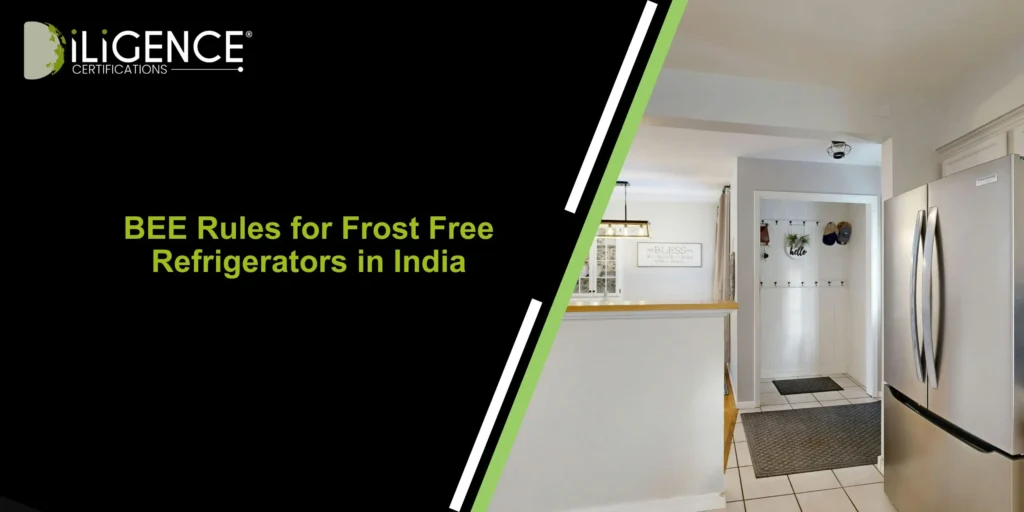
Frost Free Refrigerators are widely used in households, commercial kitchens, hotels, and retail sectors due to their automatic defrosting technology and improved cooling efficiency. However, in India, these appliances are strictly regulated under multiple compliance frameworks to ensure safety, energy efficiency, and environmental responsibility.
Frost Free Refrigerators manufacturers, importers, and exporters, understanding regulatory requirements is not optional. It directly affects product approval, customs clearance, and market access. India’s regulatory ecosystem includes BIS certification under IS standards and energy labeling compliance under BEE regulations.
The regulatory environment has become more structured in recent years due to increasing consumer demand for energy-efficient appliances and government initiatives promoting sustainability. As a result, Frost Free Refrigerators must pass strict technical, labeling, and performance-based compliance checks before reaching the Indian market.
What is Frost Free Refrigerator Compliance Certification?
Frost Free Refrigerator compliance certification refers to the mandatory regulatory approval process required under Indian standards to manufacture, import, distribute, or sell refrigerators with frost-free technology.
It primarily includes:
- BIS certification under IS 17550 standards
- Compliance with relevant amendments issued through government notifications
- Energy labeling approval from BEE (Bureau of Energy Efficiency)
Key Purpose:
- Ensure electrical safety standards
- Maintain energy efficiency benchmarks
- Control environmental impact
- Protect consumer rights
- Standardize product quality in Indian market
These certifications are legally enforced under Indian regulatory frameworks and are essential for both domestic manufacturers and foreign exporters targeting India.
Relevant Regulations and Amendments for Refrigerators
Below are the key regulatory notifications and standards applicable to Frost Free Refrigerators:
| Equipment | Short Title | Notification / Regulation / Amendment & Date | Reference IS/IEC Standards |
| Refrigerators | 14(a) | S.O. 4490(E) dated 11th Oct, 2024 | IS 17550 (as amended from time to time) |
| Refrigerators | 14(b) | S.O. 4554(E) dated 26th Sept, 2022 | IS 17550 (as amended) |
| Refrigerators | 14(b) | S.O. 4553(E) dated 26th Sept, 2022 | IS 17550 (as amended) |
| Refrigerators | 14(d) | Appliance Labeling and Compliance Regulations, 2026 (w.e.f. 1st Jan 2026) | BEE S&L Regulations |
| Refrigerators | - | No. BEE/S&L/Ref/70/202122 dated 30th Sept, 2022 | Energy Efficiency Standards |
| Refrigerators | - | No. 5506/BEE/S&L/AL/202526 dated 26th Dec, 2025 | Revised Labeling Framework |
These regulations define:
- Testing requirements
- Energy consumption thresholds
- Labeling rules
- Compliance validity conditions
- Amendment-based updates for continuous regulatory alignment
Manufacturers must ensure that all product models are tested and updated as per latest amendments.
Why Frost Free Refrigerators is Important
The certification for Frost Free Refrigerators is more than just a formality because it is mandatory under Indian law.
Main reasons:
- It is mandated by the BIS Act and Energy Conservation Acts
- Certification is essential for import clearance
- Compliance with safety and electrical hazards requirements
- Protection from poor quality or unsafe products
- Aids the government to control the country’s energy usage
- Avoids rejection in the market and product bans
Consequences of non-compliance:
- Detention of goods at port
- Legal action and fines
- Recall orders for the product
- Damage to brand reputation
- Delays in launching the product
Importance & Benefits for Frost Free Refrigerators
| Benefit | Explanation | Business Impact |
| Legal Market Access | Enables BIS and BEE approval for sale in India | Mandatory for commercial entry |
| Consumer Trust | Certified products are considered safe and reliable | Higher brand credibility |
| Energy Efficiency Compliance | Ensures adherence to BEE star rating system | Lower operational energy costs |
| Import Clearance | Required for customs approval of imported units | Smooth logistics and supply chain |
| Competitive Advantage | Certified products perform better in regulated markets | Increased market share |
Step-by-Step Certification Process
1. Standard Identification
Identify applicable standard IS 17550 and relevant amendments based on product type.
2. Product Testing
Conduct testing in BIS-approved laboratories for:
- Electrical safety
- Cooling performance
- Energy consumption
- Material safety compliance
3. Documentation Preparation
Required documents include:
- Business registration
- Technical product specification
- Test reports
- Factory details
- Quality control system documents
4. BIS Application Submission
Apply through BIS online portal for registration under Compulsory Registration Scheme (CRS) or relevant licensing system.
5. Factory Inspection (if applicable)
Authorities may inspect manufacturing facility for compliance verification.
6. Approval & Certification Issuance
Upon successful review, BIS registration/license is issued.
7. BEE Label Registration
Apply separately for energy efficiency labeling and star rating approval.
8. Continuous Compliance
Maintain adherence to updated amendments and labeling regulations.
Challenges Without a Consultant for Frost Free Refrigerators
Frost Free Refrigerator compliance (BIS + BEE + IS 17550 + amendments) is not a one-time filing task. It is a regulatory interpretation + documentation + testing coordination process. Without a consultant, most failures happen due to avoidable gaps.
- Difficulty interpreting frequent amendments and S.O. notifications
- Errors in documentation leading to application rejection
- Delays in BIS approval due to incorrect test reports
- Lack of awareness about updated IS 17550 requirements
- Mismanagement of BEE labeling process
- Increased cost due to repeated testing failures
- Customs clearance delays for imported products
Why Choose Diligence Certification
For Frost Free Refrigerators compliance (BIS + BEE + amendments), the real problem is not application filing-it is interpretation of changing regulations, correct mapping of IS 17550 requirements, and avoiding rejection due to documentation or testing gaps.
- Expert handling of BIS and BEE certification process
- End-to-end documentation and application support
- Assistance in laboratory testing coordination
- Updated compliance tracking for amendments
- Faster approval process with reduced rejection risk
- Support for manufacturers, importers, and exporters in India
Conclusion
Frost Free Refrigerator compliance in India is a strict regulatory requirement governed by BIS standards and BEE energy efficiency rules. With multiple amendments, labeling regulations, and technical standards, businesses must ensure full compliance before entering the Indian market.
Proper certification not only ensures legal approval but also improves product credibility, market acceptance, and long-term business stability in India’s competitive appliance sector.
Frequently Asked Questions (FAQs)
Is BIS certification mandatory for Frost Free Refrigerators in India?
Yes, BIS certification is mandatory for manufacturing, importing, and selling refrigerators in India.
Which standard applies to refrigerators?
IS 17550 (with amendments from time to time) applies to refrigerators.
What is the role of BEE in refrigerator compliance?
BEE regulates energy efficiency and star labeling requirements.
Can imported refrigerators be sold without BIS approval?
No, BIS approval is required for customs clearance and sales.
What is the validity of BIS certification?
Generally valid for 2 years and renewable subject to compliance.
What testing is required for certification?
Safety, performance, and energy consumption tests in BIS-approved labs.
What happens if a refrigerator is not BEE labeled?
It cannot be legally marketed or sold in India.
Are amendments compulsory to follow?
Yes, all notified amendments are legally binding.
How long does certification take?
Typically 4-8 weeks depending on documentation and testing.
Is consultant support necessary?
Not mandatory, but recommended to avoid delays and rejection risks.