BIS Certification
 CDSCO
CDSCO
 PESO
PESO
 CPCB
CPCB
 LMPC
LMPC
 WPC Approval
 Global Approvals
 TEC
TEC
 ARAI
ARAI
 BEE
BEE
 ISO Certification
 DGCA Certification
 NOC For Steel
 APEDA Registration























 Business Registration
 FSSAI Mark Certification












 (32).jpg)
 Legal Services
 Trademark Registration
 Copyright Registration
 Patent Registration
 By
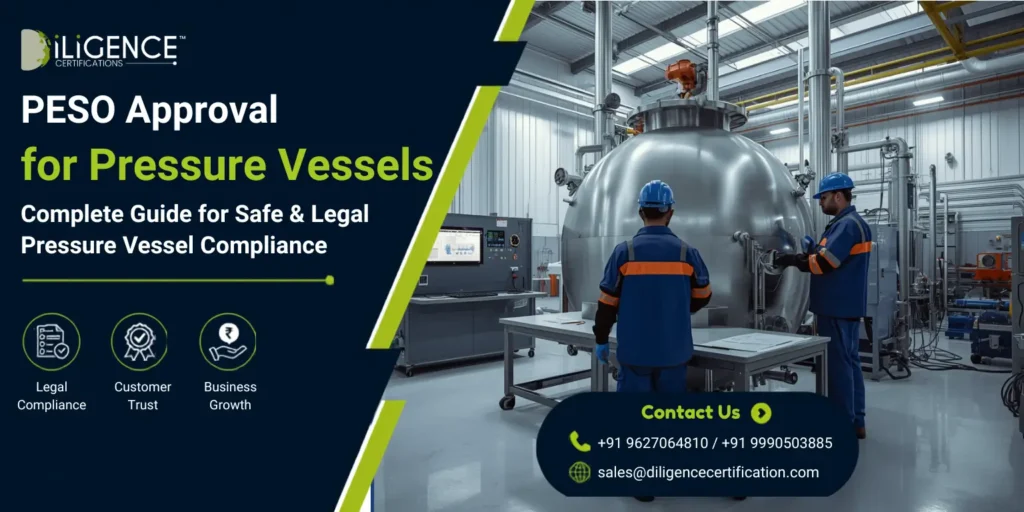
By - Approval for Pressure Vessels by PESO is essential for companies engaged in activities related to manufacture, installation, and handling of pressure vessels in order to comply with safety standards and regulations.
- This ensures that the company adheres to the necessary standards of design, testing, inspection, and quality control for the safe operation of pressure vessels.
- Professional help is essential for businesses in managing documentation and technical requirements.
Introduction
Pressure Vessels are used in many industries for storing and handling gases, liquids, and dangerous materials at high pressures. Pressure vessels are widely used in the petroleum, chemical, industrial gas, energy, and manufacturing industries.
As high pressures are involved in their operation, any error in the design, manufacture, or maintenance could lead to leaks, malfunctions, fire hazards, and accidents. Hence, there is a need to design, manufacture, test, and operate the pressure vessels as per the approved safety norms.
Petroleum & Explosives Safety Organization (PESO) is responsible for regulating the safety requirements for pressure vessels in India.
PESO Approval for Pressure Vessels confirms that the pressure vessels are in compliance with the required design specifications, testing standards, and safety norms..
What is PESO Approval for Pressure Vessels?
PESO approval refers to the approval issued by the Petroleum and Explosives Safety Organisation (PESO) which ensures that pressure vessels conform to relevant safety standards and technical specifications.
This approval ensures that the design of the pressure vessels, production process, testing facilities, inspection procedures, and safety systems comply with the required specifications.
Companies engaged in the manufacture, importation, installation or use of pressure vessels will need PESO approval based on the nature of the pressure vessels.
Who Needs PESO Approval for Pressure Vessels?
PESO approval might be needed for companies who manufacture, install, store, and operate pressure vessels depending on the type, purpose, and safety standards of the pressure vessel.
These are:
- Pressure Vessel Manufacturing Plants
- LPG Storage Vessel Manufacturers
- Industrial Gas Vessel Manufacturers
- Chemical Storage Vessel Manufacturers
- Cryogenic Pressure Vessel Manufacturers
- Hydrogen Storage Vessel Manufacturers
- Petroleum Storage Vessel Manufacturers
- Pressure Vessel Importers
- High Pressure Equipment Industry Users
Businesses establishing new plants and making changes in pressure vessel plants must comply with PESO compliance standards.
Types of Compliance Under PESO Approval for Pressure Vessels
The compliance criteria are based on the pressure vessel type, its design, the materials used, the manufacturing method, the testing equipment, and the safety standards involved.
Approval for Pressure Vessel Manufacturing Plant
This is an approval for manufacturers who manufacture pressure vessels using an approved design, manufacturing process, testing, and standards.
Applicable For:
- Pressure Vessel Manufacturing Plants
- Industrial Gas Vessel Manufacturers
- LPG Vessel Manufacturers
- Chemical Vessel Manufacturers
Pressure Vessel Design and Manufacturing Process Compliance
The pressure vessels should be designed properly and must meet proper specifications for materials used and their manufacture.
Applications:
- Design of New Pressure Vessels
- Modification of Old Pressure Vessels
- Storage Pressure Vessels
- High Pressure Gas Vessels
Pressure Vessel Testing and Quality Control Compliance
The testing and quality control process must be properly managed by manufacturers to determine the strength and safety of the pressure vessels.
The different testing and quality control process are:
- Pressure Testing Facilities
- Hydrostatic Testing Systems
- Non-Destructive Testing
- Quality Inspection Systems
- Testing Laboratories
- Manufacturing Quality Control Systems
Testing and inspection processes help businesses remain compliant with PESO standards.
Importance & Benefits of PESO Approval for Pressure Vessels
| Importance | Benefits |
| Ensures compliance with applicable safety regulations governing the design, manufacturing, installation, testing, and operation of pressure vessels. | Helps build trust among regulatory authorities, customers, suppliers, and business partners through proper PESO compliance. |
| Provides legal approval to manufacture, install, or handle pressure vessels according to prescribed technical standards and safety requirements. | Enhances the credibility and professional reputation of the organization within the pressure equipment industry. |
| Promotes safe pressure vessel operations through proper design approval, inspection procedures, testing methods, and quality control practices. | Supports uninterrupted business operations by reducing compliance issues, approval delays, and regulatory interruptions. |
| Helps maintain approved manufacturing systems, testing facilities, inspection procedures, and safety management practices. | Reduces the risk of penalties, legal complications, equipment rejection, or operational restrictions due to non-compliance. |
| Protects workers, customers, end-users, and surrounding facilities from risks associated with unsafe or defective pressure vessels. | Simplifies future approvals, renewals, modifications, and expansion of pressure vessel operations. |
Documents Required for PESO Approval for Pressure Vessels
The documents required for PESO Approval for Pressure Vessels depend on the type of pressure vessel, manufacturing process, installation requirements, technical specifications, and applicable regulations.
Generally, the required documents may include:
- Proof of identity of the applicant
- Passport sized photograph of the applicant
- Address proof of applicant and business premises
- Business registration documents such as Proprietorship, Partnership, LLP, or Company Registration Proof
- Certificate of Incorporation, wherever applicable
- Ownership proof, lease deed, or rent agreement of premises
- Site layout plan and technical drawings
- Pressure vessel design drawings and specifications
- Details of manufacturing machinery and equipment
- Raw material specifications and details
- Manufacturing process details
- Quality control and inspection procedures
- Testing facility details and equipment information
- Calibration certificates of testing equipment
- Details of technically qualified manpower
- Welding procedure specifications and qualifications, wherever applicable
- Standard Operating Procedures (SOPs)
- Safety management procedures
- Fire safety and emergency response plans
- Factory license, wherever applicable
- Environmental approvals or NOCs, wherever applicable
- Other documents required by the authority based on the pressure vessel activity
Proper documentation helps reduce delays and supports a smoother PESO approval process.
Step-by-Step Compliance Process Under PESO Approval for Pressure Vessels
Approval from PESO for Pressure Vessels becomes easier when companies go through proper compliance process having proper technical documentations and safety procedures in place.
Step 1: Determination of Applicable Requirements
Determination of applicable requirements of PESO based on the kind of pressure vessel involved, design parameters, application, and operations.
Step 2: Documentation Process
It is essential to prepare technical drawings, manufacturing details, safety documentation, testing requirements, and other required documentations prior to the application process.
Step 3: Application for Approval
Application is made to PESO having required documentation and technical information along with compliance requirements.
Step 4: Verification of Documents
The submitted documents will be evaluated by the relevant authority. Clarification or further details may be sought during the process of verification.
Step 5: Technical Evaluation of the Facility
PESO is empowered to inspect the facility where the equipment is manufactured or installed. This evaluation will include the assessment of equipment, testing facilities, quality controls, and safety systems.
Step 6: Approval from PESO
On satisfactory completion of document verification and technical inspection, PESO will give the necessary approval to perform activities on pressure vessels.
Step 7: Continued Compliance
Once the approval has been obtained, compliance must be maintained by the firms.
Timeline, Cost & Validity of PESO Approval for Pressure Vessels
The timeline, cost, and validity related to PESO Approval for Pressure Vessels depend on factors such as pressure vessel type, technical evaluation, document verification, inspection requirements, and compliance with applicable safety regulations.
| Timeline | Cost | Validity |
| The approval timeline depends on document verification, technical evaluation, and inspection of the pressure vessel facility. | The cost depends on the type of approval, pressure vessel requirements, testing expenses, and applicable compliance charges. | The validity depends on applicable PESO regulations, approval conditions, and regulatory requirements. |
| Technical review and inspection of pressure vessel systems may influence the overall processing period. | Government fees, inspection charges, testing expenses, and professional consultancy charges may apply. | Renewal or extension may be required within the prescribed period to continue operations. |
| Complete documentation and proper compliance preparation help avoid unnecessary delays. | Additional expenses may vary depending on technical requirements and inspection obligations. | Businesses must maintain continuous compliance with safety and quality standards during the approval period. |
| Processing time may vary depending on the complexity of pressure vessel design, manufacturing, or installation activities. | Proper planning helps manage overall approval-related expenses efficiently. | Maintaining updated records supports smooth renewal and compliance management. |
Why is PESO Approval for Pressure Vessels Important?
Importance of PESO Approval of Pressure Vessels is that the pressure vessels should be designed, manufactured, installed, and operated in accordance with safety standards. As the pressure vessels have high-pressure gases or liquids or hazardous substances, any problem with regard to design, manufacture, or maintenance may cause leakage, failure of the vessel, fire, or an accident.
PESO approval ensures that businesses follow proper technical procedures, inspection systems, and safety measures for pressure vessel operations.
Why PESO Approval for Pressure Vessels is highly necessary:
- Guarantees safe design, manufacture, testing, inspection, and use of pressure vessels.
- Aids companies in meeting the technical specifications and safety standards concerning pressure vessels.
- Minimizes the risk of leakage, malfunctioning, fires, and incidents.
- Builds up confidence among the clients, regulatory bodies, and commercial associates.
- Increases the safety and effectiveness of the pressure vessel process.
Consequences of Non-Compliance with PESO Approval for Pressure Vessels
Not obtaining or maintaining the PESO Approval for Pressure Vessels could pose various problems to the organizations. The pressure vessels must be compliant with safety standards because they operate under high pressures and are likely to cause safety hazards.
The following are some of the possible effects of not being compliant with the PESO standards for Pressure Vessels:
- Regulatory intervention by the authority in charge.
- Curtailing or termination of the approval granted for pressure vessel-related activities.
- Non-compliance with relevant safety regulations and requirements.
- Possibility of pressure vessel failure, leaks, or accidents.
- Difficulties in getting approvals in the future.
- Reputation and loss of confidence among clients..
Following PESO compliance requirements helps businesses maintain safe operations and avoid regulatory issues.
Renewal of PESO Approval for Pressure Vessels
Companies that have obtained the PESO Approval for Pressure Vessels should ensure that they are up-to-date with any regulations in force and are maintaining their approval status.
The process of renewing might include checking if the pressure vessel systems, manufacturing facility, tests, and safety mechanisms are complying with relevant standards.
While renewing, the relevant authorities can evaluate different elements, such as:
- Current standards of PESO approval.
- Compliance with regulations regarding pressure vessel safety.
- Condition of pressure vessel equipment and testing facilities.
- Inspection documents and quality control records.
- Tests and calibration documentation.
- Safety mechanisms and emergency response plan.
Modification of pressure vessel systems.
How Professional Assistance Helps in PESO Approval for Pressure Vessels?
The process of obtaining PESO approval for pressure vessels demands adequate technical know-how, paperwork, safety arrangements, inspection readiness, and working with the relevant authorities. Professional consultancy services facilitate efficient completion of the PESO approval process without any mistakes or delays in the documentation phase.
Professional services usually cover:
- Information concerning all the necessary PESO requirements for pressure vessels.
- Creation of technical papers, drawings, and compliance documents.
- Help in gathering and sorting the needed documentation.
- Assistance in completing and filing the application.
- Coordination during the document verification and facility inspection process.
- Assistance in the process of modifying, renewing and maintaining compliance.
- Information about any changes in relevant safety legislation.
Professional support enables companies to focus on their work while leaving the compliance process to professionals.
Why Choose Diligence Certifications for PESO Approval for Pressure Vessels?
The procedure for PESO Approval for Pressure Vessels is composed of different technical evaluations, safety compliance, documentations, and regulations. Diligence Certification to ensure that companies will go through the process without problems.
Some benefits of professional consulting include:
- Less possibility of making errors in documentations and delay in approval process.
- Full assistance in creating and submitting necessary documents.
- Assistance in complying with PESO safety regulations and pressure vessels.
- Proper coordination with authorities in the process of inspections and approval.
- Renewal and compliance in case of changes in the operation of pressure vessel.
Professional consulting can help businesses operate their pressure vessels with confidence as all PESO regulations are being met.
Conclusion
PESO Approval of Pressure Vessels is an important aspect of compliance that assures the proper design, production, installation, testing, and maintenance of pressure vessels in various industries.
This is because pressure vessels are designed to hold gases, liquids, and hazardous substances under high pressures, thus ensuring safety standards and preventing leakage, mechanical failure, fire accidents, and other problems.
By adhering to the standards of the PESO approval process, organizations will not only be complying with legal requirements but also with the safety of their operations and the reliability of the product.
The PESO Approval process makes sure that all safety standards and compliance issues related to pressure vessels design and manufacturing are addressed. With proper documentation and preparation, companies can get the PESO Approval for Pressure Vessels easily.
Frequently Asked Questions
What is PESO Approval for Pressure Vessels?
PESO Approval for Pressure Vessels means the approval granted by the Petroleum & Explosives Safety Organization (PESO) that ensures that the pressure vessels satisfy the safety standards and technical requirements.
Who needs PESO Approval for Pressure Vessels?
PESO Approval may be needed by pressure vessel manufacturers, importers, installers and industries using the applicable pressure vessels.
Who regulates PESO Approval for Pressure Vessels?
The Petroleum & Explosives Safety Organization (PESO) is the regulatory body responsible for the PESO Approval of the applicable pressure vessels in India.
Why is PESO Approval needed for Pressure Vessels?
PESO Approval is needed to make sure that pressure vessels are designed, manufactured, tested and operated in accordance with safety requirements.
What documents are required for PESO Approval for Pressure Vessels?
Documents usually include documents relating to registration of businesses, layout of the site, pressure vessel drawings, manufacturing process, testing facilities, quality control documentation and safety documentation.
Is inspection necessary for PESO Pressure Vessel Approval?
Yes, PESO can conduct technical inspection for verifying pressure vessel facilities, testing facilities, safety facilities and compliance activities.
Are there possibilities of change in a PESO approved pressure vessel facility?
Yes, modification in approved pressure vessel facilities is possible and can require approval or compliance with relevant PESO requirements.
Is renewal required after getting PESO Approval?
What are the consequences if an organization operates its pressure vessels without PESO Approval?
How do professional consultants contribute to getting PESO Approval for Pressure Vessels?
Professional consultants can contribute in a number of ways.