BIS Certification
 CDSCO
CDSCO
 PESO
PESO
 CPCB
CPCB
 LMPC
LMPC
 WPC Approval
 Global Approvals
 TEC
TEC
 ARAI
ARAI
 BEE
BEE
 ISO Certification
 DGCA Certification
 NOC For Steel
 APEDA Registration























 Business Registration
 FSSAI Mark Certification












 (32).jpg)
 Legal Services
 Trademark Registration
 Copyright Registration
 Patent Registration
 By
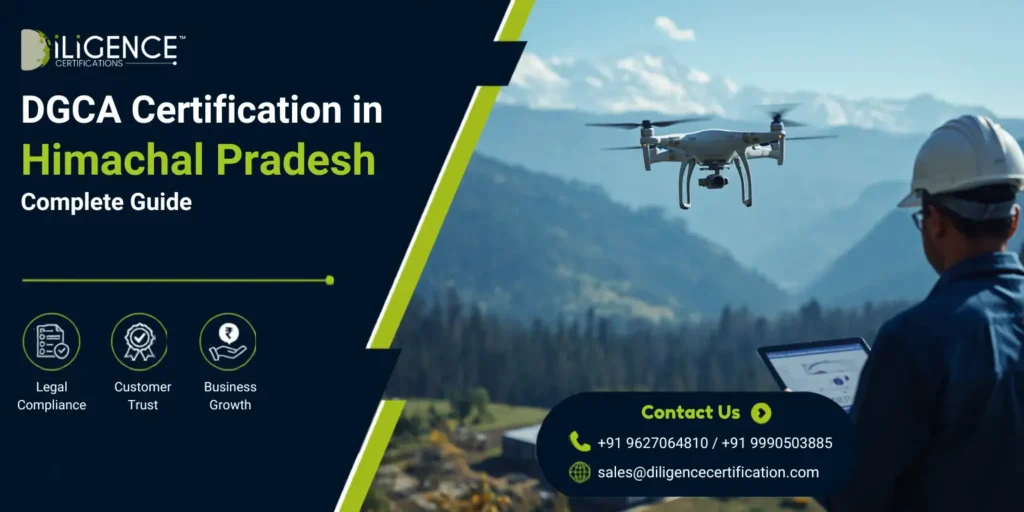
By - DGCA Certification in Himachal Pradesh supports drone manufacturers, operators, pilots, and aviation businesses in meeting applicable DGCA requirements.
- The process may involve Type Certification, Digital Sky, Remote Pilot requirements, documentation, testing, and operational compliance.
- Diligence Certifications provides end-to-end guidance for DGCA Certification in Himachal Pradesh, including documentation, application support, and regulatory compliance.
Introduction
There is a great demand for the use of aerial technologies in various operations like surveying, agriculture, inspection of infrastructure, tourism, mapping, photography, disaster assessment, among others in Himachal Pradesh. Drones can help make these operations faster and easier especially in mountainous regions and difficult to reach areas.
However, buying and using drones in any commercial operations is not just flying these drones. There are different requirements which are dependent upon the type of drone and use in commercial operations. Requirements that the firm needs to follow can be those of Type Certification, remote pilot qualifications, Digital Sky operations, registration, airspace restrictions, DGCA regulations and others.
DGCA Certification in Himachal Pradesh means the relevant approval, certification, authorizations, registrations, or compliance process as applicable under the jurisdiction of the Directorate General of Civil Aviation for the aviation or drone operations.
An example is the requirement of a manufacturer of a drone in Baddi can be very different from that of a surveying company using drones in Shimla or an agricultural firm using drones in apple growing region.
This is a critical differentiation as there is no one-size-fits-all “DGCA Certificate” for all operations involving aviation and drones. This depends on the type of operation being conducted, the type of aircraft and other relevant factors.
The Drone Rules, 2021 are the primary framework governing unmanned aircraft systems in India and have regulations for classification, Type certification and operations. DGCA also offers specific guidance on drones and Digital Sky services.
What is DGCA Certification?
DGCA Certification is a regulatory approval, certification, authorisation, registration, or licence applicable to a particular aviation activity under the Directorate General of Civil Aviation.
For drones, the requirement may involve Type Certification or other applicable compliance requirements depending on the aircraft and intended operation.
The Drone Rules, 2021 state that a person generally cannot operate an unmanned aircraft system in India unless it conforms to a Type Certificate or is exempted from the requirement under the applicable rules. The rules also provide for applications for Type Certification through the Digital Sky platform.
The certification or approval process is intended to establish that the relevant aircraft, organisation, professional, or operation satisfies the applicable regulatory, technical, safety, and operational requirements.
The services associated with DGCA Certification in Himachal Pradesh may include:
- DGCA Approval
- Type Certification Assistance
- Drone Compliance
- Remote Pilot Compliance
- Digital Sky Guidance
- Documentation Support
- Application Filing Assistance
- Regulatory Advisory
- Operational Compliance
- Post-Certification Compliance
The exact requirement should be identified before an application is submitted because different aviation activities are governed by different regulatory provisions.
Applications of DGCA Certification
DGCA-related certification and compliance can be relevant to a wide range of businesses operating in Himachal Pradesh The state’s terrain makes drones particularly useful for activities where ground access can be difficult or time-consuming.
Some common applications include:
- Drone Surveying
- Land Mapping
- Agricultural Monitoring
- Orchard Inspection
- Infrastructure Inspection
- Road and Highway Surveys
- Construction Monitoring
- Tourism Photography
- Aerial Videography
- Disaster Assessment
- Mining and Quarry Surveys
- Utility Inspection
- Industrial Monitoring
- Real Estate Photography
- Environmental Surveys
For example, a construction company monitoring a mountain road project may use drones to capture regular aerial data. An agricultural service provider may use drones for orchard monitoring. A tourism company may use aerial footage for promotional campaigns.
Each activity still has to be evaluated against the applicable DGCA and airspace requirements.
Who Needs DGCA Certification in Himachal Pradesh?
The applicable DGCA requirement depends on the activity being undertaken.
Businesses and professionals that may need relevant drone or aviation approvals include:
- Drone Manufacturers
- Drone Importers
- Drone Operators
- Remote Pilots
- Survey Companies
- Agricultural Drone Service Providers
- Mapping Companies
- Infrastructure Companies
- Construction Firms
- Aerial Photography Companies
- Drone Training Organisations
- Aviation Service Providers
- Aircraft Operators
- Maintenance Organisations
- Aviation Startups
- MSMEs Engaged in Aviation Activities
Drone manufacturers have a particularly important responsibility because certification relates to the aircraft itself, not merely the person flying it.
The Drone Rules provide a Type Certification framework for particular types of unmanned aircraft systems Therefore, a manufacturer planning to sell a drone commercially in India should assess certification requirements before finalising the product launch strategy.
Types of Compliance Under DGCA Certification
The compliance requirements under DGCA Certification in Himachal Pradesh depend on the aircraft, organisation, activity, and applicable DGCA rules.
For drone businesses, the major areas can include the following.
DGCA Registration and Digital Compliance
Digital Sky is the Government’s digital platform associated with India’s drone regulatory framework. The platform currently provides access to Drone Rules, amendment information and certification-related support Registration requirements should be checked against the current DGCA position before an application is submitted.
This is particularly important because DGCA currently states that registration of non-Type Certified UAS has been temporarily suspended until further notice. Therefore, older articles stating that every drone can simply be registered through the same process should not be treated as current regulatory guidance.
Type Certification Compliance
- Type Certification is relevant to qualifying UAS under the Drone Rules.
- The process involves technical assessment and testing through the prescribed certification framework.
- The applicant needs to ensure that the prototype, technical information, supporting documentation, and test requirements are properly aligned.
- A manufacturer should not treat Type Certification as a basic registration exercise. It is a product-level compliance process.
Remote Pilot Compliance
- A drone operation may also involve requirements concerning the person controlling the aircraft.
- Depending on the applicable category and operation, the pilot may need the appropriate training and Remote Pilot Certificate.
- DGCA maintains dedicated regulatory material concerning remote pilot training organisations and their authorisation scope.
Aviation Safety & Operational Compliance
- Certification does not mean that an aircraft can be flown without considering operational restrictions.
- Drone operators need to assess applicable airspace restrictions, operating conditions, safety procedures, pilot requirements, and location-specific considerations before flight.
- This becomes particularly important in Himachal Pradesh because mountainous terrain can make visual observation, communications, recovery planning, and weather assessment more challenging.
Documentation & Reporting Compliance
Documentation remains an important part of aviation compliance.
Depending on the activity, records can include:
- Drone technical information
- Pilot records
- Training records
- Maintenance information
- Inspection records
- Operational documentation
- Safety procedures
- Application records
- Certification documents
- Regulatory correspondence
Maintaining organised records makes future regulatory reviews and compliance updates easier.
Documents Required for DGCA Certification in Himachal Pradesh
The documents required for DGCA Certification in Himachal Pradesh depend on the particular approval being sought.
For a drone-related application, documentation may include:
- Business Registration Certificate
- PAN Card
- GST Registration, where applicable
- Applicant Details
- Authorised Signatory Details
- Address Proof
- Organisation Profile
- Drone Technical Specifications
- Product Drawings
- Prototype Information
- Technical Manuals
- Test Reports
- Safety Information
- Operational Information
- Pilot or Personnel Details, where applicable
- Training Records, where applicable
- Digital Sky Application Information
- Authorisation Documents
- Other documents prescribed under the applicable DGCA framework
The important point is consistency.
The information in the application should correspond with the actual drone, technical documents, prototype and business information A mismatch between the product specification and the prototype can create avoidable questions during the certification or testing process.
Step-by-Step Process for DGCA Certification in Himachal Pradesh
Obtaining the applicable DGCA approval becomes more manageable when the regulatory route is established before documentation and testing begin.
Step 1: Eligibility Assessment
The first step is to identify the exact activity and determine the applicable DGCA requirement.
The assessment can consider:
- Nature of Aviation Activity
- Drone Category
- Weight Classification
- Intended Use
- Commercial or Non-Commercial Operation
- Technical Configuration
- Pilot Requirements
- Type Certification Requirements
- Applicable Exemptions
- Current DGCA Rules
The Drone Rules classify UAS according to maximum all-up weight, including payload, into nano, micro, small, medium and large categories.
Step 2: Gathering Required Documents
- Once the applicable approval is identified, the next stage is document preparation.
- For manufacturers, this can involve considerably more technical information than a simple business registration application.
- Technical documents should accurately describe the drone that is actually being submitted for assessment.
Step 3: Preparing the Application
The application should be completed using the applicable DGCA or Digital Sky procedure.
For Type Certification, the Drone Rules provide for application through the Digital Sky platform along with prescribed information and the prototype process. The applicant should carefully check every technical field before submission.
Step 4: Testing and Verification
Where Type Certification applies, the prototype is subject to the prescribed testing and assessment process The authorised testing framework examines whether the drone satisfies the applicable certification standards This is where technical preparation becomes particularly important.
Step 5: Regulatory Assessment
The submitted information, test results and recommendations are assessed under the applicable regulatory process, If clarification or additional information is requested, the applicant should respond with documents that remain consistent with the original technical configuration.
Step 6: Grant of Applicable Approval
Once the applicable requirements have been satisfied, the relevant certification or approval can be issued according to the regulatory framework The nature of the approval depends on what the applicant originally applied for.
Step 7: Ongoing Compliance
Obtaining an approval is not the end of regulatory responsibility.
The business should continue monitoring:
- DGCA updates
- Aircraft configuration
- Pilot requirements
- Operational procedures
- Safety requirements
- Maintenance
- Documentation
- Airspace restrictions
- Regulatory changes
DGCA’s website continues to publish updates and regulatory guidance, making periodic review important for aviation businesses.
Timeline, Cost & Validity of DGCA Certification in Himachal Pradesh
The timeline, cost and validity of DGCA Certification in Himachal Pradesh depend on the particular certification or approval, technical complexity, documentation, testing requirements and applicable regulatory conditions.
| Timeline | Cost | Validity |
| Processing time depends on the applicable approval and regulatory procedure. | Cost depends on government fees, testing requirements and professional assistance, where applicable. | Validity depends on the particular approval, certificate or regulatory requirement. |
| Complete documentation can help avoid unnecessary clarification and processing delays. | Technical testing or prototype-related requirements may affect the overall expense. | Applicants should monitor applicable renewal, amendment or continuing-compliance requirements. |
| Actual processing can vary according to the application and regulatory assessment. | The final cost should be assessed according to the specific drone or aviation activity. | Changes in aircraft, ownership, operations or regulatory requirements may require further action. |
For Type Certification, the Drone Rules prescribe specific procedural stages involving the testing entity and DGCA.
Applicants should therefore avoid relying on a generic “DGCA certificate in X days” promise without first identifying the exact approval involved.
Importance & Benefits of DGCA Certification in Himachal Pradesh
| Importance | Benefits |
| Helps businesses understand and fulfil applicable aviation requirements. | Improves regulatory credibility. |
| Supports safe drone and aviation operations. | Builds confidence among customers and business partners. |
| Establishes a structured compliance process. | Supports professional commercial operations. |
| Encourages proper technical and operational practices. | Reduces avoidable compliance risks. |
| Helps businesses monitor continuing obligations. | Supports sustainable expansion of aviation-related activities. |
For a drone business, regulatory compliance can also become a commercial advantage.
A client engaging a survey company for an infrastructure project is more likely to work with a service provider that can clearly explain its aircraft, pilot and operational compliance position.
Why is DGCA Certification Important?
DGCA Certification in Himachal Pradesh is important because aviation activities involve technical, safety and operational risks that cannot be managed through ordinary business registration alone.
A drone used for surveying a construction site, monitoring an orchard or capturing commercial footage is still an aircraft operating within India’s aviation regulatory framework.
Certification and compliance help establish a disciplined approach to:
- Aviation Safety
- Technical Compliance
- Operational Control
- Pilot Competency
- Regulatory Monitoring
- Documentation
- Risk Management
- Continuing Compliance
For manufacturers, the importance is even greater because a compliance problem can affect the entire product line rather than one individual flight For operators, the focus shifts towards using eligible aircraft, qualified personnel and compliant operating procedures The regulatory framework therefore needs to be understood according to the actual business model.
Consequences of Non-Compliance with DGCA Requirements
Failure to follow applicable DGCA requirements can expose a business to regulatory and operational difficulties.
Regulatory Non-Compliance
Operating outside the applicable regulatory framework can result in compliance concerns and regulatory action.
Operational Restrictions
A business may face restrictions on activities until the underlying compliance issue is resolved.
Delays in Business Operations
Incomplete approvals can delay commercial projects, drone deployments and business expansion.
Certification Problems
Where certification or testing is required, incomplete technical information can lead to additional clarification or corrective work.
Financial Risk
A company may have to spend additional resources on correcting documentation, testing or operational processes.
Loss of Business Credibility
Commercial clients may hesitate to engage a service provider that cannot demonstrate a clear compliance position.
Reputation Risk
For aviation businesses, regulatory credibility is closely connected with professional reputation.
The practical lesson is simple: compliance should be planned before commercial deployment rather than addressed after a regulatory issue arises.
Renewal and Updating of DGCA Certification in Himachal Pradesh
Not every DGCA approval follows the same renewal cycle.
Some regulatory approvals may require continuing compliance, amendments, updates, or other action when there are changes in the underlying organisation or operation.
Businesses should review whether there have been changes involving:
- Ownership
- Organisation Details
- Drone Configuration
- Equipment
- Approved Personnel
- Operational Scope
- Business Address
- Technical Specifications
- Training
- Applicable Regulations
The common compliance review process includes:
- Reviewing Current Approval
- Checking Current DGCA Requirements
- Updating Organisational Information
- Reviewing Technical Information
- Maintaining Required Records
- Addressing Regulatory Changes
- Updating Applicable Applications
DGCA’s current online ecosystem includes services for pilots, aircraft, operators and aerodrome-related activities through eGCA, while Digital Sky supports the drone regulatory ecosystem.
How Professional Assistance Helps in DGCA Certification in Himachal Pradesh?
DGCA compliance can become complicated when the applicant has to coordinate technical documents, regulatory requirements, testing, applications and operational compliance at the same time.
Professional assistance can help an organisation establish the correct approval route before it starts the application.
Support may include:
- Understanding DGCA Requirements
- Eligibility Assessment
- Regulatory Route Identification
- Documentation Preparation
- Technical Documentation Review
- Digital Sky Guidance
- Application Filing Assistance
- Compliance Guidance
- Query Resolution
- Regulatory Update Monitoring
- Post-Certification Support
For example, a drone manufacturer may think that the immediate requirement is simply registration. A technical assessment may show that the more important issue is Type Certification or another applicable compliance route.
Identifying that distinction early can save time and prevent the business from building its launch plan around an incorrect assumption.
Why Choose Diligence Certifications for DGCA Certification in Himachal Pradesh?
Obtaining the applicable DGCA approval requires more than submitting an online form. The applicant needs to understand the relevant regulatory framework, identify the correct approval, organise documentation and maintain consistency between technical and business information.
Diligence Certifications provides regulatory consultancy and certification support for businesses dealing with Indian compliance requirements.
The support can include:
- Eligibility Assessment
- Documentation Assistance
- Application Filing Support
- DGCA Regulatory Guidance
- Technical Documentation Support
- Certification Process Assistance
- Query Resolution
- Compliance Advisory
- Process Management
- Post-Certification Guidance
Diligence Certifications can also help businesses understand the distinction between product certification, pilot-related requirements and operational compliance before they proceed with their regulatory application.
For a business in Himachal Pradesh, this structured approach is useful because the certification requirement should be matched to the actual drone or aviation activity rather than treated as a generic registration process.
Conclusion
DGCA Certification in Himachal Pradesh is not one common certificate that applies to all drones or any aviation-related business. It actually varies depending on the type of aircraft, nature of activity, business, pilot, operations and DGCA framework.
Type Certification is one of the major considerations for drone manufacturers. As for operators and pilots, the considerations may range from eligibility of the aircraft, pilot eligibility, digital sky process and operational considerations.
Businesses doing survey work, agriculture, infrastructure inspection or aerial photography will need to assess regulatory requirements before using drones commercially.
It is important to confirm the current DGCA framework before you submit the application, since the procedure and requirements may have changed. DGCA currently has dedicated drone guidelines, and Digital Sky continues to be one of the most important aspects of India’s drone regulation landscape.
For any business looking to get DGCA Certification in Himachal Pradesh, Diligence Certifications can help with requirements assessment, document submission and other assistance in the process.
In need of advice about getting the right DGCA approval for your drone or aviation related activity? Get in touch with Diligence Certifications.
Frequently Asked Questions
Is DGCA Certification in Himachal Pradesh mandatory?
The applicable DGCA requirement depends on the type of drone or aviation activity. Businesses should identify the specific approval or certification applicable to their operation.
Is there a separate DGCA certificate for Himachal Pradesh?
No. DGCA is India's central civil aviation regulator. The applicable DGCA framework applies nationally.
What is Type Certification for drones?
Type Certification is the regulatory certification of a particular type of unmanned aircraft system under the applicable Drone Rules framework.
Can every drone be registered with DGCA?
No. DGCA currently states that registration of non-Type Certified UAS has been temporarily suspended until further notice.
Do drone pilots need a Remote Pilot Certificate?
Where the applicable rules require one, the pilot must meet the prescribed training and certification requirements.
Is Digital Sky used for drone certification?
Digital Sky is the Government's digital platform supporting India's drone regulatory framework, including certification-related processes.
Can agricultural drones be used in Himachal Pradesh?
Agricultural drone operations can be undertaken subject to the aircraft, pilot, airspace and other applicable regulatory requirements.
Can drones be flown anywhere after certification?
No. Aircraft certification does not provide unrestricted permission to operate in every location. Applicable airspace and operational restrictions must still be followed.
Can imported drones automatically be used in India?
No. Imported equipment must be assessed against applicable Indian regulatory requirements before commercial use.
Can Diligence Certifications help with DGCA compliance?
Yes. Diligence Certifications can provide assistance with identifying applicable requirements, documentation, application procedures and regulatory compliance.