BIS Certification
 CDSCO
CDSCO
 PESO
PESO
 CPCB
CPCB
 LMPC
LMPC
 WPC Approval
 Global Approvals
 TEC
TEC
 ARAI
ARAI
 BEE
BEE
 ISO Certification
 DGCA Certification
 NOC For Steel
 APEDA Registration























 Business Registration
 FSSAI Mark Certification












 (32).jpg)
 Legal Services
 Trademark Registration
 Copyright Registration
 Patent Registration
 By
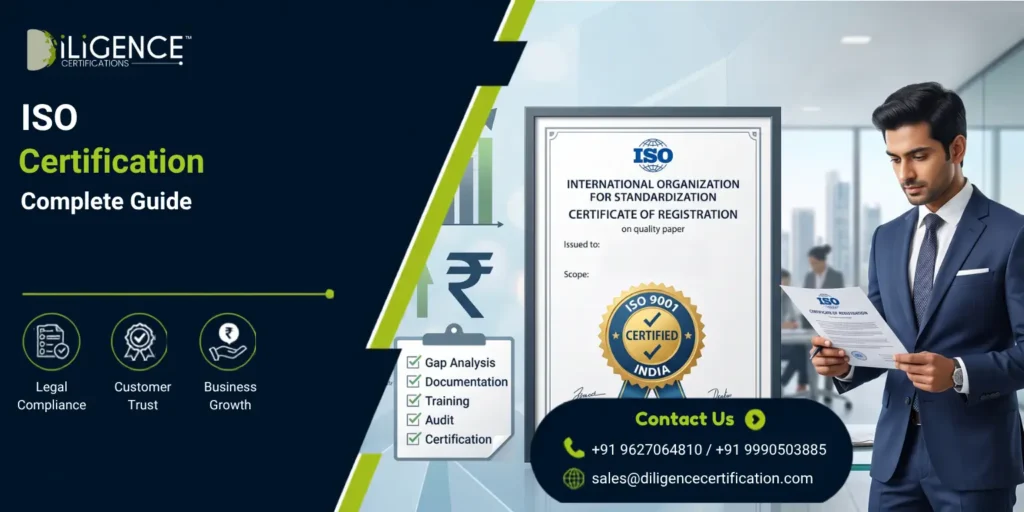
By - ISO certification cost in India depends on the ISO standard, organization size, scope, and certification body.
- The overall cost may include consultancy, documentation, implementation, audit, and certification fees.
- Choose an accredited certification body and compare the complete cost, validity, audit process, and renewal requirements before applying.
Introduction
When you are intending to get an ISO certification for your organization, the first thing which comes to mind is - what is the cost of ISO certification in India?
There is no uniform answer for the cost of ISO certification since the cost is dependent upon certain factors like the kind of ISO standard, organization size, number of employees, activities performed by the organization, places of business, scope of certification, audit needs, etc.
ISO is the abbreviated form of International Organization for Standardization. ISO provides internationally accepted standards which aid organizations in improving their processes, quality, safety, efficiency, management practices, etc.
ISO certification signifies that the organization complies with the requirements of the particular ISO management system or ISO standard. Some of the ISO standards that are widely adopted are ISO 9001 - Quality Management, ISO 14001 - Environmental Management, ISO 45001 - Occupational Health & Safety and ISO 27001 - Information Security Management.
Getting ISO certification for the businesses operating in India will provide them with credibility, better processes, customer confidence and meeting certain business/tender needs.
It is very important to understand the full ISO certification cost before beginning with the certification process.
What is ISO Certification?
ISO Certification is a formal attestation that an organization has put in place a management system which conforms to the ISO standard chosen.
This certification is usually undertaken by a certification body which is independent of the organization. The process will vary depending on the chosen International Organization for Standardization standard and the organization.
ISO certification can provide assistance with:
- ISO Certification Assistance
- ISO Compliance Assistance
- Documentation Assistance
- Management System Implementation
- Internal Audit Assistance
- Certification Audit Preparation
- Gap Analysis
- Process Improvement
- Corrective Action Assistance
- Renewal and Surveillance Assistance
- Regulatory and Compliance Guidance
The cost of ISO certification is therefore not limited to the certificate itself. Businesses may also need to consider consulting, documentation, implementation, audit, testing, training, and other applicable expenses.
The actual requirements depend on the selected ISO standard and the organization’s activities.
Applications of ISO Certification in India
ISO certification is used across a wide range of industries and business sectors. Almost any organization can adopt an appropriate ISO management system depending on its requirements.
Businesses that may obtain ISO certification include:
- Manufacturing Companies
- IT Companies
- Software Companies
- Construction Companies
- Educational Institutions
- Healthcare Organizations
- Trading Companies
- Export Businesses
- Import Businesses
- Food Businesses
- Logistics Companies
- Service Providers
- Consultancy Firms
- Startups
- Small Businesses
- Medium Enterprises
- Large Organizations
- Government Contractors
- Businesses Participating in Tenders
Different ISO standards address different business requirements. For example, a company focusing on quality management may consider ISO 9001, while an organization handling sensitive information may require ISO 27001.
Choosing the right standard is important because the certification cost depends partly on the requirements of that standard.
Who Needs ISO Certification in India?
ISO certification can be useful for organizations of different sizes and industries.
Businesses that may seek ISO certification include:
- Manufacturers
- Service Providers
- Exporters
- Importers
- IT Companies
- Software Companies
- Construction Businesses
- Educational Organizations
- Healthcare Businesses
- Logistics Companies
- Trading Companies
- Startups
- Small Businesses
- Medium Enterprises
- Large Organizations
- Organizations Participating in Tenders
- Companies Working with Corporate Clients
ISO certification can prove helpful when the customer, business partner, government tender, or any other stakeholder expects the organization to provide a well-structured management system.
It is easier for a small business to get through the certification process than it is for a big firm operating in various locations. This is among the factors that make the ISO certification cost in India vary among businesses.
Types of Compliance Supported by ISO Certification in India
Quality Management Compliance
ISO 9001 focuses on establishing a quality management system that helps organizations consistently meet customer and applicable requirements.
A business may review:
- Quality Objectives
- Customer Requirements
- Operational Processes
- Quality Controls
- Documented Information
- Customer Feedback
- Corrective Actions
- Process Monitoring
- Performance Evaluation
- Continual Improvement
Useful for:
- Manufacturers
- Service Providers
- Trading Companies
- IT Companies
- Consultants
- Exporters
A properly implemented quality management system can help organizations identify process gaps and improve consistency.
Environmental Management Compliance
ISO 14001 focuses on environmental management and helps organizations manage environmental responsibilities in a systematic manner.
Compliance may include:
- Environmental Aspects
- Environmental Impacts
- Waste Management
- Resource Consumption
- Legal Requirements
- Pollution Prevention
- Environmental Objectives
- Operational Controls
- Emergency Preparedness
- Environmental Monitoring
Useful for:
- Manufacturing Companies
- Construction Businesses
- Industrial Organizations
- Service Providers
- Businesses with Environmental Responsibilities
The certification cost may depend on the complexity of the organization’s environmental activities and the scope of certification.
Occupational Health & Safety Compliance
ISO 45001 focuses on occupational health and safety management.
Businesses may need to evaluate:
- Workplace Hazards
- Risk Assessment
- Safety Procedures
- Employee Training
- Emergency Preparedness
- Incident Management
- Worker Participation
- Legal Requirements
- Safety Controls
- Continual Improvement
Useful for:
- Construction Companies
- Manufacturing Units
- Industrial Businesses
- Logistics Companies
- Engineering Companies
- Organizations with Workplace Risks
A well-implemented safety management system can help businesses create a safer and more controlled working environment.
Information Security Compliance
ISO 27001 focuses on information security management and helps organizations protect information and manage security risks.
Compliance may involve:
- Information Security Policies
- Risk Assessment
- Access Control
- Data Protection
- Incident Management
- Business Continuity
- Asset Management
- Security Awareness
- Monitoring
- Continual Improvement
Useful for:
- IT Companies
- Software Companies
- SaaS Businesses
- Data Processing Companies
- Financial Organizations
- Businesses Handling Sensitive Information
Because information security requirements can be extensive, certification costs may be higher for organizations with complex systems and multiple locations.
Documents Required for ISO Certification in India
The documents required depend on the ISO standard, business activities, certification scope, and size of the organization.
Generally, documents may include:
- Company Registration Documents
- Business Details
- Organization Structure
- Scope of Certification
- Process Information
- Quality Policy
- Objectives
- Management System Documents
- Risk Assessment
- Operational Procedures
- Internal Audit Records
- Management Review Records
- Corrective Action Records
- Training Records
- Employee Details
- Relevant Legal Documents
- Process Records
- Supporting Technical Documents
Not every organization needs exactly the same documentation.
A professional ISO consultant can review the organization’s existing system and help identify what needs to be created, updated, or improved before the certification audit.
Proper documentation can also make the audit process smoother and reduce unnecessary delays.
Step-by-Step Process for ISO Certification in India
Step 1: Identify the Applicable ISO Standard
The first step is to determine which ISO standard is suitable for the business.
The selection may depend on:
- Business Activities
- Customer Requirements
- Industry
- Organization Objectives
- Regulatory Requirements
- Tender Requirements
- Information Security Needs
- Environmental Responsibilities
- Workplace Safety Requirements
Selecting the right ISO standard from the beginning helps avoid unnecessary certification expenses.
Step 2: Gap Analysis
A gap analysis is performed to understand the difference between the organization’s current practices and the requirements of the selected ISO standard.
The review may cover:
- Existing Processes
- Documentation
- Policies
- Operational Controls
- Risk Management
- Records
- Internal Audits
- Management Review
- Compliance Requirements
This stage helps identify areas that require improvement before the certification audit.
Step 3: Documentation and Implementation
After identifying the gaps, the required management system documentation is prepared or improved.
The organization may develop:
- Policies
- Procedures
- Objectives
- Risk Assessments
- Process Documents
- Records
- Internal Controls
- Monitoring Procedures
- Corrective Action Processes
Documentation alone is not enough. The management system should also be implemented in the actual operations of the organization.
Step 4: Internal Audit
An internal audit helps determine whether the management system has been properly implemented and maintained.
During the internal audit, the organization may identify:
- Non-Conformities
- Documentation Gaps
- Process Issues
- Implementation Gaps
- Compliance Issues
- Opportunities for Improvement
Corrective actions can then be taken before the external certification audit.
Step 5: Certification Audit
The certification body conducts the external audit to assess whether the organization’s management system meets the applicable ISO standard.
The audit may include:
- Document Review
- Process Assessment
- Employee Interaction
- Record Verification
- Site Assessment
- Management Review
- Operational Review
The audit requirements depend on the ISO standard and certification scope.
Step 6: Grant of ISO Certification
Once the certification body is satisfied that the applicable requirements have been fulfilled, the ISO certificate can be issued.
The certificate generally identifies information such as:
- Organization Name
- Certification Standard
- Certification Scope
- Certification Body
- Certification Details
- Applicable Certification Period
The certificate demonstrates that the organization’s management system has been assessed against the applicable ISO standard.
Step 7: Ongoing Compliance
ISO certification is not simply about obtaining a certificate and forgetting about the management system.
Organizations are expected to maintain their management system and continue improving their processes.
Ongoing activities may include:
- Internal Audits
- Management Reviews
- Corrective Actions
- Employee Training
- Process Monitoring
- Risk Reviews
- Documentation Updates
- Surveillance Audits
- Continual Improvement
Maintaining the system properly is important for successful continuation of certification.
Timeline, Cost & Validity of ISO Certification in India
The ISO certification cost in India depends on factors such as the selected ISO standard, organization size, number of employees, locations, certification scope, complexity of operations, certification body, audit requirements, and consultancy support.
| Timeline | Cost | Validity |
| The certification timeline depends on documentation, implementation, audit requirements, organization size, and certification scope. | The ISO certification cost depends on the selected standard, business size, scope, certification body, audit requirements, and professional assistance. | ISO certification is generally maintained through the applicable certification cycle, surveillance activities, and renewal or recertification requirements. |
| Proper documentation and timely implementation can help reduce unnecessary delays. | Additional expenses may arise from consultancy, training, audit, travel, testing, or other requirements depending on the certification. | Organizations should continue maintaining their management system and comply with applicable surveillance and recertification requirements. |
| Processing time can vary depending on the organization’s readiness and the complexity of its management system. | Businesses should evaluate the complete certification process rather than choosing a provider only on the basis of the lowest price. | Changes in the organization, scope, standard, or certification requirements may require appropriate updates or reassessment. |
Importance & Benefits of ISO Certification in India
| Importance | Benefits |
| Helps organizations establish a structured management system and improve business processes. | Improves business credibility and customer confidence. |
| Supports organizations in maintaining consistent quality and operational controls. | Helps improve process efficiency and consistency. |
| Encourages organizations to identify risks, gaps, and opportunities for improvement. | Supports better risk management and decision-making. |
| Helps demonstrate commitment to quality, safety, environmental responsibility, or information security, depending on the standard. | Can strengthen business reputation and market opportunities. |
| Supports organizations in meeting applicable customer, contractual, and business requirements. | Helps businesses compete for suitable tenders, contracts, and business opportunities. |
Why is ISO Certification in India Important?
ISO certification may be relevant to firms wishing to showcase their dedication to a process-oriented approach, quality, safety, environmentalism, or information security.
The benefit of the ISO certification for many companies is not the certification itself; implementation of an ISO management system drives companies to define their processes, responsibilities, goals, risks, and actions towards improvements.
ISO certification can be particularly important for:
- Improving Business Processes
- Maintaining Consistent Quality
- Building Customer Confidence
- Improving Risk Management
- Strengthening Business Credibility
- Supporting Tender Requirements
- Improving Operational Efficiency
- Demonstrating Management Commitment
- Supporting Continual Improvement
For companies working with larger corporate clients, an ISO certification may also help demonstrate that the organization follows a recognized management framework.
However, businesses should select an ISO standard based on their actual requirements rather than obtaining a certification simply because it is common in their industry.
How Much Does ISO Certification Cost in India?
The question “How much does ISO certification cost in India?” does not have one fixed answer.
The cost can vary significantly depending on the circumstances of the organization.
Important factors affecting the cost include:
Type of ISO Standard
Different ISO standards have different requirements. A straightforward management system may require less preparation than a complex information security or integrated management system.
Organization Size
The number of employees and the scale of operations can influence audit duration, documentation requirements, implementation effort, and certification expenses.
Certification Scope
A limited certification scope may require less assessment compared with an organization seeking certification across multiple business activities or locations.
Number of Locations
Businesses operating from multiple offices, factories, branches, or sites may have additional assessment requirements.
Existing Management System
Organizations that already maintain documented processes and internal controls may require less implementation work than businesses starting from scratch.
Certification Body
Certification bodies may have different fee structures depending on their accreditation, scope, audit requirements, and service arrangements.
Consultancy Requirements
Some organizations manage ISO implementation internally, while others use professional consultants for documentation, implementation, audit preparation, and compliance support.
Training and Internal Audit
Businesses may also need employee awareness, auditor training, internal audits, or specialized training depending on the selected ISO standard.
Therefore, businesses should not judge ISO certification solely by the quoted certificate price. It is better to understand what services and certification activities are included in the overall cost.
Consequences of Not Maintaining ISO Requirements
Obtaining ISO certification is only one part of the process. Organizations also need to maintain their management system.
Failure to maintain ISO requirements can create several concerns.
Certification Non-Compliance
If the organization fails to maintain applicable requirements, auditors may identify non-conformities during surveillance or recertification activities.
Corrective Actions
The organization may need to investigate identified issues and implement suitable corrective actions within the required timeframe.
Certification Suspension
Serious or unresolved compliance issues can potentially affect the status of certification according to the certification body’s applicable procedures.
Business Delays
Certification-related issues can create difficulties when businesses need to demonstrate valid certification to customers, partners, or tender authorities.
Customer Confidence
Failure to maintain the management system may affect customer confidence, particularly when certification is an important contractual requirement.
Business Reputation
A poorly maintained management system can negatively affect an organization’s professional reputation and credibility.
Growth Opportunities
Organizations may face challenges when attempting to meet certain customer, tender, supplier, or business requirements if their certification status is not properly maintained.
For this reason, businesses should treat ISO certification as an ongoing management commitment rather than simply purchasing a certificate.
Renewal of ISO Certification
ISO certification requires ongoing maintenance and periodic assessment according to the applicable certification cycle.
Organizations should regularly review:
- ISO Standard
- Certification Scope
- Business Activities
- Organization Structure
- Processes
- Policies
- Risk Assessment
- Internal Audit
- Management Review
- Corrective Actions
- Certification Status
The organization may need to complete:
- Internal Audits
- Management Reviews
- Surveillance Audits
- Corrective Actions
- Documentation Updates
- Employee Training
- Risk Reviews
- Recertification Activities
Businesses should also inform the certification body where applicable when significant changes occur in their organization, management system, scope, locations, or business activities.
Proper maintenance helps organizations remain prepared for surveillance and recertification activities.
How Professional Assistance Helps with ISO Certification in India?
An ISO consultant can make the certification process easier by helping organizations understand the standard and prepare their management system.
Professional assistance may include:
- ISO Standard Selection
- Gap Analysis
- Documentation Preparation
- Management System Implementation
- Risk Assessment
- Internal Audit Assistance
- Employee Awareness
- Certification Audit Preparation
- Corrective Action Assistance
- Certification Coordination
- Surveillance Assistance
- Renewal and Recertification Support
The consultant can also aid in recognizing any gaps before the external certification audit.
This can assist organizations in saving some time and being less confused, particularly if the organization does not have a competent internal compliance team.
The professional guidance can prove to be beneficial to startups and small businesses that wish to adopt an ISO management system without any disruption in their day-to-day activities.
Why Choose Diligence Certifications for ISO Certification in India?
Diligence Certifications assists organizations with ISO certification, documentation, compliance, management system preparation, audit support, and certification-related requirements.
These services include:
- ISO Certification Assistance
- Documentation Assistance
- Gap Analysis
- Application Assistance
- Management System Support
- Internal Audit Assistance
- Certification Audit Preparation
- Compliance Assistance
- Query Resolution
- Renewal Assistance
- Surveillance Support
- End-to-End Certification Assistance
ISO Certifications can help companies know about the relevant ISO standard, document all required documents, find out where there are problems with the compliance, organize the process of certification, and get ready for an assessment.
The help of professionals may prove especially helpful for those companies that acquire ISO certification for the first time and lack a compliance department.
The key aim here is not just getting the certification but helping to build up a sound management system.
Conclusion
Thus, how much will it cost an organization in India to obtain ISO certification? The cost of certification will depend on the ISO standard, the size of the organization, the scope of certification, the number of locations, pre-existing management system, the certification body, the requirements of auditing, and professional assistance, if any, required.
The cost of ISO certification is not constant for every organization.
Hence, an organization must evaluate the entire process of certification and not choose a certification agency simply because it quotes a lower amount. A thorough evaluation of all the requirements will provide a better insight into the total cost involved.
ISO certification can be used to improve processes, enhance credibility, build confidence of the customers, manage risks, and show commitment to recognized management systems.
Proper planning and professional guidance will help businesses make the entire process systematic and create a management system that can offer value-added benefits beyond just the certification.
Frequently Asked Questions
What is ISO certification?
ISO certification confirms that an organization's management system meets the requirements of a particular ISO standard.
What is the full form of ISO?
ISO stands for International Organization for Standardization.
How much does ISO certification cost in India?
The cost varies according to the ISO standard, organization size, scope, locations, certification body, audit requirements, and consultancy needs.
Is ISO certification cost the same for every company?
No. Certification costs vary depending on the organization's size, activities, scope, complexity, and selected ISO standard.
Which factors affect ISO certification cost?
Major factors include the ISO standard, company size, number of locations, certification scope, audit requirements, certification body, and consultancy support.
Does ISO certification require an audit?
Yes. The certification body generally assesses the organization's management system through an applicable audit process.
Is consultancy compulsory for ISO certification?
No. An organization may implement an ISO management system internally, but professional consultancy can make documentation, implementation, and audit preparation easier.
How long is ISO certification valid?
ISO certification is maintained according to the applicable certification cycle and requires ongoing surveillance and recertification activities.
Can a small business get ISO certification?
Yes. Small businesses can obtain appropriate ISO certification if they meet the requirements of the selected standard.
Can Diligence Certifications help with ISO certification?
Yes. Diligence Certifications can assist with ISO documentation, gap analysis, implementation support, audit preparation, certification coordination, compliance, and renewal assistance.