BIS Certification
 CDSCO
CDSCO
 PESO
PESO
 CPCB
CPCB
 LMPC
LMPC
 WPC Approval
 Global Approvals
 TEC
TEC
 ARAI
ARAI
 BEE
BEE
 ISO Certification
 DGCA Certification
 NOC For Steel
 APEDA Registration























 Business Registration
 FSSAI Mark Certification












 (32).jpg)
 Legal Services
 Trademark Registration
 Copyright Registration
 Patent Registration
 By
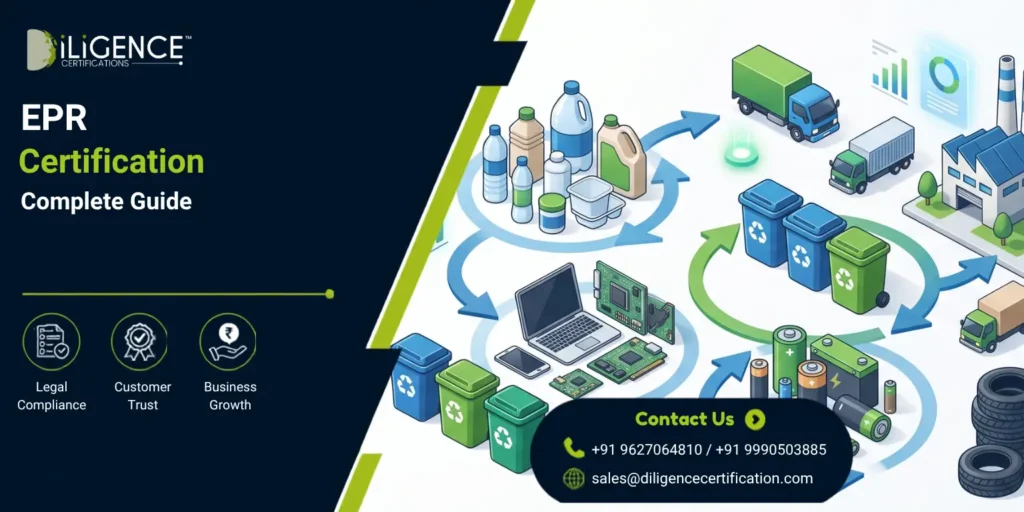
By - EPR Registration ensures that eligible producers/manufacturers/importers/brands assume responsibility for the waste created through their products.
- This concept is applicable to business organizations which are covered under certain waste management laws relating to EPR in India.
- EPR registration helps businesses comply with environmental obligations and waste recycling duties.
Introduction : What is EPR Registration and Who Needs It
EPR registration is necessary when your company produces, imports, or trades goods which produce waste requiring regulated disposal.
“EPR” means “Extended Producers Responsibility.” It refers to a program where producers, manufacturers, importers, brand owners, and many others become responsible for their waste from products or packaging.
The EPR rules in India relate to various types of waste, including plastic packaging, electronic waste, battery waste, and waste tires.
By registering under the EPR, companies can fulfill their environmental responsibilities, keep accurate records of their waste management, and promote recycling.
The understanding of EPR registration will assist the company to avoid any problems and fulfill its environmental responsibilities.
What is EPR Registration?
EPR Registration is a regulatory registration for businesses that fall under an applicable Extended Producer Responsibility framework.
Depending on the waste category, EPR compliance may involve:
- EPR Registration Assistance
- Documentation Assistance
- Waste Management Planning
- Recycling Support
- EPR Target Guidance
- Record Maintenance
- Compliance Reporting
- Annual Return Assistance
- Regulatory Guidance
EPR is not only about obtaining registration. Eligible businesses may also have ongoing responsibilities related to collection, recycling, recovery, reporting, and record keeping.
Applications of EPR Registration in India
EPR registration can apply to businesses involved in manufacturing, importing, selling, or distributing products covered under applicable waste-management regulations.
These may include:
- Manufacturers
- Producers
- Importers
- Brand Owners
- Plastic Packaging Businesses
- Electronics Companies
- Battery Businesses
- Tyre Manufacturers
- Tyre Importers
- E-Commerce Businesses
- Consumer Product Companies
- Trading Companies
- Startups
- Small and Large Businesses
The applicable EPR category depends on the product, packaging, business activity, and relevant environmental regulations.
Who Needs EPR Registration in India?
EPR registration may be required by:
- Producers
- Manufacturers
- Importers
- Brand Owners
- Plastic Packaging Businesses
- Electronic Product Manufacturers
- Electronic Product Importers
- Battery Producers
- Battery Importers
- Tyre Manufacturers
- Tyre Importers
- Businesses Selling Products Under Their Own Brand
- E-Commerce Businesses
- Businesses Placing Regulated Products in the Indian Market
EPR applicability is determined by the type of product, waste category, and role of the business. A small business may also need EPR registration if it falls under the applicable regulations.
Types of Compliance Supported by EPR Registration in India
Plastic Waste Management Compliance
Businesses introducing applicable plastic packaging into the market may have responsibilities related to collection, recycling, and responsible disposal.
Compliance may include:
- Packaging Details
- Product Information
- Recycling Arrangements
- EPR Records
- Compliance Reporting
Useful for:
- FMCG Companies
- Packaging Businesses
- Importers
- Brand Owners
- E-Commerce Businesses
E-Waste Management Compliance
Businesses dealing with applicable electrical and electronic equipment may have EPR responsibilities under the relevant e-waste regulations.
Compliance may involve:
- Product Details
- Import Information
- Recycling Arrangements
- Authorized Recycler Details
- EPR Records
- Compliance Reporting
Useful for:
- Electronics Manufacturers
- IT Companies
- Electronic Product Importers
- Consumer Electronics Brands
Battery Waste Management Compliance
Businesses manufacturing or importing applicable batteries may need to fulfill battery EPR requirements.
Compliance may include:
- Battery Details
- Manufacturer Information
- Import Information
- Recycling Arrangements
- EPR Records
- Compliance Reporting
Useful for:
- Battery Manufacturers
- Battery Importers
- Electronics Companies
- Electric Vehicle Businesses
Waste Tyre Management Compliance
Applicable tyre manufacturers and importers may have EPR responsibilities for proper waste tyre management.
Compliance may involve:
- Tyre Details
- Import Information
- Recycling Arrangements
- EPR Documentation
- Compliance Records
Useful for:
- Tyre Manufacturers
- Tyre Importers
- Automotive Businesses
- Tyre Trading Businesses
Documents Required for EPR Registration in India
The required documents depend on the EPR category and business activities.
Generally, businesses may need:
- Company Registration Documents
- PAN and GST Details
- Authorized Person Details
- Product Details
- Brand Details
- Manufacturing Details
- Import Details
- Packaging Information
- Waste Management Details
- Recycler Details
- Supporting Environmental Documents
- Compliance Records, Where Applicable
Accurate documentation is important to avoid delays or compliance issues.
Step-by-Step Process for EPR Registration in India
Step 1: Identify the Applicable EPR Category
Determine whether the business falls under plastic, e-waste, battery, tyre, or another applicable EPR framework.
Step 2: Check EPR Applicability
Review the business activities, products, brands, imports, manufacturing, and waste category.
Step 3: Prepare Documentation
Collect business, product, packaging, waste-management, and other required information.
Step 4: Submit the Application
Submit the required information and documents through the applicable regulatory process or portal.
Step 5: Review and Clarification
The application may be reviewed, and additional information or corrections may be requested.
Step 6: Grant of EPR Registration
Once applicable requirements are fulfilled, EPR registration may be granted according to the relevant framework.
Step 7: Ongoing EPR Compliance
Businesses should continue fulfilling applicable recycling, reporting, record-keeping, and waste-management responsibilities.
Timeline, Cost & Validity of EPR Registration in India
The EPR registration cost in India depends on the waste category, business activities, product details, documentation, compliance requirements, and professional assistance.
| Timeline | Cost | Validity |
| The registration timeline depends on documentation, application review, business category, and regulatory requirements. | The EPR registration cost depends on the applicable category, business activities, documentation, compliance requirements, and professional assistance. | EPR registration validity depends on the applicable EPR framework and regulatory requirements. |
| Complete and accurate documentation can help reduce unnecessary delays. | Additional expenses may arise from consultancy, recycling, testing, documentation, or other applicable requirements. | Businesses should continue fulfilling applicable EPR responsibilities after registration. |
| Processing time may vary depending on application readiness and regulatory review. | Businesses should evaluate the complete compliance requirement instead of choosing a service only by price. | Changes in products, brands, business activities, or regulations may require updates or reassessment. |
Importance & Benefits of EPR Registration in India
| Importance | Benefits |
| Helps businesses fulfill applicable environmental responsibilities. | Improves environmental compliance and business credibility. |
| Supports systematic waste and recycling management. | Encourages responsible waste management. |
| Promotes recycling, recovery, and responsible disposal. | Supports sustainable business practices. |
| Demonstrates commitment to environmental responsibility. | Can improve customer and stakeholder confidence. |
| Supports proper records and compliance reporting. | Helps businesses manage relevant market and business opportunities. |
Why is EPR Registration in India Important?
EPR registration is important because it makes businesses responsible for managing waste associated with applicable products and packaging.
It can help organizations:
- Improve Environmental Compliance
- Support Recycling
- Manage Waste Responsibly
- Reduce Improper Waste Disposal
- Maintain Compliance Records
- Improve Business Credibility
- Demonstrate Environmental Responsibility
- Support Sustainable Business Practices
EPR should not be treated as only a registration certificate. Businesses also need to fulfill their applicable ongoing waste-management responsibilities.
What is EPR Registration and Who Needs It?
EPR registration is a regulatory requirement for eligible businesses covered under applicable waste-management regulations.
It may apply to:
Producers and Manufacturers
Businesses manufacturing applicable products or packaging may have EPR responsibilities.
Importers
Importers bringing applicable products, packaging, electronic equipment, batteries, or tyres into India may need to comply with EPR requirements.
Brand Owners
Businesses selling applicable products under their own brands may have EPR obligations.
E-Commerce Businesses
Businesses selling applicable products online should assess whether their activities fall under an EPR framework.
Plastic Packaging Businesses
Businesses placing applicable plastic packaging in the Indian market may need plastic EPR compliance.
Electronics Businesses
Applicable manufacturers and importers of electronic equipment may need e-waste EPR registration.
Battery and Tyre Businesses
Applicable battery and tyre manufacturers or importers may also have EPR responsibilities.
The exact requirement depends on the product, business activity, waste category, and applicable regulations.
Consequences of Not Maintaining EPR Requirements
EPR registration is only the beginning. Businesses must also maintain applicable compliance requirements.
Regulatory Non-Compliance
Failure to meet applicable EPR obligations can create environmental compliance issues.
Corrective Actions
Businesses may need to correct missing records, documentation, or other identified gaps.
Registration-Related Issues
Non-compliance may affect the organization’s registration or compliance status according to applicable procedures.
Business Delays
EPR issues can create difficulties when customers, partners, or authorities require environmental compliance information.
Customer Confidence
Poor environmental compliance may affect customer and stakeholder confidence.
Business Reputation
Improper waste management can negatively affect a company’s professional reputation.
Growth Opportunities
Businesses may face challenges where EPR compliance is required for certain customers, marketplaces, tenders, or supply chains.
Renewal of EPR Registration
EPR requirements depend on the applicable waste category and regulatory framework.
Businesses should regularly review:
- EPR Registration Status
- Products
- Brands
- Packaging
- Business Activities
- Recycling Arrangements
- EPR Targets
- Compliance Records
- Annual Returns
- Regulatory Requirements
They might also be required to update their records, fulfill recycling responsibilities, submit any necessary returns, and retain the necessary documentation.
Changes in product types, brands, business operations, or waste categories should be examined to see how they impact EPR compliance.
How Professional Assistance Helps with EPR Registration in India?
An EPR consultant can help businesses understand the applicable requirements and organize the registration process.
Professional assistance may include:
- EPR Applicability Assessment
- Category Identification
- Documentation Preparation
- Registration Assistance
- EPR Plan Support
- Waste Management Guidance
- Recycler Coordination
- Compliance Reporting
- Record Maintenance
- Query Resolution
- Renewal and Update Support
Professional guidance can be especially useful for businesses applying for EPR registration for the first time.
Why Choose Diligence Certifications for EPR Registration in India?
Diligence Certifications assists businesses with EPR registration, documentation, compliance support, and regulatory requirements.
Services include:
- EPR Registration Assistance
- Documentation Assistance
- Applicability Assessment
- EPR Category Guidance
- Application Assistance
- Compliance Support
- Recycler Coordination
- Reporting Assistance
- Query Resolution
- Renewal Support
Diligence Certifications can help businesses understand their applicable EPR requirements, prepare documents, identify compliance gaps, and manage the registration process.
Conclusion
The EPR registration is an essential part of the environmental compliance procedure which must be completed by those entities that are eligible for the process.
The requirements will vary according to the product, category of waste, business activity, and the environmental framework.
By completing the EPR registration procedure, one will find it easier to handle their EPR-related responsibilities in relation to waste management, recycling, and reporting.
Besides ensuring registration, the business entities have to maintain their obligations. By doing the right paperwork and receiving professional assistance, the procedure of EPR registration will become more simple.
Frequently Asked Questions
What is EPR registration?
EPR registration is a regulatory registration for businesses responsible for managing applicable product or packaging waste.
What is the full form of EPR?
EPR stands for Extended Producer Responsibility.
Who needs EPR registration?
Eligible producers, manufacturers, importers, brand owners, and other entities covered under EPR regulations may need registration.
Is EPR registration mandatory?
It is mandatory for businesses covered under the applicable EPR framework.
Which products require EPR registration?
Applicable plastic packaging, electronic products, batteries, tyres, and other regulated products may require EPR compliance.
Do importers need EPR registration?
Importers dealing with applicable regulated products may need EPR registration.
What documents are required?
Business, product, brand, packaging, waste-management, and other applicable documents may be required.
How long does EPR registration take?
The timeline depends on documentation, application completeness, category, and regulatory review.
Is EPR registration permanently valid?
Validity and continuing requirements depend on the applicable EPR framework.
Can Diligence Certifications help with EPR registration?
Yes. Diligence Certifications can assist with registration, documentation, compliance, and related EPR requirements.