BIS Certification
 CDSCO
CDSCO
 PESO
PESO
 CPCB
CPCB
 LMPC
LMPC
 WPC Approval
 Global Approvals
 TEC
TEC
 ARAI
ARAI
 BEE
BEE
 ISO Certification
 DGCA Certification
 NOC For Steel
 APEDA Registration























 Business Registration
 FSSAI Mark Certification












 (32).jpg)
 Legal Services
 Trademark Registration
 Copyright Registration
 Patent Registration
 By
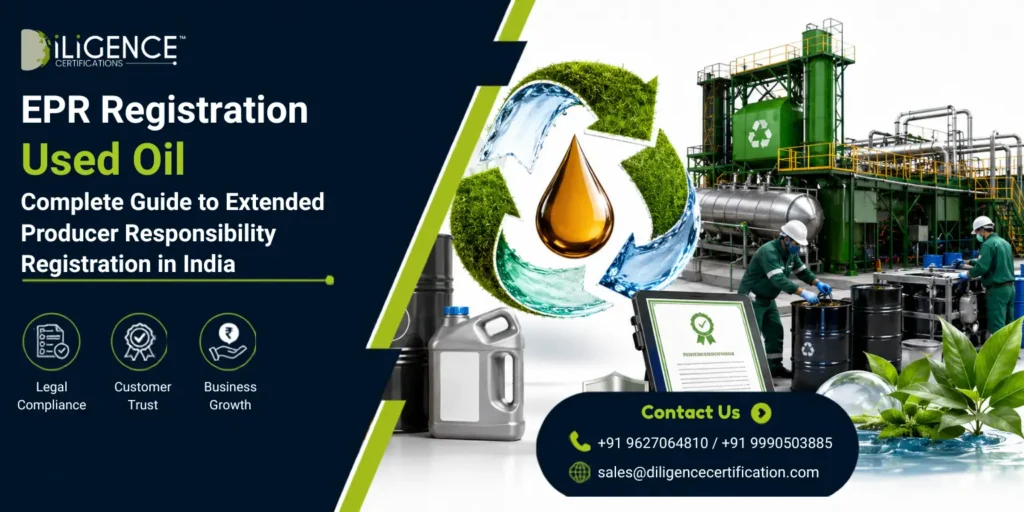
By - Describes the entire process of registering for Used Oil Extended Producer Responsibility (EPR).
- Guides producers, importers, and enterprises regarding their EPR obligations related to used oil collection and recycling.
- Gives insight into the benefits of registration and compliance with Used Oil Management rules.
Introduction
The growing use of lubricating oils and other products made from petroleum in automobiles, industrial processes, machinery, and equipment has resulted in a sharp rise in used oil production in India. The incorrect disposal of such oil might lead to serious environmental problems due to the contamination of soil and water resources, as well as pose certain dangers for people.
In order to solve this problem, the Government of India has enacted Used Oil EPR Registration within the Extended Producer Responsibility scheme. The latter means that companies engaged in producing, importing, and selling lubricating oils will be responsible for collecting, recycling, and proper management of used oil produced during the process of using the product.
Used Oil EPR Registration is necessary for the companies engaged in eligible oil products via the CPCB portal.
What is Used Oil EPR Registration?
Used Oil Extended Producer Responsibility (EPR) Registration is a regulatory compliance process designed to help producers and other responsible parties manage the environmental consequences caused by the generation of used oil from their products.
Within the EPR regulation process, the companies are supposed to take charge of the collection, recycling and disposal of the used oil in the right manner rather than disposing of it in an improper way.
The services include:
- Used Oil EPR Registration
- Used Oil Management
- Recycling and Collection Assistance
- Coordination with Authorized Recyclers
- Documentation Services
- Regulation Guidance
- EPR Compliance Management
Used Oil EPR Registration will help the companies in adhering to the CPCB regulations.
Applications of Used Oil EPR Registration
Used Oil EPR Registration is for those companies engaged in manufacturing, import, sale, or business dealings involving lubricating oils and other oil products in India.
The typical organizations which require registration include:
- Lubricating Oil Producers
- Lubricating Oil Importers
- Brand Owners
- Oil Manufacturing Companies
- Automotive Oil Manufacturers
- Industrial Oil Manufacturers
- Petroleum Product Firms
- Companies dealing with oil distribution
- MSMEs
- Start-ups dealing with oil products
The purpose of the registration is to enable companies to discharge their environmental obligations.
Who Needs Used Oil EPR Registration?
Used Oil EPR Registration is required for businesses that introduce applicable oil products into the Indian market and are responsible for managing the waste generated after consumption.
The registration ensures that businesses follow CPCB guidelines and meet their Extended Producer Responsibility obligations for used oil collection and recycling.
It is generally required for:
- Producers
- Importers
- Brand Owners
- Lubricant Manufacturers
- Automotive Oil Companies
- Industrial Oil Manufacturers
- Petroleum Product Businesses
- Oil Distributors
- MSMEs
- Startups
Obtaining Used Oil EPR Registration allows businesses to operate legally while demonstrating their commitment towards responsible waste management and environmental protection.
Types of Compliance Under Used Oil EPR Registration
Used Oil EPR Registration Compliance
Eligible businesses must obtain Used Oil EPR Registration through the CPCB portal to comply with applicable environmental regulations.
The registration generally includes:
- Business Registration Details
- PAN Details
- GST Registration Details
- Import Details (if applicable)
- Authorized Signatory Details
- Product Category Details
- Business Category Information
- EPR Compliance Details
Useful for:
- Producers
- Importers
- Brand Owners
- Lubricant Manufacturers
- Oil Businesses
- MSMEs
- Startups
Maintaining accurate registration information helps businesses meet CPCB requirements and ensures smooth compliance management.
Used Oil Collection & Recycling Compliance
Registered entities must ensure that used oil generated from their products is collected, recycled, processed, or managed through authorized recyclers as per applicable guidelines.
This generally includes:
- Used Oil Collection
- Recycling Management
- Authorized Recycler Engagement
- Environmentally Safe Processing
- EPR Target Fulfilment
- Waste Recovery Management
Useful for:
- Producers
- Importers
- Brand Owners
- Oil Manufacturers
- Industrial Businesses
Proper collection and recycling systems help reduce environmental pollution and encourage the reuse of valuable resources through sustainable practices.
Documentation & Reporting Compliance
Businesses registered under Used Oil EPR are required to maintain proper records and submit compliance-related information as required under the applicable regulatory framework.
Documentation generally includes:
- Registration Records
- Product Category Details
- EPR Compliance Records
- Recycler Details
- Recycling Certificates
- Annual Compliance Reports
- Used Oil Processing Records
Maintaining proper documentation helps businesses track their compliance activities and avoid regulatory issues during inspections or verification processes.
Documents Required for Used Oil EPR Registration
Generally, the required documents for Used Oil EPR Registration include:
- PAN Card
- GST Registration Certificate
- Business Registration Certificate
- Import Export Code (if applicable)
- Authorized Signatory Details
- Address Proof
- Product Details
- Oil Category Details
- Digital Signature Certificate (if applicable)
- Email ID & Mobile Number
- Authorization Letter (if applicable)
- Other documents required by CPCB
Keeping all documents updated and properly arranged helps businesses complete the registration process smoothly and reduces the chances of unnecessary delays during application verification.
Step-by-Step Process for Used Oil EPR Registration
Step 1: Checking Eligibility
The first step towards registering for the Used Oil EPR registration is checking if the business comes under the category of companies that need to comply with the EPR responsibilities.
Eligibility Checking usually involves the following factors:
- Business Category
- Product Category
- Used Oil Generation Liability
- EPR Responsibilities
- Regulatory Requirements
Checking eligibility before submitting an application makes it easier for businesses to do so.
Step 2: Collection of All Required Documents
Following the determination of eligibility for business registration, it is important that companies collect all required documents prior to submitting the registration form.
These documents will usually include:
- Business Registration Certificate
- PAN Card
- GST Registration Certificate
- Details of Product
- Authorization Signature Details
- Proof of Address
- Other Documentation
Well-prepared documentation ensures that the application will be well-submitted and prevents queries in the verification process..
Step 3: Completion of the Online Application Form
Once the documentation is collected, it must be submitted through the official CPCB EPR portal using the online application form by providing accurate details related to business and products.
A typical application form includes the following information:
- Business Details
- Applicant Details
- Product Category Details
- Contact Details
- EPR Compliance Details
- Recycling and Management Details
Providing correct information helps businesses avoid delays and ensures smooth processing of the application.
Step 4: Verification of the Application
After submission of the application form, CPCB verifies the details and documents provided by the applicant.
Generally, verification involves:
- Business Information
- Submitted Documents
- Product Category Details
- Compliance Details
- Supporting Information
If additional clarification or documents are required, the concerned authority may request further information before completing the approval process.
Step 5: Used Oil EPR Registration
After successful verification, the applicant receives Used Oil EPR Registration through the CPCB portal.
The Used Oil EPR Registration allows businesses to:
- Fulfill EPR Obligations
- Maintain Used Oil Management Records
- Submit Compliance Information
- Work With Authorized Recyclers
- Follow Environmental Regulations
The registration acts as proof that the business is following the applicable Used Oil Management requirements and CPCB compliance guidelines.
Step 6: Compliance
After receiving Used Oil EPR Registration, businesses must continue following the applicable environmental guidelines and fulfill their ongoing EPR responsibilities.
In most cases, businesses are required to:
- Meet EPR Targets
- Maintain Compliance Records
- Submit Required Reports
- Update Business Information
- Follow Used Oil Management Guidelines
Continuous compliance helps businesses maintain their registration status and avoid regulatory complications.
Timeline, Cost & Validity of Used Oil EPR Registration
The timeline, cost, and validity of Used Oil EPR Registration depend on document availability, application verification, business category, and applicable compliance requirements.
| Timeline | Cost | Validity |
| The registration timeline depends on document verification and application processing. | The cost depends on applicable government charges and professional service fees, if required. | Used Oil EPR Registration remains valid as per the prevailing CPCB guidelines. |
| Proper documentation helps reduce processing delays. | Additional charges may vary depending on business requirements. | Businesses should follow applicable renewal or update requirements whenever necessary. |
| Processing time may vary based on the completeness of the application. | Proper planning helps manage registration expenses efficiently. | Maintaining updated business information helps ensure continued compliance. |
Importance & Benefits of Used Oil EPR Registration
| Importance | Benefits |
| Helps businesses comply with Used Oil Management Rules and EPR regulations. | Improves business credibility and demonstrates environmental responsibility. |
| Supports proper collection, recycling, and environmentally safe processing of used oil. | Enhances brand reputation among customers and business partners. |
| Encourages responsible waste management and regulatory compliance. | Enables smooth compliance with CPCB requirements and environmental standards. |
| Promotes sustainable resource recovery and circular economy practices. | Reduces compliance risks and improves operational efficiency. |
| Helps businesses fulfill their legal environmental responsibilities. | Strengthens long-term business sustainability and regulatory confidence. |
Why is Used Oil EPR Registration Important?
Registration of Used Oil EPR is one such environmental compliance that has to be ensured by businesses which manufacture, import, brand, or sell relevant oil products in India. This helps in ensuring that companies are made accountable for the collection, recycling, and environmentally safe management of used oil created after consumption of the product.
By making use of the EPR system, businesses are able to limit their environmental impacts by ensuring that used oil is not disposed of using any hazardous means. The process of recycling and proper processing systems helps in reusing valuable resources without creating pollution.
Used Oil EPR Registration can help businesses comply with CPCB requirements.
Importance of Used Oil EPR Registration can be explained as follows:
- Regulatory Compliance
- Environmental Protection
- Used Oil Management
- Sustainable Business Practices
- Circular Economy
Used Oil EPR Registration enables organizations to manage used oil responsibly and remain compliant with applicable environmental regulations.
Consequences of Non-Compliance with Used Oil EPR Requirements
Businesses that are required to follow Used Oil EPR requirements but fail to comply with applicable regulations may face several consequences. Non-compliance can impact business operations, reputation, and environmental responsibilities.
These consequences may include:
- Violation of CPCB norms
- Regulatory action from concerned authorities
- Environmental Compensation (EC) wherever applicable
- Delay in business operations
- Negative impact on business reputation
- Compliance-related risks
- Loss of business opportunities
- Possibility of inspection by regulatory authorities
Following Used Oil EPR requirements helps businesses avoid legal complications and ensures responsible management of used oil through approved recycling and processing systems.
Renewal of Used Oil EPR Registration
For the sake of maintaining the advantages of Used Oil EPR Registration, it is essential for the companies to update their registration data as per the latest guidelines issued by the CPCB and the environmental norms.
It is necessary for companies to update any changes in business information, authorized signatory information, product category information, contact information and compliance information whenever required.
Updating registration data makes it possible for the companies to maintain continuous compliance with the Used Oil Management and ensure proper fulfillment of EPR responsibilities.
The process of updating registration data usually consists of the following steps:
- Update Business Information
- Verification of Registration Data
- Update Product Category Information
- Provide Necessary Documents
- Following CPCB Guidelines
How Professional Assistance Helps in Used Oil EPR Registration?
Used Oil EPR Registration procedure involves right documentation and application filing and should comply with CPCB norms. Errors in the form of incorrect data or faulty classification of the product may cause delay in the processing of the registration.
Professional service providers assist companies in registering for EPR effectively.
Professional service providers generally assist businesses with:
- Understanding Used Oil EPR requirements
- Documentation preparation and verification
- Online application filing
- Compliance guidance
- Resolving documentation issues
- Application status tracking
The professional services generally include:
- Eligibility Assessment
- Documentation Assistance
- Online Registration Support
- Compliance Advisory
- Application Status Tracking
- Query Resolution
Professional assistance helps businesses complete Used Oil EPR Registration smoothly while reducing compliance risks and ensuring proper alignment with CPCB requirements.
Why Choose Diligence Certifications for Used Oil EPR Registration?
Proper Used Oil EPR Registration can be attained by having knowledge about the regulations, documentation, and CPCB guidelines. Professional help will ensure that your organization does not have any difficulties completing the registration process.
Diligence Certifications will help you attain the Used Oil EPR Registration so that you can concentrate on other business activities.
Some key benefits of choosing Diligence Certifications include:
- Complete Documentation Assistance
- Support in Online Application Filing
- Guidance on CPCB Compliance Requirements
- Quick Resolution of Registration-related Queries
- End-to-End Registration Support
- Post-registration Compliance Assistance
Obtaining Used Oil EPR Registration with Diligence Certifications makes the registration process simple, efficient, and aligned with applicable environmental regulations.
Conclusion
Used Oil EPR Registration is mandatory for companies manufacturing, importing, branding or selling the oil products which fall under the ambit of the Used Oil EPR Registration in India. The registration makes sure that all the businesses comply with the framework of the Extended Producer Responsibility and fulfill their obligations to collect, recycle and manage the used oil in an environmentally sound manner.
Used Oil EPR Registration will help businesses comply with CPCB regulations as well as sustain good waste management practices. With proper collection of used oil and its recycling, it can ensure recovery of valuable resources and reduced environmental pollution.
If you are a producer, an importer, brand owner, lubricants manufacturer, industrial oil company, MSME or even a start-up company, having the Used Oil EPR Registration for your oil products will help you to comply with the regulations.