BIS Certification
 CDSCO
 PESO
 CPCB
 LMPC
 WPC Approval
 Global Approvals
 TEC
 ARAI
 BEE
 ISO Certification
 DGCA Certification
 NOC For Steel
 APEDA Registration























 Business Registration
 FSSAI Mark Certification












 (32).jpg)
 Legal Services
 Trademark Registration
 Copyright Registration
 Patent Registration
 By
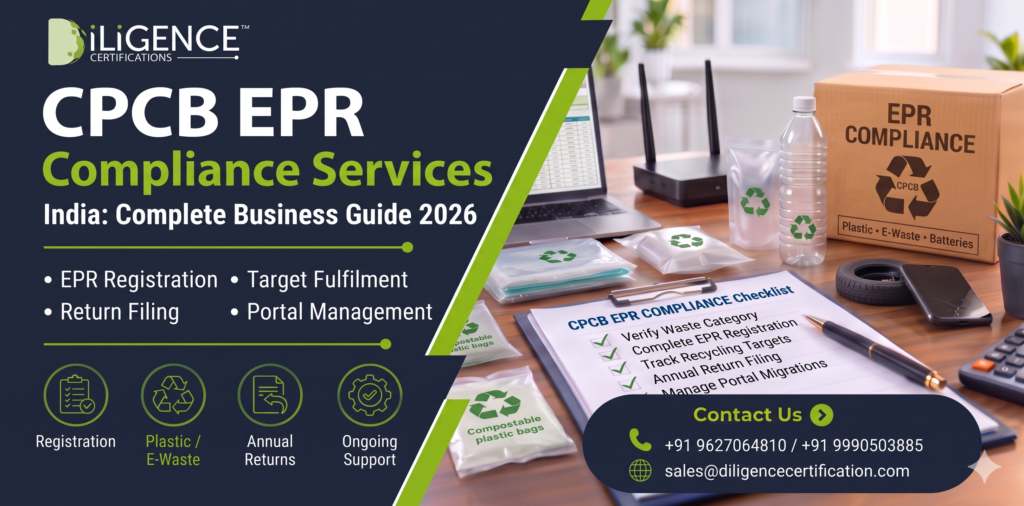
- CPCB EPR compliance services India help eligible businesses understand registration requirements, documentation and ongoing environmental responsibilities.
- Producers, Importers and Brand Owners (PIBOs) should check whether plastic packaging EPR rules apply to their business activities.
- EPR compliance may involve registration, target fulfilment, certificate management, record-keeping and applicable return filing.
- Businesses dealing with plastic packaging, e-waste, batteries, waste tyres or used oil must check the rules relevant to each waste stream.
- Professional EPR compliance support can help businesses organise documents, track deadlines and reduce avoidable application and reporting errors.
Introduction
For years a business might sell packaged food, cosmetics, electronic products or household goods and only then a key question arises: does the company need EPR registration and what follows after registration?
I have seen this often in growing businesses. A brand owner may work with a third‑party manufacturer an importer may bring products into India or an online seller may launch products under its brand. Each business model can have environmental compliance requirements.
This is where CPCB EPR compliance services that India businesses look for can help. The right support can make it easier to identify rules prepare documents, complete registration formalities and manage ongoing responsibilities.
Extended Producer Responsibility or EPR is not, about getting a certificate. Depending on the waste‑management rules that apply a company may also have to hit recycling targets keep records handle EPR certificates and file the required returns.
In this guide I explain how EPR compliance works, which businesses should check their obligations what documents may be needed and how to pick a compliance consultant.
What Are CPCB EPR Compliance Services India?
I have seen that CPCB EPR compliance services that Indian companies use generally cover help with assessment, registration, documentation, EPR target planning, certificate processes and required returns.
I believe that the Central Pollution Control Board or CPCB is responsible for implementing and monitoring environmental requirements, in India’s regulatory framework.
I understand that depending on the waste category and the rules that apply a State Pollution Control Board (SPCB) or Pollution Control Committee (PCC) might also be involved.
I have found that a compliance consultant helps a company understand the process and prepare the information.
I note that the consultant does not replace the authority nor does it remove the company’s legal responsibilities.
For example I have seen a business that sells packaged snacks may need to assess its packaging obligations.
I also see that an importer of electronic products may have to follow a different registration and recycling framework.
I think the first step is therefore to identify the rules that apply than applying for a generic EPR certificate.
What services may an EPR consultant provide?
Depending on the business and the agreed scope services may include:
- Examining the companys products, packaging and business activities.
- Identifying the EPR category that applies and the registration authority.
- Preparing a checklist of documents. Reviewing supporting records.
- Helping with registration and submitting the application.
- Assisting in evaluating the EPR targets and reporting requirements that apply.
- Supporting certificate-related processes where the rules allow.
- Helping with the required returns and planning, for compliance.
- A business should confirm which activities are included in the service agreement. Registration assistance and annual compliance support are not always the service.
Which Businesses May Need EPR Registration in India?
Not every business needs the same registration. The requirement depends on the product, material, business activity and definitions in the applicable rules.
1. Producers, importers and brand owners of plastic packaging
The Plastic Waste Management Rules, 2016, together with their applicable amendments and EPR provisions, establish responsibilities for covered Producers, Importers and Brand Owners (PIBOs).
You should assess the requirements if your business:
- Manufactures covered plastic packaging.
- Imports products or packaging covered by the rules.
- Sells packaged products under its own brand.
- Introduces covered packaging into the market through its business activities.
Consider a small company selling shampoo under its own brand. A third-party factory manufactures the shampoo, while the company manages the branding, packaging and online sales.
The owner might assume that the factory is responsible for every compliance requirement. That assumption may be incorrect. The company needs to examine its actual role under the applicable definitions and determine whether it has separate EPR obligations.
Plastic packaging is also divided into categories under the applicable framework. The classification matters because the relevant reporting and target requirements can differ.
2. Manufacturers and importers of products
The E-Waste (Management) Rules, 2022 which became effective on 1 April 2023 cover electronic equipment.
Manufacturers and importers of products that import or sell covered items must check whether those items belong to the regulated categories. Manufacturers and importers of products may need to register carry out recycling duties manage EPR certificates and file reports.
For example a manufacturers and importers of products that sells accessories should first verify that the accessories are listed in the notified categories. Manufacturers and importers of products should not assume that every electronic accessory is handled the way.
3. Battery manufacturers and importers
The Battery Waste Management Rules, 2022 set EPR responsibilities for battery categories and, for battery manufacturers and importers.
Battery manufacturers and importers may need to perform recycling or refurbishment duties through approved methods. How a battery is classified the sales information and the battery type can affect the evaluation.
Battery manufacturers and importers should also review the guidelines before submitting an application.
4. Businesses dealing with waste tyres and used oil
Different rules apply to covered waste tyres. Used oil. The definitions that apply decide which producers, importers, recyclers or other groups have registration and compliance duties.
A company should not think that a plastic packaging registration also includes waste tyres, used oil, batteries or electronic waste.
If a business works with waste types each rule should be checked individually.
5. E-commerce sellers and small businesses
Selling products online does not mean every seller is under every EPR system. However businesses that make, import or sell products under their names should look closely at their duties.
A seller offering products from others might have a situation, than an importer bringing goods into India or a brand owner putting packaged products into the market.
Small businesses should look at their packaging materials, invoices, import records, product types and agreements before deciding if they need to register.
What Are the Main EPR Rules Businesses Should Know?
India has waste‑management frameworks for different materials. Knowing which framework applies is essential before you start the registration process.
Plastic Waste Management Rules, 2016
These rules and their amendments govern waste. The EPR provisions cover producers, importers, brand owners. Also set rules for Plastic Waste Processors. Businesses should check the registration route, category, reporting duties and target calculations.
E‑Waste (Management) Rules, 2022
These rules set requirements for electrical and electronic equipment. They include an EPR framework, for producers and ways to meet recycling duties through registered recyclers. CPCB’s official e‑waste guidance and portal should be checked for the instructions.
Battery Waste Management Rules, 2022
These rules deal with the management of waste batteries. They set out the duties and obligations for producers and other entities involved in battery waste handling.
The registration and compliance process varies depending on the battery category and the role of the applicant. Each category has requirements that must be followed.
Waste tyre and used oil requirements
Different rules apply to waste tyres and used oil. The registration, reporting and certificate processes for these waste streams must be checked against the regulations.
Businesses should visit the CPCB website to find the latest rules, notifications and guidance. This ensures they follow the procedures, for compliance.
Important plastic EPR portal update for 2026
The Centralized EPR Portal, for Plastic Packaging stopped accepting new registrations on 28 June 2026. CPCB said that all existing user data has now been moved to the Common EPR Portal.
Companies that already have plastic packaging registrations must check their moved data. Report any mistakes using the portal steps that are set out. The notice also says that users must use the company name and the authorised person’s PAN when they link accounts.
You can access the portal at CPCB Common EPR Portal.
This change matters for any business that still follows instructions or has saved links. Always read the official notice before you start a new application or change existing records.
Documents Required for CPCB EPR Registration
The document checklist varies according to the waste stream, applicant category and current registration procedure. Preparing the information in advance can make the application process more organised.
Commonly required business information
Depending on the applicable process, a business may need:
- PAN and GST details, where applicable.
- Certificate of incorporation or other business-registration documents.
- Registered office address and authorised-person details.
- Import Export Code (IEC), where applicable.
- Product names, categories and technical details.
- Manufacturing, import, sales or packaging quantity records.
- Other supporting information requested by the relevant portal.
Some applications may require additional technical or operational documents. For example, information about the manufacturing process, products or recycling activities may be relevant to particular applicant categories.
Do not assume that the same checklist applies to every EPR registration.
Why document accuracy matters
I see an importer whose purchase records show one quantity while the importers internal sales spreadsheet shows a figure. The difference may come from stock that remains unsold from reporting periods or from unit conversions.
Before submitting information the importer should understand the difference. Keep supporting records. Simply entering a number into the portal without checking its source can create problems later.
A consultant can help review the documents. Find missing information. The importer should keep the records used to prepare the application and later returns.
How Does the CPCB EPR Compliance Process Work?
The process starts with understanding the business not with filling out a form.
Step 1: Review the business activities
Write down the products you make bring in or sell under your brand name. Note the packaging materials and waste streams linked to the products.
This simple check shows which rules deserve attention.
Step 2: Confirm applicability and registration requirements
Check the definitions, product categories, registration conditions and the right authority, for your case.
For packaging the registration path may depend on your company’s operations across states or union territories. Other waste streams follow their procedures.
Step 3:. Verify the documents
Collect the business records gather the product details. Assemble the quantity data that you need for your category.
Double-check that the company name the address, the PAN and the other details match everywhere the process requires them to match.
Step 4: Complete the application
Enter the information into the website and upload all the documents that are needed.
Double-check the application one time before you click submit. If the government office asks for information or an explanation make sure to include the supporting documents that go with your application.
Step 5: Understand the responsibilities after registration
After registration is approved review the conditions carefully. Discover what must be done. I know this can feel overwhelming but staying organized will help.
Depending on the rules the business may need to track EPR targets, handle certificates keep supporting records and file returns.
Step 6: Create a compliance calendar
Assign tasks for collecting data and watching deadlines. The finance team might handle sales numbers. Operations staff might keep production records. The compliance team might manage submissions.
Putting all this together regularly is much easier than scrambling to put a year’s records right before a deadline.
Step 7: Keep evidence of compliance
Save copies of applications, approvals, returns, relevant certificates and supporting quantity records. These documents help when checking numbers or answering questions, from regulators.
The actual process and deadlines change depending on the waste stream. So businesses should confirm the rules that apply to them than just following a general checklist.
What Happens After EPR Registration?
Registration is a step but it does not finish the companys responsibilities.
Depending on the rules that apply a business that is registered might have to:
- Keep track of the EPR goals and the times when reports are due.
- Check how many products or packaging items are being put into the market.
- Meet the rules by using allowed ways.
- Use proper EPR certificates if they are needed.
- Make sure the records inside the company match the numbers that are reported.
- Submit the needed reports before the time limits.
- Look at the messages, on the website. Keep the proof that supports the information.
I know that many businesses receive their registration certificate but do not keep company’s sales and packaging records throughout the year. When the return becomes due the team may need to gather information from invoices, warehouse systems and accounts. This creates work and raises the risk of reporting errors.
A simple monthly review can help. The business can compare business’s records identify missing information and address discrepancies while the details are still available.
The reporting frequency and target requirements depend on the applicable waste‑management framework. Businesses should check the rules and portal instructions, for business category.
Common EPR Compliance Mistakes to Avoid
Many compliance problems begin with small assumptions. The following mistakes deserve attention.
Assuming that registration completes every requirement
A registration certificate does not automatically mean that all future targets and reporting duties have been completed. Review the ongoing obligations separately.
Choosing the wrong product category
Product classification can affect the applicable process. Check the definitions and schedules rather than relying only on a product’s marketing name.
Submitting inconsistent figures
Production, import, sales and packaging figures may come from different departments. Reconcile the data before filing and keep records that explain any differences.
Missing a reporting deadline
Do not assume that all EPR categories follow the same annual or quarterly reporting schedule. Create reminders based on the applicable rules and official notices.
Ignoring portal changes
Companies with existing plastic packaging records should check their data on the Common EPR Portal following the 2026 migration. If discrepancies appear, follow the official reporting procedure.
Relying on guaranteed-approval claims
A consultant cannot guarantee a regulatory decision. The authority evaluates the application under the applicable rules, and the business remains responsible for the accuracy of its information.
Treating every waste stream as one registration
Plastic packaging, e-waste, batteries, waste tyres and used oil have distinct frameworks. A business dealing with more than one category should assess each obligation individually.
How Can CPCB EPR Compliance Services India Help Your Business?
Professional support can be useful when a company is unfamiliar with environmental rules, has incomplete records or needs to manage several compliance activities at once.
The value of CPCB EPR compliance services India businesses choose depends on the provider’s understanding of the applicable framework and the scope of work agreed with the client.
Regulatory applicability review
The consultant reviews the business activities, products and materials to identify the relevant EPR framework. This helps the company understand which requirements need further assessment.
Registration and document support
The service may include preparing a checklist, reviewing records, assisting with the online application and helping respond to regulatory queries.
EPR target and data review
Where relevant, the consultant can help the business understand how the applicable target is calculated and what evidence is needed to support reported figures.
Certificate and return assistance
Depending on the waste stream and agreed service, support may include certificate-related processes, return preparation and compliance tracking.
Ongoing compliance planning
A useful plan identifies the records to maintain, the staff responsible for collecting information and the reporting dates that apply.
Before appointing a service provider, confirm whether the quotation covers only registration or includes post-registration support. This avoids confusion about responsibilities later.
How to Choose the Right EPR Compliance Consultant
Choosing a consultant should involve more than comparing prices. The provider should understand the rules relevant to your business and explain the work clearly.
Ask these questions before making a decision:
1. Have you handled my waste category before?
The provider should understand the relevant framework rather than treating every EPR application in the same way.
2. What is included in the service?
Confirm whether the scope includes registration, document review, regulatory follow-up, certificate-related assistance and returns.
3. How will you verify my records?
Ask how the provider checks the quantities and supporting documents used in the application.
4. Who will manage the portal account?
Your business should retain appropriate access to its account and copies of important submissions.
5. How will regulatory changes be communicated?
The provider should explain how it monitors relevant notifications and updates its advice.
6. What happens if additional information is requested?
Clarify who will prepare the response and what documents the business must supply.
7. Will I receive copies of all filings?
Maintain your own compliance records rather than depending entirely on an outside consultant.
A dependable consultant should explain what is known, identify what needs checking and avoid promising results that are outside its control.
Why Choose Diligence Certifications for CPCB EPR Compliance Services India Certification?
For many companies, the challenge is not simply completing an application. It is understanding which rules apply, preparing accurate information and managing the work that continues after registration.
Diligence Certifications offers compliance-related guidance and services for businesses navigating regulatory requirements.
Companies looking for registration assistance can review the CPCB EPR Registration Service page to understand the available support and discuss their requirements.
Before beginning the process, prepare a basic summary of your business. Include the products you manufacture or import, the packaging you use, your brand ownership arrangements and any existing registrations.
You can then discuss the relevant waste stream, the documents available and the support required for registration or ongoing compliance.
The appropriate service depends on your business activities and the rules in force. A preliminary assessment is a practical way to identify the next steps without assuming that every company needs the same registration.
Conclusion
EPR compliance becomes easier to manage when it is part of the company’s regular operations rather than a last-minute task. Businesses should identify their applicable category, maintain accurate records, track relevant targets and follow the reporting requirements set out in the rules.
CPCB EPR compliance services India businesses seek can provide practical support with registration, documentation and ongoing compliance planning. However, the correct approach depends on the company’s products, activities and legal responsibilities.
If your business manufactures products, imports goods or sells under its own brand, start by reviewing your product categories and available records. Contact Diligence Certifications to discuss your requirements and identify the compliance steps that may apply to your business.
Frequently Asked Questions
1. What are CPCB EPR compliance services in India?
These services help eligible businesses understand EPR requirements and manage registration, documentation, applicable targets, certificates and returns under the relevant waste-management rules.
2. Who needs EPR registration in India?
Depending on the applicable rules, producers, importers, brand owners, manufacturers, recyclers and other specified entities may need registration.
3. Is EPR registration mandatory for small businesses?
It depends on the business's activities, products, packaging and applicable legal definitions. Small businesses should check their specific obligations before deciding whether registration is required.
4. What documents are required for CPCB EPR registration?
Documents may include PAN, GST details where applicable, business-registration proof, authorised-person details, product information and relevant manufacturing, import, sales or packaging records.
5. What is the difference between EPR registration and EPR compliance?
Registration is one step in the regulatory process. Compliance may also involve meeting applicable targets, maintaining records, managing certificates and filing required returns.
6. Do e-commerce sellers need EPR registration?
Some e-commerce businesses may have EPR obligations, depending on whether they manufacture, import, sell under their own brand or perform another activity covered by the relevant rules.
7. Can one EPR registration cover plastic, batteries and e-waste?
Businesses should not assume that one registration covers every waste stream. Each category has its own applicable regulatory framework and registration requirements.
8. What happens if a business fails to meet EPR requirements?
Consequences depend on the applicable rules, the type of non-compliance and the circumstances. Businesses should review the relevant provisions and address any missed obligations promptly.
9. Can an EPR consultant help with annual returns?
Yes. Depending on the service agreement and applicable rules, a consultant can assist with data preparation, return filing, record review and compliance tracking.
10. How can I choose the right CPCB EPR compliance consultant?
Check the consultant's experience with your waste category, the services included, document-verification process, regulatory-update practices and post-registration support.