BIS Certification
 CDSCO
 PESO
 CPCB
 LMPC
 WPC Approval
 Global Approvals
 TEC
 ARAI
 BEE
 ISO Certification
 DGCA Certification
 NOC For Steel
 APEDA Registration























 Business Registration
 FSSAI Mark Certification












 (32).jpg)
 Legal Services
 Trademark Registration
 Copyright Registration
 Patent Registration
 By
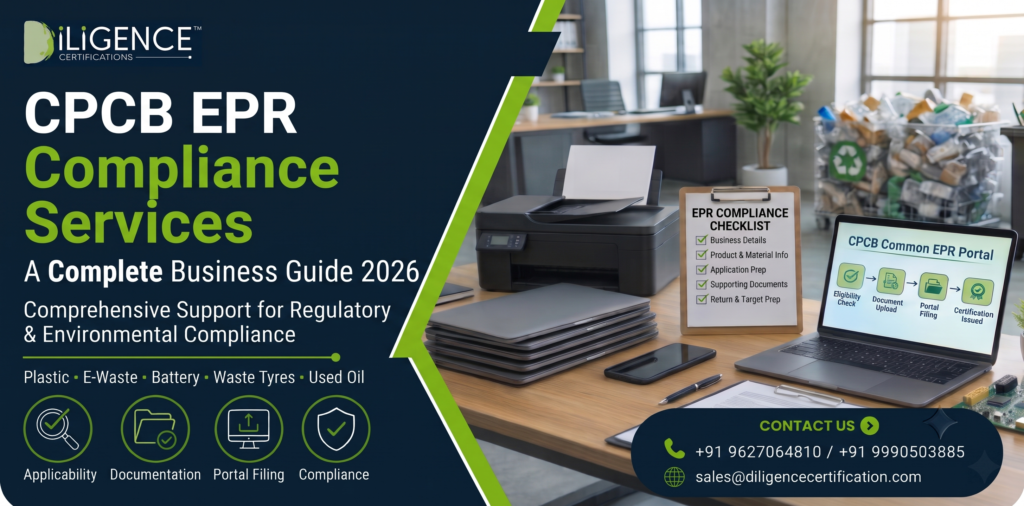
- I find CPCB EPR compliance services helpful because they explain the rules of Extended Producer Responsibility and guide businesses through the registration steps.
- I note that EPR obligations vary depending on the product the packaging used, the role of the business and the waste management rules that apply.
- I have seen that plastic packaging, electronic equipment, batteries, used oil and waste tyres each have their regulatory frameworks.
- I observe that businesses often need company documents, details of each product, sales or import records and other supporting information for registration.
- I realize that after registration EPR compliance keeps going through target fulfilment, certificate tasks, handling returns and keeping records.
Introduction
Imagine a business that brings accessories into the country and sells them on its own website and other online marketplaces. That business already has GST registration, import documents and a regular supply chain. Sales are growing,.
No one has looked at whether the products or their packaging add extra environmental compliance responsibilities.
The issue may only show up when a buyer asks for compliance documents when an application must be filed or when the business thinks about expanding and reviews its duties. This is where CPCB EPR compliance services become relevant. Extended Producer Responsibility or EPR assigns duties to certain producers and other regulated entities, for handling waste from products or packaging that the rules cover. In India the Central Pollution Control Board (CPCB) runs EPR-related registration and reporting systems.
There is no single set of rules that applies the same to every business. A plastic packaging brand owner, an electronics importer and a used‑oil producer each face obligations. Therefore businesses should first identify their category check the rules that apply and organize their records. Registration is the first step;
understanding and keeping up with the ongoing obligations is just as important. EPR compliance must be.
Followed carefully. Without EPR compliance the business may face penalties. EPR compliance is a part of regulatory responsibility.
What Are CPCB EPR Compliance Services?
CPCB EPR compliance services are help that guides businesses to check their environmental rules put together registration papers file the right forms and handle tasks after registration. CPCB EPR compliance services help you avoid surprises and keep your operations smooth.
EPR means a business that follows the rules must take care of the waste that comes from its products or packaging sold on the market. Depending on the rules these duties can be registration, recycling or processing goals, certificate needs and regular reports. EPR responsibilities are clear. Must be met every year.
For example a company that sells items, in packaging might have to figure out if it is a Producer, Importer or Brand Owner, which is called PIBO. An electronics maker must also decide if its items fall under the E‑Waste (Management) Rules of 2022. EPR rules change, so always double‑check your role.
A compliance consultant is there to explain the rules that matter to the business and show the steps that must be taken. The consultant does not take away the company’s duties or the decision power of the authorities.
What can these services include?
Depending on the agreed scope, professional support may cover:
- Checking EPR applicability for the business and its products.
- Identifying the relevant registration category and portal.
- Preparing and reviewing supporting documents.
- Assisting with online registration and application submission.
- Helping respond to regulatory queries.
- Reviewing relevant product, packaging, sales or import data.
- Supporting applicable EPR target calculations and certificate-related processes.
- Assisting with annual returns and compliance records.
- Tracking relevant notifications and reporting requirements.
The exact scope should be confirmed before appointing a service provider. Initial registration and ongoing compliance are different activities and may require separate work.
Which Businesses May Need CPCB EPR Compliance Services?
The requirement depends on the applicable rules, the business’s activities and the materials or products involved. Simply operating an online store does not automatically mean every business requires every type of EPR registration.
1. Plastic packaging manufacturers and brand owners
Companies that make bring into the country or sell products under their brand that use covered plastic packaging should check where they stand under the Plastic Waste Management Rules, 2016 and any changes to those rules.
Examples are brands that sell food in packaging companies that make care products businesses that sell household items and sellers that offer private-label products.
The correct category and the rules that apply depend on what the business does and the definitions that are in place.
2. Electronics manufacturers and importers
Companies that handle covered electrical and electronic equipment may be covered by the E-Waste (Management) Rules, 2022.
The rules list the types of businesses that are regulated such as makers, owners, people who repair equipment and those who recycle it. The rules that apply depend on what the business does and what kind of equipment is involved.
An importer should not think that buying products from a foreign supplier means the foreign supplier takes on all the Indian EPR responsibilities.
3. Battery producers and manufacturers
Rules about battery waste management apply to businesses that make or sell batteries under the Battery Waste Management Rules, 2022 and any changes, to those rules.
Companies should look at the types of batteries they put on the market whether they are the maker or producer and the registration and reporting steps they need to follow.
4. Used-oil producers and importers
Businesses manufacturing or importing covered base oils and lubricating oils should check the used-oil EPR framework.
CPCB’s guidance identifies different producer categories based on activities such as manufacturing oil, importing it, or selling oil under a brand using another manufacturer’s base oil.
5. Waste tyre producers and other regulated entities
The waste tyre framework works under the hazardous and other wastes rules. Companies that make or bring in tyres need to find out if the work gives them EPR responsibilities.
Recyclers and other waste processors might also have to register and report under the rules that apply to them.
Important: EPR registration must be checked for every waste stream that applies. One registration, for one category does not automatically cover a category.
How Do CPCB EPR Compliance Services Help Businesses?
A useful compliance service starts with the business’s actual situation rather than a standard application form.
Step 1: Identify the regulatory category
The first step is to understand what the company makes brings in from abroad sells or works on.
A brand owner who sells packaged goods may have duties, than a distributor who sells goods made and branded by another company. An importer also must review its duties even if the foreign maker already has product certificates.
The consultant must point out the rules and explain why those rules might apply.
Step 2: Review the available documents
The business should prepare its legal and operational records before the application is submitted.
Depending on the registration category, documents may include:
- Certificate of incorporation or other business constitution documents.
- PAN and GST registration details, where applicable.
- Details of authorised representatives.
- Registered office and manufacturing facility information, where relevant.
- Product descriptions, brands and applicable categories.
- Sales, production or import records.
- Packaging composition and quantity data, where relevant.
- Existing environmental registrations or permissions, where applicable.
- Details of registered recyclers or processors, if required under the applicable framework.
This is a general checklist, not a universal list. The official portal’s current requirements and the relevant rules should determine the final document set.
Step 3: Prepare and submit the application
After the category and supporting records have been checked the application can be prepared using the portal that’s responsible for this process.
The information given must match the company records, product descriptions and supporting documents. Discrepancies in names, amounts or business details can cause problems. Lead to requests for more information.
The person applying should check the application before sending the application. Should keep a copy of the information that was provided.
Step 4: Respond to queries
A government agency might ask for information or clarification. The answer must directly respond to the question, from the government agency. Include supporting evidence.
A consultant can help put the response. The final decision is made by the official authority. No reliable service provider should promise a certificate. Say that a specific date will be given for approval regardless of the application.
.
Step 5: Plan for continuing compliance
Getting registration does not automatically finish the business EPR responsibilities.
Depending on the framework the company must keep track of its EPR responsibilities maintain product or waste‑related records meet targets finish certificate‑related activities and file returns before the required deadlines.
A compliance calendar can help the business assign responsibilities. Avoid leaving reporting until the moment.
What Documents Should You Prepare for EPR Registration?
The papers needed vary based on the type of waste and who is applying. A good way to start is to group the information into four sections.
Business records: Legal name, address, PAN, GST details and information about the people allowed to act on behalf of the company if needed.
Product information: Names of the products, brands, types, materials used and details about the packaging that goes along with them.
Quantity records: Data about how much’s made, sold brought in or other numbers that are needed under the rules that apply.
Compliance records: registrations, any permissions that are in place past reports and other documents that support the application if needed.
For example someone who brings in waste should match the import papers with the product details and the numbers they put in their application. A company that makes packaging should arrange the information needed to find out which kinds of packaging they use and how much.
Having these papers in a spreadsheet or inside the companys system helps when looking into any differences and getting ready for reports, in the future.
Common EPR Compliance Mistakes Businesses Should Avoid
Many compliance problems begin with assumptions rather than deliberate non-compliance.
Choosing the wrong registration category
A company may select a category based on its business name rather than what it actually does. A proper review of manufacturing, importing, branding and processing activities can help prevent this error.
Assuming registration means complete compliance
A registration certificate does not automatically confirm that every future target, return or reporting requirement has been met.
Businesses should identify their ongoing responsibilities at the beginning of the process.
Using incomplete or inconsistent data
If product quantities, sales records and supporting documents do not match, the application or subsequent reporting may require clarification.
Companies should maintain a clear record of how figures were calculated and where the supporting evidence is stored.
Missing reporting dates
Different EPR frameworks can have timelines and requirements. Businesses should check the rules and official portal instructions rather than relying on an old checklist or an assumed universal deadline.
Depending on unregistered or unsuitable partners
Where the correct rules say that recyclers or processors need to be registered companies should check the registration and the papers that go with it before using them for following the rules.
EPR Compliance for E-Commerce and Private-Label Businesses
I have seen how e-commerce has made it easier for small businesses to launch products without owning a factory. Just because a business does not have a manufacturing facility does not mean a business is free from EPR responsibilities.
Take a business that imports personal care products and sells them under its brand on an online marketplace. I notice that this business must think carefully about the product, its packaging, its role in the supply chain and the rules that apply.
It is not enough to assume the marketplace or the overseas manufacturer is handling all the duties. I remind the business that the business must figure out who is responsible under the rules and what obligations actually apply to business activities.
The same goes for a company that sells products. The company should clearly separate the responsibilities tied to the equipment itself from those related to company packaging.
Online sellers should also keep records. Online sellers need to track product quantities import details and packaging information when those recordsre important, for EPR. Keeping records helps with an accurate understanding as online sellers grow.
How to Choose a CPCB EPR Compliance Consultant
Selecting a consultant should involve more than comparing quotations.
Before engaging a service provider, ask the following questions.
- Do you understand my waste category? The provider should be able to explain the relevant framework and why it applies to the business.
- What exactly is included? Confirm whether the quotation covers applicability assessment, documentation, registration, regulatory follow-up, returns and continuing compliance.
- How will you verify the information? Ask how the consultant reviews product data, quantities and supporting documents.
- Who controls the portal account? The business should maintain appropriate access and keep copies of its submissions and registration records.
- How are regulatory updates handled? The provider should explain how it checks official notifications and communicates relevant changes.
- What happens if the authority requests clarification? Establish who will prepare the response and which additional documents the company must provide.
- Will I receive copies of the filings? Maintain your own compliance records instead of depending entirely on an external consultant.
A reliable consultant should explain the scope of the service, identify unresolved questions and avoid unsupported promises about approval, exemptions or deadlines.
Why Choose Diligence Certifications for CPCB EPR Compliance Services Certification?
EPR compliance involves more than completing an online form. Businesses need to identify the applicable regulatory category, prepare accurate information and understand their responsibilities after registration.
Diligence Certifications provides compliance-related assistance intended to help businesses understand relevant requirements, organise documentation and navigate registration processes.
For businesses evaluating professional support, Diligence Certifications provides information about its broader certification and compliance work.
The specific scope of assistance should be discussed before the engagement begins. Depending on the business and the service agreed, the discussion may cover:
- Initial review of business activities and likely EPR applicability.
- Identification of the relevant waste category and registration route.
- Documentation checklists and application preparation.
- Assistance with registration-related queries.
- Review of applicable post-registration responsibilities.
- Support with relevant reporting and compliance planning.
Businesses can review the CPCB EPR compliance services in India to understand the available service information and discuss their requirements.
Before proceeding, keep your business details, product information and existing compliance records ready. This makes the initial discussion more useful and helps establish the work that needs to be done.
Registration approval remains subject to the applicable rules and the competent authority’s decision. The objective of professional support is to make the process clearer and better organised, not to promise an outcome that cannot be controlled.
What Is the Official Source for CPCB EPR Requirements?
Businesses must trust the rules, amendments, official notifications and instructions that are published by the relevant authorities.
The Central Pollution Control Board provides access, to guidance and EPR‑related resources. The specific portal and the documents should be checked for the waste category.
This is particularly important when rules change or when a business operates across product categories. A general online article can explain the process. It should not replace a review of the current official requirements.
Before submitting an application verify the definitions, documents, targets, fees and reporting deadlines. Where the rules are unclear seek compliance or legal guidance.
Conclusion
Environmental compliance should be part of business planning, not something that is only thought about when a deadline comes up or a customer asks for it.
CPCB EPR compliance services can help businesses find out which rules apply gather the needed documents fill out registration forms and understand what they must do after registration. The best way to begin is, by looking at the company’s real activities the products it makes or sells and the types of waste it produces.
Manufacturers, importers, private-label sellers and other companies that fall under the rules should check their situation before thinking that registration is not needed. One certificate does not cover all activities.
Start by collecting your business details, product data and any compliance records you already have. Then check what requirements apply to your case. Finally decide if hiring help would make the process easier and more reliable.
Frequently Asked Questions
1. What are CPCB EPR compliance services?
CPCB EPR compliance services help businesses understand applicable Extended Producer Responsibility requirements and manage activities such as registration, documentation, reporting and ongoing compliance, depending on the agreed scope.
2. Who needs CPCB EPR registration in India?
Registration may be required for businesses covered by the relevant waste management framework, including certain plastic packaging brand owners, importers, electronics producers, battery producers and used-oil producers. Eligibility depends on the applicable rules and the business's activities.
3. Is EPR registration mandatory for every e-commerce seller?
No. Selling online does not automatically make every seller subject to every EPR framework. Businesses should assess whether their products, packaging and role in the supply chain fall within the applicable rules.
4. Which documents are required for CPCB EPR registration?
Requirements vary by category. They may include business registration details, PAN, GST information, authorised-person details, product information, quantity records and supporting environmental documents where applicable. The relevant official portal should be checked for the final list.
5. Does an EPR certificate remove all future compliance responsibilities?
No. Registration and continuing compliance are separate matters. Depending on the applicable framework, businesses may still need to meet targets, complete certificate-related activities, maintain records and file returns.
6. Can a consultant guarantee CPCB EPR registration approval?
A consultant can assist with application preparation and regulatory follow-up, but the competent authority decides whether to grant registration. Approval should not be guaranteed regardless of eligibility or documentation.
7. How do I choose the right EPR compliance service provider?
Check the provider's understanding of your waste category, document review process, service scope, reporting support and approach to regulatory updates. Confirm that you will receive copies of submissions and retain appropriate control over your records.