BIS Certification
 CDSCO
 PESO
 CPCB
 LMPC
 WPC Approval
 Global Approvals
 TEC
 ARAI
 BEE
 ISO Certification
 DGCA Certification
 NOC For Steel
 APEDA Registration























 Business Registration
 FSSAI Mark Certification












 (32).jpg)
 Legal Services
 Trademark Registration
 Copyright Registration
 Patent Registration
 By
- When you hire a CPCB EPR consultant for your India business that consultant must handle registration, targets, EPR credits and yearly returns not only the first certificate.
- Producers, importers and brand owners also known as PIBOs must register on CPCB’s Common EPR Portal if they sell products or packaging in India.
- The Plastic Waste Management (Amendment) Rules of 2026 added duties for content, labelling and audits.
- Check the CPCB consultant’s process how they handle data and the support, after registration before you sign a contract.
- Registration is the beginning of compliance, not the end.
Introduction
CPCB EPR Consultant India Consider a common case. A home-appliance importer in Pune gets his first EPR notice and assumes it is only a form. His clearing agent says “just register.” Three weeks later the portal rejects his application because the product category does not match his import records. He has already shipped stock. Now he is fixing paperwork and planning sales at the same time.
This is the situation a good CPCB EPR consultant India companies can rely on helps you avoid. The law is not too hard to understand. The trouble is that small mistakes in data, category and targets show up again at the annual return stage, and fixing them later costs more time than doing them right the first time.
This article explains what an EPR consultant does, what has changed in 2026, and how to check a consultant before you trust them with your compliance.
What Does a CPCB EPR Consultant in India Actually Do?
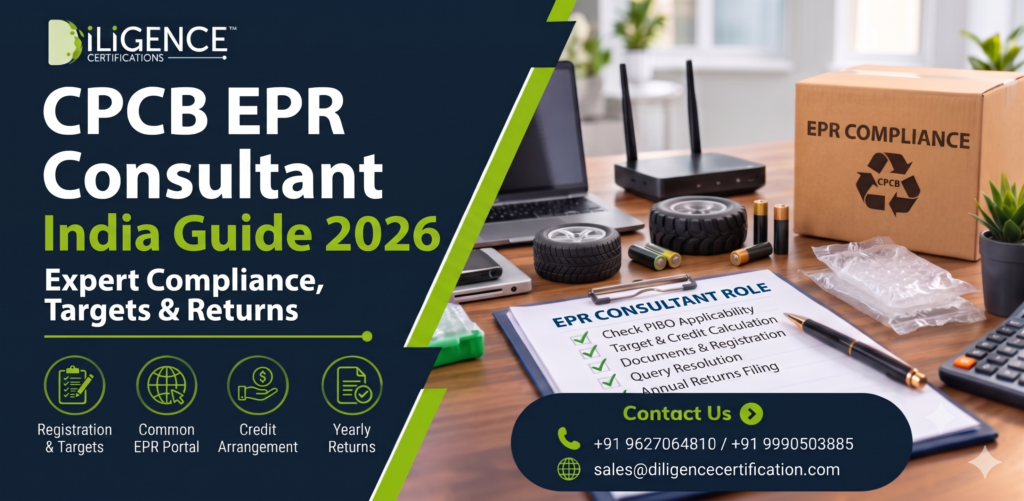
A CPCB EPR consultant helps producers, importers and brand owners register on CPCB’s portal, calculate their EPR targets, arrange EPR credits, and file annual returns correctly. They act as your compliance partner between your business and the pollution control authorities, so your records stay accurate and on time.
In practice the work covers:
- Checking whether your business is a PIBO and under which waste stream
- Preparing documents and filling the portal forms
- Working out targets from your sales or import data
- Replying to queries raised by CPCB
- Filing annual returns and keeping records ready for audit
You can read how this works for registrations in our CPCB EPR registration service guide.
Who Needs EPR Registration in India?
EPR applies to three groups:
- Producers, who make the product or packaging
- Importers, who bring products or packaged goods into India
- Brand owners, who sell under their own brand, even if someone else manufactures for them
CPCB runs EPR for several waste streams: plastic packaging, e-waste, batteries, waste tyres and used oil. Each stream has its own rules, so a business dealing in more than one may need to register for each.
E-commerce sellers and D2C brands get caught here often. If you ship products in plastic packaging, you are probably a brand owner for that packaging, even if you never touch a factory.
What Changed in 2026 That Every PIBO Should Know
Two changes matter now. First the portal. CPCB has moved its portals for plastic, e-waste, battery, tyre. Used oil to a Common EPR Portal. You log in once with a Common EPR ID (CEPR ID). Many guides online still point to the plastic portal, which causes confusion. Always start from the CPCB’s website and check that your data has carried across correctly.
Second, the plastic rules. The Plastic Waste Management (Amendment) Rules, 2026 were notified on 31 March 2026. In terms the rules bring in recycled-content targets for packaging labels requirements for recycled content reuse and stronger audits. Importantly recycled plastic used in imported packaging does not count toward the obligation. The exact targets increase each year. Vary by category so be sure to check the official notification to confirm the percentages before planning any action. I hope this helps.
A consultant who still quotes 2022 rules is already, behind.
How the CPCB EPR Registration Process Works
The steps are simple to list, but each one needs care:
- Confirm your status and waste stream. Are you a producer, importer or brand owner? Is it plastic, e-waste, battery, tyre or used oil?
- Create or link your Common EPR ID. Existing users should link old credentials rather than start again.
- Collect your documents. Details of the company, GST, product and packaging data, and import records if you import.
- Fill and submit the application for the right category.
- Answer CPCB queries. This is where wrong or missing data costs time.
- Receive registration and move on to targets, credits and returns.
Timelines depend on how complete your data is and how quickly queries are answered, so be careful with any consultant who promises a fixed number of days.
Documents You Should Keep Ready
Documents differ by stream, but most businesses should keep these on hand:
- Company registration proof and GST details
- Import Export Code, for importers
- Product and packaging details with weights
- Sales or import quantities for the last few years
- Authorised signatory details
- Proof of agreements with recyclers or processors, where needed
Neat records help you more than any consultant can. If your own numbers are scattered, start there.
7 Smart Checks Before You Hire a CPCB EPR Consultant
Anyone can say “we are experts.” These seven questions show who actually is.
1. Do they explain the changes for 2026 in the language?
I need to ask what has changed this year. A good consultant must talk about the Common EPR Portal and the 2026 plastic amendments without reading from a script.
2. How will my targets be calculated?
The honest answer begins with my data: what I sold or imported and which category. If the reply is vague I should be careful.
3. Who handles CPCB queries after submission? Queries are normal. I should ask whether the same team answers them or whether I am on my own after registration.
4. Do they support returns and EPR credits?
Registration is the step. Returns, credits and record-keeping happen every year. A consultant who disappears after the certificate leaves me exposed.
5. Will they tell me when I am wrong?
If my category or numbers do not look right a good consultant says so. A consultant who agrees with everything may hide risk.
6. Do they avoid guarantees?
No consultant controls government decisions. I should be wary of promises such, as “approval guaranteed” or “no questions will be raised.”
7. Are fees and scope written down?
I should get the scope in writing: which streams, which filings, which years. Surprises later usually come from scope.
Common Mistakes That Cause Trouble
- Registering in the wrong category and finding out at return time
- Using old portal links or guides from before 2026
- Ignoring EPR until a notice or a shipment problem arrives
- Mixing up brand owner and producer duties
- Not matching sales data with GST and import records
- Treating registration as a one-time task
Under the rules, non-compliance can lead to action, including environmental compensation, and in some cases goods may be held at port. The cheapest fix is almost always early and accurate filing.
Why Choose Diligence Certifications for CPCB EPR consultant India Certification?
We started as a certification and compliance consultancy, and EPR is one of the areas where small details matter most. At Diligence Certifications, we try to work the way a good consultant should:
- We start with your data. We check your PIBO status, category and records before filing anything.
- We explain in simple words. You should know what is being filed in your name.
- We keep up with changes. That includes the Common EPR Portal and the 2026 plastic amendments.
- We support you after registration. Targets, returns and CPCB queries are part of the job.
- We do not make guarantees. Approval depends on CPCB and on the quality of your data. We can only promise careful work and honest advice.
If you are unsure where you stand, a short call is usually enough to tell you which waste streams apply to you.
Conclusion
Hiring a CPCB EPR consultant India businesses can depend on is less about the lowest quote and more about clear answers, clean data and support that lasts beyond the certificate. Ask the seven questions above, check the latest rules on CPCB’s official EPR portal, and keep your own records in order.
If you would like a straight opinion on which EPR streams apply to your business, speak to our team at Diligence Certifications. A short conversation now can save you weeks of rework later.
Frequently Asked Questions
1. What is a CPCB EPR consultant?
A CPCB EPR consultant is a compliance professional who helps producers, importers and brand owners register on CPCB’s portal, set EPR targets, arrange credits and file returns correctly.
2. Is EPR registration mandatory for e-commerce sellers?
It can be. If you place products or plastic packaging on the Indian market as a brand owner, producer or importer, you may need to register. Check your exact role.
3. How do I choose the right EPR consultant in India?
Ask how they calculate targets, who answers CPCB queries, and whether they support annual returns. Avoid anyone who guarantees approval.
4. What is the Common EPR ID?
It is a single ID issued through CPCB’s Common EPR Portal that lets you access plastic, e-waste, battery, tyre and used-oil EPR modules through one login.
5. Is EPR a one-time registration?
No. After registration you have to meet targets and file returns every year.