BIS Certification
 CDSCO
CDSCO
 PESO
PESO
 CPCB
CPCB
 LMPC
LMPC
 WPC Approval
 Global Approvals
 TEC
TEC
 ARAI
ARAI
 BEE
BEE
 ISO Certification
 DGCA Certification
 NOC For Steel
 APEDA Registration























 Business Registration
 FSSAI Mark Certification












 (32).jpg)
 Legal Services
 Trademark Registration
 Copyright Registration
 Patent Registration
 By
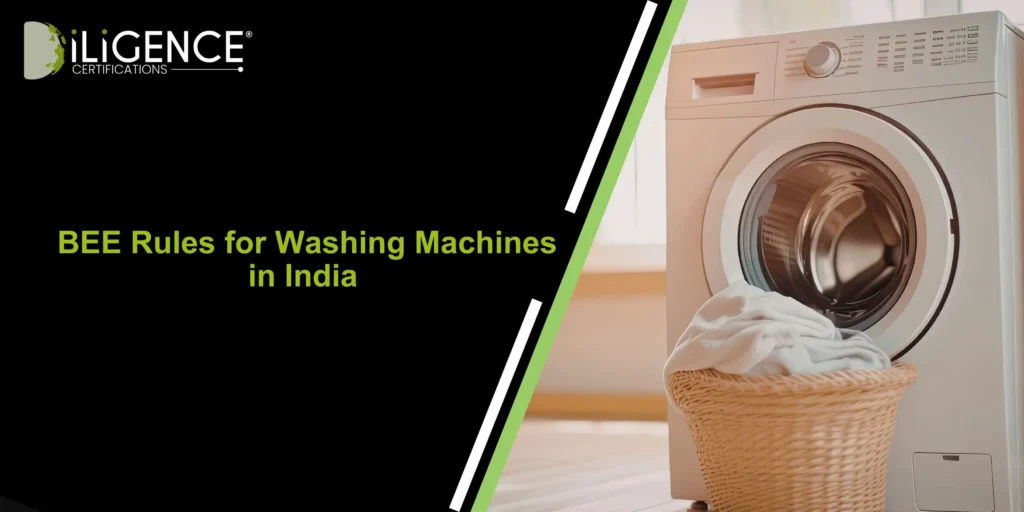
By - Product Classification Under Indian Compliance System BEE Rules for Washing Machines are classified under regulated electrical appliances requiring mandatory compliance before sale or import.
- Energy Efficiency & Labeling Compliance BEE star labeling is compulsory for most washing machine categories under Appliance Labeling Regulations.
- Safety Standard Requirements Compliance with IS 302-2-7 ensures electrical safety, overheating protection, and operational reliability.
- Import & Manufacturing Approval Dependency No import clearance or manufacturing approval is granted without certification under EC Act and applicable notifications.
- Market Access & Consumer Trust Certified products gain faster market approval, better retail acceptance, and improved brand credibility.
Introduction | BEE Rules for Washing Machines
BEE Rules for Washing Machines in India fall under regulated electrical appliances due to safety, energy efficiency, and labeling compliance requirements. For manufacturers, importers, and exporters, compliance is not optional; it is mandatory under multiple regulatory frameworks including the Electricity Act, Bureau of Energy Efficiency (BEE) standards, and Indian Standard specifications.
The market for washing machines (semi-automatic, top load, and front load) is growing rapidly, but regulatory compliance remains a key barrier for market entry. Any non-compliant product can face customs rejection, penalties, or market recall.
What is BEE Rules for Washing Machines?
BEE Rules for Washing Machines certification refers to mandatory regulatory approval required under Indian electrical safety laws, energy efficiency regulations, and BIS/ISI standards.
It ensures that washing machines meet:
- Electrical safety standards
- Energy consumption limits
- Performance benchmarks
- Labeling transparency requirements
This certification is governed under the Electricity Act, 2001 and enforced through notified standards and BEE labeling regulations.
Key purpose:
- Prevent unsafe electrical appliances in the market
- Reduce energy consumption at national level
- Ensure standardized product quality
Why BEE Rules for Washing Machines is Important
BEE Rules for Washing Machines certification is not optional for business operations in India. It is legally required for manufacturing, importing, and selling electrical appliances.
Non-compliance leads to:
- Customs seizure of imported goods
- Heavy penalties under EC Act provisions
- Market recall orders
- BIS registration cancellation
- Loss of distribution channels
For exporters, missing compliance results in shipment rejection and financial loss.
Importance & Benefits on BEE Rules for Washing Machines
| Benefit | Explanation | Business Impact |
| Legal Market Access | Ensures compliance with EC Act & BIS norms | Enables product sales in India |
| Energy Efficiency Approval | Meets BEE labeling requirements | Reduces energy consumption rating risk |
| Consumer Trust | Certified products appear safer and reliable | Improves brand reputation |
| Customs Clearance | Required for import clearance | Prevents shipment delays |
| Market Competitiveness | Compliance improves product acceptance | Higher retail placement chances |
Regulatory Framework Applicable to Washing Machines
Washing machines (Semi-Automatic, Top Load, and Front Load) fall under mandatory electrical safety, energy efficiency, and labeling compliance regulations in India. The applicable legal framework is structured as follows:
1. Electricity Act, 2001 - Notified Provisions
| Short Title Clause | Notification / Regulation / Amendment | Date | Reference IS / IEC Standards |
| 14(a) | S.O. 4675(E) | 26th October, 2023 | Applicable for Washing Machines |
| 14(b) | S.O. 4674(E) | 26th October, 2023 | Applicable for Washing Machines |
2. Safety Standard Compliance
| Clause | Standard Reference | Applicability |
| 14(d) | IS 302-2-7 (as amended from time to time) | Electrical safety requirements for washing machines |
3. Energy Efficiency & Labeling Regulations
| Regulation | Notification No. | Date | Effective From |
| Appliance Labeling and Compliance Regulations, 2026 | No. 5506/BEE/S&L/AL/2025-26 | 26th December, 2025 | 1st January, 2026 |
Step-by-Step Process
1. Product Classification
Identify washing machine category (semi-automatic, top load, front load) and applicable standard.
2. Standard Mapping
Match product with IS/IEC standards:
- IS 302-2-7 (safety compliance)
- BEE labeling requirements
3. Application Submission
Submit application under relevant authority with product details and technical specifications.
4. Testing in NABL Lab
Product testing for safety, energy consumption, and performance.
5. Documentation Review
Technical file evaluation including:
- Product design
- Electrical safety reports
- Energy performance data
6. Approval & Registration
Once approved, certification and labeling authorization is issued.
Challenges Without a Consultant for BEE Rules for Washing Machines
Businesses dealing with washing machine certification in India often face practical and compliance-related difficulties when handling the process independently. Key challenges include:
- Incorrect Regulatory Interpretation Misinterpretation of regulations as per the Electricity Act, 2001 and its notification (14(a), 14(b), 14(d)).
- Improper Product Classification Wrong classification of products between semi-automatic, top loading, and front load models.
- Inadequate Documentation Technical documents, test reports, and declarations not provided can result in rejection or delay in the application process.
- Failure in Testing in NABL Lab Products fail to pass safety testing standards (IS 302-2-7).
- Delay in BEE Labeling Application of incorrect energy rating data and labeling procedure leads to delays in getting the label approved under Appliance Labeling Regulations, 2026.
- Multiple Revisions and Resubmission Initial mistakes cause revision, resubmissions, and delays in the application process.
- Customs Clearances Problem Non-certified imported washing machine can face detention/rejection in the port area.
- Poor Communication with the Authority Difficulty in coordinating with the regulatory authority such as BIS, BEE, and testing laboratories.
- Constant Change in Regulatory Requirements Difficulties in meeting changes in regulations/notifications as per amendments in laws.
- Increased Cost and Delay The whole process will be delayed and become costly and cumbersome.
Why Choose Diligence Certification for BEE Rules for Washing Machines
Diligence Certification provides end-to-end compliance support for washing machine certification in India, ensuring accurate documentation, faster approvals, and complete alignment with BIS, BEE, and EC Act requirements.
Key Points:
- Expertise in Indian Compliance Framework Strong understanding of EC Act provisions, BIS standards, and BEE labeling regulations.
- End-to-End Certification Support Covers application filing, documentation, testing coordination, and final approval.
- Accurate Documentation Handling Eliminates errors in technical files, reducing chances of rejection.
- Faster Approval Process Streamlined workflow ensures quicker certification and market entry.
- Coordination with Authorities Direct handling of BIS, BEE, and NABL lab interactions.
- Reduced Compliance Risk Minimizes chances of penalties, delays, and product rejection.
- Support for Importers & Manufacturers Tailored solutions for both domestic and international businesses.
- Up-to-Date Regulatory Knowledge Keep your business aligned with latest amendments and notifications.
- Cost and Time Efficiency Optimized process reduces unnecessary expenses and delays.
- Reliable Post-Certification Support Assistance in renewals, updates, and ongoing compliance requirements.
Conclusion
BEE Rules for Washing Machines under Indian regulations is mandatory for legal market entry. With evolving standards like Appliance Labeling and Compliance Regulations, 2026, businesses must ensure full alignment with safety and energy efficiency requirements.
Proper certification not only ensures legal compliance but also improves market acceptance, reduces operational risks, and supports long-term business stability in the Indian appliance sector.
Frequently Asked Questions (FAQs)
Is certification mandatory for washing machines in India?
Yes, it is mandatory under EC Act and BEE regulations.
Which standards apply to washing machines?
IS 302-2-7 and applicable IEC standards.
Is BEE labeling compulsory?
Yes, for energy efficiency classification and labeling.
Who issues certification?
BEE and BIS under Indian regulatory framework.
How long does approval take?
Typically 3-8 weeks depending on documentation.
Can imported washing machines be sold without certification?
No, customs clearance requires compliance approval.
What documents are required?
Technical file, test reports, product specifications, and application forms.
What happens if a product fails testing?
Re-testing or modification is required before approval.
Is certification valid permanently?
No, it requires renewal or updates based on regulation changes.
Can consultants help in approval?
Yes, they reduce errors, delays, and rejection risks.