



 BIS Certification
 CDSCO
CDSCO
 CPCB
CPCB
 LMPC
LMPC
 WPC Approval
 Global Approvals
 TEC
TEC
 ARAI
ARAI
 BEE
BEE
 ISO Certification
 DGCA Certification
 NOC For Steel
 APEDA Registration










 Business Registration
 FSSAI Mark Certification










 Legal Services
 Trademark Registration
 Copyright Registration
 Patent Registration
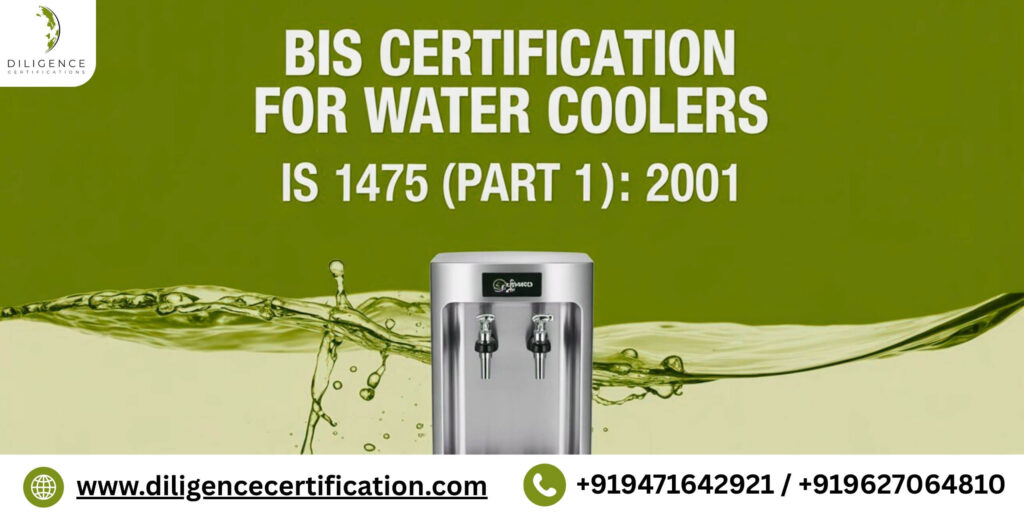
- IS 1475 (Part 1): 2001 ensures safety standards for Water coolers, crucial for home and office use.
- A proper BIS Certification and ISI Mark on water coolers guarantees hygienic drinking water.
- Real‑life client stories underscore the importance of Diligence Certification when selecting Self‑Contained Drinking Water Cooler.
- Comparing top brands highlights maintenance, energy efficiency, and long‑term savings benefits.
Introduction
When I walked into a mid‑sized software firm in Noida last month, the reaction to their water cooler was universal disappointment. Employees complained it dispensed tepid, questionable tasting water at all hours. The office manager, Priya, admitted they had never checked for certification or purity standards. Once we switched to a trusted BIS‑certified water cooler, matched to IS 1475 (Part 1): 2001 norms, the difference was astounding. Instant chills, consistent quality, and no more complaints.
That’s when I realised: many Indian offices and homes still compromise on water quality due to lack of clarity on certification and diligence. In this guide, I’ll walk you through everything—from why water coolers matter, to BIS and diligence certification, selection pointers, installation, and ongoing compliance.
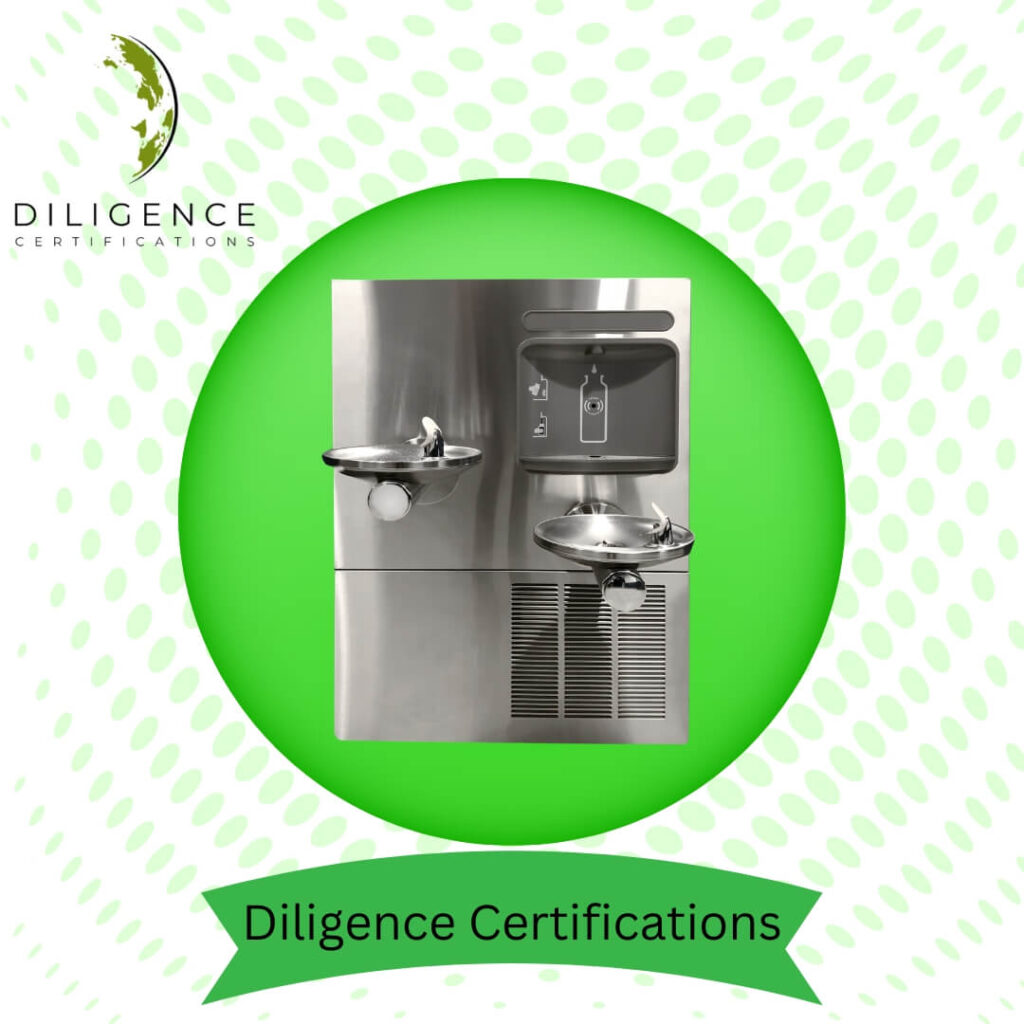
BIS Certification for Self-Contained Drinking Water Coolers – Safety, Performance & Legal Mandates
An independent extraction well municipal drinking water cooler is a functional and effective device for providing pure and safe drinking water in various environments: household settings, offices, and public institutions. These municipal drinking water coolers have kept pace with the growing consumer demand for clean potable water, enhanced through advanced features to ensure quality, energy efficiency, and performance.
To assist and regulate the process of manufacturing, testing, and the use of such cooling units, the Indian Standard IS 1475 (Part 1): 2001 was accepted for consideration. The standard lays down a complete specification for assessing the performance, safety, and ecological aspects of the units. To ensure that uniform standards are maintained, the Government of India proceeded further by binding them to compliance through the BIS Certification for Self-Contained Drinking Water Coolers (Quality Control) Order, 2023.
With these obligations enforced by the BIS Certification for Self-Contained Drinking Water Cooler (Quality Control) Order-2023, manufacturers must comply with these standards. The Order entails placing a Bureau of Indian Standards (BIS) certification mark on all drinking water coolers demonstrating compliance with IS 1475 (Part 1):2001. In addition, the suppliers will be subject to regular inspection and testing for continued certification. Anything less would impose penalties on them, up to and including withdrawal of certification, recall of products, and litigation, thus securing a stringent enforcement mechanism across the industry.
Understanding Water Coolers: Why Standards Matter
IS 1475 (Part 1): 2001
This Indian Standard (IS) outlines electrical and mechanical safety criteria for water coolers. From cord insulation to thermostat calibration, IS 1475 ensures no electric shock risk or mechanical failure. Most importantly, it mandates a Self‑Contained Drinking Water Cooler to be leak‑safe and user‑friendly—a deal breaker if you’re avoiding water‑logging in shared spaces.
BIS Certification & ISI Mark
BIS (Bureau of Indian Standards) Certification, symbolized by the ISI Mark, means third‑party testing and regular factory audits. It assures end‑users that:
- The cooler uses food‑grade internal pipes.
- Cooling units maintain <10 CFU/mL bacterial count (tested post‑cooling).
- Electrical components are CE‑verified.
In simple words: if a model lacks BIS or ISI, it might be cutting corners.
What is IS 1475 (Part 1): 2001?
Requirements BIS Certification for Self-Contained Drinking Water Cooler IS 1475 (Part 1): 2001 covers:
Energy Efficiency: Benchmark in terms of energy consumption at optimal level is defined by the standard for these coolers in order to fulfill the sustainability and operational cost reduction needs.
Performance: Evaluating the performance characteristics- cooling capacity, water flow rate, and operability as a whole, to meet the consumer needs in these aspects.
Safety: The self-contained drinking water coolers should also comply with the prescribed safety norms ensuring that they can be relied upon without the hazard when in use.
Key Highlights of the Quality Control Order (QCO) 2023
All manufacturers are mandated by the Quality Control Order of the Ministry of Commerce and Industry to comply with IS 1475 (Part 1): 2001. They need to obtain BIS certification. Here are some salient points:
Compliance Deadlines
Large Enterprises: Six months from the date of notification in the Official Gazette.
Small Enterprises: Nine months from the date of notification.
Micro Enterprises: Twelve months from the date of notification.
The phased timeline is given so that smaller enterprises may take time to re-orient their manufacturing processes to be conformant with standards.
Possible Tests in a Day
In accordance with IS 1475 : 2001 (Part 1), the following tests can be performed on the product by the manufacturer:
- Cooling Efficiency Test: Assess the duration it takes to cool a given volume of water.
- Energy Consumption Test: Measurement of overall electricity consumption during a specified time of operation.
- Flow Rate Test: Measure the amount of water the dispenser can discharge within one minute.
- Temperature Retention Test: Test the constant water temperature in the cooler.
- Material Durability Inspection: After using the parts constitutively, they should be checked for their wearing and tearing.
- Leakage Test: No leakage of either water or coolant should occur during operation.
- Electrical safety test: Assessment of insulation, grounding, and general electrical safety.
- Noise Level Test: Test measured operational noise to see if it is within limits.
- Pressure Testing: This would be testing the water system to withstand high pressure.
- Microbial Testing: Free from contamination of the water.
| Key Highlights | Details |
| Objective | Ensures compliance with IS 1475 (Part 1): 2001 standards for quality, performance, and safety. |
| Mandatory Requirement | Certification is mandatory under the Self-Contained Drinking Water Cooler (Quality Control) Order, 2023. |
| Testing Parameters | Evaluates energy efficiency, cooling capacity, material safety, and durability. |
| BIS Certification Mark | Products with the BIS mark signify adherence to national standards for reliability and safety. |
| Manufacturer Benefits | Enhances brand reputation, facilitates market entry, and boosts consumer trust. |
| Compliance Process | Includes product testing, factory inspections, and periodic audits to maintain certification. |
| Regulatory Authority | Overseen by the Bureau of Indian Standards (BIS), India’s national standards body. |
| Legal Compliance | Non-certified products are prohibited from sale, ensuring market regulation and consumer protection. |
Documents Required
- Product Features with Specification
- Details on Manufacturing Process
- Quality control measures
- Details about the Factory Layout and Testing Equipment
- Test Report from BIS Recognized laboratory
BIS Certification Process for Water Coolers

Step 1: Verify Product Standard
Confirm your product aligns with IS 1475 (Part 1): 2001, covering electrical, storage-type water coolers with cooling, safety, and ISI marking compliance.
Step 2: Prepare Documents
Gather:
- Company & factory registrations
- Product drawings & test data
- Quality control setup
- NABL test reports as per standard
Step 3: Apply on BIS Portal
Register on manakonline.in, submit Form VI, upload documents, select a lab, and pay ₹5,000 application fee.
Step 4: Lab Testing of Samples
Send product to BIS-recognised NABL lab for:
- Cooling & energy tests
- Material safety
- Microbial checks (for self-contained units)
Step 5: BIS Factory Inspection
BIS inspects:
- Production process & equipment
- QC system & documentation
- ISI marking and raw material traceability
Step 6: Pay Fees & Get Licence
After approval:
- Pay BIS licence + ISI marking fee
- Receive CM/L number and official certification
Step 7: Start ISI Marked Production
Begin manufacturing with proper ISI logo, IS number, and CM/L on each product.
Step 8: Ongoing BIS Surveillance
Expect:
- Two surprise inspections yearly
- Market sample re-testing
- Licence suspension if non-compliance is found
How Diligence Certifications Can Help
Diligence Certifications provides the entire process right from obtaining BIS certification for independent drinking water chillers, but as rules and regulations are referred to, the entire process is smoothing for a manufacturer, importer, or seller.
Steps to Achieve BIS Certification
- Application Submission: Submission of the relevant documents and application to BIS.
- Product Testing: Subject the product for comprehensive testing for compliance with the requirements of IS 1475 (Part 1): 2001.
- Factory Inspection: Visit of BIS officials to the manufacturing unit for verifying quality control measures.
- License Grant: On successful inspection and testing, BIS grants the license for the ISI Mark.
Conclusion
Certification under BIS is mandatory for drinking water coolers to comply with the enhanced quality standards in IS 1475 (Part 1): 2001 and Self-Contained Drinking Water Cooler (Quality Control) Order, 2023 (QCO 2023). The products are now required to comply with this standard to ensure the highest quality, performance, and energy efficiency of the equipment. Such adherence will also protect the health and safety of users while being the basis for sustainable practices in manufacturing since all aspects of energy conservation and environmental responsibility will have evolved.
One of the most prominent points of compliance is BIS Certification, which has become the official mark of quality and reliability. This certification denotes that the apparatus has been extensively tested for performance criteria set out in IS 1475(Part 1):2001. For the manufacturers, this becomes one of the important trust-building pillars with the consumer, as it bids adieu to a long way of assurance that its products conform to the national standards of safety, durability, and performance. The acceptance of the Bureau of Indian Standards mark as a symbol for the assurance of the quality and reliability of drinking water coolers has grown immensely among consumers.
Apart from BIS certification, Diligence Certifications play an important role in assisting manufacturers in navigating the compliance process. These certifications assist businesses in implementing product design, manufacturing, and quality control best practices, thus fulfilling the standards. By ensuring that their products meet or exceed regulation, the manufacturers can enjoy a headway in market competition. On top of this, Diligence Certifications will reassure the consumers about their commitment to excellence and continuous improvement.
FAQs
What documents are needed for BIS certification of water coolers?
You require GST/MSME certificate, factory layout, quality manual, technical drawings, NABL test reports (IS 1475 compliance), sample units, and pictures of production.
How long does it take for BIS certification?
Usually 5–6 weeks depending on testing and inspections.
What is the validity of BIS certification?
A BIS licence is mainly valid for 2 years, with surveillance audits every 6 months.
What does IS 1475 (Part 1): 2001 consists of?
It specifies design, materials, hygiene, insulation, electrical safety and labelling requirements of the cooler.
Do imported water cooler also require BIS certification?
Yes. Importers also require a BIS certification for compliance to IS 1475 and as well to acquire a BIS licence.
Can a manufacturer self-certify water cooler?
No. Self-certification is not legal. Only BIS testing and approval are legal and valid.
Why should the plastic be BPA free in BIS certification?
Because the water tanks must be food-grade and also be BPA-free, so they are safe to drink water from.
How can I check if a water cooler has a BIS certification?
Check the BIS licence number on the BIS portal which will show validity of the licence and what models it applies too.
Who is a diligence certification consultant?
A consultant who handles documents, lab tests, and BIS coordination to make certification hassle-free.
What happens if I sell non-certified water coolers?
They may be seized, fined, or banned from sale in India.