


 BIS Certification
 CDSCO
CDSCO
 PESO
PESO
 CPCB
CPCB
 LMPC
LMPC
 WPC Approval
 Global Approvals
 TEC
TEC
 ARAI
ARAI
 BEE
BEE
 ISO Certification
 DGCA Certification
 NOC For Steel
 APEDA Registration

















 Business Registration
 FSSAI Mark Certification












 (32).jpg)
 Legal Services
 Trademark Registration
 Copyright Registration
 Patent Registration
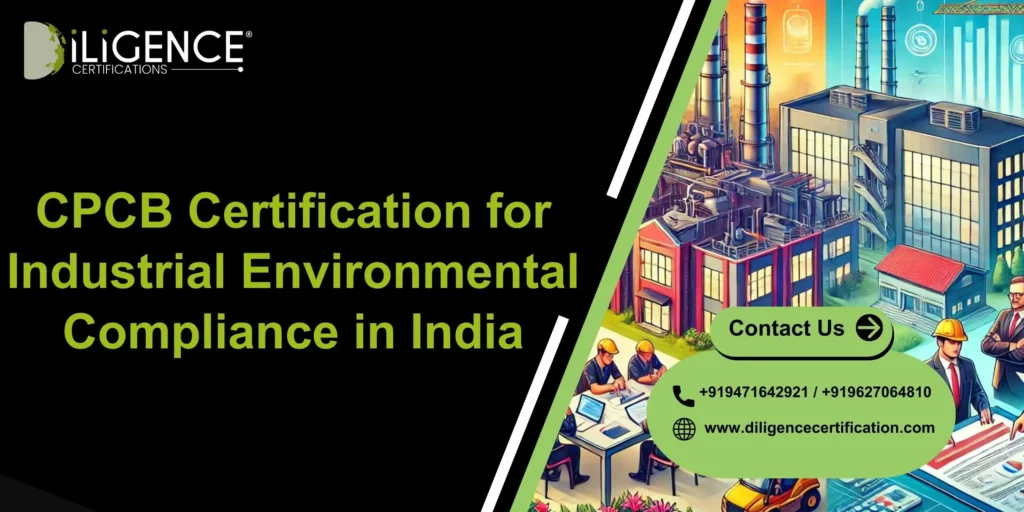
- In India, the industries are made to adhere to environmental laws and CPCB Certification for Industrial regulations through the enforcement of these rules and regulations.
- All this leads to the avoidance of legal notices, fines, and shutdowns which are the risks that the industries have to face if they do not comply.
- Moreover, it also leads to not only pollution control but also responsible waste management.
- Trust between the regulator and the industry is built up while regulatory goodwill for the industry is increased.
- When the industry is given the green light, the result is sustainable operations and the company’s ability to grow in the long run.

Introduction
In India, industrial growth should be accompanied by environmental protection. Industries see production efficiency, expansion and profit making as their most important aspects, but at the same time, the adherence to environmental regulations is a must. Central Pollution Control Board
If the manufacturing units and industrial plants, in India, do not take the CPCB Certification for Industrial Environmental Compliance into account, they might have to face inspections, notices, shutdown orders, and huge fines.
This article presents the reason, the way, and the advantages of CPCB Certification for Industrial making it easier for industries to grasp how the environmental compliance contributes to their staying power and being lawful in India.
What is CPCB Certification for Industrial Environmental Compliance in India?
The CPCB (Central Pollution Control Board) Certification is a governmental endorsement that is given based on various environmental laws among which is the Environment (Protection) Act, 1986.
This certification is required for those industries that produce pollutants in the form of air emissions, water discharge, and hazardous waste, plastic waste, and electronic waste.
CPCB Certification guarantees:
- Lawful adherence to the environmental standards set by the legislation
- Proper execution of the pollution control measures
- Safe and compliant waste management practices
- Conservation of natural resources
- Legitimate operation of the industries
On the other hand, industries without a CPCB Certification for Industrial can be legally sued, given closure notices, or have their operations restricted.
Why CPCB Certification is Important for Industries in India
Environmental compliance with the law is compulsory for industries and their operations. Not getting the CPCB Certification for Industrialcan lead to:
- Legal warnings and fines from the government
- Temporary shut down or total stop of factory units
- Non-approval of applications for consent
- Harm to brand image and loss of investor trust
- Slower operations and money wastage
CPCB Certification for Industrial Environmental Compliance in India indicates that a company is dedicated to legal, ethical, and sustainable practices.
Industries That Require CPCB Certification
CPCB Certification is mandatory in a variety of sectors such as:
- Manufacturing and processing plants
- Chemical and pharmacology industries
- Textile, dyeing, and printing processes
- Plastics, e-waste, and battery making
- Food preservation and packaging
- Power generation and infrastructure works
CPCB compliance is necessary for any sector that produces emissions, effluents, or regulated waste.
Benefits of CPCB Certification
| Importance | Benefits |
| Legal compliance | Evades fines, notifications, and business stoppages |
| Regulatory approval | Facilitates smooth approvals from pollution control authorities |
| Environmental protection | Pollution and ecological impact reduction |
| Brand credibility | Professionalism perception increase among stakeholders |
| Sustainable growth | Long-term industrial operations support |
Step-by-Step CPCB Certification Process
Step 1: Environmental Assessment
Assess the extent of pollution, the amount of waste produced, and the effect of industrial operations on the environment.
Step 2: Documentation Preparation
Compose environmental reports, provide technical details, and create compliance documents.
Step 3: Application Submission
Post the application via the portals of either CPCB or the respective State Pollution Control Board.
Step 4: Scrutiny & Inspection
The authorities examine the papers and can also visit the site.
Step 5: Grant of CPCB Certification
CPCB Certification is granted after the process of verification has been successfully completed.
Step 6: Renewal & Ongoing Compliance
Compliance is sustained through monitoring, reporting, and renewals done on time.
Documents Required for CPCB Certification
- Certificate of Incorporation
- PAN and GST Registration
- Site layout together with fabrication flow details
- Environmental management plan
- Consent to Establish / Operate documents
- Authorization letters (if applicable)
Timeline, Validity & Renewal
- Processing Time: 30–60 working days
- Validity: Varies by industry category
- Renewal: Required before expiry
- Amendments: Mandatory for changes in process, capacity, or location
Common Environmental Compliance Requirements
- Measures for the control of air and water pollution
- Systems for the disposal and treatment of waste
- Constantly checking the environment
- Submitting reports of compliance to the authorities
- Proper management of dangerous materials
Non-compliance might lead to fines, closure orders, or the cancellation of approvals.
Conclusion
CPCB Certification for Industrial Environmental Compliance in India is not just a government formality – it is a promise to operate in an environmentally friendly and socially responsible manner.
The industries that consider the CPCB Certification for Industrial as their priority will not only save themselves from legal problems but also develop good relationships with the regulators and will be able to contribute to environmental conservation positively.
Through compliance, industries will be able to conduct their operations with confidence, grow in a proper way, and still have a good reputation in the ever-changing regulatory environment in India.
Frequently Asked for Questions
What exactly is CPCB Certification?
CPCB Certification is a more than mere official sanction; it is a guarantee to the industrial sector that they meet the environmental demands of the Indian government.
Are the industries over which CPCB Certification is granted compulsory?
Certainly, CPCB is not overlooking the industries that directly or indirectly contribute to pollution or waste generation.
Which ones are the industries that the CPCB Certification covers?
industrial sectors like textiles, e-waste, and food processing among others.
Who is responsible for issuing CPCB Certification in India?
The Central Pollution Control Board along with the State Pollution Control Boards.
What if the CPCB Certification is not acquired?
In that case, the industrial units might become liable to pay fines, receive legal notices, or face shutdowns and even cancellation of their operations.
What is the duration of CPCB Certification?
Usually, it takes 30 to 60 working days to get the certification done.
What documents need to be submitted for CPCB Certification?
The required documents include the certificate of incorporation, an environmental plan, a site layout, and the consent obtained.
What is the period of CPCB Certification validity?
The validity period differs according to the type of industry and the pollution category.
Is it necessary to renew CPCB Certification?
Yes, it is necessary to renew the certification before the expiry date to avoid incurring penalties.
Can a CPCB Certification be a reason for business growth?
Yes, certification supports smooth operations, provides regulatory trust, and is a sign of sustainable expansion.