BIS Certification
 CDSCO
CDSCO
 PESO
PESO
 CPCB
CPCB
 LMPC
LMPC
 WPC Approval
 Global Approvals
 TEC
TEC
 ARAI
ARAI
 BEE
BEE
 ISO Certification
 DGCA Certification
 NOC For Steel
 APEDA Registration























 Business Registration
 FSSAI Mark Certification












 (32).jpg)
 Legal Services
 Trademark Registration
 Copyright Registration
 Patent Registration
 By
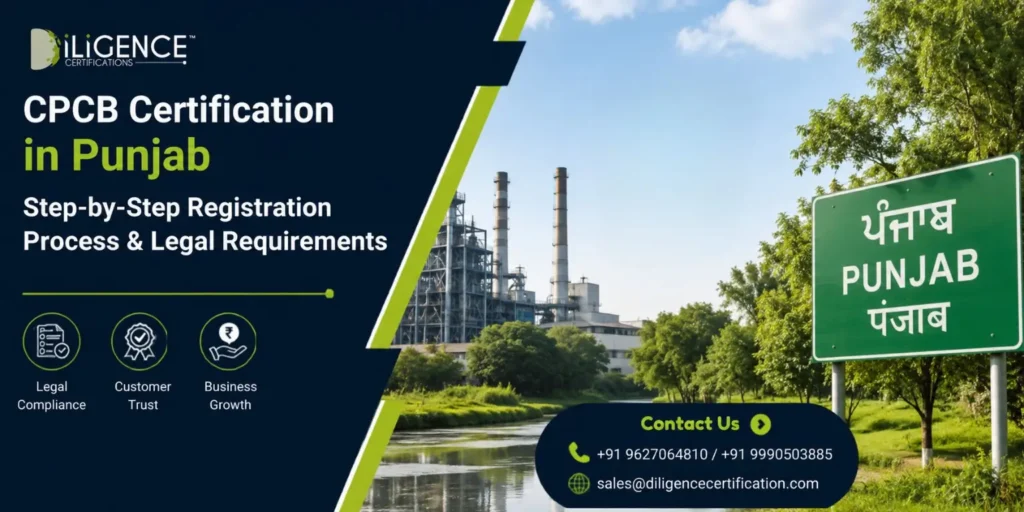
By - CPCB Certification in Punjab ensures that industries follow pollution norms and controls prior to conducting any business activities.
- Approvals such as Consent to Establish (CTE), Consent to Operate (CTO), and Hazardous Waste Authorization may be required by industries depending upon their activities.
- Diligence Certifications provides expert assistance for documentation, application filing, and environmental compliance management.
Introduction
The Punjab State is among the major industrial States of India that boasts of its manufacturing and agriculture based industries, textiles, food processing, medicines, and engineering industries. With the increasing growth of industries in the State, there is a pressing need for compliance in environmental matters in order to run business in the State successfully.
A couple of years back, a manufacturing company that sought to expand its business operations in Punjab consulted experts in compliance because of delays in its setting up of a new production line. The company had purchased all the necessary machinery and infrastructures but had failed to attain the pollution control approvals.
This is something that most industries face because of their ignorance of the importance of the environmental approval process. Getting the CPCB Certification in Punjab will help you overcome such problems.
The CPCB certification will ensure that your industries comply with the pollution prevention standards with regard to air emission, effluents, hazardous wastes, and environmental management. Depending on the industry and pollution category, you need to get the approvals from Punjab Pollution Control Board and other authorities.
With proper guidance, industries can complete the certification process smoothly by preparing accurate documents, selecting the correct approval category, and following compliance requirements.
What is CPCB Certification?
Certification CPCB is known as those certificates which need to be obtained by different industries in order to show that they comply with the environment protection norms set up by the Central Pollution Control Board.
The Central Pollution Control Board functions on the basis of the Ministry of Environment, Forest and Climate Change and tries to control pollution, set environment norms, and monitor industrial activities in India.
Industries of Punjab, which produce pollution in any form during their manufacturing processes, need to get relevant environment clearance prior to operation.
CPCB-related approvals generally include:
- Consent to Establish (CTE) before setting up an industrial unit
- Consent to Operate (CTO) before starting commercial production
- Hazardous Waste Authorization for industries handling hazardous materials
These approvals confirm that an industry has proper pollution control systems and follows environmental regulations.
Main Objectives of CPCB Certification in Punjab
The primary objective of CPCB Certification in Punjab is to ensure industrial development takes place without causing unacceptable harm to the environment.
The major objectives include:
1. Control Industrial Pollution
Different pollutants emanate from industries during their manufacturing operations. CPCB compliance is important in ensuring that air emissions, wastewater, and industrial waste are properly treated.
2. Ensure Legal Compliance
Environmental approvals enable companies to conduct themselves in accordance with government regulations and thereby avoid penalties and restrictions.
3. Promote Sustainable Industrial Growth
The CPCB certificate will assist industries in using technologies which are environmentally friendly.
4. Protect Natural Resources
Effective pollution control measures assist in protecting the natural resources within Punjab state.
5. Improve Business Credibility
Companies having environmental approvals have credibility both with customers and government agencies.
Types of CPCB Certification in Punjab
Environmental approval requirements for industries could vary based on industry activities, production capacity, and pollution levels.
There are three primary approvals, which include:
- Consent to Establish (CTE)
- Consent to Operate (CTO)
- Hazardous Waste Authorization
Consent to Establish (CTE)
Explanation
Consent to Establish (CTE) is a compulsory clearance which must be obtained before establishing a new industrial unit or expansion of the existing one.
This ensures that the proposed project site, production process, and pollution control facilities comply with environmental norms before the actual construction/installation work starts.
CTE must be obtained by industries before doing any activities in establishing the plant.
Applicable Industries
CTE is generally required for:
- Manufacturing units
- Chemical industries
- Pharmaceutical companies
- Food processing units
- Textile industries
- Automobile component manufacturers
- Mining and processing industries
- Waste treatment facilities
Key Highlights
- Required before starting industrial setup
- Evaluates pollution risks of the proposed project
- Reviews location suitability and environmental measures
- Helps industries plan compliance requirements in advance
Importance & Benefits
Obtaining CTE helps businesses avoid legal complications during project development.
Benefits include:
- Legal permission for project establishment
- Reduced risk of regulatory objections
- Better planning of pollution control infrastructure
- Smooth transition towards operational approval
Consent to Operate (CTO)
Explanation
Consent to Operate (CTO) should be obtained after the establishment of the industrial facility but prior to production.
The CTO verifies that the industry has put into place all necessary pollution control systems and is running in compliance with environmental laws.
Without CTO approval, industries cannot legally continue production activities.
Applicable Industries
CTO is required for:
- Existing manufacturing units
- Industrial plants
- Processing facilities
- Production-based businesses
- Industries generating air or water pollution
Key Highlights
- Required before starting commercial operations
- Confirms installation of pollution control equipment
- Ensures compliance with environmental standards
- Requires periodic renewal based on category and regulations
Importance & Benefits
CTO approval allows industries to operate legally while maintaining environmental responsibility.
Benefits include:
- Permission for regular business operations
- Protection from compliance penalties
- Improved environmental performance
- Increased trust among stakeholders
Hazardous Waste Authorization
Explanation
Hazardous Waste Authorization is an environmental permit that is needed by industries that generate, store, treat, recycle, transport, or dispose of hazardous waste.
The industries that handle chemicals, oils, solvents, batteries, industrial sludge, or any other type of hazardous material need to handle such waste in accordance with environmental laws.
Hazardous Waste Authorization makes sure that hazardous waste does not cause any harm to anyone.
Applicable Industries
Hazardous Waste Authorization is generally required for:
- Chemical manufacturing industries
- Pharmaceutical industries
- Automobile and engineering units
- Paint and dye industries
- Metal processing industries
- Recycling facilities
- Waste treatment and disposal units
Key Highlights
- Mandatory for industries generating hazardous waste
- Ensures safe storage, transportation, and disposal practices
- Helps industries maintain environmental records
- Required under hazardous waste management regulations
Importance & Benefits
Proper hazardous waste management protects industries from environmental risks and regulatory action.
Benefits include:
- Legal permission for hazardous waste handling
- Safe waste disposal practices
- Reduced environmental impact
- Better compliance management
- Improved industrial reputation
Importance vs Benefits of CPCB Certification in Punjab
| Importance of CPCB Certification | Benefits of CPCB Certification |
| Ensures industries follow environmental regulations | Helps businesses operate legally |
| Controls industrial pollution levels | Reduces risk of penalties and notices |
| Maintains proper waste management practices | Improves business credibility |
| Protects natural resources and public health | Supports sustainable business growth |
| Required for regulatory compliance | Builds customer and investor confidence |
Industries Requiring CPCB Certification in Punjab
Punjab has a diverse industrial landscape, and many businesses require environmental approvals before starting or continuing operations.
Industries commonly requiring CPCB-related approvals include:
Manufacturing Industries
Manufacturing units involving production processes, machinery operations, and industrial emissions generally require pollution control approvals.
Food Processing Industries
Food processing units, dairy plants, and agro-based industries may require environmental approvals depending on wastewater generation and production capacity.
Pharmaceutical Industries
Pharmaceutical manufacturing involves chemical processes and waste generation, making compliance approvals essential.
Chemical Industries
Chemical industries require strict environmental monitoring due to the possibility of hazardous emissions and waste generation.
Textile and Dyeing Industries
Textile processing units often generate wastewater containing chemicals and dyes, requiring proper pollution control measures.
Automobile and Engineering Industries
Automobile component manufacturing and engineering units may require approvals for emissions, waste disposal, and industrial operations.
Waste Management Facilities
Facilities involved in recycling, treatment, and disposal activities require authorization for proper waste handling.
CPCB Certification Process in Punjab
The procedure for getting the CPCB Certification in Punjab calls for adequate planning, documentation, and an understanding of compliance.
Step 1: Identify Applicable Approval Requirement
Identifying the relevant requirement is the first step for any business.
Various industries need to identify the following types of approvals:
- Consent to Establish (CTE)
- Consent to Operate (CTO)
- Hazardous Waste Authorization
- Other environmental permissions
The requirement depends on industry type, pollution category, and operational activities.
Step 2: Prepare Required Documents
Once the requirements of approvals have been identified, the firms have to collect the necessary documentation.
Incomplete or incorrect documentation forms one of the major causes of delays in application processing.
Such documentation should comprise details about the firm, technical data, and environmental compliance documents.
Step 3: Submit Online Application
The application is then submitted online on the portal of concerned pollution control authority.
Applicants must ensure that:
- Information provided is accurate
- Documents are properly uploaded
- Required fees are submitted
Step 4: Document Verification
Authorities review the submitted application and supporting documents.
During verification, officials check:
- Business information
- Manufacturing details
- Pollution control measures
- Waste management plans
Step 5: Site Inspection (If Required)
Depending on the industry category, authorities may conduct a site inspection.
The inspection focuses on:
- Installed machinery
- Pollution control equipment
- Waste storage systems
- Environmental management practices
Step 6: Approval and Certificate Issuance
After successful verification and compliance review, the approval is issued.
The certificate confirms that the industry meets required environmental standards.
Step 7: Maintain Continuous Compliance
Obtaining certification is not the final step. Industries must continue following environmental regulations.
Businesses should maintain:
- Waste disposal records
- Pollution monitoring reports
- Renewal schedules
- Compliance documents
Documents Required for CPCB Certification in Punjab
Preparing accurate documents is important for faster approval processing.
Business Documents
Common business documents include:
- Company registration certificate
- PAN card of company/owner
- GST registration certificate
- Partnership deed or incorporation documents
- Authorization letter
- Identity proof of authorized person
Technical Documents
Technical documents provide details about industrial operations.
These include:
- Manufacturing process details
- Product information
- Production capacity details
- Machinery details
- Factory layout plan
- Process flow diagram
- Raw material details
Environmental Documents
Environmental documents demonstrate pollution control planning.
Required documents may include:
- Water consumption details
- Wastewater generation details
- Air emission details
- Pollution control equipment details
- Waste management plan
- Environmental monitoring reports
Additional Documents
Depending on the industry category, additional documents may be required:
- Previous environmental approvals
- Site photographs
- Electricity bill
- Land ownership/lease documents
- Consent renewal documents
- Other supporting records
Timeline, Cost & Validity of CPCB Certification in Punjab
The processing time and cost of CPCB approvals depend on factors such as industry category, project size, documentation accuracy, and approval type.
| Approval Type | Purpose | Estimated Processing Time | Validity |
| Consent to Establish (CTE) | Required before setting up industry | 30-90 days | As mentioned in approval |
| Consent to Operate (CTO) | Required before starting operations | 30-90 days | Depends on industry category |
| Hazardous Waste Authorization | Required for hazardous waste handling | 30-90 days | As per applicable regulations |
The government fee varies according to industry type and pollution category. Professional consultation charges depend on documentation requirements and complexity of the project.
Common Challenges in CPCB Certification Process
A lot of industries encounter challenges when submitting their environmental applications because of the insufficient technical knowledge or preparations.
1. Incorrect Documentation
It leads to delayed processing of the application.
2. Understanding Compliance Requirements
Each industry has its own environmental responsibilities. Choosing an incorrect approval type results in complications.
3. Approval Delays
Inadequate application leads to further explanations.
4. Technical Compliance Issues
Pollution control systems, waste management, and environmental reports can be challenging for some industries.
5. Renewal and Post-Approval Compliance
Ongoing compliance involves monitoring and renewal procedures.
Why Choose Diligence Certifications for CPCB Certification in Punjab?
Managing environmental approvals requires technical understanding and proper documentation. Diligence Certifications assists businesses in completing CPCB compliance requirements efficiently.
1. Expert Compliance Guidance
Our team helps industries understand applicable environmental approvals based on their operations and pollution category.
2. Complete Documentation Support
We assist in preparing and reviewing required business, technical, and environmental documents.
3. Application Preparation Assistance
From form preparation to submission support, we help businesses avoid common application mistakes.
4. Industry-Specific Solutions
Every industry has different compliance requirements. We provide solutions according to business activities and regulatory needs.
5. Approval Tracking Support
We help monitor application progress and coordinate requirements during the approval process.
6. Post-Certification Compliance Support
Our assistance continues beyond approval by helping businesses understand renewal and compliance responsibilities.
Conclusion
Environmentally compliant processes have gained significant importance in responsible industrial development in Punjab. All such businesses that are engaged in manufacture, processing, waste management, and other kinds of polluting activities require approval before they proceed further with their operations.
CPCB Certification in Punjab is important to ensure that all the industries adhere to pollution control norms, add to their credibility, and are protected from any kind of compliance risk.
Proper documentation, prompt application, and professional assistance will help them complete the entire process.
Diligence Certifications offers professional assistance for CPCB compliance, among others.
Frequently Asked Questions
What is the CPCB certificate?
The CPCB certificate means the environmental clearance and registration that is required by industries in India as per pollution control and waste management laws.
How do I get CPCB certification?
To obtain CPCB certification, you need to know what clearance is needed, collect documents, make an application, complete inspections, and obtain the approval of the respective body.
Who is eligible for CPCB?
Industrial manufacturers, recyclers, importers, exporters, waste handlers, and industries causing pollution or hazardous waste generation may be eligible for CPCB clearance.
What is the difference between CTE and CTO?
The CTE is taken before setting up the industrial unit, whereas CTO is taken before the start of the commercial operation of the unit.
Which Documents are Needed for CPCB Certification?
Business registration certificates, technical data, production data, pollution control data, and environment related documents are the types of documents needed.
How Long Does It Take for CPCB Approval in Punjab?
It typically takes 30 to 90 days from the time of submission of the application for the approval process.
How Much Does CPCB Certification Cost in Punjab?
It varies according to the type of approval, industry category, government charges, and professional help required.
Industries that need CPCB Approvals?
Manufacturing industries, chemical industry, pharmaceutical industry, textile industry, food processing industry, automobile industry and waste management industry need CPCB approvals.
Do Diligence Certifications help in getting CPCB Certification?
Yes, Diligence Certifications can assist you in all the documentation, application process, compliance and in obtaining CPCB approval.
How can industries ensure CPCB compliance after getting the approval?
Industries must keep pollution monitoring records and follow waste management systems.