BIS Certification
 CDSCO
 PESO
 CPCB
 LMPC
 WPC Approval
 Global Approvals
 TEC
 ARAI
 BEE
 ISO Certification
 DGCA Certification
 NOC For Steel
 APEDA Registration























 Business Registration
 FSSAI Mark Certification












 (32).jpg)
 Legal Services
 Trademark Registration
 Copyright Registration
 Patent Registration
 By
- An e waste EPR consultant in India helps businesses figure out if they need to register under the E-Waste (Management) Rules, 2022 and which category fits their operations.
- Producers, manufacturers, refurbishers and recyclers each have registration rules under these rules.
- Producers are responsible for meeting their Extended Producer Responsibility obligations by using the system and registered recyclers as required.
- Depending on the type of applicant documents like business registration details, product information, sales data and authorised signatory details may be needed.
- Getting registered is not the same, as being compliant. Businesses must also keep records achieve the targets set for them and file the necessary returns on time.
Introduction
CPCB E-Waste EPR Registration An e waste EPR consultant India helps businesses understand CPCB registration requirements and manage their responsibilities under the E-Waste (Management) Rules, 2022. Companies that manufacture, import or sell covered electrical and electronic equipment need to check whether they fall under the applicable producer definition and what compliance obligations apply to them.
Many businesses assume that obtaining EPR registration is the final step. However, compliance may also involve meeting recycling targets, obtaining eligible EPR certificates, maintaining accurate records and filing the required returns. Missing these responsibilities can create avoidable regulatory problems.
For example, a company importing laptops or selling electronic products under its own brand may need to review its product categories, sales records and registration status before proceeding. An experienced e-waste consultant can help organise these details and guide the business through the relevant process.
This guide explains e-waste EPR registration in India, eligibility, required documents, CPCB procedures, recycling obligations and ongoing compliance in simple terms.
What Is an E-Waste EPR Consultant in India?
An e waste EPR consultant India helps companies understand and manage their duties under Indias waste management system. The consultant can help with finding the category making papers sending registration details checking product information and handling regular compliance needs.
E-waste refers to electronic items like computers printers televisions some home appliances and other things that are covered by the rules. When these items are no longer useful they need to be handled through ways of being thrown away or dealt with without safety measures.
The E-Waste (Management) Rules 2022 started on 1 April 2023. Took the place of the 2016 rules. The system brought in a registration and EPR system, for companies that are covered
For example a company that sells computer parts under its brand may have different duties than a store that sells products from another company. Also a company that brings equipment into India for selling must check if it is considered a producer.
An e waste consultant helps the company look at these details before it applies. This is important because the right registration category depends on what the company does the products it has and its position, in the supply chain.
Why Is E-Waste EPR Registration Important for Businesses?
EPR means Extended Producer Responsibility. From my experience EPR is a standard. Under this approach producers must meet obligations that relate to the end‑of‑life management of electrical and electronic equipment that the rules cover.
The idea is simple: businesses that bring covered products into the market must take responsibility for the recycling obligations that apply, rather than leaving the whole burden to waste collectors or local authorities.
For a business this responsibility means more than collecting old electronic items. The rules set up registration, record‑keeping, recycling targets and reporting requirements.
Consider a business that imports equipment and sells it on an online marketplace. Its products can reach customers across India. Epr responsibilities do not vanish simply because the sales are online. The business must assess its status under the rules. Follow the requirements that apply to its products and activities.
An e‑waste EPR consultant, in India can help a company understand the process before any compliance problems arise.
What can happen if a business ignores its EPR responsibilities?
I have seen that non-compliance can be a problem. Depending on the facts and the provisions that apply non-compliance can lead to notices, directions, environmental compensation or other enforcement action.
I have also seen businesses struggle when businesses registration status or businesses supporting records are incomplete. When a buyer, regulator or business partner asks for evidence of compliance businesses may face difficulties.
I recommend that the sensible approach is to review the requirements. Maintaining records and resolving gaps before they become problems is key.
Who Needs E-Waste EPR Registration in India?
The E-Waste (Management) Rules, 2022 list four groups of people or companies that need to register using the proper CPCB system: manufacturers, producers, refurbishers and recyclers.
The specific duties vary depending on the group.
1. Producers
A producer can be a company that makes and sells covered electronic equipment under its own brand sells equipment that is assembled by another company under its own brand or brings in covered equipment to sell.
This means that a company does not have to have a factory to be considered a producer.
For example a company might buy finished products from a foreign supplier and sell them in India under its own brand. It should check the producer definition and Schedule I instead of thinking that the manufacturers registration covers its Indian business.
Producers have EPR duties that must be met according to the rules that apply.
2. Manufacturers
A manufacturer that makes covered electrical and electronic equipment should look at the registration rules that apply to its manufacturing work.
The type of registration and the papers needed depend on the kind of work being done and the rules that are in place.
3. Recyclers
Recyclers take e-waste. Get materials or other things back through proper recycling methods.
Companies that want to register as recyclers need to look at the rules for their buildings the work they do the records they keep and the papers they need. They also have to follow the steps, for making and giving out EPR certificates.
A company should not think that just picking up waste makes it a registered recycler.
4. Refurbishers
Refurbishers take used electronic equipment and make it work again or make it last longer following the rules that apply.
Refurbishing and recycling are not the things. A company should choose its registration group based on what it does.
How an E-Waste EPR Consultant India Helps With Registration
The registration process can look confusing when a business first deals with product classifications, company records and portal requirements.
A consultant can organise the registration process into stages.
Step 1: Understand the business activity
The first step of the registration process is to find out what the company actually does.
Does the company make products? Does it sell goods under its brand? Does it import equipment from countries? Does it repair used devices. Then resell them? Does it run a recycling centre? The answers to these questions will help the registration process pick the category and know which rules apply.
Step 2: Check the product category
The consultant needs to match the company’s products with the equipment listed in Schedule I of the E‑Waste (Management) Rules, 2022. Just looking at the product name is not enough. The details of how the product is used the parts it contains and its exact category matter a lot. For example a business selling accessories should not assume all items follow the rules. The registration process must check the schedule and the latest guidance from the authority.
Step 3: Review business and product records
The applicant must gather information. This includes details such, as the name of the signatory, a list of products and sales or operational data. A consultant can help spot missing information before the registration process submits the application. This step prevents mistakes that could delay the registration process.
Step 4:. Submit the application
The application has to be sent through the CPCB e‑waste EPR portal. The details entered must match the records and the category chosen. Submitting the form does not mean the registration process is complete. The process is not finished until the authority reviews. Accepts the application.
Step 5: Respond to queries
If the CPCB asks for details or documents the applicant must look closely at the request. Reply with the right information. A consultant can help gather the needed documents and structure the response. The final decision is always made by the authority.
Step 6: Maintain compliance after registration
After getting a registration certificate the business must keep following the rules. It should keep records report as needed and stay aware of its responsibilities. Registration is not a one-time fix. Compliance must continue every year as part of the registration process.
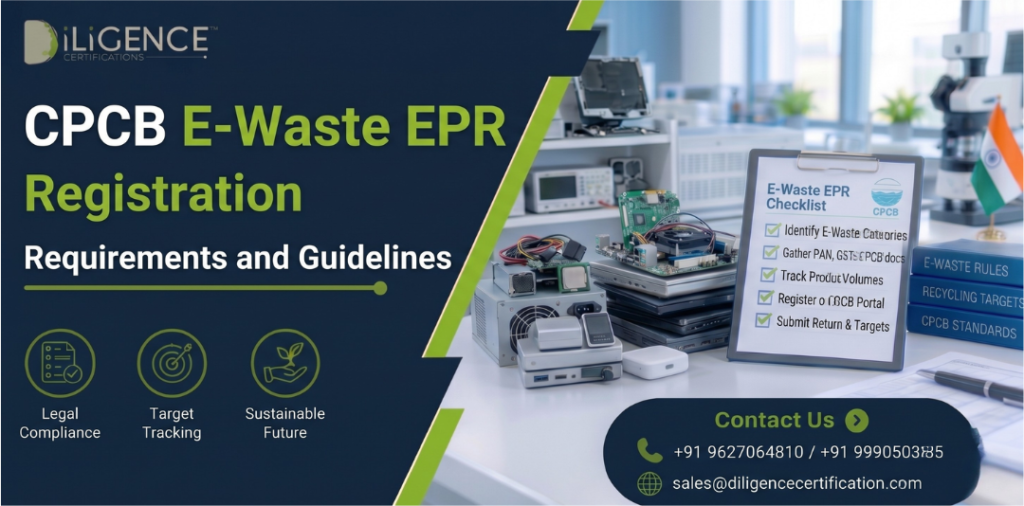
Documents Required for E-Waste EPR Registration
The document list varies according to whether the applicant is a producer, manufacturer, refurbisher or recycler. The current portal instructions and standard operating procedure should always be checked before filing.
Commonly relevant information may include:
- Company incorporation or business registration documents, where applicable.
- PAN and other business identification details requested by the portal.
- GST registration details, where applicable.
- Details of the authorised signatory.
- A valid email address and contact information.
- Product names, categories and technical details.
- Brand and manufacturing information relevant to the applicant category.
- Sales or import data, where required for producer obligations.
- Factory, facility, process or capacity details for the relevant operational category.
- Supporting declarations, undertakings and other documents required by the applicable SOP.
These items are a preparation checklist, not a guarantee that every document is required for every applicant.
Why should businesses review documents before applying?
A common problem is that the information in records doesn’t match.
For example a product might be described one way in a sales spreadsheet and another way in the specification. A brand owner might also not have details about the actual manufacturer or the products being sold under their brand.
These differences can cause questions during application review.
A consultant should help the applicant check the information for accuracy, consistency and completeness. The goal is to submit an application supported by real reliable records. It’s not about uploading a lot of documents. It’s about making sure the information is correct and matches, across all records.
E-Waste EPR Recycling Targets and Certificates
Understanding the EPR system is essential for producers because registration and fulfilment of recycling obligations are separate responsibilities.
Under the framework, eligible producers fulfil their applicable obligations through EPR certificates obtained through the prescribed CPCB portal system from registered recyclers.
The applicable targets depend on the rules, the product category, the relevant sales or waste-generation data and the financial year.
For established producers covered by the applicable phased targets, the CPCB’s published guidance describes the following broad schedule:
| Financial year | General recycling target |
| 2023-24 | 60% |
| 2024-25 | 60% |
| 2025-26 | 70% |
| 2026-27 | 70% |
| 2027-28 onwards | 80% |
These figures should not be applied blindly to every business. The applicable calculation can differ for new producers, imported used equipment and other cases covered by specific provisions. Producers should verify their assigned obligation on the official portal and consult the applicable schedules and amendments.
What is an EPR certificate?
An EPR certificate is a record generated within the prescribed regulatory system to support the fulfilment of an eligible producer’s recycling obligation.
Registered recyclers generate certificates based on eligible recycling activities and the applicable procedures. Producers use the prescribed online process to obtain and submit certificates towards their obligations.
A producer should not purchase certificates from an unregistered recycler or rely on informal paperwork as a substitute for the required portal process.
Why should EPR certificates be checked carefully?
The business should confirm that the certificates are generated and transferred in accordance with the applicable requirements and that its own records support the obligation being fulfilled.
The relevant quantity, category, financial year and transaction details should be reviewed.
This is where an e waste EPR consultant India can support the producer by helping organise its records, review its assigned obligations and track the steps that remain incomplete.
E-Waste EPR Returns and Ongoing Compliance
Registration is only one part of the process. Covered stakeholders must also meet the reporting and record-keeping requirements that apply to their category.
Producers and recyclers have specific return-related responsibilities under the rules and the portal procedures. The applicable reporting frequency and due dates should be checked against current CPCB instructions and any valid extensions.
Businesses should maintain a clear record of relevant information, such as:
- Product-wise sales or other data used for applicable EPR calculations.
- Relevant imports and product details.
- EPR obligations assigned for the financial year.
- EPR certificates obtained or generated, as applicable.
- Supporting invoices and transaction records.
- Information required for the relevant returns.
- Correspondence with CPCB and responses to regulatory queries.
A practical way to manage this is to maintain a compliance calendar and assign responsibility for reviewing the data before each filing.
For example, if the finance team maintains sales data but the compliance team prepares the return, both teams should use the same verified figures. Differences between internal records and portal submissions should be investigated rather than ignored.
What should a company do if it has missed a filing deadline?
First portal status should be checked the reporting requirement should be. Any official extension that may be, in place should be considered. Next filing should be identified, well as any other corrective action.
Business should not assume that a missed deadline is automatically waived, nor that filing a return will erase every compliance issue.
When things are complex professional guidance can help the business see the corrective steps. Any regulatory response must rely on the facts and the rules that apply.
Common E-Waste EPR Compliance Mistakes
Businesses often run into difficulty because they treat registration as a one-time administrative task.
Selecting the wrong category
A brand owner, importer, recycler and refurbisher may have different responsibilities. The applicant should identify its actual activities before choosing a category.
Using incomplete product information
Incorrect descriptions or missing technical details can make it harder to determine whether a product is covered and how it should be classified.
Assuming online sales create an exemption
The producer definition expressly considers selling methods such as e-retailing. Selling through an online marketplace does not, by itself, remove an otherwise applicable obligation.
Ignoring recycling obligations after registration
Producers should track their assigned targets and the certificates required to meet them. A registration certificate alone does not prove that the annual EPR obligation has been fulfilled.
Relying on unregistered recyclers
The prescribed EPR certificate mechanism depends on registered recyclers. Businesses should verify the relevant registration and transaction records rather than relying only on verbal assurances.
Leaving compliance until the last minute
Waiting until a return is due can expose gaps in sales data, product classifications or certificate records.
A regular review is usually more manageable than trying to reconstruct a full year’s records in a few days.
E-Waste EPR Compliance for E-Commerce Businesses and Brand Owners
E-commerce sellers often need to examine their position carefully because the same business model can involve several parties: the brand owner, importer, contract manufacturer, marketplace and distributor.
The legal responsibility depends on the definitions and facts under the rules, not simply on which company ships the product.
Consider a hypothetical business that imports computer monitors, sells them through its own website and also supplies them to marketplace sellers. The business should check whether it qualifies as a producer, which equipment categories apply and what registration and EPR obligations follow.
Now consider a retailer selling a covered product under the original manufacturer’s brand. Its position may be different, depending on the actual activity and the applicable definition.
A useful review should cover:
- Who manufactures or imports the product?
- Under whose brand is the product sold?
- Is the product covered by Schedule I?
- Which party falls within the applicable producer definition?
- What registration and reporting requirements apply?
- Are the relevant records available and consistent?
An e waste EPR consultant India can help a company map its business model against these questions. This is particularly useful when products are sourced from multiple suppliers or sold under several brands.
How to Choose the Right E-Waste EPR Consultant in India
The right consultant should make the rules easier to understand and help the business build a practical compliance process.
Before appointing a consultant, ask the following questions.
Do they understand the applicable rules?
They should be able to explain the difference between registration, recycling obligations, EPR certificates and returns in plain language.
Will they check the applicant category first?
A reliable process starts with the company’s activity and product range. It should not begin with a promise to obtain a certificate without reviewing eligibility.
Do they explain which documents are required?
The consultant should provide a category-specific checklist and explain why the information is needed.
Can they help with ongoing compliance?
Ask whether their service includes only application support or also record review, return preparation, portal follow-up and compliance tracking.
Are fees and service limits clear?
The engagement should explain the scope of work, client responsibilities, additional charges if any, and what happens if CPCB requests further clarification.
Do they promise guaranteed approval?
Be cautious about anyone who guarantees registration or claims that regulatory review can be bypassed. The competent authority makes the final decision.
A consultant’s value lies in helping the business understand its obligations, prepare accurate information and follow the proper process.
Why Choose Diligence Certifications for E-Waste EPR Registration?
Diligence Certifications can be considered by businesses seeking guidance on environmental registration and EPR compliance. The right starting point is a review of the company’s activities, product categories and current documentation.
A practical consultation should help the business understand:
- Whether its products and activities fall within the relevant rules.
- Which registration category it should examine.
- What information and supporting documents may be required.
- How the application and portal process works.
- Which ongoing records, certificates and returns need attention.
The aim should be to make the compliance process clear, organised and easier to manage.
Businesses can visit the Diligence Certifications homepage to learn more about the company. For service enquiries, review the Diligence Certifications services page and confirm the scope of support available for e-waste EPR matters.
Before appointing a consultant, share accurate details about your products, business model and existing registration status. This allows the requirements to be assessed more meaningfully.
No consultant can replace the regulatory authority or guarantee a particular outcome. Registration and compliance decisions must follow the applicable rules and CPCB procedures.
Conclusion
E‑waste compliance demands that businesses understand their role in the supply chain pick the registration category and keep accurate records. Producers also need to mind their recycling duties, E‑PR certificates and reporting duties.
An E‑waste E‑PR consultant in India can organise these tasks explain the procedures and spot missing information before it turns into a problem. The first step is to review the company’s products and activities against the E‑waste (Management) Rules, 2022 and the latest CPCB instructions.
For a business that wants to manage E‑waste compliance a clear understanding of the rules is more useful than rushing through registration. Check the requirements prepare genuine supporting records and build a process, for monitoring obligations all year long.
Frequently Asked Questions
1. What does an e waste EPR consultant India do?
An e waste EPR consultant India helps businesses understand their obligations under the E-Waste (Management) Rules, 2022. Depending on the agreed scope, support may include eligibility checks, product classification, document preparation, registration assistance, portal queries, EPR obligation tracking and return-related compliance.
2. Is E-Waste EPR registration mandatory in India?
Registration is mandatory for entities covered by the relevant provisions of the E-Waste (Management) Rules, 2022. The rules identify manufacturers, producers, refurbishers and recyclers as registration categories. A business should check its activity, products and any applicable exclusions before deciding whether registration is required.
3. Which businesses are considered producers under the E-Waste Rules?
The definition includes specified businesses that manufacture and sell covered equipment under their own brand, sell equipment assembled by another manufacturer under their own brand, or import covered equipment for sale. The exact position depends on the rule's definition and the facts of the business.
4. What documents are required for e-waste EPR registration?
Requirements depend on the applicant category. Commonly relevant information includes business identification, authorised signatory details, product descriptions, brand or manufacturing details and relevant sales or facility information. Applicants should follow the latest CPCB portal instructions and applicable SOP for their category.
5. How long does CPCB e-waste EPR registration take?
There is no single processing time that should be promised for every application. The time required can depend on the application category, completeness of the documents, portal requirements and any clarifications requested by CPCB. Applicants should rely on current official guidance rather than a guaranteed timeline.
6. Can an e-commerce seller need EPR registration?
Yes, an online selling model does not automatically exempt a business from the producer definition. A brand owner or importer selling covered electronic equipment online should examine its status under the rules. A retailer selling another company's products may have a different position depending on its activities.
7. How do producers fulfil e-waste EPR obligations?
Producers fulfil applicable obligations through the prescribed CPCB system, including obtaining and submitting eligible EPR certificates from registered recyclers. The required quantity depends on the applicable rules, product category and assigned target.
8. What happens if a company fails to meet its EPR obligations?
Depending on the circumstances and applicable provisions, non-compliance may result in regulatory directions, environmental compensation or other enforcement action. Businesses should review their obligations and address gaps promptly rather than assuming that registration alone is sufficient.