 BIS Certification
 CDSCO
 PESO
 CPCB
 LMPC
 WPC Approval
 Global Approvals
 TEC
 ARAI
 BEE
 ISO Certification
 DGCA Certification
 NOC For Steel
 APEDA Registration













 Business Registration
 FSSAI Mark Certification



 (32).jpg)
 Legal Services
 Trademark Registration
 Copyright Registration
 Patent Registration
 By
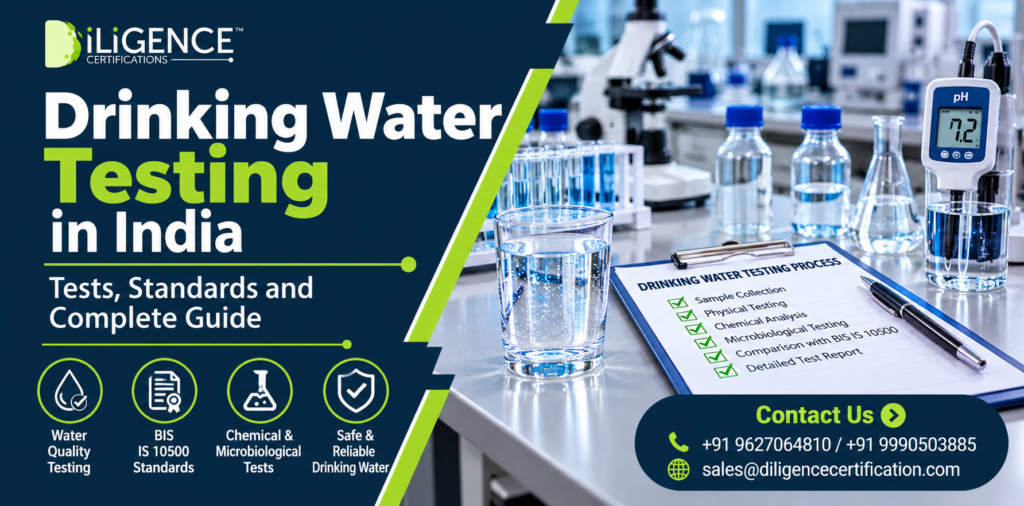
- Drinking water testing checks whether water is safe for human consumption.
- BIS IS 10500 specifies drinking water quality requirements in India.
- Important tests include pH, TDS, turbidity, hardness, fluoride and nitrate.
- Microbiological testing helps identify harmful bacteria such as E. coli.
- Water testing laboratories use physical, chemical and microbiological methods.
- Regular testing helps households, industries and water suppliers maintain water quality.
- Packaged drinking water manufacturers must follow applicable FSSAI requirements.
Introduction
Clean drinking water is essential for good health. However, water that looks clear and tastes normal is not always safe to drink. It may contain harmful bacteria, dissolved chemicals, heavy metals or other impurities that cannot be identified without proper testing.
For example, borewell water may look clean but contain excess fluoride, iron or nitrate. Similarly, water supplied through pipelines may become contaminated because of damaged pipes, poor storage or leakage.
This is why drinking water testing is important. It helps identify impurities and determine whether water meets the required quality standards.
In India, the Bureau of Indian Standards (BIS) has established IS 10500, which specifies drinking water quality requirements. It covers different physical, chemical and microbiological parameters.
This guide explains drinking water testing, important parameters, BIS standards, laboratory procedures and common mistakes in simple language.
What Is Drinking Water Testing?
Drinking water testing is the process of examining a water sample to determine its quality and suitability for human consumption.
During laboratory analysis, different characteristics of water are checked, including:
- Colour, taste and odour
- pH value
- Turbidity
- Total dissolved solids (TDS)
- Total hardness
- Chloride and sulphate
- Fluoride and nitrate
- Iron and other heavy metals
- Total coliform bacteria
- E. coli contamination
The laboratory compares the test results with applicable drinking water quality requirements.
If any parameter exceeds the relevant limit, further investigation or water treatment may be necessary.
Why Is Drinking Water Quality Testing Important?
Water contamination is not always visible. Harmful microorganisms and chemicals may be present even when water appears clean.
Here are some important reasons to test drinking water.
1. Identifies Harmful Bacteria
Water may contain bacteria such as E. coli and other coliform organisms. Their presence can indicate contamination from sewage or other unsafe sources.
Microbiological testing helps identify these problems.
2. Detects Chemical Contamination
Groundwater may contain unwanted chemicals such as fluoride, arsenic, nitrate and heavy metals.
Chemical analysis helps identify substances that may affect human health when present above permitted limits.
3. Checks Water Quality Against BIS Standards
IS 10500 provides drinking water quality specifications in India. Testing helps determine whether water meets the relevant acceptable and permissible limits.
4. Supports Better Water Treatment
Water treatment should be selected according to actual test results.
For example:
- High iron may require iron removal.
- Excess hardness may require water softening.
- High turbidity may require filtration.
- Microbial contamination may require disinfection.
- High dissolved salts may require suitable treatment.
Testing helps businesses choose appropriate treatment methods.
BIS Standard for Drinking Water in India
The Bureau of Indian Standards (BIS) has developed IS 10500:2012 - Drinking Water Specification to define drinking water quality requirements in India.
The standard covers physical, chemical and microbiological characteristics of drinking water. It also specifies acceptable limits and permissible limits in the absence of an alternate source.
Important Drinking Water Quality Parameters
The following table shows selected parameters under IS 10500.
| Parameter | Acceptable Limit | Permissible Limit |
|---|---|---|
| pH | 6.5-8.5 | No relaxation |
| TDS | 500 mg/L | 2,000 mg/L |
| Turbidity | 1 NTU | 5 NTU |
| Total Hardness | 200 mg/L | 600 mg/L |
| Chloride | 250 mg/L | 1,000 mg/L |
| Sulphate | 200 mg/L | 400 mg/L |
| Fluoride | 1.0 mg/L | 1.5 mg/L |
| Nitrate | 45 mg/L | No relaxation |
| Iron | 0.3 mg/L | No relaxation |
| Arsenic | 0.01 mg/L | No relaxation |
Note: This is a selected list, not the complete IS 10500 specification. Always verify the latest applicable standard and amendments before making compliance decisions.
For microbiological quality, E. coli or thermotolerant coliform bacteria and total coliform bacteria should not be detectable in a 100 ml drinking water sample.
Different Types of Drinking Water Tests
Drinking water analysis generally includes three main categories: physical, chemical and microbiological testing.
1. Physical Water Testing
Physical testing checks the visible and measurable characteristics of water.
Colour Test: Checks unusual colour that may result from iron, manganese or organic matter.
Odour Test: Identifies unpleasant smells that may indicate contamination.
Turbidity Test: Measures the cloudiness of water caused by suspended particles such as soil, dust and other impurities.
Temperature Test: Measures water temperature, which can influence certain chemical and microbiological conditions.
2. Chemical Water Testing
Chemical testing identifies dissolved substances that may affect water safety and quality.
pH Testing: Measures whether water is acidic or alkaline. The acceptable pH range under IS 10500 is 6.5 to 8.5.
TDS Testing: Measures the concentration of dissolved substances such as salts and minerals. High TDS may affect taste, but TDS alone cannot confirm water safety.
Hardness Testing: Checks dissolved calcium and magnesium. High hardness may cause scale formation in pipes and water heaters.
Chloride Testing: Measures chloride concentration. Excess chloride can affect water taste and may indicate contamination.
Fluoride Testing: Checks fluoride concentration, particularly in groundwater. Excess fluoride can create health concerns.
Nitrate Testing: Identifies nitrate contamination that may enter groundwater through fertilisers, sewage and other sources.
Heavy Metal Testing: Checks harmful metals such as arsenic, lead, cadmium, mercury and chromium.
3. Microbiological Water Testing
Microbiological testing identifies bacterial contamination in water.
Important tests include:
- Total Coliform Test: Checks bacteria that may indicate problems with water treatment or distribution.
- E. coli Test: Helps identify possible faecal contamination.
- Total Plate Count: Estimates viable microorganisms present under specified laboratory conditions.
- Pathogen Testing: Checks for specific disease-causing microorganisms when required.
These tests are important because contaminated water can look completely normal.
Drinking Water Testing Process: Step by Step
Water testing follows a systematic procedure. Proper sample collection and handling are important for accurate results.
Step 1: Identify the Water Source
First, identify where the water comes from.
Common sources include:
- Borewells and groundwater
- Municipal water supply
- Rivers and lakes
- Water treatment plants
- Storage tanks
- Packaged drinking water units
Different sources may require different testing parameters.
Step 2: Select the Required Tests
The laboratory identifies the parameters according to the water source and intended use.
A basic analysis may include pH, TDS, turbidity and hardness. Detailed testing may include heavy metals, pesticides and microbiological parameters.
Step 3: Collect the Water Sample
Water should be collected in suitable, clean containers.
For microbiological testing, sterile sample bottles are required. Sampling should follow the laboratory’s instructions to prevent contamination.
Step 4: Preserve and Transport the Sample
Some water parameters can change after collection. Samples may require suitable preservation, temperature control and timely transportation.
Step 5: Perform Laboratory Testing
The laboratory examines the sample using suitable instruments and testing methods. Depending on the parameter, the process may involve meters, titration, filtration, incubation or advanced analytical equipment.
Step 6: Prepare the Test Report
The laboratory prepares a report containing the tested parameters, measured values, units and relevant testing methods.
The results are compared with applicable quality requirements.
Step 7: Take Corrective Action
If a parameter fails, the water supplier or responsible organisation should investigate the cause.
Suitable treatment may include filtration, softening, disinfection or other contaminant-specific processes. Repeat testing helps verify the effectiveness of corrective action.
Equipment Used in Drinking Water Testing Laboratories
Water testing laboratories use different instruments depending on their testing scope.
| Equipment | Purpose |
|---|---|
| pH Meter | Measures acidity and alkalinity |
| TDS Meter | Estimates dissolved solids through conductivity |
| Turbidity Meter | Measures water cloudiness |
| Conductivity Meter | Measures electrical conductivity |
| Spectrophotometer | Analyses selected chemical parameters |
| Incubator | Supports microbiological testing |
| Autoclave | Sterilises laboratory materials |
| AAS | Analyses selected metals |
| ICP-OES / ICP-MS | Analyses multiple elements |
A laboratory does not necessarily require every instrument. Equipment requirements depend on the parameters and testing methods covered by its scope.
Drinking Water Testing for Different Industries
Drinking water quality testing is useful for different businesses and organisations.
1. Residential Societies
Housing societies should monitor water supplied through overhead tanks, underground tanks and borewells. Testing helps identify contamination caused by storage and distribution problems.
2. Hotels and Restaurants
Hotels and restaurants use water for drinking, cooking and cleaning. Regular quality checks support hygiene and food safety.
3. Hospitals
Hospitals need reliable water quality for drinking and other activities. Testing requirements should depend on the intended application.
4. Schools and Colleges
Educational institutions should monitor drinking water sources, storage tanks and dispensers to maintain safe facilities for students and staff.
5. Industries
Manufacturing units may require water testing for drinking facilities, production processes, boilers and other industrial applications.
6. Packaged Drinking Water Manufacturers
Packaged drinking water manufacturers require quality control for raw water, treated water, finished products, packaging and production hygiene.
Standards for Packaged Drinking Water in India
Apart from IS 10500, separate Indian Standards apply to packaged water products.
| Indian Standard | Product |
|---|---|
| IS 10500:2012 | General drinking water specifications |
| IS 14543:2024 | Packaged drinking water |
| IS 13428:2024 | Packaged natural mineral water |
IS 14543:2024 covers packaged drinking water other than natural mineral water, while IS 13428:2024 covers packaged natural mineral water.
Important FSSAI Update for Packaged Water
FSSAI removed the mandatory BIS certification mark requirement for packaged drinking water and mineral water in October 2024.
However, manufacturers must still follow applicable FSSAI licensing, inspection and testing requirements.
FSSAI introduced a separate testing scheme for packaged drinking water and mineral water, effective from 1 January 2026.
Therefore, manufacturers should check the latest FSSAI notifications and applicable testing scheme before starting or changing production.
How to Choose a Drinking Water Testing Laboratory?
Selecting a suitable laboratory is important because inaccurate testing can lead to incorrect decisions.
Consider these points before choosing a laboratory.
1. Check NABL Accreditation
Look for a laboratory accredited under ISO/IEC 17025 by NABL.
Check whether its current accreditation scope includes the specific water parameters and testing methods you require.
2. Verify Testing Facilities
The laboratory should have suitable instruments, trained staff and appropriate testing facilities.
3. Check Testing Methods
Ask which standards and methods the laboratory follows. Testing methods should be appropriate for the selected parameters.
4. Review the Test Report
A proper water testing report should include sample identification, tested parameters, results, units, methods and laboratory details.
5. Check Laboratory Experience
Choose a laboratory familiar with your type of water source and testing requirements.
Documents Required for Drinking Water Testing
The documents and details may vary depending on the laboratory and purpose of testing.
Common requirements include:
- Applicant or company name
- Company address and contact details
- Water source information
- Sample identification
- Sample collection date and location
- List of required parameters
- Applicable standard
- Previous test reports, if available
- Water treatment details, where applicable
Packaged drinking water manufacturers may need additional documentation under applicable FSSAI requirements.
Common Mistakes to Avoid During Water Testing
Some common mistakes can affect the accuracy and usefulness of test results.
1. Using Unclean Bottles: Contaminated sample containers can affect laboratory results. Use suitable containers as instructed by the laboratory.
2. Ignoring Microbiological Tests: pH and TDS results alone cannot establish drinking water safety.
3. Testing Only Once: Water quality can change due to seasonal conditions, storage problems and source contamination.
4. Ignoring Heavy Metals: Certain harmful metals cannot be detected through taste, smell or appearance.
5. Choosing Incomplete Test Packages: Select parameters according to the source and contamination risks.
6. Ignoring Failed Reports: Investigate failed parameters, take corrective action and conduct repeat testing where necessary.
How Often Should Drinking Water Be Tested?
Testing frequency depends on the water source, contamination risks, intended use and applicable regulations.
Some general considerations include:
- Households: Test independent water sources periodically and whenever contamination is suspected.
- Residential Societies: Monitor water quality at sources, storage tanks and distribution points.
- Hotels: Follow a suitable water quality monitoring schedule.
- Industries: Follow internal quality control and applicable regulatory requirements.
- Packaged Water Manufacturers: Follow the prescribed FSSAI sampling and testing schedule.
Businesses should follow their applicable regulatory requirements instead of relying only on general testing recommendations.
Diligence Certifications in Drinking Water Compliance
Understanding drinking water standards, laboratory reports and regulatory requirements can be challenging for manufacturers and businesses.
Diligence Certifications helps businesses understand applicable product standards, testing requirements and certification-related procedures.
Our support includes:
- Understanding applicable BIS standards
- Identifying product testing requirements
- Guidance on laboratory documentation
- Understanding regulatory requirements
- Guidance on FSSAI compliance
- Assistance with certification-related documentation
- Support with applicable compliance procedures
Diligence Certifications is a compliance consultancy, not a physical water testing laboratory. Actual sample collection, testing and issuance of laboratory reports must be performed by suitably qualified laboratories.
Conclusion
Drinking water testing is essential for maintaining water quality and protecting public health. Water may appear clean but still contain harmful bacteria, chemicals and heavy metals.
Testing physical, chemical and microbiological parameters helps identify contamination and determine suitable corrective measures.
In India, IS 10500 provides general drinking water quality specifications, while separate standards and FSSAI requirements apply to packaged drinking water and natural mineral water.
For manufacturers, water suppliers and businesses, regular monitoring, proper documentation and suitable testing procedures help maintain water quality and support regulatory compliance.
Frequently Asked Questions
1. What is feeding bottle testing?
Feeding bottle testing checks a bottle's material, strength, durability, leakage performance and chemical safety. It helps determine whether the product meets the applicable Indian Standard.
2. Which BIS standard is used for plastic feeding bottles?
IS 14625:2015 covers plastic feeding bottles. Manufacturers should also check the applicable amendments, including the fifth amendment issued in 2026.
3. Is BIS certification mandatory for feeding bottles in India?
Yes. Section 11(2) of the Infant Milk Substitutes, Feeding Bottles and Infant Foods (Regulation of Production, Supply and Distribution) Act, 1992, requires feeding bottles sold or distributed in India to conform to BIS Standard Mark requirements.
4. Which standard covers glass feeding bottles?
IS 5168:2018 is the Indian Standard associated with glass feeding bottles.
5. Which standard applies to stainless steel feeding bottles?
IS 18800:2023 covers stainless steel feeding bottles for infants.
6. What are the main tests conducted on feeding bottles?
Important tests may include physical inspection, wall thickness, capacity, transparency, leakage, drop resistance, ageing resistance, deformation resistance and chemical safety.
7. Why is chemical migration testing important?
It helps determine whether substances from the bottle material can transfer into the liquid that comes into contact with it. This is particularly important for infant feeding products.