BIS Certification
 CDSCO
CDSCO
 PESO
PESO
 CPCB
CPCB
 LMPC
LMPC
 WPC Approval
 Global Approvals
 TEC
TEC
 ARAI
ARAI
 BEE
BEE
 ISO Certification
 DGCA Certification
 NOC For Steel
 APEDA Registration























 Business Registration
 FSSAI Mark Certification












 (32).jpg)
 Legal Services
 Trademark Registration
 Copyright Registration
 Patent Registration
 By
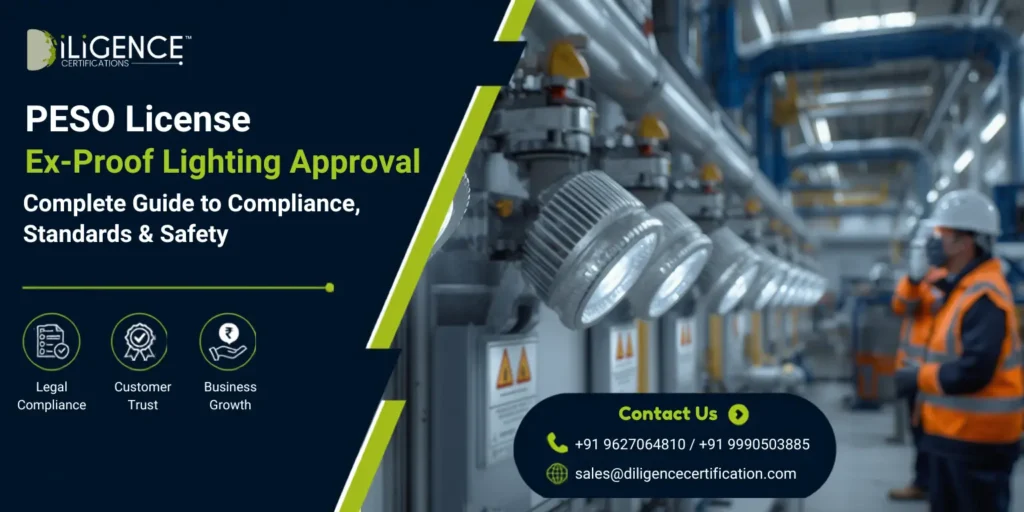
By - Ex-Proof Lighting Approval ensures the safe and reliable operation of lighting equipment installed in hazardous industrial environments where flammable gases, vapors, or dust may be present.
- It helps industries comply with safety requirements, maintain secure workplaces, and protect workers, equipment, and industrial facilities from fire and explosion risks.
- Ex-Proof Lighting Approval supports continuous industrial operations by ensuring that explosion-proof lighting systems are designed and installed according to applicable safety standards for hazardous locations.
Introduction
Ex-Proof Lighting Approval refers to the process of verifying that explosion-proof lighting equipment is suitable for use in hazardous areas where combustible gases, vapors, or dust particles can create a risk of fire or explosion.
These lighting systems are specially designed to prevent sparks, flames, or excessive heat generated inside the equipment from becoming a source of ignition in the surrounding atmosphere.
Industries such as oil & gas, chemical, pharmaceutical, mining, petrochemical, refineries, and manufacturing industries use Ex-Proof Lighting systems to ensure workplace safety and meet hazardous area compliance requirements.
Professional consultants assist businesses by helping with technical documentation, compliance procedures, testing coordination, and approval requirements, making the complete process more efficient and organized.
What is Ex-Proof Lighting Approval?
Ex-Proof Lighting Approval is a certification and compliance process that confirms lighting equipment can safely operate in hazardous environments without creating ignition risks.
Ex-Proof Lighting systems are manufactured with specially designed protective enclosures that prevent internal sparks, flames, or heat from escaping into the surrounding hazardous atmosphere.
These lighting systems are developed according to Petroleum and Explosives Safety Organization and are commonly used in locations where explosive gases, vapors, or combustible dust may exist.
Applications of Ex-Proof Lighting Approval include:
- Hazardous area lighting systems
- Industrial lighting installations
- Oil and gas facility lighting
- Chemical plant lighting
- Mining area illumination
- Petrochemical facility lighting
- Process plant lighting
- Storage and warehouse lighting in hazardous locations
Who Needs Ex-Proof Lighting Approval?
Ex-Proof Lighting Approval is required by industries that install lighting equipment in hazardous environments where flammable substances are handled, processed, stored, or manufactured.
These industries include:
- Oil & Gas Industries
- Chemical Manufacturing Units
- Petrochemical Plants
- Pharmaceutical Industries
- Mining Operations
- Fertilizer Manufacturing Plants
- LPG & Gas Processing Facilities
- Refineries
- Paint & Solvent Industries
- Hazardous Chemical Storage Facilities
- Industrial Automation Projects
- Manufacturing Industries
These businesses should ensure that their Ex-Proof Lighting systems comply with applicable industrial safety standards before installation and operation in hazardous areas.
Types of Compliance Under Ex-Proof Lighting Approval
Compliance requirements for Ex-Proof Lighting depend on factors such as equipment design, hazardous area classification, operating conditions, installation environment, and applicable safety standards.
Ex-Proof Lighting Design Compliance
Ex-Proof Lighting systems should be designed to operate safely in hazardous locations while preventing ignition risks caused by electrical faults or excessive heat.
The design generally includes:
- Explosion-proof enclosure
- Safe electrical construction
- Proper cable entry arrangements
- Effective heat management
- Mechanical protection
- Suitable protection rating
- Safe component selection
Applicable For:
- LED Ex-Proof Lights
- Explosion-proof Lighting Fixtures
- Hazardous Area Lighting Systems
- Industrial Lighting Equipment
- Emergency Lighting Systems
Manufacturing & Quality Compliance
Manufacturers should follow proper quality control practices to ensure Ex-Proof Lighting equipment is safe, reliable, and suitable for hazardous industrial applications.
This generally includes:
- Material inspection
- Component testing
- Assembly inspection
- Quality control procedures
- Performance testing
- Safety verification
Applications:
- New Ex-Proof Lighting Systems
- Customized Hazardous Area Lighting
- Industrial Lighting Equipment
- Hazardous Location Installations
Safety & Operational Compliance
Proper safety practices help ensure reliable performance of Ex-Proof Lighting systems in hazardous environments.
Typical compliance measures include:
- Electrical Safety Systems
- Explosion Protection Measures
- Proper Installation Procedures
- Earthing Arrangements
- Temperature Control
- Inspection Procedures
- Preventive Maintenance
- Equipment Labelling
Maintaining proper compliance helps industries reduce safety risks and ensures reliable operation of lighting systems in hazardous industrial locations.
Importance & Benefits of Ex-Proof Lighting Approval
| Importance | Benefits |
| Ensures compliance with applicable industrial safety standards for hazardous locations. | Helps build trust among customers, regulatory authorities, and business partners. |
| Supports the safe operation of lighting equipment in explosive environments. | Enhances the credibility and professional reputation of the organization. |
| Reduces the risk of fire, explosions, and electrical accidents in hazardous areas. | Supports uninterrupted industrial operations by minimizing safety and compliance issues. |
| Helps maintain safe installation, operation, and maintenance of industrial lighting systems. | Reduces the risk of penalties, legal complications, and operational disruptions. |
| Improves workplace safety by protecting workers, equipment, and surrounding facilities. | Simplifies future inspections, upgrades, and compliance management. |
Documents Required for Ex-Proof Lighting Approval
The documents required for Ex-Proof Lighting Approval may vary depending on the type of lighting equipment, application, installation location, hazardous area classification, and applicable safety standards.
Generally, the required documents may include:
- Applicant’s identity proof
- Passport-size photograph of the applicant
- Business registration documents
- Certificate of Incorporation, wherever applicable
- Address proof of the business premises
- Factory or installation address details
- Product technical specifications
- General Arrangement (GA) drawing
- Electrical circuit diagrams
- Bill of Materials (BOM)
- Lighting fixture drawings
- Component specifications
- Hazardous area classification details
- Quality control documents
- Manufacturing process details
- Test certificates of electrical components
- Product testing reports, wherever applicable
- Quality Management System documents
- User manual and operating instructions
- Product marking and nameplate details
- Declaration of conformity, wherever applicable
- Other documents required by the concerned authority
Proper documentation helps reduce delays and supports a smoother approval and compliance process for Ex-Proof Lighting systems.
Step-by-Step Compliance Process Under Ex-Proof Lighting Approval
Following the compliance process helps businesses ensure that their Ex-Proof Lighting systems meet the required safety standards and are suitable for operation in hazardous areas.
Step 1: Requirements Identification
Identification of applicable requirements according to the lighting equipment type, hazardous area classification, installation environment, and relevant safety standards is the first step.
Understanding these requirements helps businesses prepare their Ex-Proof Lighting products for assessment and approval.
Step 2: Documentation Preparation
Preparation of necessary documents such as technical specifications, product drawings, electrical details, test reports, and compliance documents follows.
Complete and accurate documentation helps businesses avoid complications during the evaluation process and supports smooth approval procedures.
Step 3: Application Submission
Submission of the application along with required documents and technical information to the concerned authority or certification body follows.
Providing complete and correct information helps businesses proceed with the assessment process efficiently.
Step 4: Document Verification
The submitted documents are reviewed and verified according to applicable technical and safety requirements.
The authority or certification body may request additional information or clarification if required during the verification process.
Step 5: Product Testing & Technical Evaluation
Ex-Proof Lighting equipment may undergo technical evaluation and testing to verify its safety, quality, and suitability for hazardous environments.
The evaluation may include:
- Construction of protective enclosure
- Electrical safety testing
- Mechanical strength verification
- Explosion protection assessment
- Temperature testing
- Cable entry arrangements
- Protection system verification
- Product performance testing
This evaluation helps confirm that the Ex-Proof Lighting system can safely operate in hazardous locations without creating ignition risks.
Step 6: Approval / Certification
After successful document verification and technical evaluation, the required approval or certification is granted.
This confirms that the Ex-Proof Lighting equipment meets the necessary safety requirements and is suitable for hazardous area applications.
Step 7: Continual Compliance
Even after receiving approval, manufacturers and users should continue maintaining quality standards, conducting inspections, and following maintenance procedures.
Regular monitoring helps ensure that Ex-Proof Lighting systems continue to operate safely and remain compliant with applicable requirements.
Timeline, Cost & Validity of Ex-Proof Lighting Approval
The timeline, cost, and validity depend on factors such as product specifications, testing requirements, technical evaluation, applicable standards, and approval procedures.
| Timeline | Cost | Validity |
| The timeline depends on document verification, product testing, and technical evaluation. | The cost depends on product specifications, testing requirements, certification charges, and professional consultancy fees. | The validity depends on applicable certification requirements and regulatory guidelines. |
| Technical review and product testing may influence the overall processing period. | Government fees, laboratory testing charges, and documentation expenses may apply. | Renewal or revalidation may be required as per applicable regulations. |
| Complete documentation helps avoid unnecessary delays. | Additional costs may vary depending on technical requirements and testing scope. | Businesses should maintain continued compliance during the validity period. |
| Processing time may vary depending on product complexity and certification procedures. | Proper planning helps manage overall certification expenses efficiently. | Maintaining updated technical records supports smooth renewals and future compliance. |
Why is Ex-Proof Lighting Approval Important?
Ex-Proof Lighting Approval plays an important role in protecting industrial facilities that operate in hazardous environments. These lighting systems are specially designed to prevent ignition risks by containing internal sparks, flames, or excessive heat generated within the equipment.
The use of compliant Ex-Proof Lighting systems helps industries maintain safe working conditions, reduce operational risks, and follow applicable industrial safety standards.
Ex-Proof Lighting Approval ensures that lighting equipment installed in hazardous locations is properly evaluated for safety, reliability, and performance before being used in critical industrial applications.
Importance of Ex-Proof Lighting Approval:
- Safe operation of lighting systems in hazardous areas.
- Minimization of fire and explosion risks.
- Protection of workers, equipment, and industrial facilities.
- Compliance with relevant safety standards.
- Reliable and efficient industrial operations.
Consequences of Non-Compliance with Ex-Proof Lighting Approval
Failure to use approved Ex-Proof Lighting systems and not following mandatory safety requirements may result in several operational and safety-related issues.
These include:
- Actions by the relevant authority
- Withdrawal or suspension of certifications or approvals
- Increased chances of fire, explosion, and electrical hazards
- Damage to industrial equipment and facilities
- Operational disruptions and production losses
- Difficulty in obtaining future approvals or certifications
- Loss of trust among customers and business partners
Following necessary compliance requirements allows organizations to maintain workplace safety and avoid unnecessary operational risks.
Renewal of Ex-Proof Lighting Approval Compliance
Organizations should regularly inspect and maintain their Ex-Proof Lighting systems to ensure continuous compliance with applicable safety standards.
The renewal or periodic compliance review may include:
- Verification of applicable compliance requirements
- Inspection of Ex-Proof Lighting equipment
- Testing of electrical and safety systems
- Maintenance of product performance records
- Calibration and servicing, wherever applicable
- Inspection of protection and earthing systems
- Review of modifications or upgrades
- Updating technical documentation
Maintaining proper records, conducting regular inspections, and following preventive maintenance practices help ensure the safe and reliable operation of Ex-Proof Lighting systems while supporting long-term compliance.
How Professional Assistance Helps in Ex-Proof Lighting Approval Compliance?
Technical expertise, documentation knowledge, product testing support, and understanding of hazardous area safety standards are required for successful Ex-Proof Lighting Approval compliance.
Professionals simplify the complete approval process by helping businesses prepare required documents, manage technical requirements, and coordinate with certification authorities.
Services of professionals usually include:
- Guidance on suitable compliance requirements for Ex-Proof Lighting systems.
- Assistance in preparing technical documents, drawings, and product specifications.
- Support in collecting and organizing required documentation.
- Application preparation and submission assistance.
- Verification and technical evaluation support.
- Assistance with product modifications and renewal procedures.
Professional assistance allows companies to focus on their business operations while experts manage technical and compliance-related requirements.
Why Choose Diligence Certifications for Ex-Proof Lighting Approval Compliance?
Compliance with Ex-Proof Lighting Approval requires proper technical documentation, product assessment, testing coordination, and understanding of hazardous area safety requirements.
With the support of experienced Diligence Certifications businesses can complete the compliance process more efficiently while reducing unnecessary delays and documentation errors.
The advantages of professional consulting include:
- Reduces possible mistakes in technical documentation and application procedures.
- Provides complete support for compliance-related documents and requirements.
- Offers expert guidance regarding industrial safety regulations.
- Helps throughout the testing, evaluation, and approval process.
With professional consulting support, businesses can achieve compliance efficiently while saving time and effort.
Conclusion
Ex-Proof Lighting Approval is essential for industries operating in hazardous areas where flammable gases, vapors, or combustible dust may be present. These lighting systems are designed to prevent ignition risks and provide safe illumination in challenging industrial environments.
Using approved Ex-Proof Lighting equipment helps organizations improve workplace safety, protect employees and assets, and maintain compliance with industrial safety requirements.
Following proper safety procedures, maintaining technical records, conducting regular inspections, and taking professional assistance whenever required makes the approval process smoother and supports long-term operational safety.
Frequently Asked Questions
What is Ex-Proof Lighting Approval?
Ex-Proof Lighting Approval is a compliance process that confirms lighting equipment is safe for use in hazardous areas where flammable gases, vapors, or dust may create explosion risks.
Where are Ex-Proof Lighting systems used?
Ex-Proof Lighting systems are commonly used in oil & gas industries, chemical plants, petrochemical facilities, pharmaceutical industries, mining operations, refineries, LPG facilities, and other hazardous industrial locations.
Why is Ex-Proof Lighting Approval important?
Ex-Proof Lighting Approval helps industries reduce fire and explosion risks, protect workers and equipment, and ensure that lighting systems meet required safety standards.
What documents are required for Ex-Proof Lighting Approval?
The required documents generally include business details, technical specifications, product drawings, electrical documents, component details, quality records, test reports, and other compliance documents.
Is product testing required for Ex-Proof Lighting Approval?
Yes, depending on applicable safety standards and approval requirements, product testing may be conducted to verify the safety and performance of Ex-Proof Lighting equipment.
Can existing Ex-Proof Lighting equipment be modified?
Yes, existing Ex-Proof Lighting equipment can be modified, but major changes may require additional evaluation or approval according to applicable compliance requirements.
Is periodic inspection important for Ex-Proof Lighting systems?
Yes, regular inspection, preventive maintenance, and performance testing are important to ensure continued safety, reliability, and compliance.
How do companies maintain continuous compliance for Ex-Proof Lighting Approval?
Companies should maintain updated documentation, conduct regular inspections, follow maintenance procedures, and ensure that their equipment continues to meet applicable safety standards.
What are the consequences of non-compliance with Ex-Proof Lighting Approval?
Non-compliance may result in safety hazards, operational disruptions, legal complications, rejection of approvals, and difficulty in obtaining future certifications.
How does a professional consultant help with Ex-Proof Lighting Approval?
A professional consultant provides assistance with technical documentation, compliance guidance, application support, testing coordination, approval procedures, and renewal requirements.